Categories
judiciary national politics & policies

Ghost of an Argument

On the 73rd anniversary of the birth of Hillary Clinton, the United States Senate confirmed Amy Coney Barrett to the Supreme Court.

Mrs. Clinton, the former Democratic presidential candidate, looms in the background of the issue as a sort of éminence grise, a specter of the politics of the left. Had she won in 2016, late luminary RBG would have been replaced by a progressive woman. Not ACB.

For what would have been Hillary’s, count ’em, third nomination.

Not a specter, or grisey eminence, is Senator Kamala Harris (D-Calif.), Joe Biden’s partner in procuring 2020’s big prize. 

“I’m on my way to the Senate floor to vote no on Judge Amy Coney Barrett’s nomination to the Supreme Court,” Harris tweeted, yesterday. “Health coverage for millions of people hinges on who fills this seat. It’s clear that this nominee has the potential to do great harm to the American people.”

Note that this complaint has nothing to do with actual judicial qualifications. It has to do with a policy that Democrats insist upon: socialized medical billing. But as ACB made clear in the hearings, her judicial mindset is about legal process, as it should be, not government policy.

An hour later, candidate Harris asserted that Senate Republicans had “denied the will of the American people by confirming a Supreme Court justice through an illegitimate process.”

Illegitimate?

Well, you see, “more than 62 million people have already voted.” That is it. Harris pretends that since there is an election next week, and some people have already voted, the normal, constitutional business of Congress should not go on.

Anything to rescue their broken policy, Obamacare. 

Next week’s election sure will have consequences, but ACB’s stint on the Court resulted from Hillary’s quite legitimate loss.

This is Common Sense. I’m Paul Jacob. 


PDF for printing

See all recent commentary
(simplified and organized)
See recent popular posts
Categories
Thought

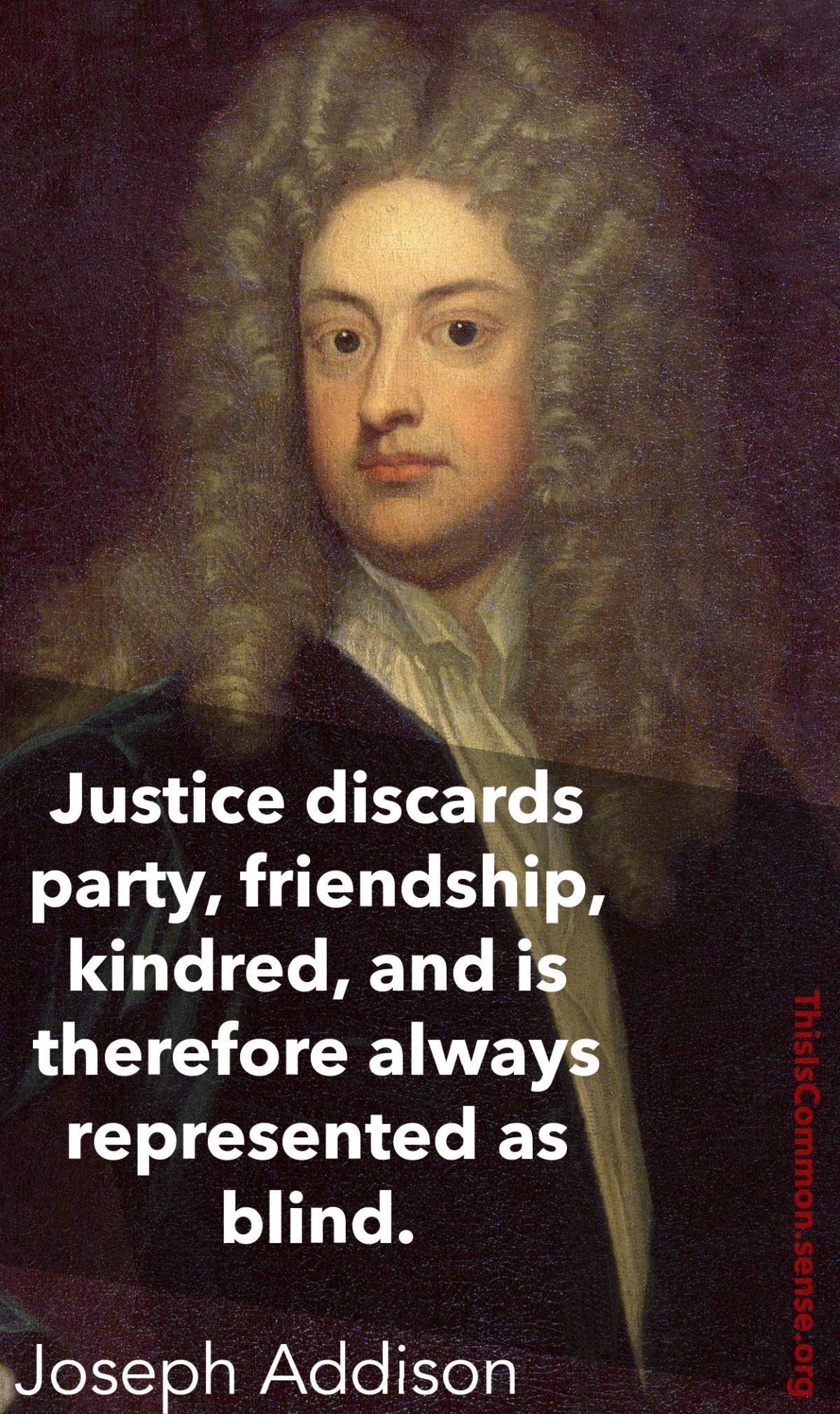
Joseph Addison

Justice discards party, friendship, kindred, and is therefore always represented as blind.

Joseph Addison, The Guardian (1713), no. 99.
Categories
Today

Reagan and Goldwater

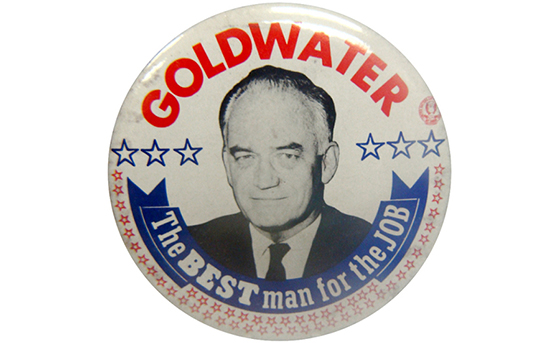
On October 27, 1964, Ronald Reagan delivered a speech on behalf of Republican candidate for president, Barry Goldwater, thereby launching Reagan’s political career. The speech came to be known as “A Time for Choosing.”

Categories
Today

Times for Choosing

On October 27, 1964, Ronald Reagan delivered a speech on behalf of Republican candidate for the United States Presidency, Barry Goldwater, thereby launching Reagan’s political career. The speech came to be known as “A Time for Choosing.”

Two years earlier, Vasili Arkhipov, a flotilla commander present on the Soviet Foxtrot-class submarine B-59 in the Caribbean sea, defied the sub’s captain, Valentin Savitsky, to launch a nuclear device. The captain had come to the conclusion that war had started while the submarine had been submerged. He had inferred this from the depth charges that American ships had deployed in order to force the submarine to the surface during the Cuban Missile Crisis. Captain Savitsky, seeking the necessary approval of two others on board, political officer Ivan Masslenikov and the flotilla commander Vasili Arkhipov, to launch a nuclear torpedo.

Masslenikov agreed. Arkhipov refused.

The date was October 27, 1962, and World War III was prevented by this one man, Arkhipov, who held his ground while facing the increasing anger of the submarine commander, refusing to approve a nuclear torpedo launch that would most almost certainly have triggered a conflict that would have doomed civilization, perhaps most or all of humanity.

That, we can now agree, was a “time for choosing” when the correct choice was made.

Categories
Today

Continental Congress

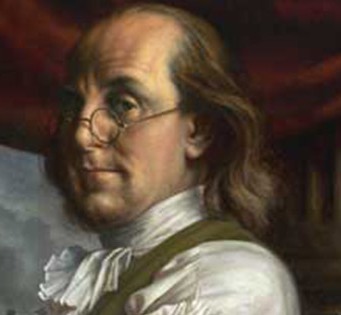
On October 26, 1774, the first Continental Congress adjourned in Philadelphia, Pennsylvania. Exactly one year later, King George III of Great Britain went before Parliament to declare the American colonies in rebellion. And one year later yet, to the day, in 1776, septuagenerian Benjamin Franklin (pictured, above) departed from America for France, seeking financial support for the American Revolution.

Categories
Thought

Herbert Spencer

Every cause produces more than one effect.

Categories
Today

Max Stirner

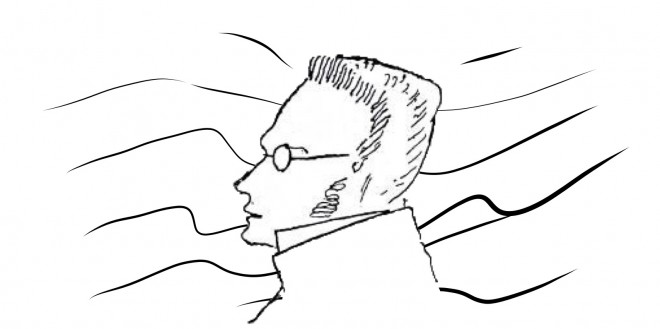
On October 25, 1806, the German philosopher Max Stirner was born. Stirner was known for his radical individualism, which under the name of “egoism” became culturally chic in the late 19th and early 20th centuries. In addition to Der Einzige und sein Eigentum, a major work that was famously attacked by Karl Marx, he translated into German Adam Smith’s Wealth of Nations from its original English and J.-B. Say’s A Treatise on Political Economy from its original French.

Categories
Today

Thirty Years’ End

On October 24, 1648, the Peace of Westphalia was signed, marking the end of the Thirty Years’ War.

Categories
Today

Uprising(s)

On October 23, 1850, the first National Women’s Rights Convention began in Worcester, Massachusetts.

On the same October date 106 years later, thousands of Hungarians rose up against Soviet rule.

Categories
too much government

For a New Normalcy

Science writer Ronald Bailey argues that the best path to “a New Normal” can be found by rolling out home COVID-19 tests. But notes they are illegal.

Bailey’s November piece in Reason magazine informs us that “biotech startup E25Bio, diagnostics maker OraSure, and the 3M Co., are working on and could quickly deploy rapid at-home COVID-19 diagnostic tests.”

These tests work, he says, “by detecting, within minutes, the presence of coronavirus proteins using specific antibodies embedded on a paper test strip coated with nasal swab samples or saliva. Somewhat like at-home pregnancy tests, the antigen tests change color or reveal lines if COVID-19 proteins are recognized.”

So why not go ahead with these antigen tests? Well, the Food and Drug Administration doesn’t allow it. Bailey quotes a Harvard epidemiologist: “Until the regulatory landscape changes, those companies have no reason to bring a product to market.”

Regulatory blocking and kludge are just one reason this is not possible.

But if you — or for that matter, Mr. Bailey — think that this problem can just be solved with a Trumpian executive order or a quick legislative fix, there are reasons for doubt.

Our whole system is government-rigged. And, as Ludwig von Mises made clear in Bureaucracy, clunky slowness is not just a bug of such systems. It’s the feature

And it’s a bad feature. 

It’s why many of us oppose regulation by bureaucracy and prefer a rule of law and competition within markets to supply the regulation that businesses need.

Which suggests to me that the best way back to normalcy is not through a quick government fix but by nixing government fixes more broadly.

This is Common Sense. I’m Paul Jacob.


PDF for printing

Photo by Marco Verch

See all recent commentary
(simplified and organized)
See recent popular posts