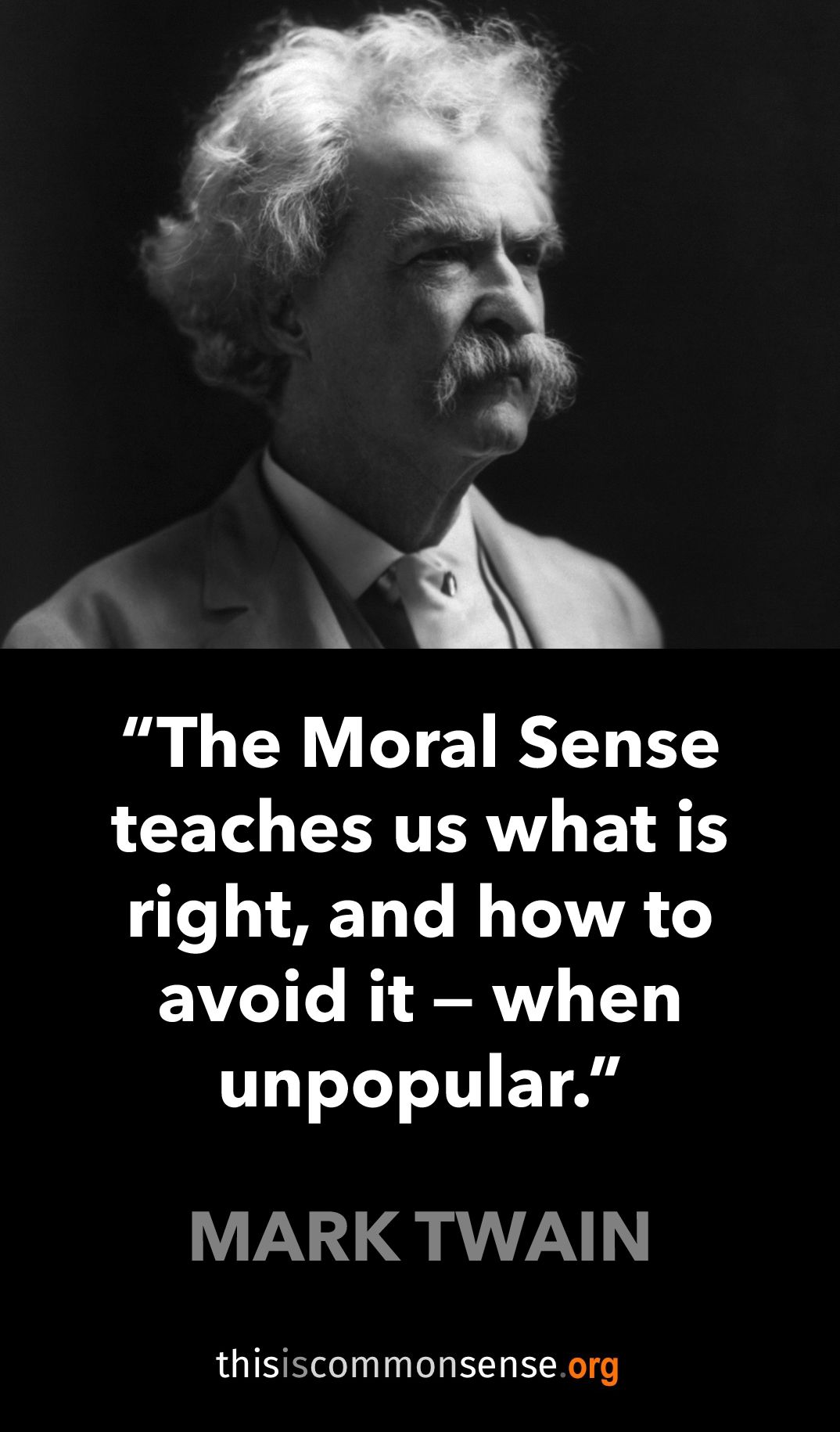
The Moral Sense teaches us what is right, and how to avoid it — when unpopular.
Mark Twain, “The United States of Lyncherdom” (1901), first printed in Albert Bigelow Paine, ed., Europe and Elsewhere (1914).
Mark Twain
The Moral Sense teaches us what is right, and how to avoid it — when unpopular.
Mark Twain, “The United States of Lyncherdom” (1901), first printed in Albert Bigelow Paine, ed., Europe and Elsewhere (1914).
On December 28, 1797, Thomas Paine was arrested in France for treason, after being tried in absentia on December 26 and convicted. Before moving to France, Paine had been an instrumental figure in the American Revolution as the author of Common Sense. Paine then moved to Paris to become involved with the French Revolution, but the chaotic political climate turned against him. Paine had not earned friends in the Revolution with his vocal opposition to capital punishment.
“During the whole of my imprisonment,” Paine later wrote, “prior to the fall of Robespierre, there was no time when I could think my life worth twenty-four hours, and my mind was made up to meet its fate. The Americans in Paris went in a body to the convention to reclaim me, but without success.”
Paine’s imprisonment in France caused a general uproar in America. Future President James Monroe used all of his diplomatic connections to get Paine released in November 1794.
With the publication of Paine’s The Age of Reason — a great part of which he wrote in French prison — the American population turned against him, and he died penniless in New York in 1809.
On this date in 1832, John C. Calhoun resigned as Vice President of the United States, the first to do so.
Nature has provided, by means as simple as they are infallible, that there should be dispersion, diffusion, coordination, simultaneous progress, all constituting a state of things that your restrictive laws paralyze as much as they can; for the tendency of such laws is, by isolating communities, to render the diversity of condition much more marked, to prevent equalization, hinder integration, neutralize countervailing circumstances, and segregate nations, whether in their superiority or in their inferiority of condition.
Frédéric Bastiat, from Economic Sophisms, “To Equalize the Conditions of Production” — the “such laws” mentioned are protectionist measures, and protectionism was the chief target of Bastiat’s famous book.
Paul Jacob covers the big stories of the week, starting on such a happy note, plunging through rough waters, and ending on a note of hope. Don’t believe us? Give him a listen:
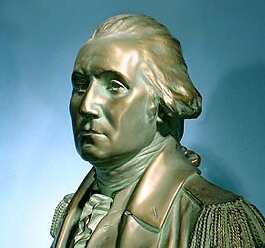
December 26, 1799 – Henry Lee III’s eulogy to George Washington in Congress declared him “first in war, first in peace and first in the hearts of his countrymen.”
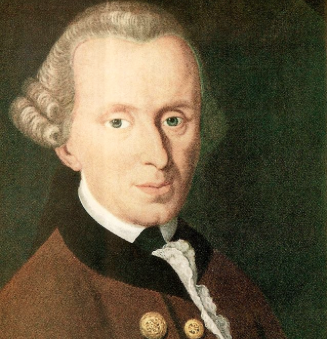
Human freedom is realised in the adoption of humanity as an end in itself, for the one thing that no-one can be compelled to do by another is to adopt a particular end.
Immanuel Kant, Metaphysics of Morals (1797), Part Two: “Metaphysics of Virtue.”
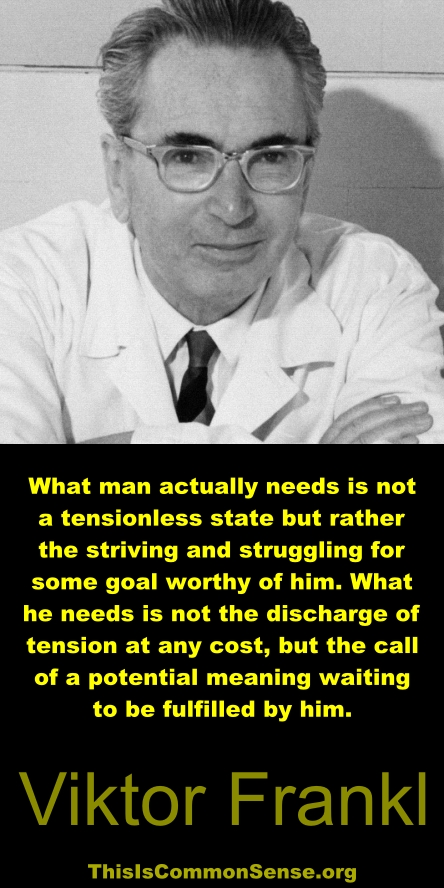
What man actually needs is not a tensionless state but rather the striving and struggling for some goal worthy of him. What he needs is not the discharge of tension at any cost, but the call of a potential meaning waiting to be fulfilled by him.
Viktor Frankl, Man’s Search for Meaning (1946; 1959; 1984).
November 25, 1975, Suriname gained independence from the Netherlands.
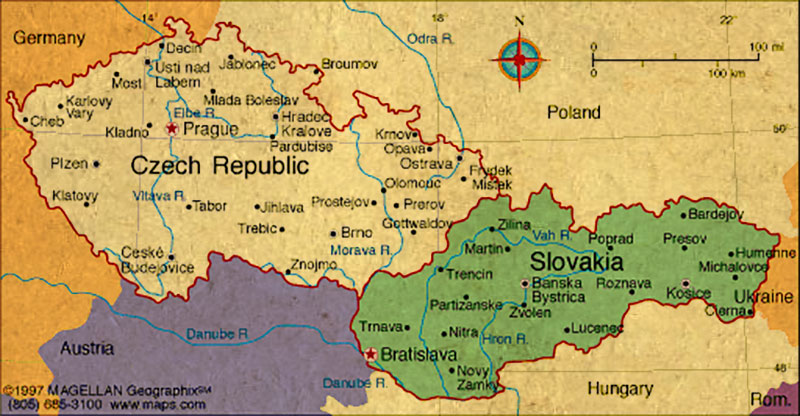
On the same month and date 17 years later, the Federal Assembly of Czechoslovakia voted to split the country into the Czech Republic and Slovakia (officially disjoined as of January 1, 1993). This split has been called “The Velvet Divorce” (following, in style and method, “The Velvet Revolution”).
They don’t read.
No one reads the legislation Congress passes, not the staffers and lobbyists who write “the packages” and congresspeople least of all, as again illustrated by the recent 5,593-page, $2.3 trillion pandemic-relief-plus-kitchen-sink bill just passed by Congress.
They haven’t for decades.
Nor do they care to.
James Bovard, expert reporter on the excesses of the modern individual-stomping state, says the new monster-bill “is another warning that know-nothing, no-fault legislating will be the death of our republic unless Americans can severely reduce Congress’s prerogative to meddle in their lives.”
Correct. Problem is, it’s Congress that must enact reform — on itself. Talk about a conflict of interest! That’s why the citizen initiative process has been so important at the state level. Without democratic checks — initiative, referendum, recall — at the federal level, what major reform is even possible?
All big, necessary reforms hit a roadblock on that issue alone.
That goes for limiting the page-length of bills or requiring legislation be posted online for days if not weeks before a vote.
Same for congressional term limits, which would de-insulate Congress from us.
And, just so, with the late columnist Bob Novak’s proposal of smaller districts, maybe increasing the number of U.S. representative to 2,000. (It wouldn’t cost taxpayers anything more if we cut their pay.) More politicians might be better than fewer by decreasing the power of individual politicians — diminishing marginal power, you might say.
We find ourselves in a trap. These ideas amount to ways to avoid the trap once we are out of it.
But it is getting out of the trap that’s the hard part.
Any ideas? Please advise. You can be sure your good ideas will be read — not by Congress, of course, but by those of us who want a way out.
This is Common Sense. I’m Paul Jacob.
See all recent commentary
(simplified and organized)
See recent popular posts