Categories
Today

American Crises

On December 19, 1776, Tom Paine published one of a series of pamphlets in the Pennsylvania Journal titled The American Crisis. Exactly one year later, George Washington’s Continental Army went into winter quarters at Valley Forge, Pennsylvania.

On December 19, 1828, Vice President of the United States John C. Calhoun penned the South Carolina Exposition and Protest, protesting the Tariff of 1828, a key moment in what became known as the Nullification Crisis.

Categories
Thought

George Washington

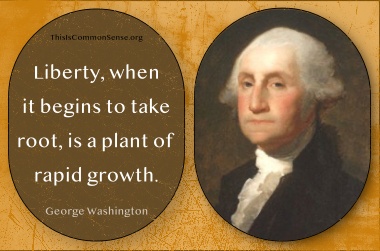
Liberty, when it begins to take root, is a plant of rapid growth.

George Washington, in a letter to James Madison (March 2, 1488).
Categories
Today

The Convention Parliament

On December 16, 1689, England’s Convention Parliament began, not only transferring power from one king to another, but establishing procedures and rights.

Categories
ideological culture judiciary national politics & policies U.S. Constitution

Packing Unpacked

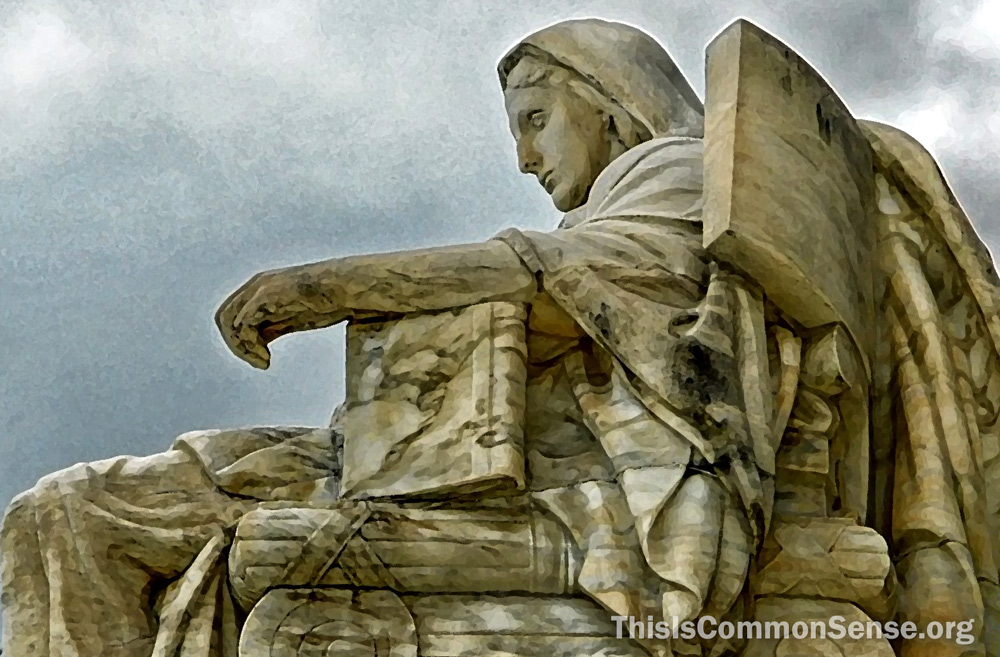
The “court packing” notion that progressives itch to implement has obvious flaws — which have been addressed (but not settled) in the recent report of the Presidential Commission on the Supreme Court of the United States, initiated by the Biden Administration last April

The report, just out, did not give progressives what they want. “Opponents contend that expanding — or ‘packing’ — the Court would significantly diminish its independence and legitimacy and establish a dangerous precedent that could be used by any future political force as a means of pressuring or intimidating the Court. The Commission takes no position on the validity or strength of these claims.” 

Not a few Democrats wanted the Commission to take a very negative position on those claims. Democrats currently maintain a shaky hold on power in the Legislative and Executive branches. Had the Commission given them the green-light to push progressives onto the Court — to overwhelm the current “conservative” majority — they might have consolidated power.

The report is inconvenient for that political move — as is Associate Justice Stephen Breyer’s opposition. Damon Root, at Reason, summarizes Breyer’s case: “It is a tit-for-tat race to the bottom. One party expands the size of the bench for nakedly partisan purposes, so the other party does the same (or worse) as soon as it gets the chance.” Breyer fears that court-packing would undermine Court authority, and liberalism itself would suffer.

By “liberalism” I take Breyer to mean the order that is defined by the Constitution itself: separation of powers, basic rights, citizen control of government. And there is a way to save this kind of “liberalism”: fix the size of the Supreme Court in the Constitution.

The very opposite of court packing.

This is Common Sense. I’m Paul Jacob.


PDF for printing

See all recent commentary
(simplified and organized)
See recent popular posts
Categories
Today

A King Resigned

On December 14, 1918, Friedrich Karl von Hessen, a German prince elected by the Parliament of Finland to become King Väinö I, renounced the Finnish throne.

In 1939, on this date, the Soviet Union was expelled from the League of Nations for invading Finland and starting the Winter War.


On December 14, 1819, Alabama became the 22nd state of these United States.

Categories
Today

Jurors, Twelve

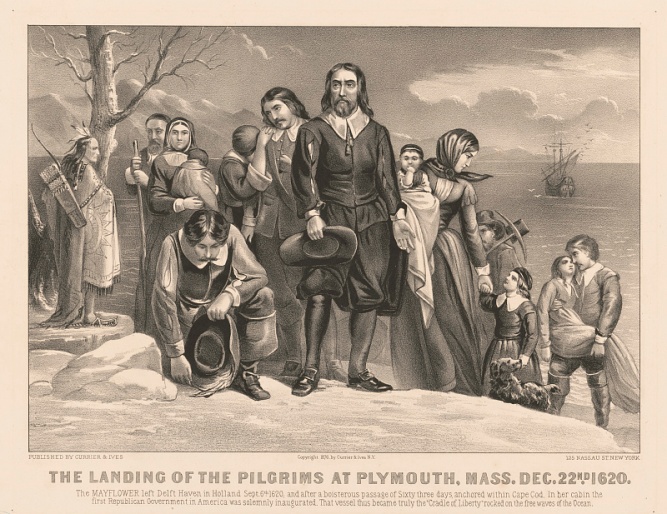
On December 13, 1623, Plymouth colonist established the system of trial by 12-men jury.

Categories
ideological culture national politics & policies

Commie Beyond the Pale

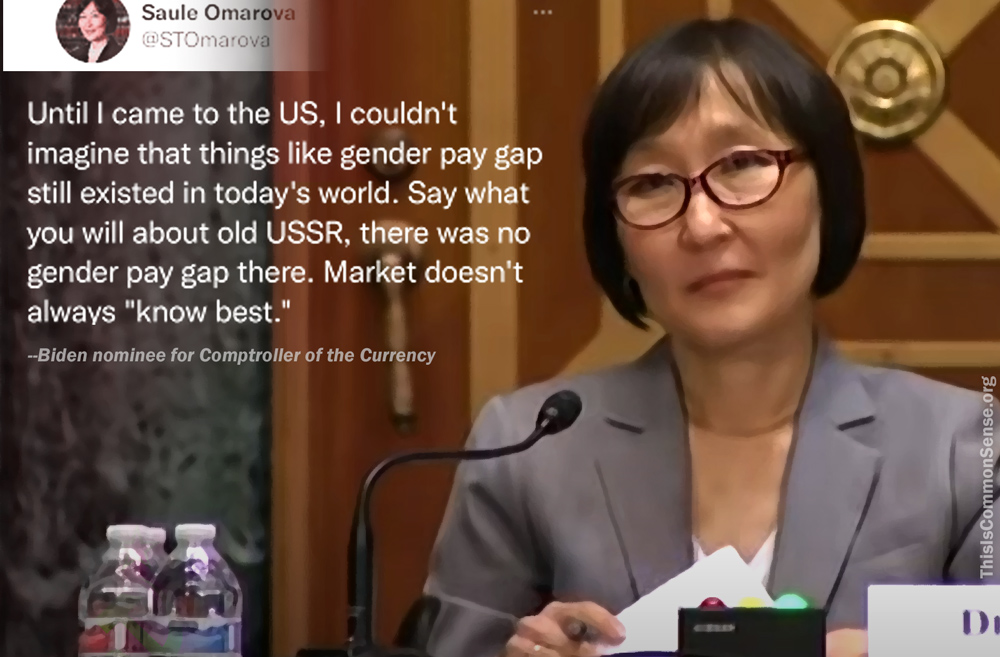
President Biden has a funny way of admitting that his nominee for Comptroller of the Currency had to withdraw for being, well, too communist. He says Saule Omarova faced “inappropriate personal attacks that were far beyond the pale.”

Is calling a communist a communist . . . personal

As for “inappropriate” . . . negative attacks against an appointee are only inapt if groundless or unrelated to prospective performance.

Ominously, Omarova’s paper on Marxism got memory-holed after she was nominated; she refused to cough it up to the Senate Banking Committee. Written back in her college days in the USSR — was that too long ago to serve as fair evidence?

Fast-forward.

An undated but recent video clip shows Omarova musing that oil companies should “go bankrupt if we want to tackle climate change.”

A 2019 Twitter tweet opines: “Say what you will about old USSR, there was no gender pay gap there. Market doesn’t always ‘know best.’”

Mass murder, mass repression — but hey, no gender pay gap!

In a 2020 paper, “The People’s Ledger,” Omarova proposed “a structural shift at the very core” of the current system. The Fed balance sheet “should be redesigned to operate as . . . the ‘People’s Ledger’: the ultimate public platform for both modulating and allocating the flow of sovereign credit and money in the national system.”

Central bank accounts would “fully replace — rather than uneasily co-exist with — private bank deposits.”

Not sure what that means, precisely? No wonder: slogging through the paper, we find vagueness — maybe even evasion. My guess: it’s all about massively increasing control over our wallets and lives.

Typical, but not just of Marxists, of the Washington elite more broadly. 

This is Common Sense. I’m Paul Jacob.


PDF for printing

See all recent commentary
(simplified and organized)
See recent popular posts
Categories
Thought

Mark Twain

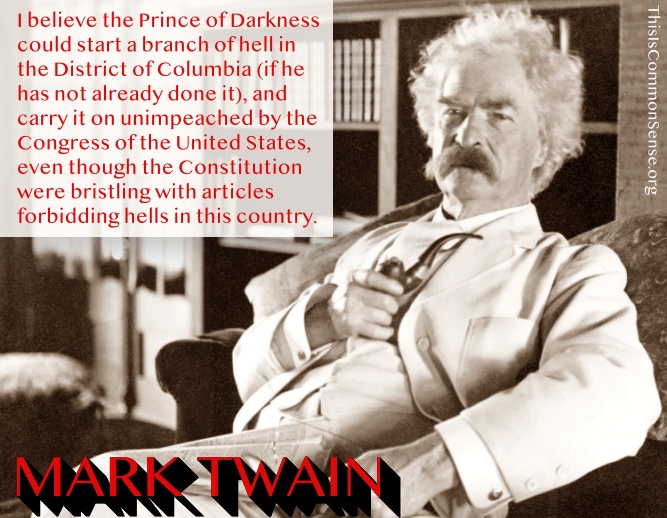
I believe the Prince of Darkness could start a branch of hell in the District of Columbia (if he has not already done it), and carry it on unimpeached by the Congress of the United States, even though the Constitution were bristling with articles forbidding hells in this country.

Mark Twain, Territorial Enterprise, April 7, 1868.

Categories
media and media people

Black & White & NPR

The NPR headline mentioned race: “3 white men are found guilty of murder in the killing of Ahmaud Arbery.”

Before the verdict, I had mentioned the case on my This Week in Common Sense podcast, expecting and supportive of that ultimate outcome. So I left it at that.

But Sean Malone, the brilliant videographer, had something to say about that headline: “Dear NPR: You don’t need to put race in every headline. Please stop. Alternatively, if you’re hell-bent on doing this, then do it consistently.”

Legacy news media outfits seem committed to a racial double standard, which Mr. Malone calls our attention to: “I notice that you didn’t put ‘black suspect’ in this article,” linking to “The Waukesha death toll rises to 6, and the suspect faces homicide charges.” The suspect in this horrific crime is African-American, but NPR doesn’t give that fact banner billing in this or a separate headline on the same horrific incident.

Yet, on November 4, the title was “A nearly all-white jury will hear evidence in the Ahmaud Arbery case.”

Selective race identification is journalistic practice. 

The pattern used to be that newspapers went out of their way to identify black criminals and white victims, but not vice-versa. Now it seems to be the reverse.

Are NPR and other outfits deliberately fanning the flames of racism, with a constant stream of implied and sometimes explicit ‘Hate Whitey’ themes? 

Relentlessly focusing on race as the ultimate driver of our society is not likely to reduce racism but to encourage it. 

To the detriment of individuals of all races.

This is Common Sense. I’m Paul Jacob.


PDF for printing

See all recent commentary
(simplified and organized)
See recent popular posts
Categories
by Paul Jacob video

Watch: Totalitarianism, Stoicism, Chinazism

Paul Jacob expresses gratitude for all the blessings of our time, notwithstanding China imperialism, social media censorship, and our culture of violence.

View on Rumble!