Categories
First Amendment rights ideological culture

The Anti-Free Speech Boycott

Now that The Atlantic — a once- or twice- or thrice-upon-a-time great magazine — toes a statist line relentlessly, it is most valuable for its hints at the exact opposite of the truth. 

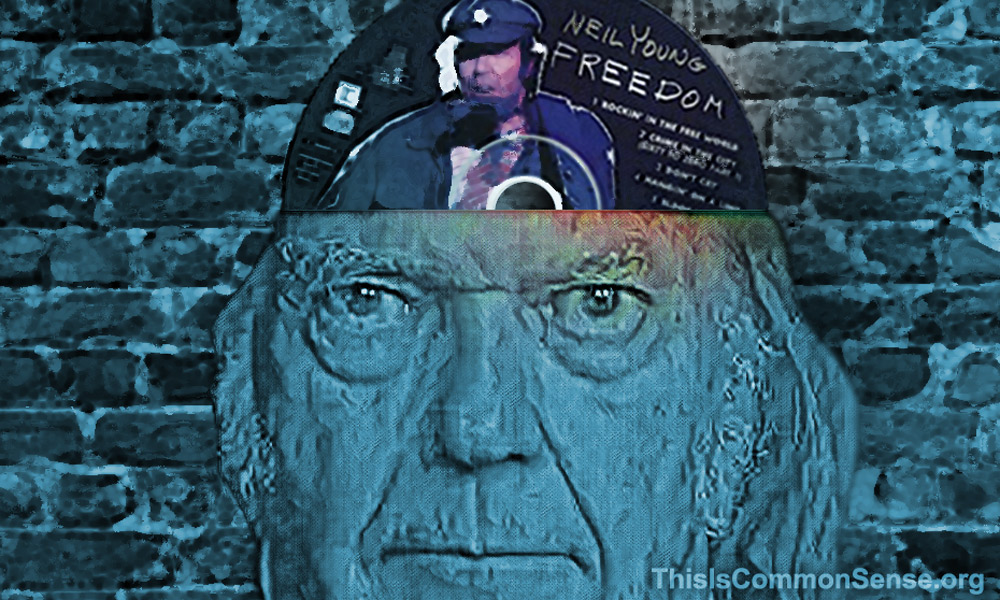
While Spencer Kornhaber’s article, “Spotify Isn’t Really About the Music Anymore,” may be mostly correct regarding the facts presented in Neil Young’s and Joni Mitchell’s boycotts of Spotify — pulling their music off the Internet platform — the whole angle is off. 

Spotify, we learn, rarely turns a profit in its long tail music biz. By making an exclusive podcasting contract with The Joe Rogan Experience, the company seeks to entice users to pay up to listen to talk-show audio, and thereby become more profitable. 

But is the service not really “about the music anymore”? 

Adding an allied genre does not negate the provision of entertainment to the core audience.

The article’s tagline gets it exactly backwards: “In choosing Joe Rogan over Neil Young, the company has made its new priorities clear to listeners.” Well, no. It was Neil Young (and then Joni Mitchell) who went the narrow, exclusionary route. Spotify had made a long-term contract with Rogan in a bid to attract listeners of podcasts and other spoken-word content. Young and Mitchell didn’t have the same kind of relationship with Spotify, so their attempt to cancel Rogan was doomed.

Unless they get other artists to do the same. Which could sink the company.

Then we would see the culture war ramp up another notch, with the artistic community segregating itself against those of differing (non-leftist*/non-statist/pro-freedom) opinions.

It’s something rich old rock-n-roller cranks can do. 

But a dangerous strategy for younger artists.

This is Common Sense. I’m Paul Jacob.


* Even leftists with differing opinions shall be shunned; back in 2020, Joe Rogan endorsed socialist Vermont Sen. Bernie Sanders for president. 

PDF for printing

See all recent commentary
(simplified and organized)
See recent popular posts
Categories
Today

Corn Law

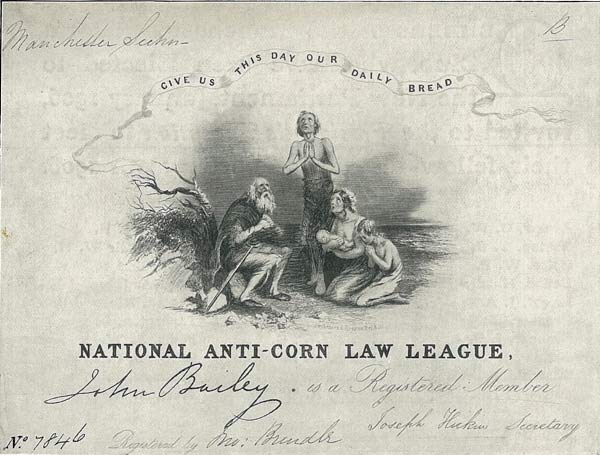
On January 31, 1849, the Corn Laws were abolished in the United Kingdom, one of the most impressive and far-reaching anti-protectionist moves of all time. “Corn” stood for all grains, including wheat, oats, barley, etc.; the free-trade agitation by John Bright and Richard Cobden was one of the main impetuses for the reform.

On Jan. 31, 1865, the United States Congress proposed the Thirteenth Amendment to the U.S. Constitution, submitting it to the states for ratification. The Amendment’s main section reads: “Neither slavery nor involuntary servitude, except as a punishment for crime whereof the party shall have been duly convicted, shall exist within the United States, or any place subject to their jurisdiction.”

On Jan. 31, 1990, the first McDonald’s fast food restaurant opened in the Soviet Union. Having once traveled to Moscow, I’m exceedingly thankful for this.

Categories
Today

Non-Violence … and Violent Reaction

On Jan. 30, 1948, Indian leader Mohandas K. Gandhi, known for his non-violent, non-cooperation struggle for freedom and national independence, was assassinated by a Hindu extremist.

On Jan. 30, 1956, Martin Luther King, Jr.’s home was bombed in retaliation for his work on the Montgomery Bus Boycott.

On Jan. 30, 1972, British soldiers killed fourteen unarmed civil rights marchers in Northern Ireland in what came to be known as “Bloody Sunday.” Soldiers shot 26 unarmed protesters and bystanders – 13 males, seven of whom were teenagers, died immediately, while another man died of his injuries nearly five months later. In the immediate aftermath, an investigation by the British Government largely cleared the soldiers and British authorities of blame. A second investigation begun in 1998, released a report in 2010 declaring that all of those shot were unarmed, and that the killings were both “unjustified and unjustifiable.”


Not quite fitting today’s “non-violence elicits violence” theme, on January 30, 1835, Richard Lawrence attempted to shoot former military leader and then-President Andrew Jackson, but failed. He was subdued by a crowd, including several congressmen. That marked the first attempt on the life of a sitting U.S. president.

Categories
Today

Gallatin

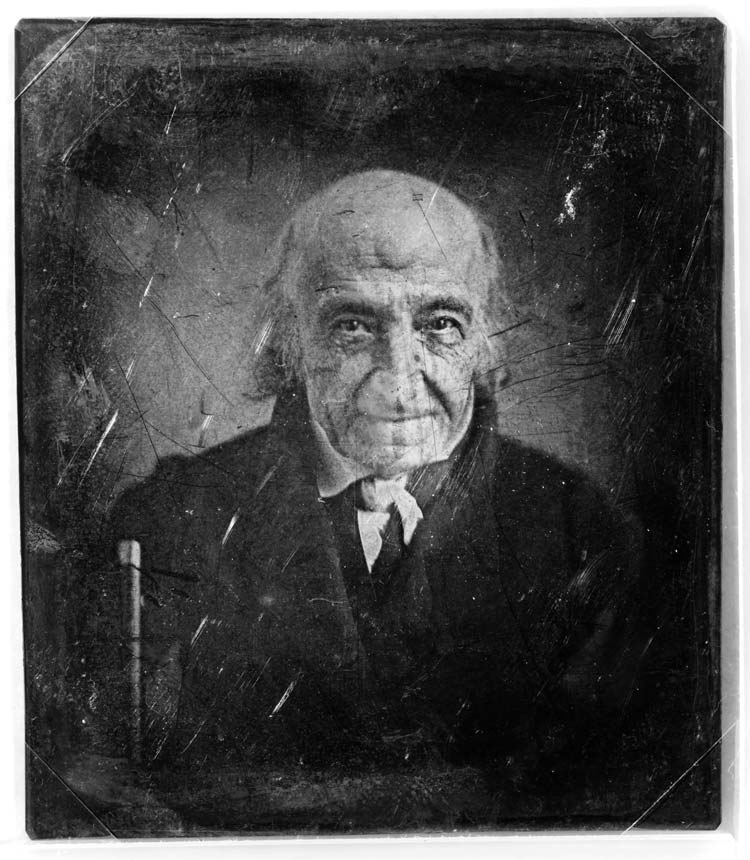
On January 29, 1761, Albert Gallatin was born. Gallatin served as the fourth United States Secretary of the Treasury — a post in which he served longer than any other in American history — advanced the anthropological and linguistic study of native Americans, and became the subject of a biography by Henry Adams. Called the “father of American ethnology,” he has been honored with a 1967 U.S. stamp as well as many place names, including the Gallatin National Forest in Montana.

Categories
Today

Boris!

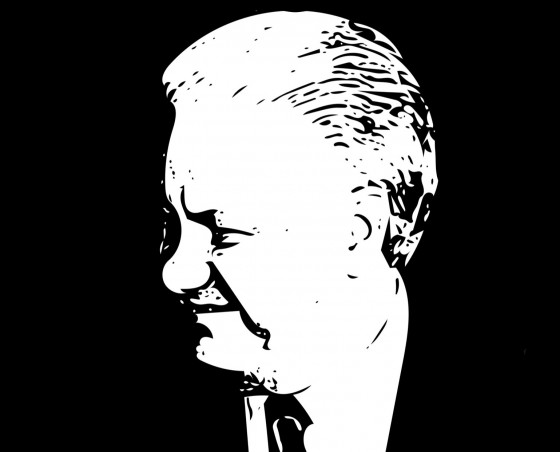
On January 26, 1992, Boris Yeltsin announced that Russia would stop targeting United States cities with nuclear weapons.

Categories
Today

Shays

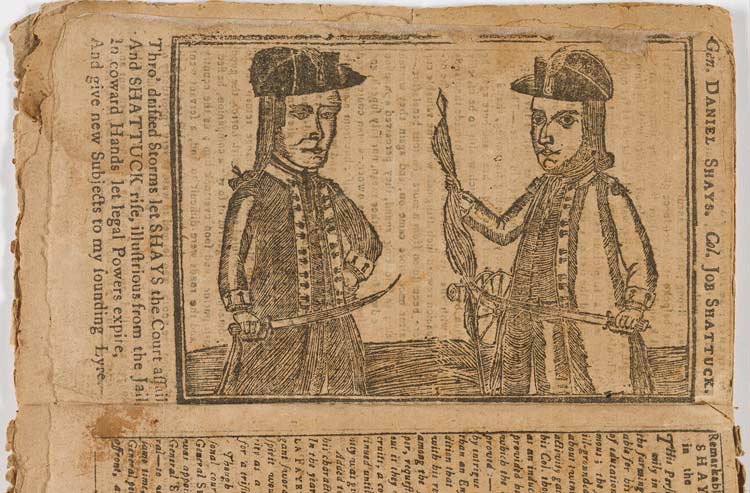
On January 25, 1787, Shays’s Rebellion experienced its largest confrontation, outside the Springfield Armory, with four of the rebels dead, 20 wounded.

The rebellion was a key moment in United States history. Daniel Shays and his followers objected to Massachussetts’s high taxes and rampant cronyism. The revolt, which was completely suppressed, led to the adoption of the U.S. Constitution and drawing George Washington from his retirement.

Categories
Today

Stendhal, Cobden & Chevalier

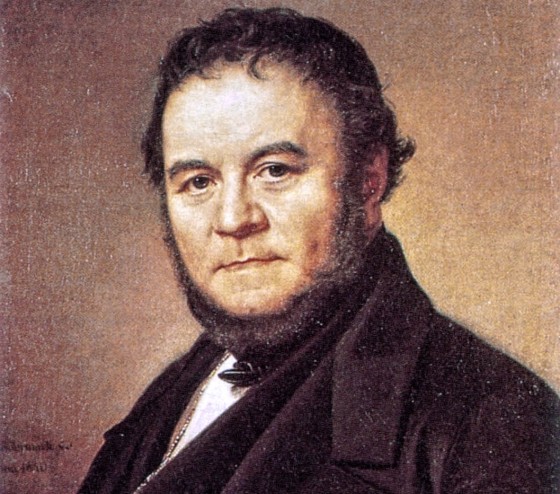
On January 23, 1783, journalist and novelist Marie-Henri Beyle, known by his pen name Stendhal (pictured above), was born. Stendhal was a follower of Destutt de Tracy and an attendant at the count’s salons. His most famous works include the novel The Red and the Black and a treatise on romantic love.

Stendhal died March 22, 1842.

On January 23, 1860, the Cobden–Chevalier Treaty was signed between France and Great Britain. The treaty was named after the two main proponents of the agreement, Richard Cobden (in England) and economist Michel Chevalier (in France). The treaty had been suggested the year earlier, in British Parliament, by Cobden’s colleague John Bright, who saw the measure as a peace measure, and an alternate to a military build-up.

Categories
Today

Kristol

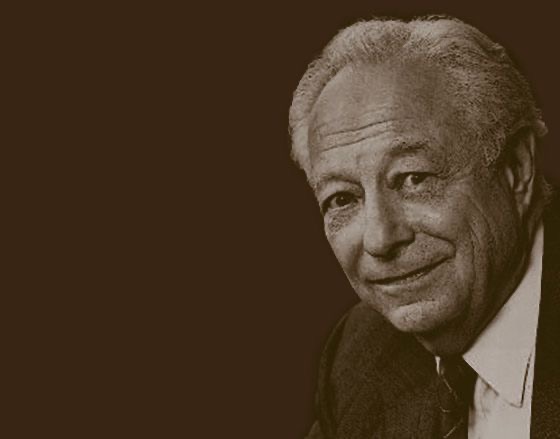
On January 22, 1920, American neoconservative pundit and author Irving Kristol was born.

Categories
Today

Witness

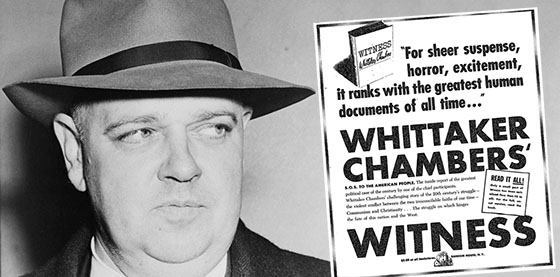
On January 21, 1950, Alger Hiss was convicted of perjury, with Whittaker Chambers being the main witness in Hiss’s prosecution. Chambers confessed to having been a Soviet spy, and accused Hiss as an accomplice, which Hiss denied to his dying day. Chambers gave a fascinating account of all this in his bestselling 1952 memoir, Witness.

Categories
Today

ACLU

On January 20, 1920, the American Civil Liberties Union was founded.