Conventionality is not morality. Self-righteousness is not religion. To attack the first is not to assail the last.
Charlotte Brontë, Jane Eyre (1949).
Categories
Charlotte Brontë
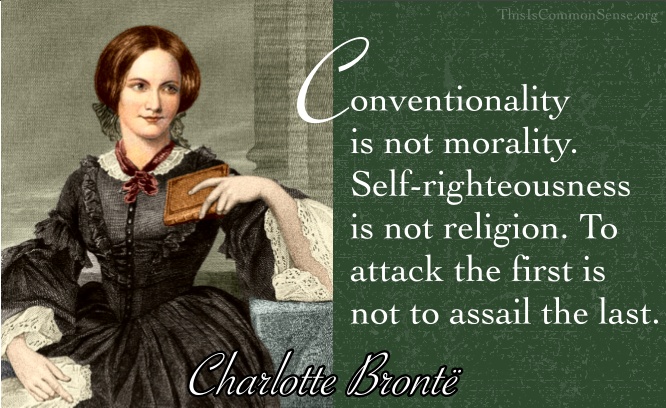
Conventionality is not morality. Self-righteousness is not religion. To attack the first is not to assail the last.
Charlotte Brontë, Jane Eyre (1949).

Self-defense often starts with your communication devices, the kind of things that Big Brother and Big Corporate Overlords tend to target. Reclaim the Net has put together a fairly comprehensive overview and explanation of ways to reduce your risk.
For example:
● Use a strong passkey.
● Turn off fingerprint unlock and face unlock.
● Be alert to phishing attempts.
● Delete unused apps and data.
● Delete photo metadata before sending or posting photos.
● Disable location services.
● Use airplane mode when preventing access to you is more important than having access yourself.
● Usea VPN to evade censorship and tracking.
● Be careful what kind of information about yourself you make public.
● Take steps to recover a confiscated or stolen device, or at least to make its data unrecoverable.
● Use anonymous accounts.
● Use encrypted text messengers.
● Switch to more privacy-conscious browsers, search engines, and ISPs.
Depending on your circumstances, some of these tips will be more relevant than others, of course. But it’s worth perusing the whole list.
Of course, to go to all this trouble, you’d have to believe that big governments and mega-corporations are trying to surveil you. As if we lived in one of those dystopian futures they talk about in scary science fiction stories.
And who could ever believe that?
Well . . .
This is Common Sense. I’m Paul Jacob.
See all recent commentary
(simplified and organized)
See recent popular posts
March 15 was “the Ides of March” in the Roman calendar. On that date in 44 BC, Julius Caesar, Dictator of the Roman Republic, was stabbed to death by a handful of prominent senators.
On the same date in 1783, General George Washington eloquently entreated his officers not to support the Newburgh Conspiracy. His plea was successful: the threatened coup d’état never took place.

On March 14, 1900, the Gold Standard Act was ratified, ending the long practice of bimetallism by placing the United States Treasury — and banking and currency — on the gold standard.

It is not as if they are saying that. But . . . Paul Jacob explains how to avoid World War III:
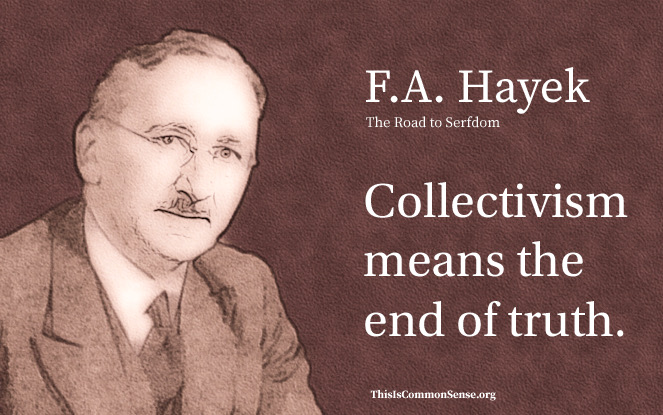
Collectivism means the end of truth. To make a totalitarian system function efficiently, it is not enough that everybody should be forced to work for the ends selected by those in control; it is essential that the people should come to regard these ends as their own. This is brought about by propaganda and by complete control of all sources of information.
Friedrich A. Hayek, “The Road to Serfdom: A Condensation from the Book,” Reader’s Digest (April 1945), p. 11.
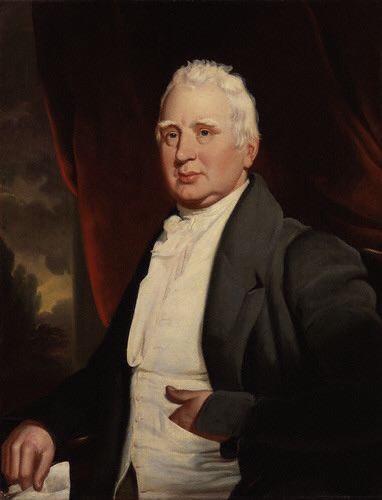
March 9 marks the 1763 birthday of British pamphleteer and activist William Cobbett. Cobbett was known for his lifelong opposition to authority, and his later-in-life “radicalism,” which included his opposition to Britain’s protectionist Corn Laws as well as his support for Catholic Emancipation. Cobbett died in 1835.
In 1776 on this date, Scottish philosopher Adam Smith published An Inquiry into the Nature and Causes of the Wealth of Nations, which became the first widely accepted landmark work in the field of economics. It was not the first general treatise on the subject, however; that designation almost certainly belongs to banker Richard Cantillon’s Essai sur la Nature du Commerce en Général, cited by Smith in his more famous book. It is also worth noting that Étienne Bonnot de Condillac’s systematic treatise, Le Commerce et le Gouvernement, also saw publication in 1776.
On March 9, 1862, the USS Monitor and CSS Virginia fought to a draw in the Battle of Hampton Roads, the first battle between two ironclad warships. The Virginia was built on the remains of the USS Merrimack, and the battle is often referred to as between “the Monitor and the Merrimack.”
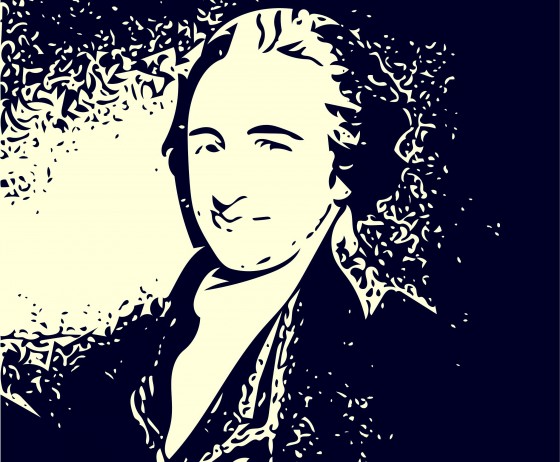
On March 8, 1775, “African Slavery In America,” often described as the first known essay advocating the abolition of slavery in America, was published anonymously in the Pennsylvania Journal and the Weekly Advertiser. Thomas Paine (pictured) is believed to be the essay’s author.
The first anti-slavery society was formed in Philadelphia weeks after publication, and Paine was a founding member.
Exactly 120 years earlier, a court in Northampton County of the Virginia Colony ruled that John Casor, then working as an indentured servant to Robert Palmer, must be returned to Anthony Johnson as Johnson’s “lawful” slave for life. Johnson himself was one of the original indentured servants brought to Jamestown, had completed his indenture to become a “free Negro,” and became the first African landowner in the colony. The case marked the first person of African descent to be legally recognized as a lifelong slave in England’s North American colonies. In summary: the first official chattel slave in English-speaking North America was of African descent was owned by a man also of African descent.

On February 27, 1830, American economist and free trade advocate Arthur Latham Perry was born.
The Twenty-second Amendment (Amendment XXII) of the United States Constitution, which sets a term limit for election and overall time of service to the office of President of the United States, was ratified by the requisite 36 of the then-48 states of the union on February 27, 1951.
Congress had passed the amendment on March 21, 1947.

Paul Jacob is on the road, so this week he speaks from . . . the past! The year 2019, to be exact, and from Taiwan, to be geographical about it: