Categories
ballot access initiative, referendum, and recall international affairs

A Deafening Disquiet

“We are living in a world of disquiet,” offers U.N. Secretary-General António Guterres at the beginning of a one-minute video now running on social digital platforms in the U.S. and worldwide.

The advertisement shows political strife in Hong Kong and Sri Lanka. It is the opening salvo in a campaign called “Stop Fighting Start Voting,” launched by Citizens in Charge Foundation today with support from direct democracy experts and organizations across the globe — researchers, advocates, NGOs, and academics. 

As scenes from the Hong Kong protests unfold, a woman tells a newscaster that China’s new “national security law” will “take away our freedoms . . . our rule of law.” The spot then pivots to Sri Lanka, lamenting “possible war crimes” and noting that a U.N. panel found “40,000 Tamil civilians were killed” at the end of the country’s civil war a little more than a decade ago.

“We hope to have the right to vote,” a Tamil says as the video ends.

The Stop Fighting Start Voting campaign seeks to increase awareness of unresolved conflicts, such as the struggle for basic democracy in Hong Kong or concerning a referendum for the establishment of a separate Tamil homeland in Sri Lanka. We do not advocate for or against the underlying issues in these often bitter disputes, but advance the use of direct democracy, voters weighing in through ballot referendums conducted under accepted international norms and procedures, to achieve a peaceful resolution.

Self-determination takes a lot of determination. So does the establishment of basic democracy with human rights. That’s why non-governmental organizations and concerned citizens must step up. 

Don’t leave the future of freedom and democracy in this world to governments alone.

This is Common Sense. I’m Paul Jacob.


PDF for printing

See all recent commentary
(simplified and organized)
See recent popular posts

Categories
Today

Tenth State to ratify Constitution

Virginia became the tenth state to ratify the U.S. Constitution, on June 25, 1788. Other events on the 25th of June include Custer dying at the Battle of Little Bighorn (1876); Igor Stravinsky’s ballet The Firebird debuting (1910), with the composer becoming an instant celebrity; and Civil War veterans began arriving at the Great Reunion of 1913 at Gettysburg.

Categories
media and media people national politics & policies

Q & A & Q & A

Trevor Noah, interviewing presidential candidate Joe Biden a while back, had a juicy question near the end of his “Daily Social Distancing Show” with the Democrat pol. “Have you ever considered what would happen if the election result came out as you being the winner and Trump refused to leave?”

“Yes I have,” Biden confidently stated.

Then there is an obvious cut, and the video switches from side-by-side video-chat panels to the comedian in a Picture-in-Picture box with a full-screen Biden saying all the sudden:

And I was so damned proud. Here you have four chiefs of staff coming out and ripping the skin off of Trump. You have so many rank-and-file military personnel saying ‘whoa, we’re not a military state, this is not who we are.’ I promise you — I am absolutely convinced — that they will escort him from the White House with great dispatch.

This is hacky. Not stand-up comedian hacky — political hacky.  

Its function is transparent, being primarily a self-programing technique, which — in recent times — partisans use to convince themselves that their enemies, in this case the Evil Republicans, will stoop to anything

Allowing them to stoop to anything.

The crowning case of this idiocy came in 2016, when Democrats worked themselves into a frenzy over Trump’s flip answer to the debate question whether he would ‘absolutely accept the results of this election.’ 

Hillary Clinton grinned triumphantly when Trump gave his non-canned, iffily defiant response. Very Trumpian. 

But after Election Day, Clinton’s followers spent months and then years not accepting the results of the election. 

Clinton’s lingering Cheshire Cat smile rebukes her party.

And persistent questions like Trevor Noah’s.

This is Common Sense. I’m Paul Jacob.


PDF for printing

See all recent commentary
(simplified and organized)
See recent popular posts

Categories
Thought

Aldous Huxley

Happiness is not achieved by the conscious pursuit of happiness; it is generally the by-product of other activities.

Aldous Huxley, “Distractions I” (essay) in Vedanta for the Western World (1945), Christopher Isherwood, editor.
Categories
Today

Bitter Bierce

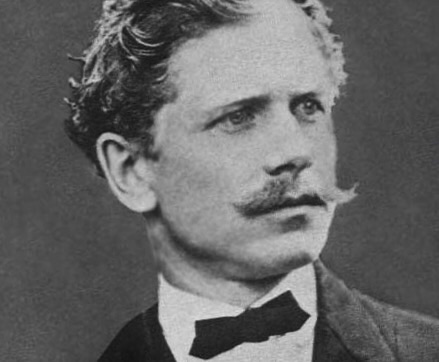
June 24 birthdays include Henry Ward Beecher, clergyman and reformer (1813); Ambrose Bierce [pictured], author of “An Occurrence at Owl Creek Bridge” and The Devil’s Dictionary — his dark, cynical wit earned him the epithet “Bitter Bierce” (1842); Karin Pilsäter, Swedish politician of the Liberal People’s Party (1960).

Categories
ideological culture initiative, referendum, and recall

Erecting Democracy

Though I opposed the 2003 U.S. invasion of Iraq, I was not at all offended when an Iraqi mob toppled the statue of Saddam Hussein. 

I liked it. That statue was a symbol of oppression.

In my mind, at least. 

I guess that’s the rub, eh? A symbol of oppression to one person might be an important piece of history to another.

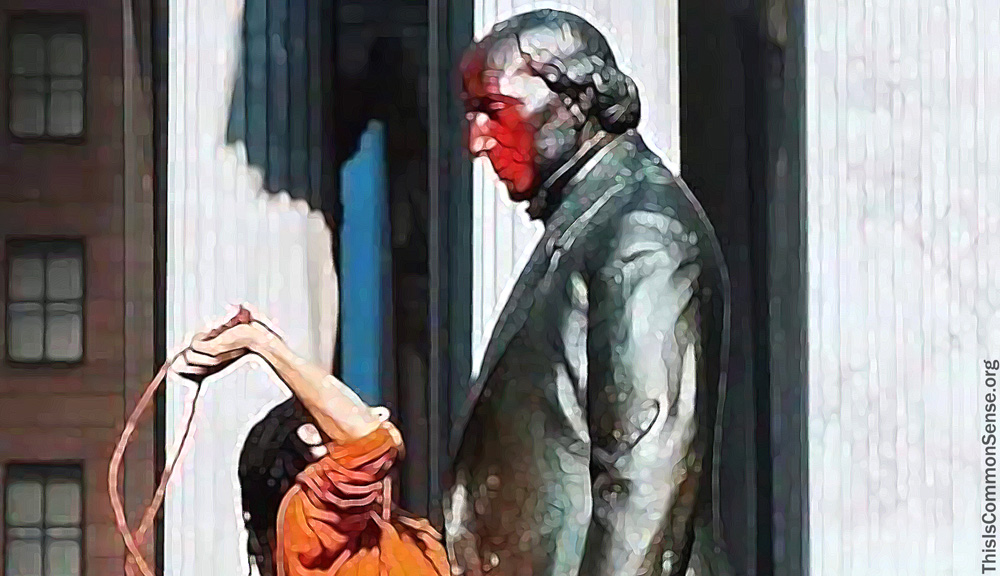
Here in the good ole USA, we now have our own variant of statue roulette going on, of course. And I wonder: Can we not find a better way to decide public policy regarding statue removal than today’s status quo of leaving it up to roaming, violent mobs? Iconoclastic crowds that, we can see, have some trouble coherently identifying the enemy symbols they seek to vandalize.*

“[T]he choice in 2020 is very simple,” offers President Trump. “Do you want to bow before the left-wing mob or do you want to stand up tall and proud as Americans?”

Actually, cancel those calisthenics.

Let’s vote on the issue. 

Either lawmakers or citizens should initiate ballot measures, city by city, state by state, asking voters to choose: keep or remove said statute(s).

The advantages?

  • A more fair and democratic approach, for starters. 
  • Less public policy decision-making by mobs.
  • No one else need be critically injured from faulty statue-removal efforts.

Perhaps most important of all, a real discussion and debate can take place.

Where all sides can be heard. 

Whatever decisions get made regarding any given monument, we would at least better understand each other.

Let’s stop fighting and start voting.

This is Common Sense. I’m Paul Jacob.


* Monuments to famous abolitionists, Matthias Baldwin and John Greenleaf Whittier, as well as a memorial to fallen Union soldiers, who gave their “last full measure of devotion” to end slavery, have been defaced or destroyed. “The irony of vandalizing a monument to those who died to end slavery,” said a Friends of Matthias Baldwin Park member, “is lost on the morons who don’t know their history.” 

PDF for printing

See all recent commentary
(simplified and organized)
See recent popular posts
Categories
Thought

Kong Fu Zi

“If names be not correct, language is not in accordance with the truth of things.”

The beginning of wisdom is to call things by their proper names.

The popular paraphrase of the maxim, above, from The Analects of Master Kong (Kong Fu Zi, or “Confucius”), Chapter XIII, with one grammatical emendation. (The common saying has, inexplicably, the final word in singular form.)

Categories
Today

Victory Day

Today is Estonia’s Victory Day, which has been celebrated on June 23 every year since 1934. The date recalls the victory in the 1919 Battle of Vonnu of the Estonian military forces (and Latvian North brigade) and their allies over German forces (Baltische Landeswehr) who sought to re-assert Baltic-German control over the region. The battle was part of the 1918-1920 Estonian War of Independence, where the main adversary of the newly independent Estonia was Communist Russia.

Today, Victory Day also marks the contributions of all Estonians in their fight to regain and retain their independence. Estonian celebration of June 23 is ceremonially tied to the following Midsummer Day celebrations on June 24.

According to Estonian laws, the state flags are not to be lowered during the night between days.

Categories
general freedom ideological culture

Twitter Gulag?

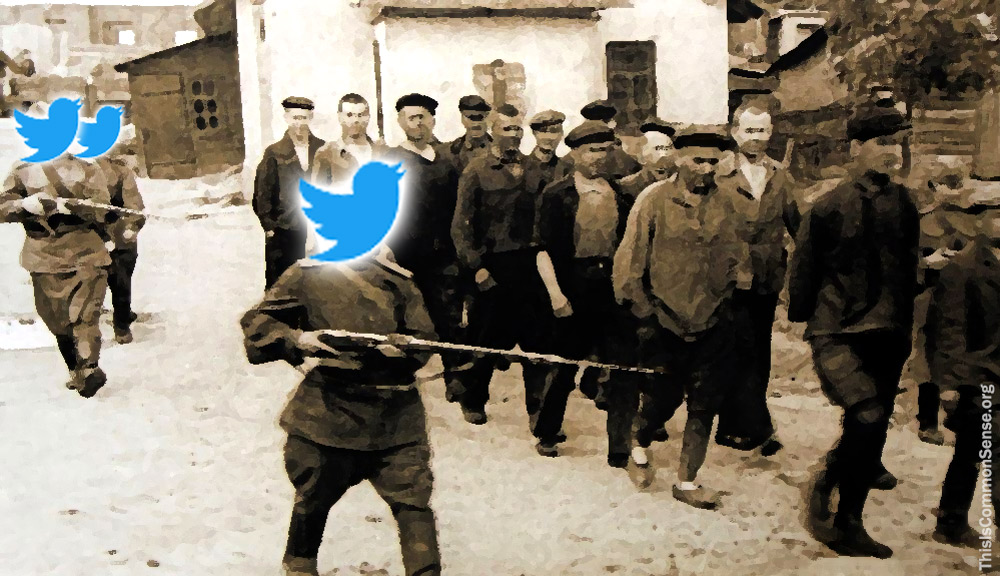
An old Soviet-phrase — “ne chital, no osuzhdayu” (“didn’t read, but disapprove”) — seems as apt now as ever. Why? Because Americans today have revived the “Soviet mentality,” according to Izabella Tabarovsky, writing at Tablet

Ms. Tabarovsky, a researcher with the Kennan Institute at the Wilson Center, explains that “[c]ollective demonizations of prominent cultural figures were an integral part of the Soviet culture of denunciation that pervaded every workplace and apartment building.”

Jobs lost, careers ruined, people socially disgraced — for “social media gaffes or old teenage behavior” — this is not just a Soviet mania, for Twitter mobs are on the rampage against those they deem “to be deplorable and unforgivable.” 

The difference between current mobbing and Soviet experience, though, is stark: the government does not seem to be in charge, and there are no real gulags to be sent to — as of yet.

Today’s mobbing behavior, on and off Twitter, appears spontaneous and “systemic,” not organizational — more Crucible-like than 1984-ish. 

Nevertheless, this is dangerous stuff. “The practice of collective condemnation feels like an assertion of a culture that ultimately tramples on the individual and creates an oppressive society,” Tabarovsky concludes, insisting that “the failure of institutions and individuals to stand up to mob rule is no longer an option we can afford.”

She’s right. Twitter-mobbing may be ugly, but it is more than that: it is obviously backed by force — witness the current riots; look at the policy agendas of the “politically correct” — and, unless stopped culturally it will have to be stopped in the realm of (ugh) politics and government.

This is Common Sense. I’m Paul Jacob.


PDF for printing

See all recent commentary
(simplified and organized)
See recent popular posts
Categories
Thought

Jane Austen

Vanity and pride are different things, though the words are often used synonymously. A person may be proud without being vain. Pride relates more to our opinion of ourselves, vanity to what we would have others think of us.

Mary, in Pride and Prejudice (1813), Ch. 5.