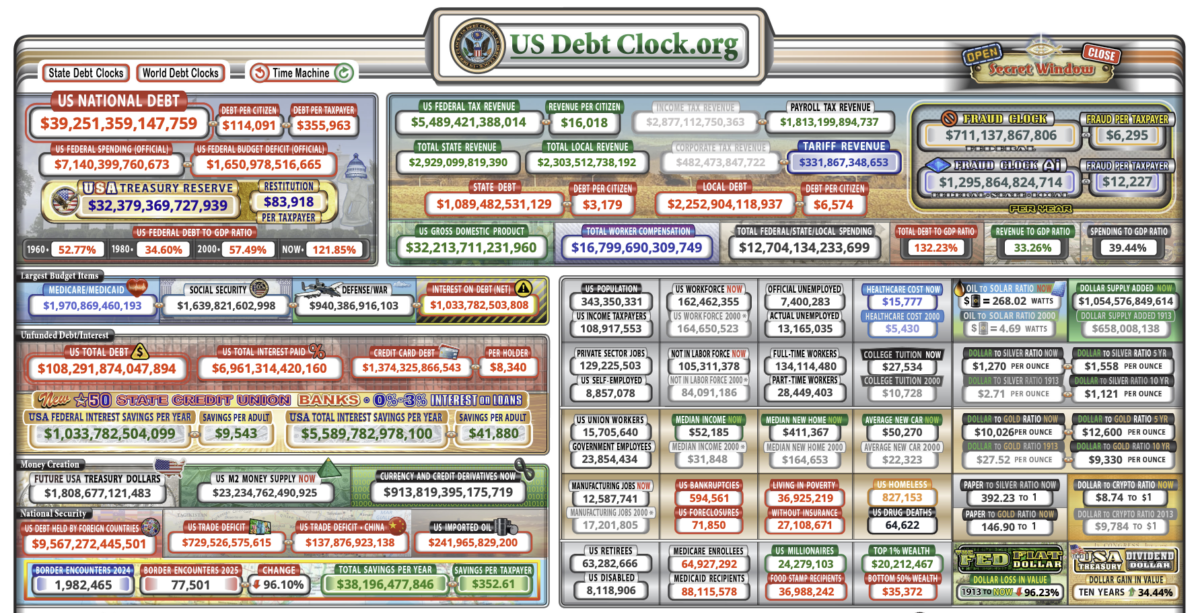
As the federal government’s debt climbs up to $40 trillion, it is time, once again, to mark our place on the march to insolvency, especially as it regards to the one program upon which the most number of Americans rely, Social Security. As the U.S. Debt Clock shows, there are over 63 million Americans retired on the program, over 8 million on the disabled prong of the program, nearly 65 million enrolled in Medicare, and over 88 million people getting Medicaid benefits.
That is a lot of people to support! But are these programs really in financial danger?
Reason magazine helps:
Ernest Hemingway once wrote that there are two ways to go bankrupt: “gradually and then suddenly.”
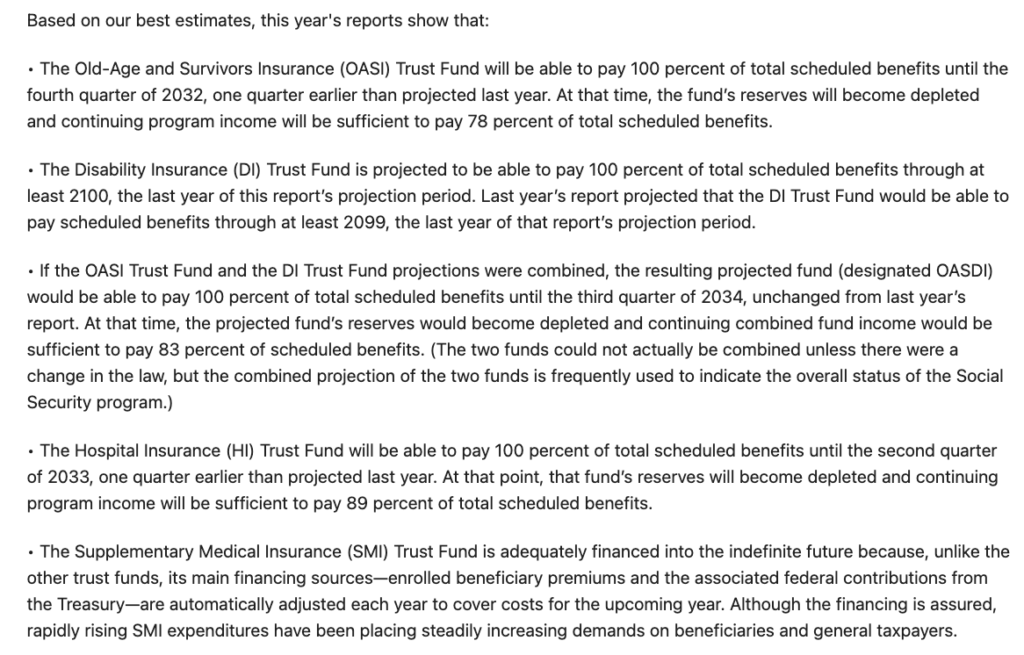
For Social Security, the “gradually” phase is coming to an end. According to the latest report from the trustees who oversee Social Security, the program will hit insolvency in late 2032 — and, at that point, benefits will be cut by about 22 percent. That moment of crisis is no longer some distant problem to be worried about in the future. Senators elected later this year will be serving their terms when the “suddenly” arrives.
Eric Boehm, “Social Security Is Going Bankrupt Because Its Benefits Are Too Generous,” Reason (June 11, 2026).
Take a look at the 2026 Trustees’ Report linked to in the Reason article:
What to do about the bad financing? Reason offers the obvious, if chilling, advice: cut benefits. “Benefits to most Social Security recipients could be cut significantly without pushing anyone into poverty. And that’s what should happen. Social Security is a safety net program, not one meant to finance a lavish retirement lifestyle.”
Careful readers might be tempted to note that this is not the usual way that Reason looks at Social Security. Usually libertarians and free-market economists emphasize the ill-designed nature of the program, and blame Congress for how it has handled this core welfare-state institution for nearly a century, in effect castigating politicians for the growing revenue-and-spending imbalances. And that is all very true. However, it is all water under the broken dike. Sunk costs, so to speak. We cannot do anything now about the past.
We have a program, many people rely upon it, many more people want it to carry on doing all the things it has been doing. But very soon some things just will not be possible: like paying retirees at the same rates and with the same consistency as in the past.
This is not magic. Somebody has to pay.