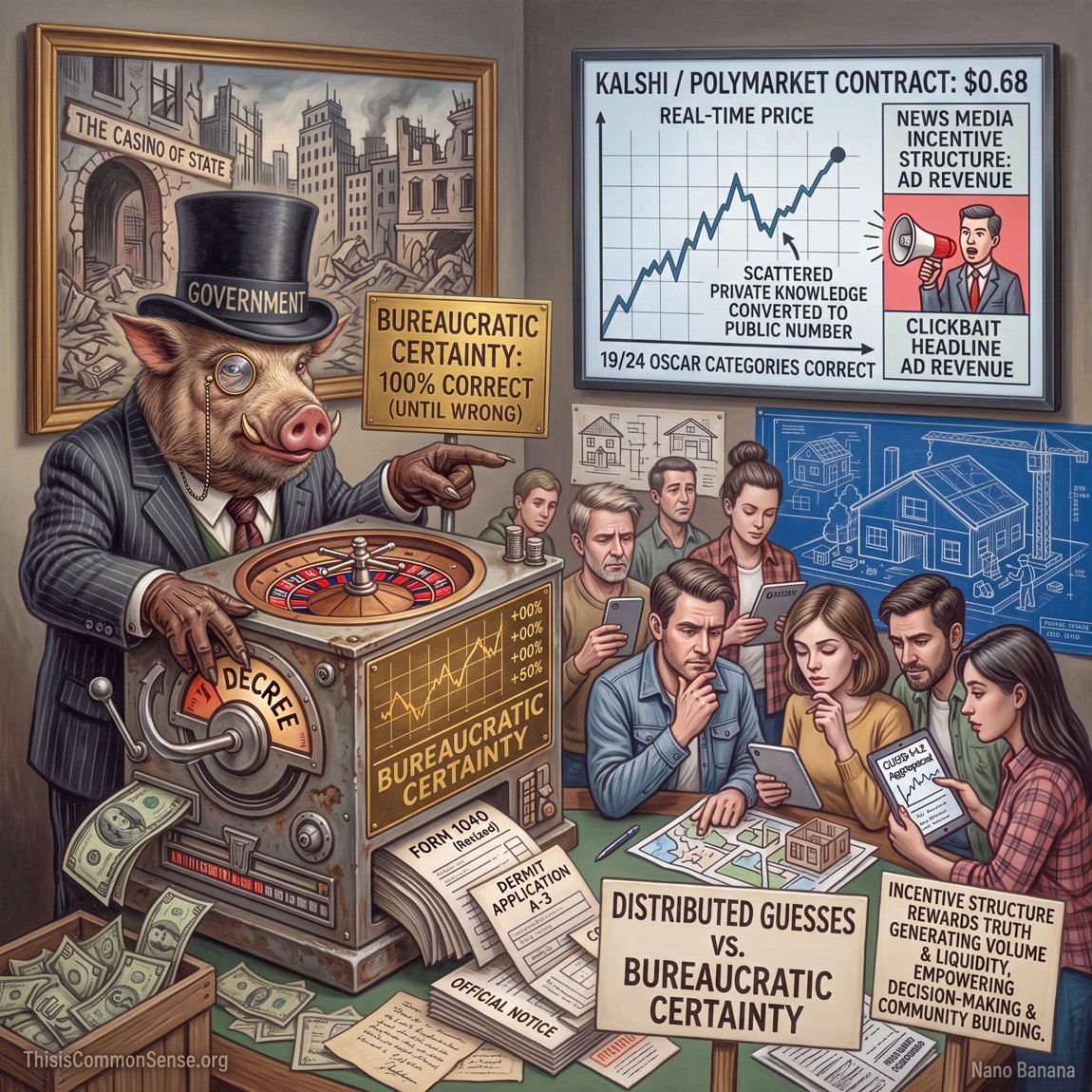
Is the Maryland Lottery and Gaming Control Agency’s cronyism really “a little too obvious,” as Reason magazine ironically argues?
Both the casino group’s model letter and the Maryland agency’s nearly identical letter to the Commodity Futures Trading Commission speak of “our grave concerns regarding the introduction of so-called ‘sport events’ contracts,” how citizens are being put “at risk” by enabling avoidance of state regulations, etc.
Casinos compete with online prediction markets. One way to compete is just to compete. If some of your casino customers are drifting to online betting, find ways to make the in-person experience more appealing. Improve advertising. Jigger the odds ever-so-slightly more in favor of players. Increase the dollar value of wins. Etc. We might call this the economic means of competition.
The other way to compete? Deploy the political means: cajole government to bludgeon competitors. Thus the American Gaming Association, which represents casinos, would like the federal government to do something to impede online prediction markets — the trading of contracts about what’s going to happen in sports and otherwise on platforms like Kalshi and Polymarket.
Sean Maloney, who heads the competing lobby group Coalition for Prediction Markets, explains how prediction-market betting differs from casino betting.
“[A casino] wins when you lose. A sportsbook will kick you off if you win too much. An exchange has no such incentive. It just takes a small fee, and two equally situated counterparties can trade. That’s why consumers prefer prediction markets.”
My prediction? Industry foes of market competition won’t be persuaded.
This is Common Sense. I’m Paul Jacob.
Illustration created with Nano Banana
See all recent commentary
(simplified and organized)
See recent popular posts