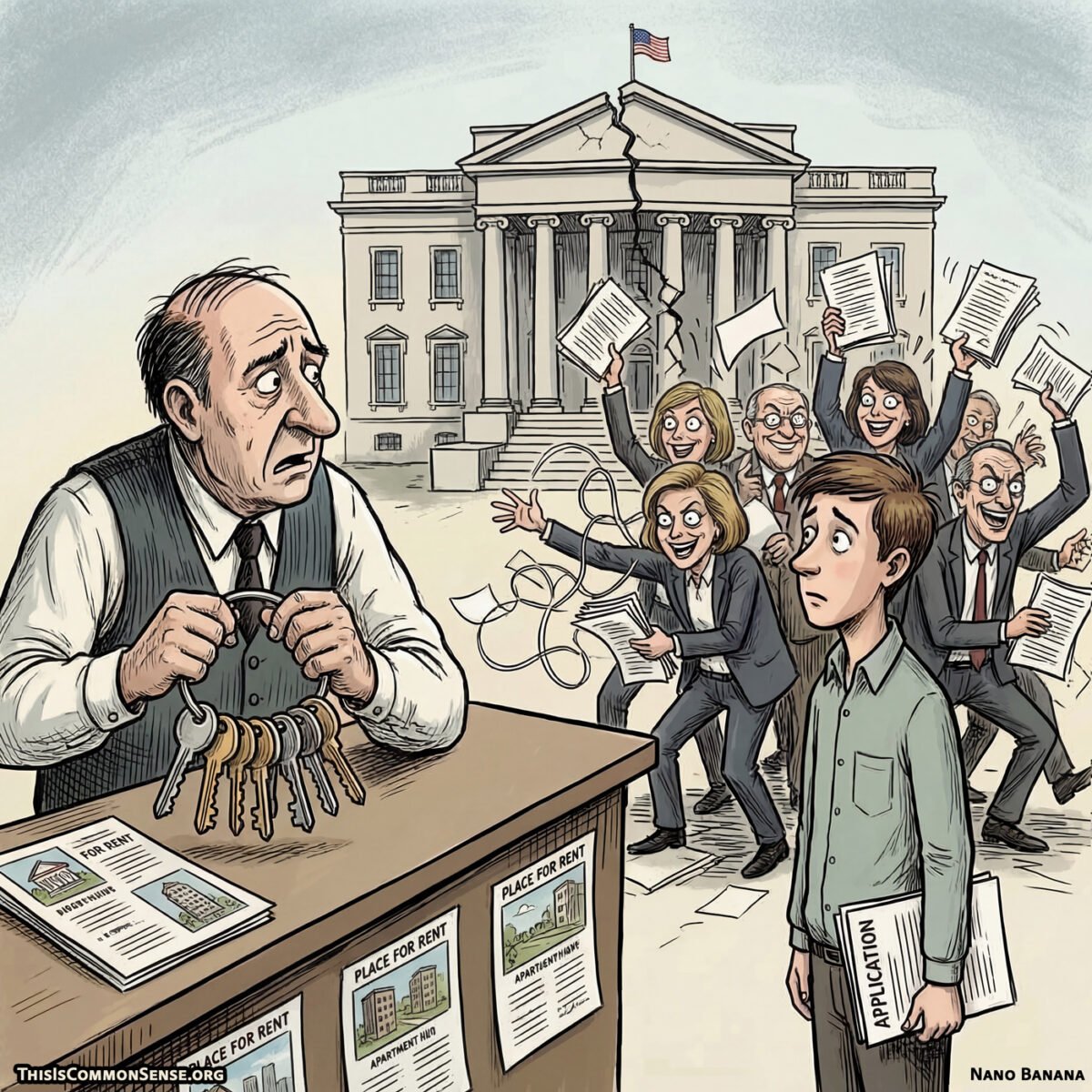
It’s getting tougher to rent a place to live.
Applications now often entail fearsomely intrusive scourings of financial history. And, writes Jeffrey Tucker, “if you are unbanked or missed a payment at some point, you can forget it.”
This is about more than digital intrusiveness or the end of privacy. It’s about aversion to risk.
The aversion may have many causes. Tucker stresses a factor that’s pretty glaring once you think about it: the federal government’s assault on private property rights during the COVID-19 pandemic. Some tenants eagerly exploited a federally imposed moratorium on rent payment — plus ban on evictions — only finally stopped by a 5-4 decision by the Supreme Court.
At the state level, evictions continued to be outlawed until 2022.
So property owners assume that they cannot at all count on government to be in their corner. If a tenant fails to pay rent, folks in government (who include the ones with guns) protect the person who cannot or will not pay his or her bills.
The concern must be even more intense if an owner’s property is located in a town with a track record of demonizing landlords and in the process of launching further assaults on property rights. (Example: New York City, where high rents are now officially called rip-offs.)
Landlords want to avoid tenants who would use any law or bureaucratic tendency to rationalize skipping rent payment. Since owners can’t count on government to protect their property rights, they are becoming ultra-cautious.
That is why conscientious prospective tenants who may have a blot or two in their financial history are paying the price.
This is Common Sense. I’m Paul Jacob.
Illustration created with Nano Banana
See all recent commentary
(simplified and organized)
See recent popular posts
One reply on “Too Damn High?”
When the government fails at one of its constitutional duties, upholding contracts, then this is the result. The honest get caught up in the reaction to the dishonest.
Nothing is free. There are always consequences for actions, even if they are unintended or unseen.