Categories
initiative, referendum, and recall nannyism political challengers Regulating Protest

Irony in Spain

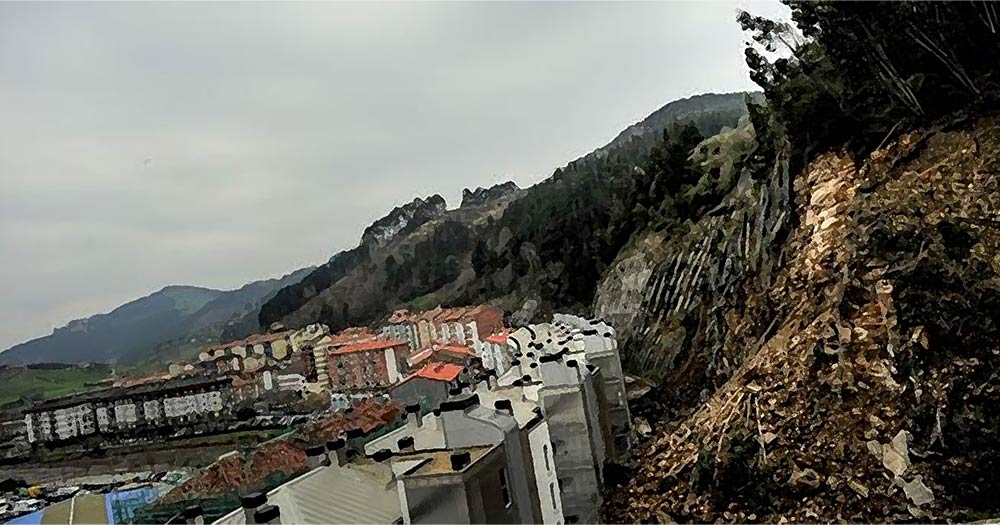
When I arrived at the Donostia-San Sebastián City Hall, in the beautiful Basque Country of Spain, I wondered what all the ruckus was about. There were hundreds of noisy protesters waving long, colorful banners.

My goodness, how interesting to witness acts of political agitation on the public square in another country, I thought. Then, atop the crowd some 20 feet opposite the protest, I spied Daniel Schily, a key activist, funder and cheerleading motivator of the direct democracy movement in Germany.

After greeting, he drily brought me up to date: “They’re protesting us.”

“No, really,” I asked, “what are they protesting?”

“Really,” he said, seemingly sincere. “They’re protesting the Global Forum.”

I stood there dumbstruck, for a moment, before I noticed one sign written in English: “Global Forum on Modern Direct Democracy,” with a very large, black, bold question mark beside it.

Schily wasn’t kidding.

In almost no time, I met up with friends from Bulgaria, South Korea, Uruguay, Chile — fellow activists, all. We had gathered in this “cultural capital of Europe” precisely because of our belief that all people have a right to not only speak out, but effect change, through ballot initiatives and referendums.

It turned out that the protestors hailed from the Satorralaia neighborhood movement. Their beef? Even after gathering nearly 9,000 signatures on petitions requesting a public referendum on a proposed through-station for the mass-transit metro system project, the city government shrugs.

The same city council that helped organize our forum, ignoring citizens while claiming the city is “The World Capital of Democracy.”

Government. What more proof do we need that it could use more checks and balances from the people themselves?

This is Common Sense. I’m Paul Jacob.


N.B. This is a Common Sense digest version of Paul’s weekend column. For more information, see Saturday’s and Sunday’s posts. Paul was in transit home when this entry was being prepared for the Web; he may offer further reports from his trip in the near future.
Printable PDF

Spain, Paul Jacob, Common Sense, initiative, democracy


Categories
Today

The Mayflower Compact

On November 21, 1620, Plymouth Colony settlers signed the Mayflower Compact.

On this day in 1922, Rebecca Latimer Felton of Georgia took the oath of office, becoming the first female United States Senator.

November 21st birthdays include:

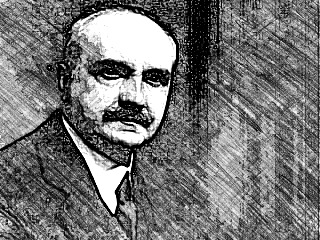
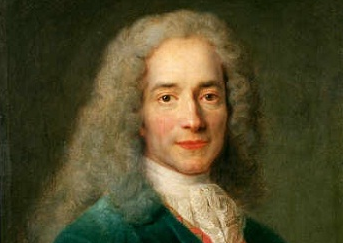
1694 – Voltaire, French philosopher (d. 1778) — portrait above
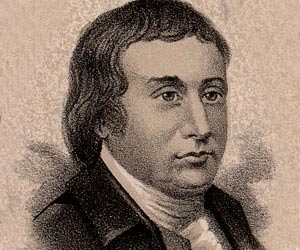
1729 – Josiah Bartlett, American signer of the Declaration of Independence (d. 1795)
1870 – Alexander Berkman, anarchist (d. 1936), who shot but did not kill industrialist Henry Clay Frick

Categories
Thought

Josiah Bartlett

Of all the vices incident to man, lying is the most mean, most contemptible; it evinces a very weak, depraved heart, which shrinks at the exposure of motives and of actions.


Josiah Bartlett, chief executive, president, and governor of the State of New Hampshire, and before that delegate to the Continental Congress — not to be confused with the fictional U. S. President played by Martin Sheen on The West Wing.

Categories
links

Townhall: An American Abroad

Paul Jacob was in Europe last week, at a conference. Which was not without its ideological conflicts — on the streets. Click on over to Townhall, then come back here for street-ready ideas.

Categories
Thought

P. J. O’Rourke

There is worldwide pigheadedness about money. There is a willful and even belligerent ignorance concerning ways and means. . . . Not all this ignorance is irrational. Economists, for instance. John Maynard Keynes couldn’t have become a big shot, guiding government intervention in business and finance, if it hadn’t been for the Great Depression. And Alan Greenspan is a success because we all lost our wallets when inflation scared our pants off.


P. J. O’Rourke, Eat the Rich: A Treatise on Economics (1998), p. 235.

Categories
by Paul Jacob video

The Media Helped Elect Trump

From an interview on Swiss public television, Paul Jacob explains the Trump victory for concerned Europeans:

http://youtu.be/96WgWGxFWZQ

An article featuring Paul can be found here: “Election upset to boost direct democracy in US.”

Paul is scheduled to return to his home soil next week.

Categories
Thought

Roy Blount, Jr.

A good heavy book holds you down. It’s an anchor that keeps you from getting up and having another gin and tonic.


Roy Blount, Jr., “Reading and Nothingness, Of Proust in the Summer Sun,” New York Times (June 2, 1985).

Categories
Today

Of/By/For

On November 19, 1863, President Abraham Lincoln delivered the Gettysburg Address at the ceremonial dedication of the military cemetery in Gettysburg, Pennsylvania, appropriating an old phraseology for republican government — “of the people, by the people, for the people” — and giving it its most memorable usage.

On the same date in 1955, National Review published its first issue.

Categories
general freedom ideological culture nannyism national politics & policies Popular too much government U.S. Constitution

The Venezuela Chaos

I have friends who call themselves anarchists. Their theory? Government is always merely an open conspiracy of some to live at the expense of others.

Republicanism, on the other hand, proposes that if we limit government, we can hone it down to the level where there is no conspiracy, and everything the government does can plausibly help everybody.

Not just a few insiders.

Socialism is the opposite notion. Socialists seek to grow government so far that it “naturally” serves everybody, not only the few. It’s all about “equality,” you see.

Here’s what we know for sure: socialism, when really tried, is so awful that it makes anarchy-as-chaos sound good.

The latest socialist horror is Venezuela, which is getting worse every day. Now hospitals place newborns in cardboard boxes. There are no other supplies.

But that’s not all. The special program for feeding everybody? It’s now mainly for feeding just those close to the government — precisely as my anarchist friends say all government is:

Six months after the creation of the Local Committees of Supply and Production (Clap) that is designed to “distribute food directly to the people,” the government has decided to change its approach by threatening those using the program.

The Venezuelan government announced that it will suspend delivery of food packages to those who criticize its policies.

Are socialist out to prove anarchists right?

I bet most of my readers still put some hope in limiting government to serve all. Venezuelan socialism demonstrates how badly the opposite idea is, showing us that serving everybody by total government just decays into the folks allied closely with government warring against everybody else . . . who starve in plain sight.

This is Common Sense. I’m Paul Jacob.


Ask the next question.

Questions Answered:

What is the difference between a republic and a socialist state?

What do anarchists think of government?

What happens when government tries to do everything for everybody?

The Next Question:

How do we convince well-meaning socialists that total government cannot work for the benefit of everybody? (Since the examples of the USSR, Communist China, and Venezuela haven’t worked so far.)


Printable PDF

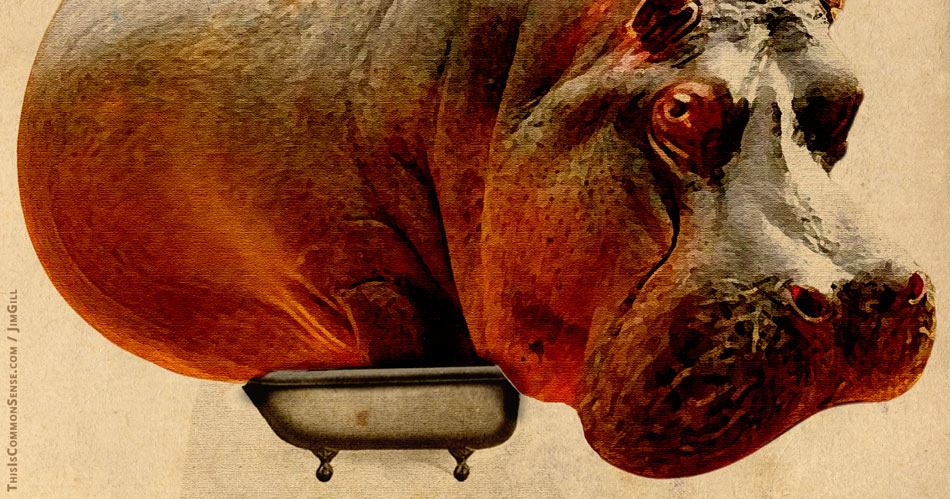
government, bathtub, Venezuela, illustration


Categories
Thought

George Santayana

Egotism is a bastard word meant to designate something spurious and artificial, not to be confused with the natural egoism or self-assertion proper to every living creature. To condemn the latter would be to condemn life, which could not go on without it; but like every normal faculty, self-assertion has degrees, and passes insensibly from the happy mean to the opposite vices of excess and defect. Egotism, on the contrary, though more or less pronounced, is always a vice because it is founded on a mistake.


George Santayana, postscript to Egotism in German Philosophy (1916).