Categories
video

Video: 2016 — best year ever?

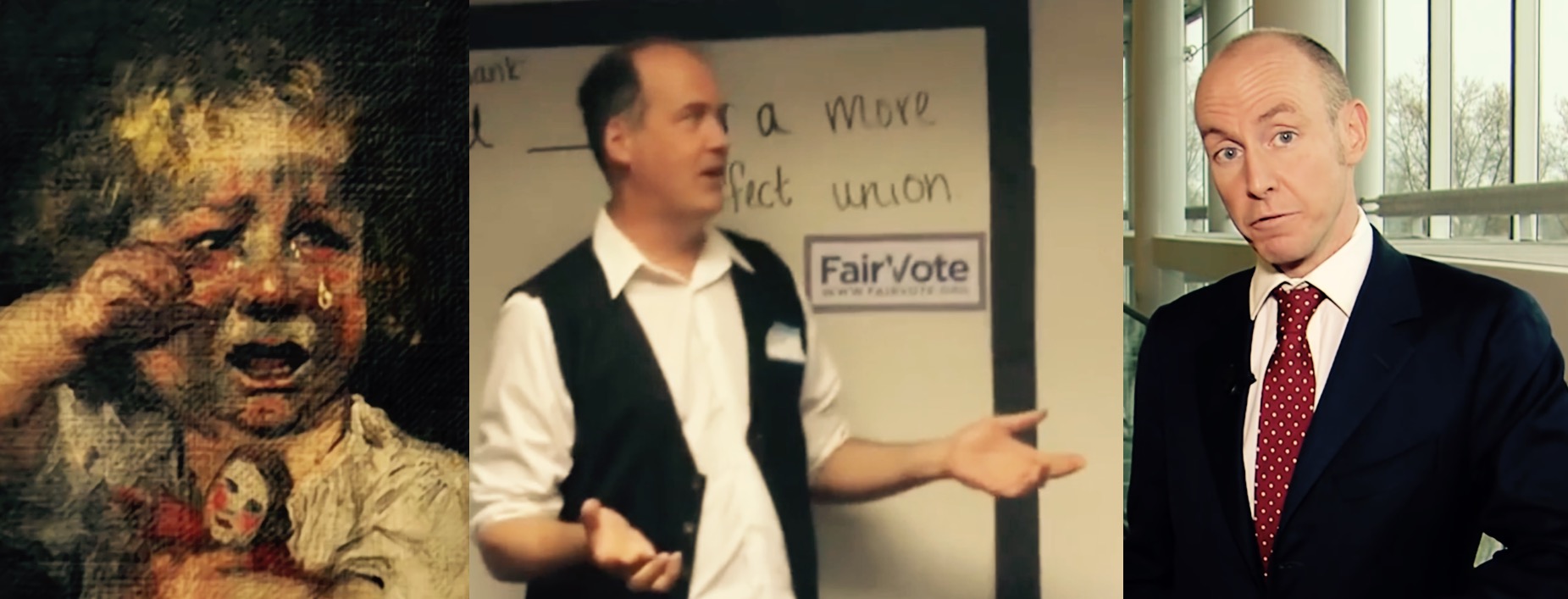
Lots of people are saying that 2016 was “the worst.” Dan Hannan disagrees:

Krist Novoselic, my colleague at FairVote.org, here gives a little talk about how we can change our democratic processes for the better. “We’re getting there,” he says, about the organization’s substantial election reform — a non-partisan variety of reform that, he says, will benefit all Americans. For some reason not many people have seen this video:

But are things really all that good? A lot of folks will say that the President-elect is the most dangerous trending topic. But Professor Gad Saad suggests, in this entry of The Saad Truth, that the worst trend is the victimology cult:

Categories
Thought

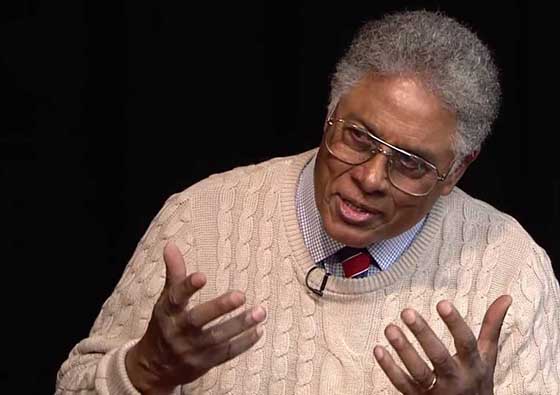
Thomas Sowell

The old are not really smarter than the young, in terms of sheer brainpower. It is just that we have already made the kinds of mistakes that the young are about to make, and we have already suffered the consequences that the young are going to suffer if they disregard the record of the past.


Thomas Sowell, “Random Thoughts, Looking Back,” his final syndicated column upon retirement, National Review (December 27, 2016).

Categories
Today

Bricked Windows

On December 31, 1695, Englanders received a new tax, a window tax. One of the main responses to this was the bricking up of many British windows.

This last day of the year in 1991 marked the complete cessation of all institutions of the Soviet Union.

New Year’s Eve 1992 saw the peaceful dissolution of Czechoslovakia into the Czech Republic and Slovakia. This has been dubbed the “Velvet Divorce.”

Categories
Accountability crime and punishment general freedom moral hazard national politics & policies privacy responsibility

In Plain Sight

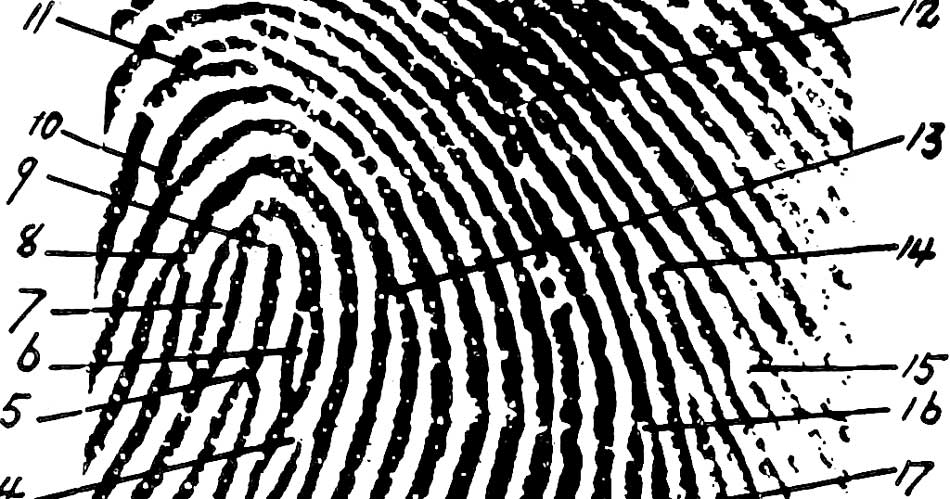
The Berlin terrorist attack just a little over a week ago fit a noteworthy pattern. German authorities had investigated Anis Amri — the Tunisian man who drove that large truck into a crowded Christmas market, killing 12 and wounding 56 others — and found “links with Islamic extremists.”

Later killed in Milan, Italy, Amri had been wanted in Tunisia for “hijacking a van” and jailed in Italy for arson and a “violent assault at his migrant reception center.” And yet with all that known or easily knowable, the German authorities couldn’t prevent him from killing innocent Germans.

It’s not just a European phenomenon, either.

Consider Omar Mateen, this country’s worst mass shooter, having massacred 49 people in Orlando’s Pulse nightclub. The FBI had spent ten months looking into Mateen.

Years before the Boston Marathon bombing, the FBI had tracked Tamerlan Tsarnaev, one of the bombers.*

“In case after case . . . authorities have come forward after the fact to say that they had enough cause to place the suspect under surveillance well before the violence,” the Washington Post recently noted. This was the case with the majority of recent lone-wolf terrorism plots.

“If any lesson can be learned from studying the perpetrators of recent attacks,” a report in The Intercept concluded, “it is that there needs to be a greater investment in conducting targeted surveillance of known terror suspects and a move away from the constant knee-jerk expansion of dragnet surveillance . . .”

Yet intelligence agencies are still grabbing our metadata in violation of the Fourth Amendment. That needs to stop.

The fact that known threats are consistently not being stopped suggests curtailing mass surveillance won’t hurt our security, but improve it.

This is Common Sense. I’m Paul Jacob.


* The same is true regarding the Ft. Hood (work-place) shooter, Nidal Hasan. Likewise, Abdulhakim Mujahid Muhammad (formerly Carlos Bledsoe), who was under the active eye of the FBI after returning from Yemen . . . until he opened fire on a Little Rock, Arkansas, recruiting station killing one soldier and wounding another. Ditto Ahmad Khan Rahami, the less deadly bomber in New York City and New Jersey.


Printable PDF
terrorism, surveillance, privacy, fingerprint, targeted, illustration


Categories
Thought

Jack Williamson

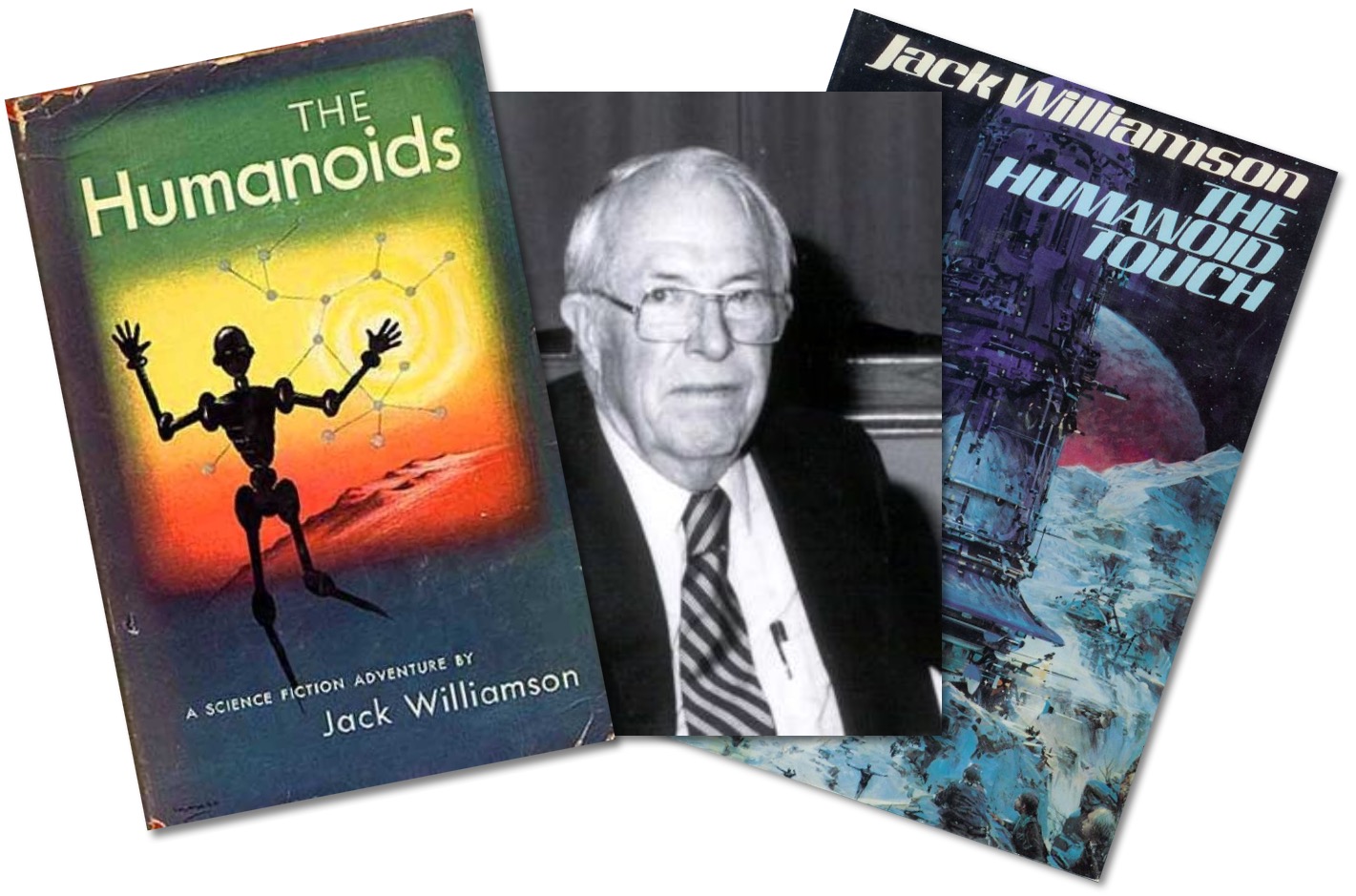
The humanoids protect people so well they won’t let them drive a car lest they have an accident or let a woman hold a needle lest she stab herself, . . . With the Patriot Act, people are trying to overprotect us by taking our freedoms away. I’d repeal it if I could.


Jack Williamson, author of The Humanoids (1948) and The Humanoid Touch (1980), science fiction novels in which humanity is overrun with “well-intentioned” robots.

Categories
Today

A law student

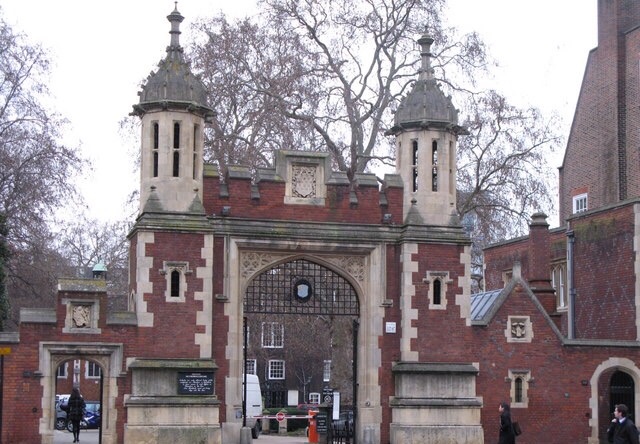
On December 30, 1919, Lincoln’s Inn in London, England, admitted its first female bar student.

Categories
Thought

Ursula K. Le Guin

The trouble is that we have a bad habit, encouraged by pedants and sophisticates, of considering happiness as something rather stupid. Only pain is intellectual, only evil interesting. This is the treason of the artist: a refusal to admit the banality of evil and the terrible boredom of pain. If you can’t lick ’em, join ’em. If it hurts, repeat it. But to praise despair is to condemn delight, to embrace violence is to lose hold of everything else.


Ursula K. Le Guin, “The Ones Who Walk Away from Omelas,” New Dimensions 3 (Robert Silverberg, ed.), p. 254

Categories
ideological culture media and media people national politics & policies political challengers

Democracy — Oh, My!

The President-elect has had some difficulty booking celebrity acts for his inauguration. And instead of taking this as a cue to trim down on celebratory excess, his team has extended the guest performer list to include New York’s world-famous chorus line dancers, the Rockettes.

The leggy, sequined showgirls might seem a perfect fit for the President-elect’s celebration — more, say, than a ballet troupe, or a string quartet — but one among the Rockettes protested.  Being a part of a performing team might seem a dream job, but not for Phoebe Pearl. She was, she wrote on Instagram, “overwhelmed with emotion,” and not in a good way. She felt “embarrassed and disappointed” that the gig “has been decided” for her.

She feels . . . coerced.

Dan Avery, writing before Christmas, characterizes the contract as a matter of “force.”

Welcome, Ms. Pearl, to the world that most American workers already know.

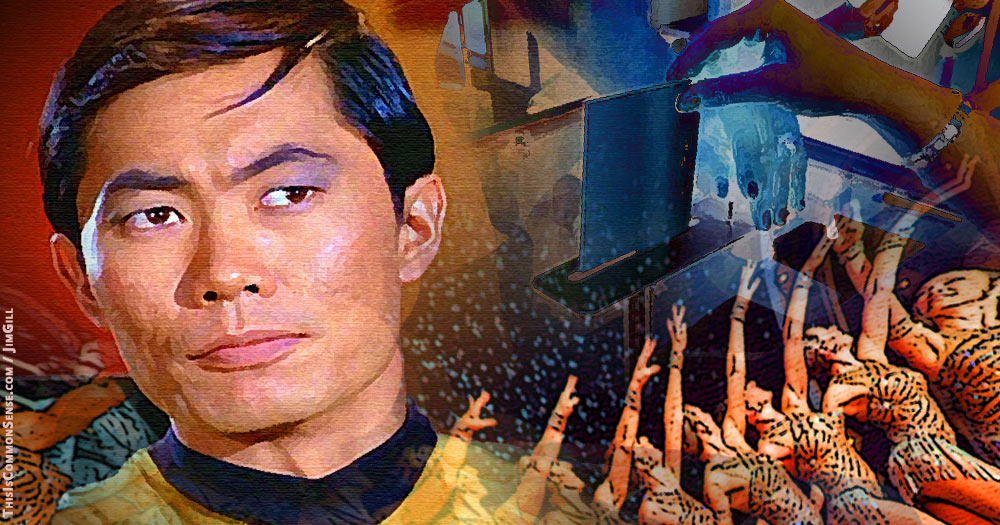
But the silliness reached high pitch with actor George Takei, who tweeted: “The members of the Rockettes and the Mormon Tabernacle are like all of us: Forced to go along with something horrible they didn’t choose.”

Democracy — oh, my!

Most people have had to put up with democratic results they did not like. Are Democrats only now understanding this?

To a degree, I sympathize. Which is why I want limits placed on government. Perhaps Democrats should have thought of this every time they cheered as their elected candidates increased presidential power. Did they not realize that someday they might lose?

And if you want a right of refusal, make sure it is in your contract.

The Rockette does not have a leg to stand on.

This is Common Sense. I’m Paul Jacob.


Printable PDF

Rockettes, democracy, inauguration, Trump, media, entertainment, illustration, association, voluntary


Categories
Thought

Thomas Sowell

When I was growing up, we were taught the stories of people whose inventions and scientific discoveries had expanded the lives of millions of other people. Today, students are being taught to admire those who complain, denounce, and demand.


Thomas Sowell, “Random Thoughts, Looking Back,” his final syndicated column upon retirement, National Review (December 27, 2016).

Categories
Today

Mongolia

On December 29, 1911, Mongolia gained independence from the Qing Dynasty.