Paul Joseph Watson expands on how one of the major players in social media is trying to re-establish the center-left’s gatekeeper hegemony:
Categories
Gatekeeping 2.1 (The YouTube Gambit)

Paul Joseph Watson expands on how one of the major players in social media is trying to re-establish the center-left’s gatekeeper hegemony:
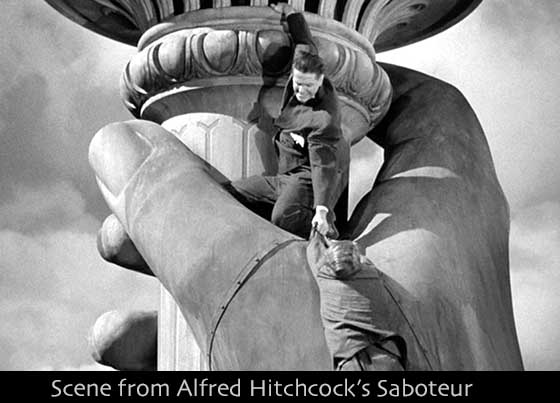
On August 5, 1861, the U.S. Army abolished flogging. The same day 23 years later, Bedloe’s Island in New York Harbor received the foundation stone for the Statue of Liberty (which was featured in the rousing conclusion to Alfred Hitchcock’s wartime picture, Saboteur). The island was later renamed Liberty Island.
President Ronald Reagan fired 11,359 striking air-traffic controllers (who had ignored his order for them to return to work) on August 5, 1981.

How is the world ruled and led to war? Diplomats lie to journalists and believe these lies when they see them in print.

There once was opinion hegemony, almost a monopoly. Official gatekeepers kept unwanted ideas — including some of mine, including many I strongly oppose — out of public consideration.
Then came the online media revolution, which switched influence from corporate, academic-approved media outlets to truly new media, like Facebook, Twitter and YouTube.
And now? The counter-revolution.
We saw it obviously in the downgrade and then banning of Milo Yiannopoulis’s Twitter, last year. Since then, new measures surface on a regular basis.
We helots, we commonfolk, must not be allowed actually to affect an election!
Or the hearts and inquiring minds of Americans, Europeans, and others worldwide.
Unless that opinion has received the imprimatur of the Center-Left.
I’ve written about this return of the Gatekeeper mentality before. The latest malefactor is YouTube, which locked Dr. Jordan Peterson out of his account this week* as well as put in place new policies to hobble the social sharing elements of YouTube.**
A week or so earlier, Patreon, an online crowdfunding patronage web service I’ve been thinking about trying out, cancelled independent journalist Lauren Southern’s account. Patreon managers charged that her most recent endeavor might cause “loss of life,” but, tellingly, “showed no evidence or proof, are allowing no appeal and have acted as judge, jury and executioner” — as one concerned netizen not inaccurately summarized.
The company’s CEO calmly explained himself to Dave Rubin on YouTube. Does he convince you?
I catch a whiff of panic.
This is Common Sense. I’m Paul Jacob.
* Dr. Peterson’s account has since been reinstated, no explanation given.
** You can learn all this and more on YouTube itself — so the platform hasn’t been shut down as such. Instead, a new Artificial Intelligence will restrict videos that do not even break YouTube terms of service, removing Likes, Comments, and Search features.


On August 4, 2010, in Perry v. Schwarzenegger, Judge Vaughn Walker overturned California’s Proposition 8, the ballot initiative prohibiting same-sex marriage that had passed two years earlier by the state’s voters.
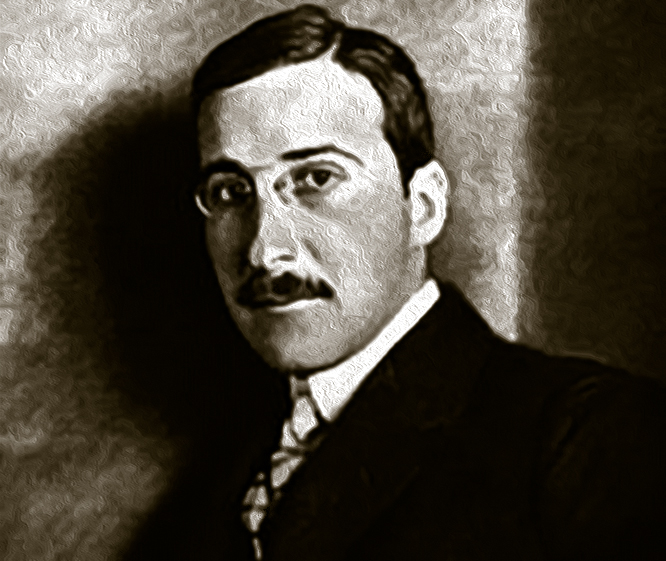
All the pale horses of the apocalypse have stormed through my life, revolution, starvation, devaluation of currency and terror, epidemics, emigration; I have seen the great ideologies of the masses grow and spread out before my eyes. Fascism in Italy, National Socialism in Germany, Bolshevism in Russia, and, above all, that archpestilence, nationalism, which poisoned our flourishing European culture.
Stefan Zweig, The World of Yesterday [Die Welt von Gestern], Marion Sonnenfeld, translator (1942).

The great barrier to educational advance in our time is the federal government. The second great barrier? Your state government. The third great barrier? Your local government.
Proposals to break up government-subsidized and -enforced school monopolies have ranged from tax credit proposals and voucher programs to charter schools and (the biggest success so far) home schooling.
But it may be time to advance something a little . . . more daring. Break the stranglehold of government on dysfunctional schooling.
How?
Apply the “free trade zone” (FTZ) idea to education.
We remember the FTZ proposal because of its rise in popularity amongst academics and policy wonks in the 1980s and 1990s. But the notion is an old one. And in China, where they are called “special economic zones” (SEZs) — and it is this term that is catching on — they have been amazingly successful, the former fishing village of Shenzhen being the most obvious example.
What about America? Take a devastated region, like inner-city Chicago or Detroit,* and simply nullify the regulations and rules. (This probably would require federal enabling legislation on top of state leadership.) With the ensuing freedom and opportunity, entrepreneurs, established businesses and schools, teachers, community groups and activists could cook up new solutions to the oldest schooling problem there is:
actual education.
I’ve heard whispers of this Educational SEZ idea for some time now.
It is time for rational and quite public discussion.
And then the shouting.
This is Common Sense. I’m Paul Jacob.
* Of course, any area could work. The reason to focus on demonstrably failed educational regions is that such areas have lost hope, and thus the politically resistant are likely to give in and allow it.


On August 3, 2008, Aleksandr Solzhenitsyn died at age 90. His novels, such as One Day in the Life of Ivan Denisovich and Cancer Ward, explored life under totalitarian Communism, and remain classics of modern literature. His huge survey of Soviet concentration camps, The Gulag Archipelago, was an important contribution to the demise of Communism as a popular ideology, showing just how horrifying the repression in the Soviet Union had become.
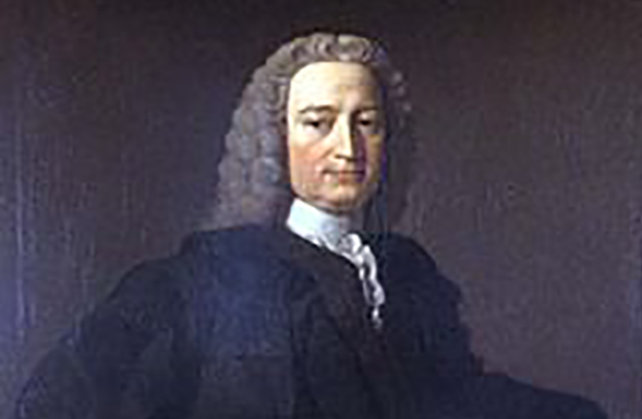
Francis Hutcheson, The Dublin Weekly Journal, No. 12 (June 19, 1725).
Men have been Laughed out of Faults which a Sermon could not reform.

What a pleasure — comparing notes with Nick Tomboulides, executive director of U.S. Term Limits, my old job.
Speaking on a panel last week at the Young Americans for Liberty National Convention,* Illinois came up. Nick agreed that if the Land of Lincoln had a term-limited legislature, we would never have heard the end of it: “Term limits are a failure!”
Illinois, you see, is a failed state, confessing the lowest credit rating in history.
Only a notch above junk bond status.
The media would have incessantly blamed “inexperience” for the fiscal implosion.
In reality, though, Illinois is a career politician’s paradise. Speaker Michael Madigan (D-Chicago) has spent the last 45 years in the legislature and all but two of the last 34 years as the chamber’s top banana.
Oh, it’s been a great ride for this longest-serving House Speaker in modern history. He’s grown wealthy while “serving” in office — and provided himself with a lucrative (and curiously gamable) state pension.
On the panel, Mr. Tomboulides highlighted “Ranking the States by Fiscal Condition,” a recent study by the Mercatus Center at George Mason University. Though only 15 of the 50 states have term-limited legislatures, those term-limited states represent a majority, eight of the top 15 ranked states. Among the states ranked at the very bottom, none have term limits.
“For years they’ve warned that term limits would lead to inexperience which would produce fiscal ruin,” Tomboulides wrote at the U.S. Term Limits blog. “This report proves the opposite is true — that term limits states do better than those run by prehistoric politicians.”
And yet, somehow, not once have Nick or I seen the state’s financial woes blamed on careerism.
This is Common Sense. I’m Paul Jacob.
* Feel good about the future: Very smart group of young folks at this YAL event.