Todo o homem que merece ser célebre sabe que não vale a pena sê-lo.
Every man who deserves to be famous knows it is not worth the trouble.
Fernando Pessoa, A Celebridade (1915).

Todo o homem que merece ser célebre sabe que não vale a pena sê-lo.
Every man who deserves to be famous knows it is not worth the trouble.
Fernando Pessoa, A Celebridade (1915).
On October 27, 1964, Ronald Reagan delivered a speech on behalf of Republican candidate for the United States Presidency, Barry Goldwater, thereby launching Reagan’s political career. The speech came to be known as “A Time for Choosing.”
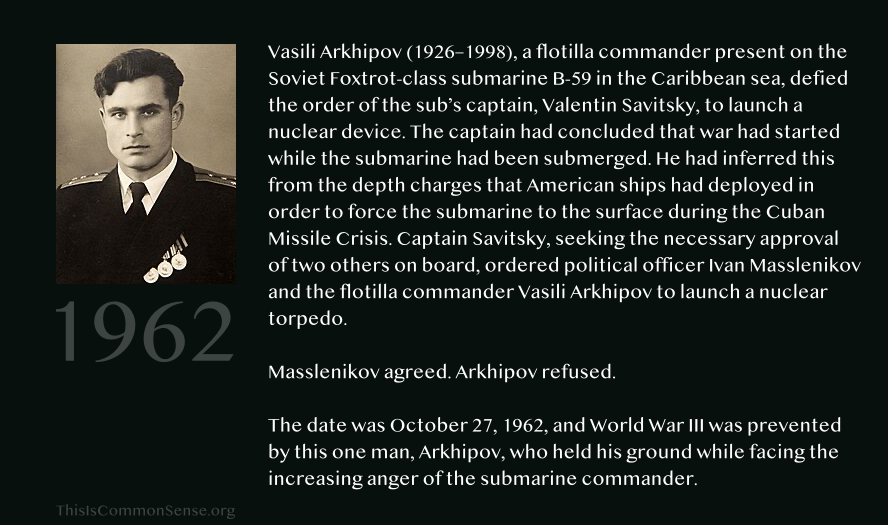
Two years earlier, Vasili Arkhipov, a flotilla commander present on the Soviet Foxtrot-class submarine B-59 in the Caribbean sea, defied the order of the sub’s captain, Valentin Savitsky, to launch a nuclear device. The captain had concluded that war had started while the submarine had been submerged. He had inferred this from the depth charges that American ships had deployed in order to force the submarine to the surface during the Cuban Missile Crisis. Captain Savitsky, seeking the necessary approval of two others on board, ordered political officer Ivan Masslenikov and the flotilla commander Vasili Arkhipov to launch a nuclear torpedo.
Masslenikov agreed. Arkhipov refused.
The date was October 27, 1962, and World War III was prevented by this one man, Arkhipov, who held his ground while facing the increasing anger of the submarine commander, refusing to approve a nuclear torpedo launch that would most almost certainly have triggered a conflict that would have doomed civilization, perhaps most or all of humanity.
That, we can now agree, was a “time for choosing” — and the correct choice was made.
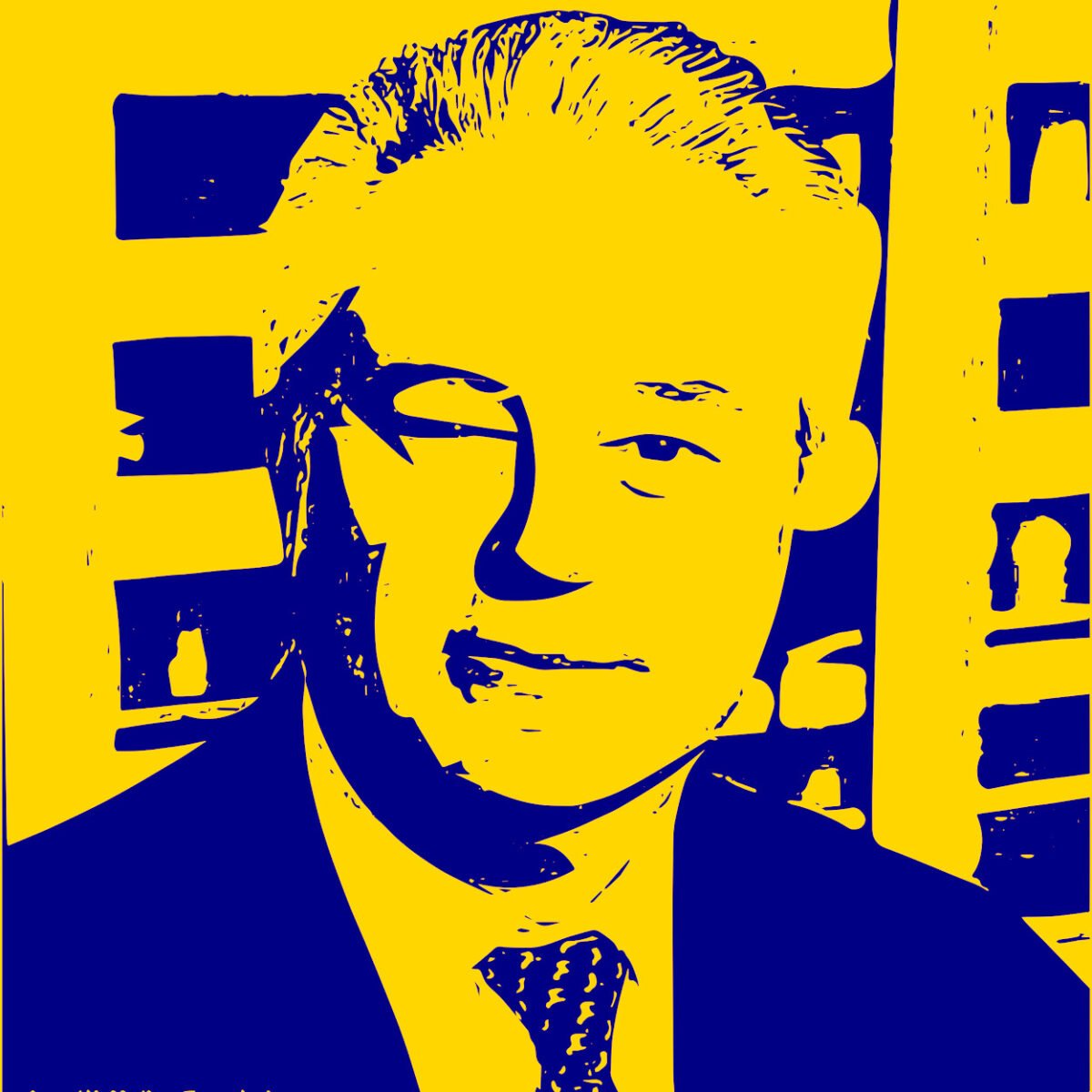
“The mystery surrounding the generous billionaire who contributed $130 million to cover US military salaries during the government shutdown has been resolved,” explains InterNewsCast.com. “The benefactor is none other than Timothy Mellon, heir to an oil fortune.”
Former President Donald Trump revealed on Thursday that this significant donation was made by a ‘friend’ as a patriotic gesture towards the military and the country.
“He called us recently and said, ‘I’d like to make up for any shortfall due to the Democrat shutdown. I want to contribute personally because I have a deep love for the military and for our nation,’” Trump shared.
Describing the donor as ‘a great American citizen’ and ‘a substantial man,’ Trump noted that the individual wished to remain anonymous, which he found remarkable given that most people in politics seek recognition.
The Pentagon later confirmed that the Department of Defense had indeed received the contribution on Thursday, ensuring that service members’ salaries would be paid. The donor had been kept anonymous, but the New York Times revealed the billionaire’s identity on Saturday.
Mellon, 83, is a member of one of America’s wealthiest families. Paul Jacob has mentioned, on this site, Timothy Mellon’s cousin Christopher Mellon (the former U.S. Deputy Assistant Secretary of Defense for Intelligence) in articles related to UFO disclosure. Both are members of the extended Mellon family — a prominent Pittsburgh-based dynasty founded by 19th-century banker Thomas Mellon and including figures like Treasury Secretary Andrew Mellon (grandfather to Timothy). Timothy (born 1942) is the son of Paul Mellon (1907–1999), while Chris (born 1958) is the son of Karl Negley Mellon (1938–1983).
The family’s collective net worth is estimated at around $14 billion.
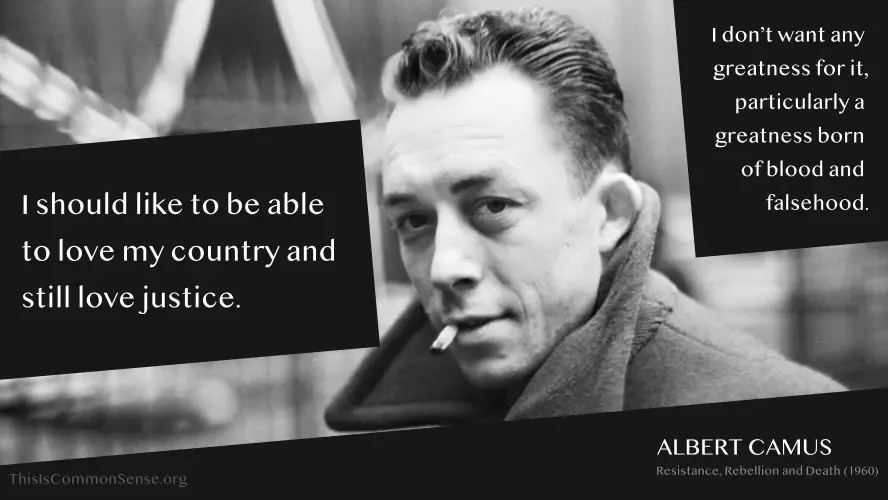
And I should like to be able to love my country and still love justice. I don’t want any greatness for it, particularly a greatness born of blood and falsehood.
Albert Camus, from Resistance, Rebellion and Death (1960).
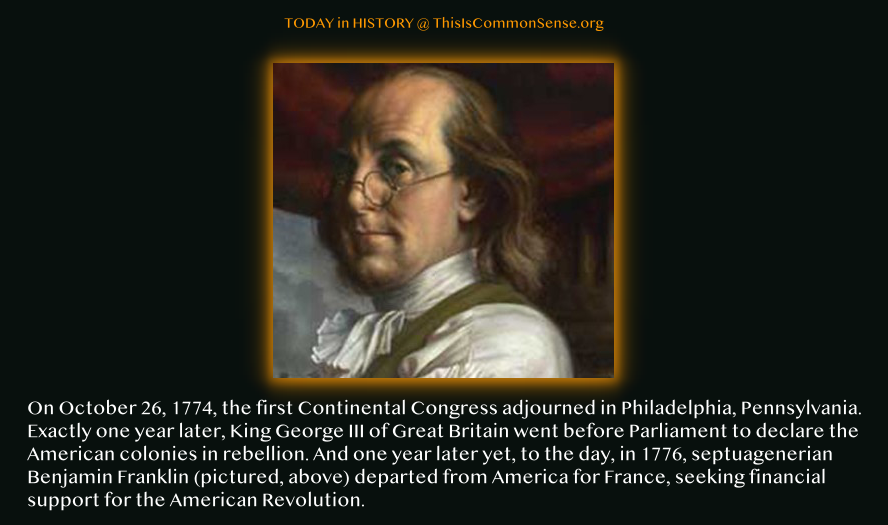
On October 26, 1774, the first Continental Congress adjourned in Philadelphia, Pennsylvania. Exactly one year later, King George III of Great Britain went before Parliament to declare the American colonies in rebellion. And one year later yet, to the day, in 1776, septuagenerian Benjamin Franklin (pictured, above) departed from America for France, seeking financial support for the American Revolution.
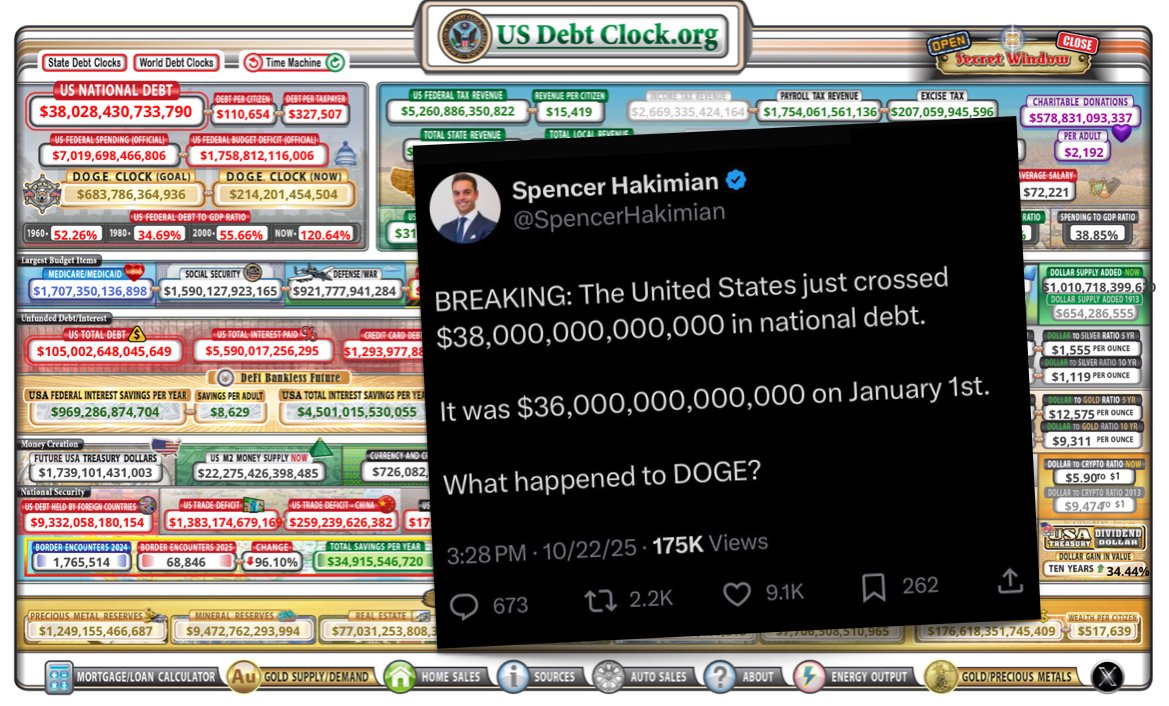
This week, the official public debt of the federal government of the United States hit $38 trillion. Many reports noted that it came quickly after hitting the $37 trillion mark, that it came during the federal shutdown, and that only during the pandemic did debt accumulate faster:
Reports were widely published, but were they widely read? Is this just ho hum?
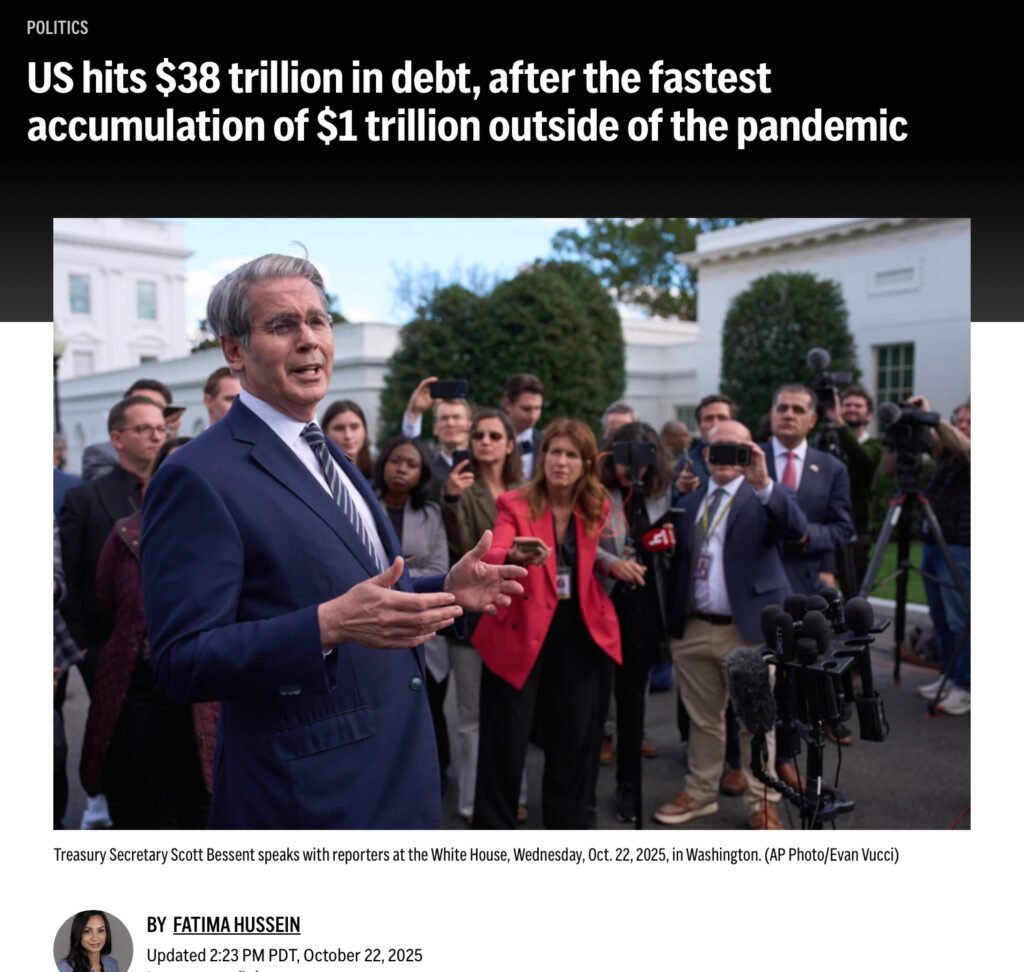
This space last hosted news on debt accumulation markers in the trillions in mid-June. About two months later, the U.S. gross national debt surpassed $37 trillion (August 11, 2025), according to the U.S. Treasury Department’s daily financial report. This milestone came years earlier than the Congressional Budget Office’s 2020 projections, which had anticipated it after fiscal year 2030.
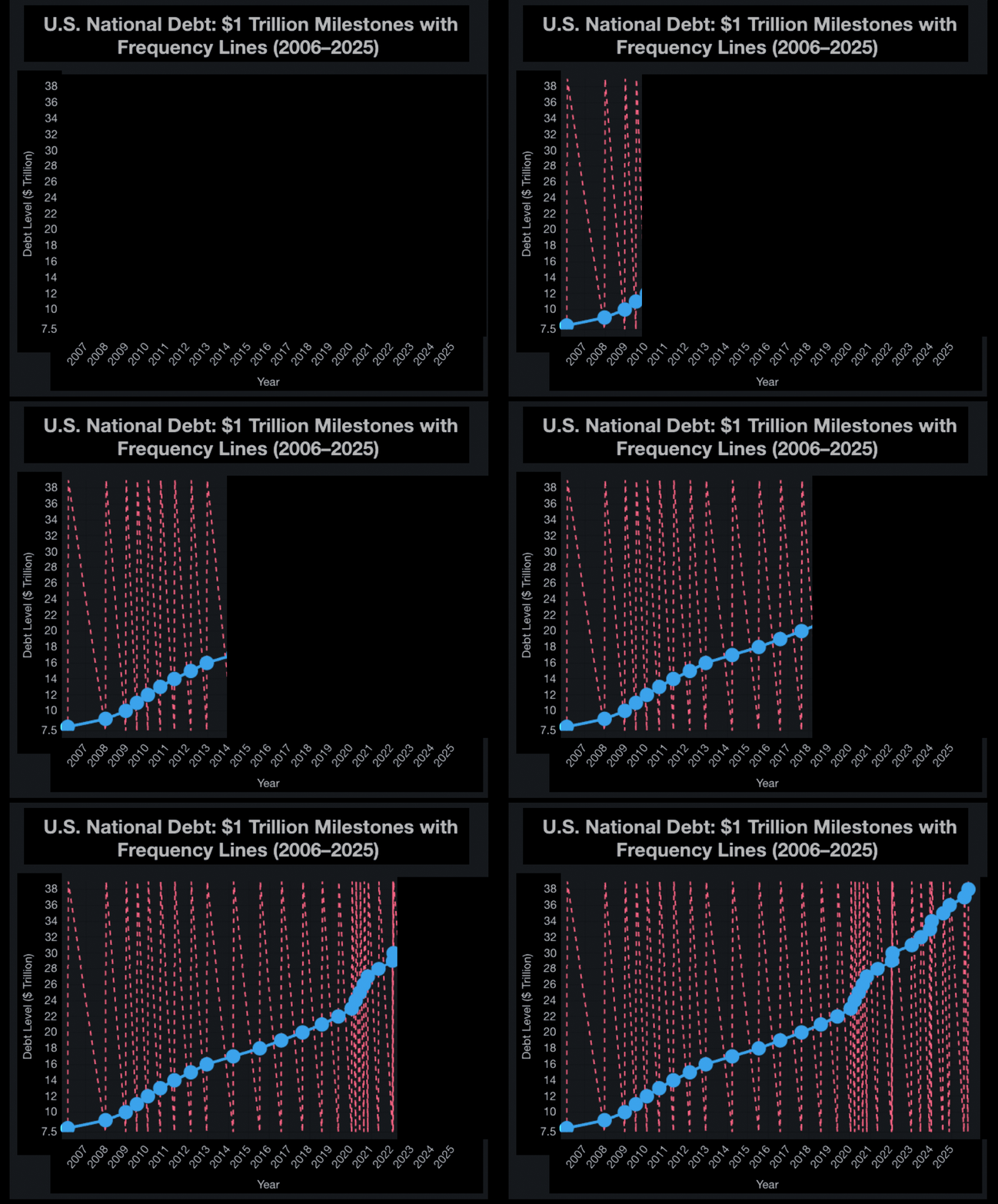
Seeking to illustrate the increased frequency of debt accumulation milestones, we offer this (with help from Grok):
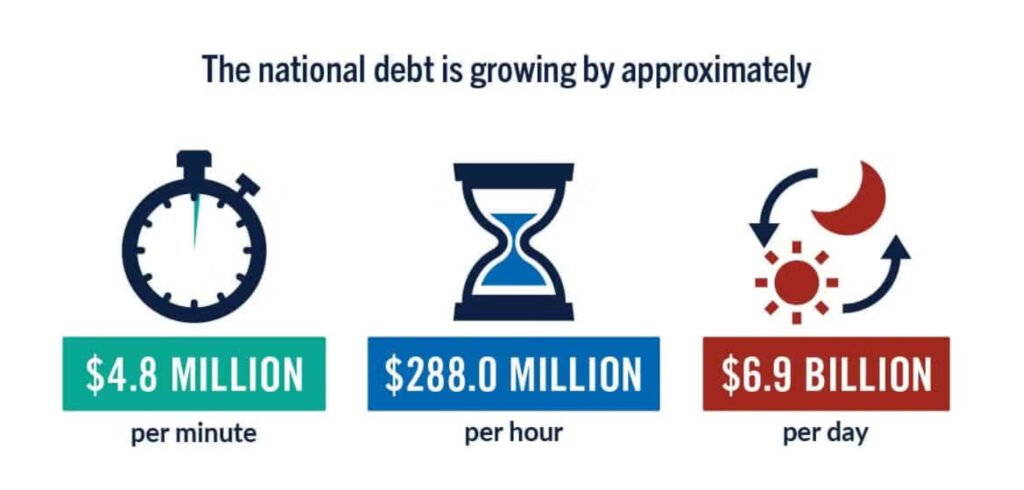
The Peter G. Peterson Foundation has a number of graphs related to the subject:
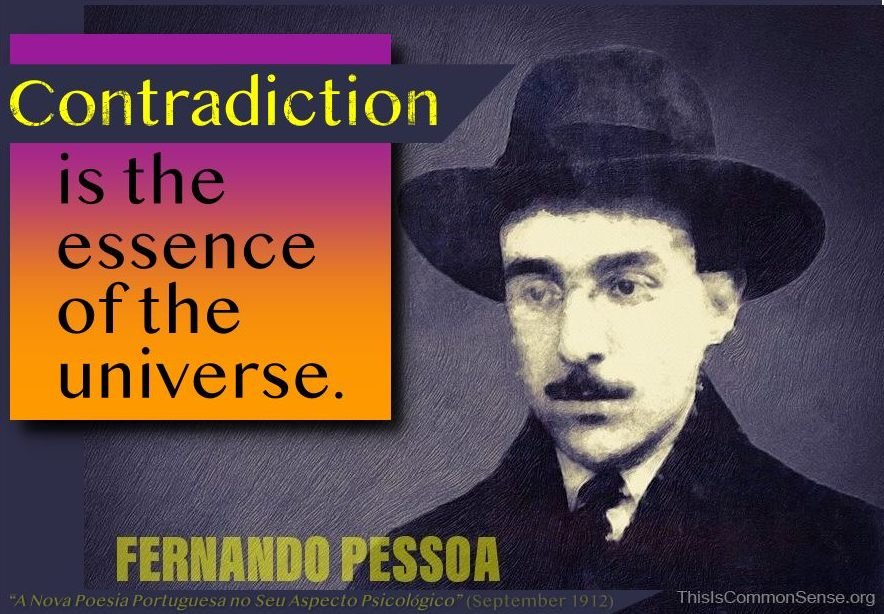
A essência do universo é a contradição.
Contradiction is the essence of the universe.
Fernando Pessoa, “A Nova Poesia Portuguesa no Seu Aspecto Psicológico,” A Águia, Porto (September 1912).
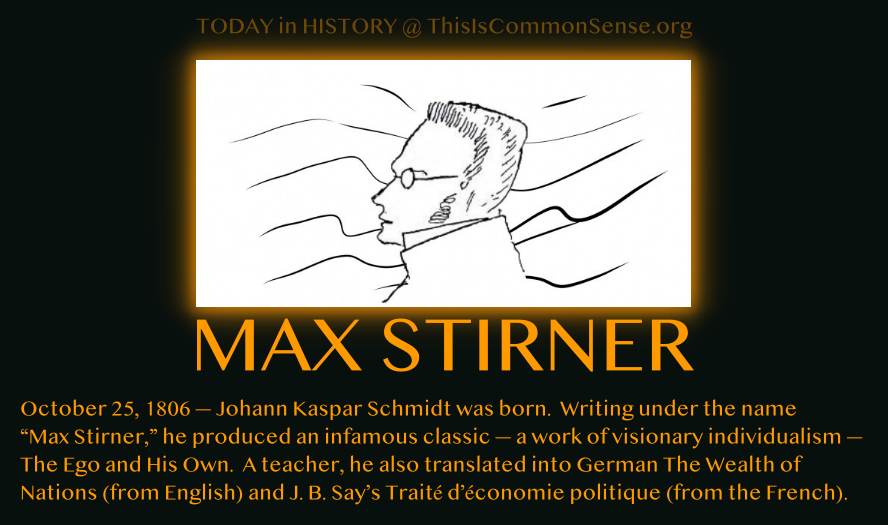
On October 25, 1806, German philosopher Max Stirner was born. Stirner was known for his radical individualism, which under the name of “egoism” became culturally chic in the late 19th and early 20th centuries. In addition to Der Einzige und sein Eigentum, a major work that was famously attacked by Karl Marx, he translated into German Adam Smith’s Wealth of Nations (from its original English) and J.-B. Say’s A Treatise on Political Economy (from its original French).
Der Einzige und sein Eigentum has been translated into English as The Ego and Its Own and The Ego and His Own.
“Max Stirner” is a nom de plume, his birth name being Johann Kaspar Schmidt. He died in 1856, and his biography by John Henry Mackay, Max Stirner — sein Leben und sein Werk, was published in German in 1898 (enlarged 1910, 1914), and finally translated into English in 2005.
The only image we have of him was sketched by Karl Marx’s comrade, benefactor and abuse-buddy, Friedrich Engels. The portrait above has been adapted from that drawing.
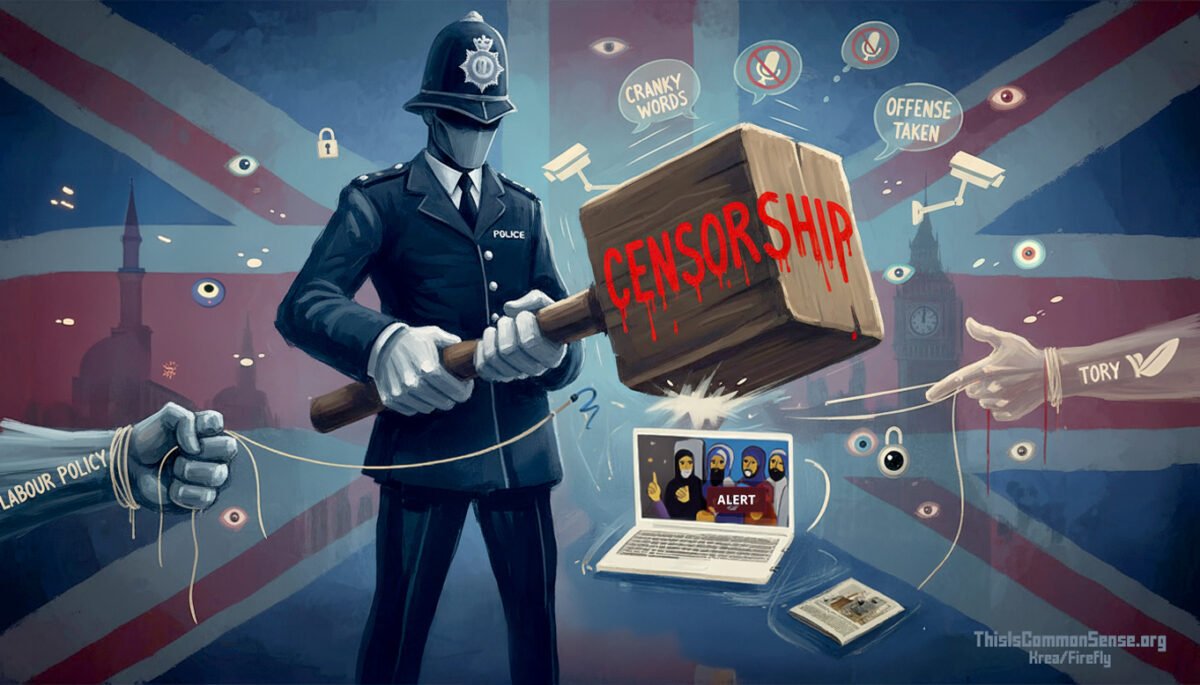
That good news is a retreat from harassing innocent people for posting online too freely for the taste of British police enforcers.
In the big picture, the change in policy by the Metropolitan Police Service is but a minor tactical withdrawal in the pursuit of a censorship agenda that is otherwise proceeding on all fronts. It’s not so minor for people like, say, comedy writer Graham Linehan.
Several weeks ago, Linehan was arrested at Heathrow Airport by five armed officers.
“I was arrested at an airport like a terrorist, locked in a cell like a criminal, taken to hospital because the stress nearly killed me, and banned from speaking online.” His sin was posting a few tweets critical of transgender activists.
The charges against Linehan have been dropped.
And from now on, says the Met, it will stop investigating “non-crime hate incidents.” A spokesperson explains that the commissioner “doesn’t believe officers should be policing toxic culture war debates. . . .”
The “non-crime hate incidents” will still be logged, though.
The policy of harassing Britons for cranky words has been softened before, by the Tories. When Labour came in, the new government promptly hardened things again.
And further caution: Met policy is not government policy.
So this particular hammer for banging upon speakers daring to offend the easily offendable could come swinging down again at any moment.
This is Common Sense. I’m Paul Jacob.
Illustration created with Krea and Firefly
See all recent commentary
(simplified and organized)
See recent popular posts

It is war that wastes a nation’s wealth, chokes its industries, kills its flower, narrows its sympathies, condemns it to be governed by adventurers, and leaves the puny, deformed, and unmanly to breed the next generation.
George Santayana, The Life of Reason: Reason in Society, (1905), p. 82.