On December 11, 1957, American cartoonist and Reason magazine contributor Peter Bagge was born.

On December 11, 1957, American cartoonist and Reason magazine contributor Peter Bagge was born.
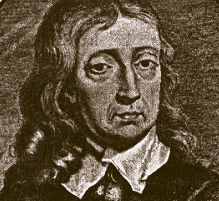
I cannot praise a fugitive and cloistered virtue, unexercised and unbreathed, that never sallies out and sees her adversary, but slinks out of the race where that immortal garland is to be run for, not without dust and heat.

To find out what Washington incumbents really want — and what really bugs them — click on over to Townhall. Then click back here. For the background.
Where liberty dwells, there is my country.
H.L. Mencken attributed this popular statement to Benjamin Franklin, written in a March 14, 1783 letter to Benjamin Vaughan. That letter, however, has not been located. Bartlett’s Familiar Quotations notes this was the motto of James Otis (Latin: Ubi libertas, ibi patria; the 1780 A Complete Book of Heraldry marks it as the motto of Daniel Huger, Esq. Many early biographies of Thomas Paine portray Ben Franklin mystically speaking these words to Paine. The slogan has also been attributed to Algernon Sidney, the forgotten founding father. In “Defining Liberty: An Analysis of Its Three Elements” (ABA Journal, April 1965), Wendell J. Brown identified John Milton as its author. Which is why we picture the great poet, above. Help in correctly citing priority for this great quotation would be greatly appreciated.
On December 10, 1884, Mark Twain’s Adventures of Huckleberry Finn was first published. This novel, narrated in the first person by the title character, is a dark comedy of the antebellum South and slavery, and has been considered by many American critics and writers to qualify as the “Great American Novel.”
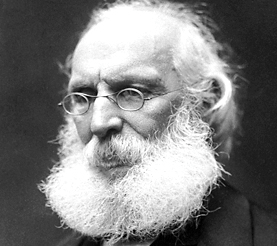
On this date in 1901, the first Nobel Peace Prizes were awarded — to economist Frédéric Passy (pictured above), co-founder of the Inter-Parliamentary Union; and to Henry Dunant the founder of the International Committee of the Red Cross.
Passy was an admirer of Richard Cobden and an active member in the French Liberal School of Political Economy that developed in the tradition of J.B. Say, Destutt de Tracy, and Frédéric Bastiat. His published works include Leçons d’économie politique (1860-61); La Démocratie et l’Instruction (1864); L’Histoire du Travail (1873); Malthus et sa Doctrine (1868); and La Solidarité du Travail et du Capital (1875).

The cyber/crypto currency Bitcoin has been going through downs and ups, recently. This discussion from a few weeks ago might help unpack some of the issues:
Be not astonished at new ideas; for it is well known to you that a thing does not therefore cease to be true because it is not accepted by many.
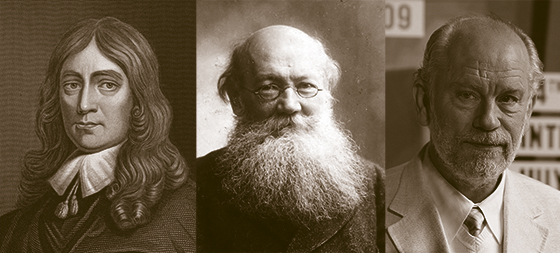
On December 9, 1958, the John Birch Society was founded in the United States. December 9 also marks the birthdays of

How can we expect the federal government to continue to function at its usual peak efficiency without the awesome 52 years of experience and institutional knowledge supplied by Michigan Congressman John Conyers?
American government faces a congressional brain drain, Conyers’s resignation in the wake of accusations of sexual harassment not being anything like unique. Yesterday, Senator Al Franken (D-Minn.) announced his impending resignation, as did Rep. Trent Franks (R-Ariz.) — before allegations against him had even hit the news.
Also imperiled? The talents of an unknown number of other eminent gropers and experienced molesters, a treasury of firsthand knowledge of how government really works.
Sure, the nation survived back when George Washington stepped down after two terms as president; when Congress lost Daniel Webster and Henry Clay and John C. Calhoun, the institution carried on.
But just think of the complexity of modern governance, and the great expertise and finely crafted statesmanship exhibited by someone like Congressman Conyers. Are we being sent up the proverbial Detroit River sans oar?
If only someone could step forward with the same skill-set as the iconic Conyers! Well, in announcing his resignation, and that his “legacy can’t be compromised or diminished in any way by what we’re going through now,” the congressman endorsed his son, John Conyers III, as his replacement.
Qualifications? you dare ask.
Back in 2010, the III tweeted, “My dad’s a f*cking player and reckless as hell! He just got at this doods wife super low-key.” Earlier this year, the young Conyers was arrested (but not prosecuted) on a domestic abuse charge.
Indeed, the “dood” appears more than able to carry on.
This is Common Sense. I’m Paul Jacob.

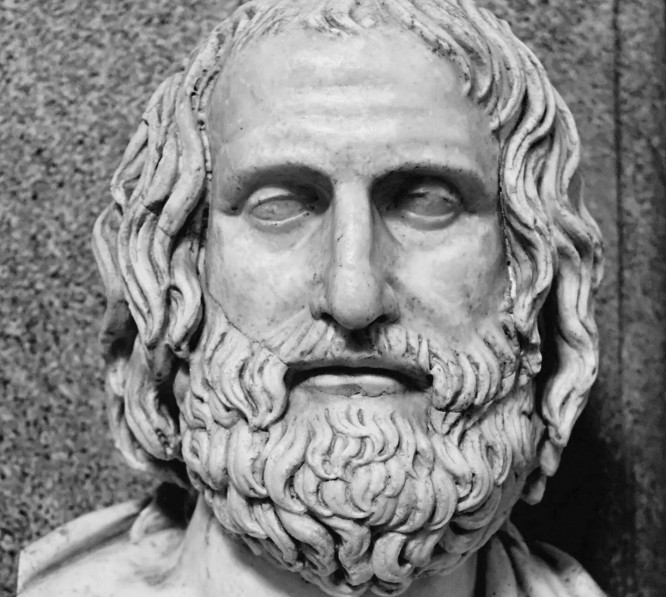
This is true liberty, when free-born men,
Having to advise the public, may speak free,
Which he who can, and will, deserves high praise;
Who neither can, nor will, may hold his peace:
What can be juster in a state than this?
Euripides, The Suppliant Women (c. 420-415 BC), as used by John Milton as epigraph to his Areopagitica (1644). A modern translation of this passage, and a few lines immediately preceding, by Frank William Jones, runs as follows:
Nothing . . .
Is worse for a city than an absolute ruler.
In earliest days, before the laws are common,
One man has power and makes the law his own:
Equality is not yet. With written laws,
People of small resources and the rich
Both have the same recourse to justice. Now
A man of means, if badly spoken of,
Will have no better standing than the weak;
And if the little man is right, he wins
Against the great. This is the call of freedom:
“what man has good advice to give the city,
And wishes to make it known?” He who responds
Gains glory; the reluctant hold their peace.
For the city, what can be more fair than that?