Categories
Today

Montesquieu

On January 18, 1689, Charles-Louis de Secondat, Baron de La Brède et de Montesquieu, French satirist and philosopher, was born.

His treatise The Spirit of the Laws was a major influence upon America’s founding generation. He is famous for his articulation of the theory of separation of powers, which is implemented in many constitutions throughout the world. He did more than any other author to secure the place of the word despotism in the political lexicon.

In 1811, former U.S. President Thomas Jefferson translated and published Destutt de Tracy’s Commentary and Review of Montesquieu’s ‘Spirit of Laws,’ a very popular review of republican principles — which helps demonstrate how important these French writers were to the American form of government.

Montesquieu died on February 10, 1755.

Categories
education and schooling folly ideological culture moral hazard

Through a Lens, Darkly

The “best debates” are ones in which one side shouts down the other side and threatens violence.

Well, that is what a Washington Post essay implies. In “Why ‘social justice warriors’ are the real defenders of free speech on campus,” Matthew A. Sears, an associate professor of classics and ancient history at the University of New Brunswick, offers a bizarre take on current campus controversies.

After two years of bizarre antics from leftist student bodies in colleges and universities all over the country, academics as diverse as Steven Pinker, Jordan Peterson, and Camille Paglia have denounced the intentionally disruptive and even violent tactics of student mobs. We need to go back to the Socratic method and “the disinterested pursuit of truth,” as Jonathan Haidt, the author of The Righteous Mind, put it.

Sears counters this by defending the “social justice approach” as better than a “disinterested pursuit of truth.” Instead of “constituting an attack on knowledge, the social justice lens reflects new ideas generated by academic disciplines and experts within them, and generally encourages expanding our knowledge and opening up subjects to new perspectives, much like Socrates advocated.”

Conflating Socratic “dialectic” with the screaming matches and overt force used by the social justice students who have shut down lectures, seminars and fora featuring non-leftist figures such as Ben Shapiro, Heather Mac Donald and Charles Murray, is more effrontery than enlightening.*

And about that “social justice lens”? Lenses refract, mirrors reflect — and Sears’ argument, you will notice, defends bad behavior out of his classroom by focusing on how he teaches in class.

We don’t need mirrors or lenses to see the deflection here.

This is Common Sense. I’m Paul Jacob.


* It was heartening to read most commenters on the page engaging in a merciless “dialectic” against the author.


PDF for printing


Categories
Today

George Stigler

On January 17, 1937, Chicago School economist George Stigler was born. Stigler won a Nobel Memorial Prize for his work. His autobiography is entitled Memoirs of an Unregulated Economist.

Categories
Thought

Montesquieu

If one only wished to be happy, this could be easily accomplished; but we wish to be happier than other people, and this is always difficult, for we believe others to be happier than they are.

Categories
Accountability crime and punishment First Amendment rights general freedom government transparency local leaders moral hazard Regulating Protest too much government U.S. Constitution

Lock Her Up

“Who Are We?” I asked Sunday at Townhall.com.

Today’s question: What have we come to?

Under a seemingly click-bait headline in The Atlantic, “Can Government Officials Have You Arrested for Speaking to Them?” Garrett Epps examines last week’s outrageous handcuffing and arrest of a Louisiana teacher, Deyshia Hargrave, for speech displeasing to the Vermilion Parish school board at a public meeting.

The elementary school teacher complained about a $30,000 raise the board was giving the superintendent, noting that teachers had not seen an increase in nearly a decade. After asserting that the raise would be “basically taken out of the pockets of teachers,” she was ruled out of order by the school board president and then asked to leave the premises. She calmly left the meeting room . . . only to be forced to the floor, handcuffed and arrested once in the hallway.

Police claimed the arrest was for “remaining after having been forbidden” and “resisting an officer.”

The school district announced it won’t press charges. Very funny. Anyone can see from the video that her treatment was excessive.

Next month, the U.S. Supreme Court will hear oral arguments in Lozman v. Riviera Beach, Florida, where an arrest was clearly retaliatory, but the city is newly claiming another violation it could have used to arrest Mr. Lozman.

Does this after-the-fact adding on of charges provide governments with an escape clause? As Epps argues, a Lozman decision “could either rein in, or embolden, the tiny-handed tyrants who rule county buildings and city halls around the country.”

If respectfully challenging our so-called public servants in meetings designed for that can lead to being arrested, handcuffed and dragged off, we no longer live in ‘the land of the free.’

This is Common Sense. I’m Paul Jacob.


PDF for printing


Categories
Today

Religious Freedom

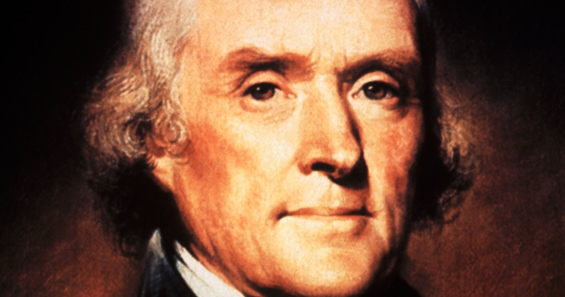
On January 16, 1786, Virginia enacted the Statute for Religious Freedom authored by Thomas Jefferson.

Categories
Thought

Ayn Rand

Your life, your achievement, your happiness, your person are of paramount importance. Live up to your highest vision of yourself no matter what the circumstances you might encounter.

Categories
Accountability folly government transparency local leaders moral hazard porkbarrel politics responsibility too much government

Babylon Goes Broke

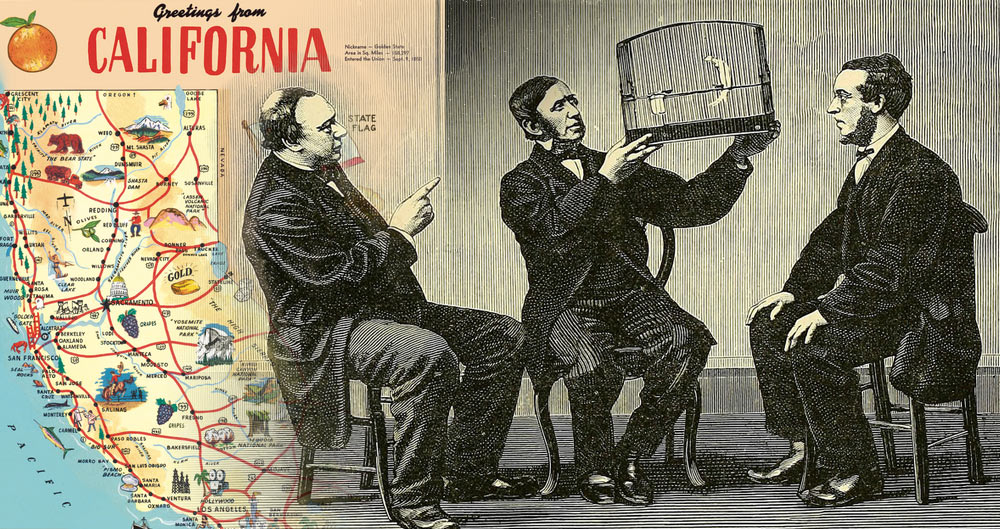
A few Babylonian, er, California cities going bankrupt — Stockton, Vallejo, and Bell — should be seen as more than dead canaries in a coalminer’s care.

Indeed, you don’t need special prophetic gifts to see the dangers posed by over-promising cushy pensions to government workers. Californians are coming around. And the state’s governor, Jerry Brown, appears to be “calling for reductions in gold-plated, unsustainable public-sector pensions,” as Nick Gillespie informs us at Reason.

But statewide reforms will not be easy. The problem is huge, presenting grave costs. “Absent the ability to alter pensions, states and localities have to devote more and more of their taxes to simply covering the costs of retired workers,” Gillespie explains. “Worse still, they often raise taxes to cover rising costs, typically at the expense of providing basic services such as police and road maintenance.”

Yes, over-promising defined-benefit pension packages effectively distributes wealth away from basic government services and into the pockets of the people with whom politicians work most closely.

Unfortunately, the courts long ago decided that politicians’ promises to employees outweigh basic government duties. That is, the courts determined that “public-sector employees at all levels of government had an inviolable right to the pension benefits that existed on the day they were hired.”

But the courts seem to be lightening up on this “California Rule,” and the governor has dared mention that, come “the next recession,” some headway might be possible.

No matter what you may think of this rather desperate hope, the writing is on the wall. And it is in red ink and numbers, not Babylonian.*

As America’s Babylon is finding out.

This is Common Sense. I’m Paul Jacob.


* And not “Mene, Mene, Tekel, Upharsin.”


PDF for printing
 

Categories
Thought

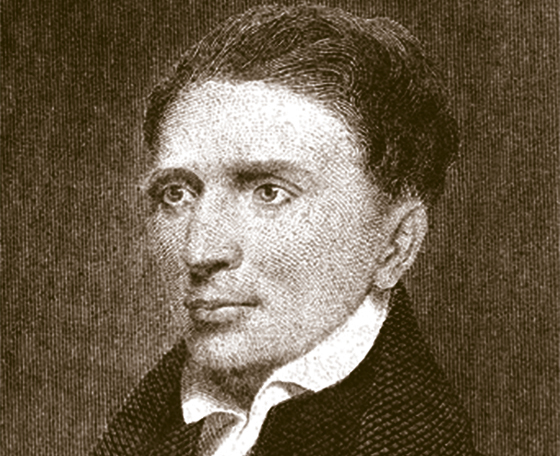
William Leggett

“‘DO NOT GOVERN TOO MUCH,’ is a maxim which should be placed in large letters over the speaker’s chair in all legislative bodies. The old proverb, ‘too much of a good thing is good for nothing,’ is most especially applicable to the present time, when it would appear, from the course of our legislation, that common sense, common experience, and the instinct of self-preservation, are utterly insufficient for the ordinary purposes of life; that the people of the United States are not only incapable of self-government, but of taking cognizance of their individual affairs; that industry requires protection, enterprize bounties, and that no man can possibly find his way in broad day light without being tied to the apron-string of a legislative dry-nurse. The present system of our legislation seems founded on the total incapacity of mankind to take care of themselves or to exist without legislative enactment.”


William Leggett, in an editorial in the Evening Post, March 11, 1835 (republished in A Collection of the Political Writings of William Leggett (1840), and titled “The Legislation of Congress”).

Categories
Today

New Connecticut?

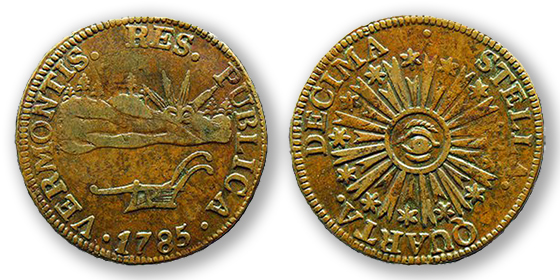
On January 15, 1777, New Connecticut declared independence from the crown of Great Britain and the colony of New York.

Delegates first named the independent state New Connecticut and, in June 1777, finally settled on the name Vermaont, an imperfect translation of the French for Green Mountain.

This new “Vermont Republic” minted copper coins (see above), first struck in 1785. The people of Vermont took part in the American Revolution although the Continental Congress did not recognize the jurisdiction, because of vehement objections from New York, which had conflicting property claims.

In 1791, Vermont was admitted to the United States as the 14th state, upon which its minting of coins ceased.