Categories
links

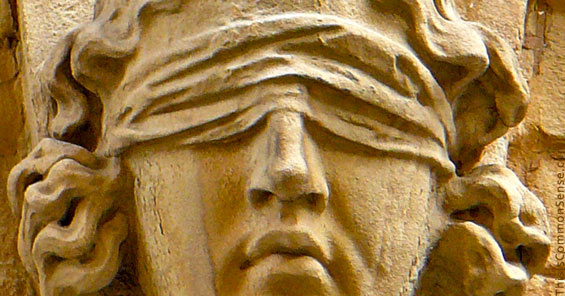
Townhall: Justice Post Blindfold

Sometimes law is just politics. But must it be so? Make a motion over to Townhall, and then make your appeal back here.

On Tuesday, March 6, the column appears on this site.

Categories
video

Gender and Racial Identity Fluidity … in Kindergarten

Really? This is a thing?

https://youtu.be/D9d0Um11OnY

Categories
Today

25th Anniversary

On March 3, 1991, an amateur videographer captured the beating of Rodney King by Los Angeles police officers, thus ushering in the age of citizen surveillance of the state.

Categories
Thought

Epicurus

Those animals which are incapable of making binding agreements with one another not to inflict nor suffer harm are without either justice or injustice; and likewise for those peoples who either could not or would not form binding agreements not to inflict nor suffer harm.

Categories
Accountability ballot access general freedom government transparency initiative, referendum, and recall local leaders moral hazard

Fear of Voters

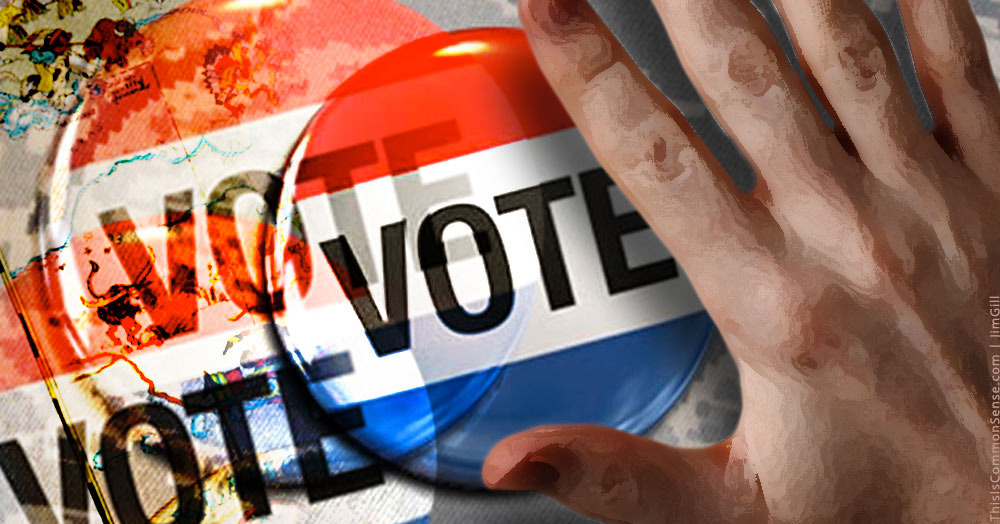
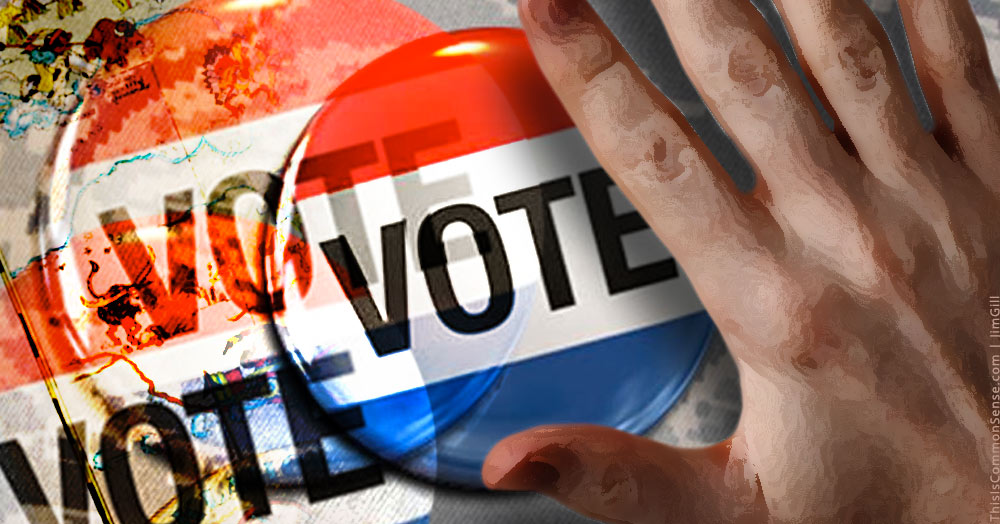
You are a state legislator, say. And an issue could be placed on the ballot on which a majority of your state’s citizens might not vote according to your preference. What would you do?

  1. Educate your fellow citizens on the merits of your position; or
  2. Dawdle while calling a lobbyist for advice; or
  3. Change the constitution to make it impossible for such a vote to ever be held?

State Rep. John Enns chose option C — perhaps after exhausting B. Stamping out Oklahoma’s ballot initiative process, freeing Enns and other legislators from this citizen check at the ballot box, is the essence of his House Bill 1603.

The Sooner State already possessed the toughest petition requirements in the country.  Supporters must gain the country’s highest percentage of voter support (15 percent) while limited to the second shortest time period (90 days) to circulate petitions.

On top of this current statewide slog, Enns’ constitutional amendment would require also qualifying in every single county. Oklahoma has 77 counties.

As the Tulsa World editorialized, “he wants to make it impossible.”

What lousy rationale lies behind Enns’ desire to destroy democratic governance?

In response to another legislator’s query about his “fear that some marijuana bill will . . . become a state [ballot] question,” Enns claimed his effort was “not pre-emptive.” But he acknowledged his strong opposition to legalizing recreational marijuana, which he pointed out “had been done through initiative petition” in other states.

Enns is afraid of Oklahoma voters having their say. He should be.*

This is Common Sense. I’m Paul Jacob.


* I mean, of course, that Rep. Enns should fear being booted out of office on his keister. He should not have to fear physical reprisal. The Tulsa World reports that the Oklahoma Highway Patrol is now providing security to Enns, after a death threat was received related to his HB 1603.


PDF for printing


Categories
Today

Rothbard and Houston

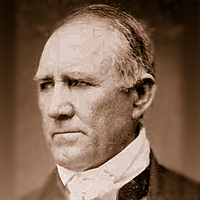
On March 2, 1793, Sam Houston was born.

On March 2, 1926, American economist and political theorist Murray N. Rothbard was born.

As President of the Republic of Texas, Houston (pictured above) cut the size of the Republic’s budget by a whopping amount, including selling the navy for scrap. Rothbard theorized about even more daring — and more permanent — cuts to (and limits upon) government.


On March 2, 1781, the Second Continental Congress convened as the new Congress of the Confederation, under the Articles of Confederation, ratified the day before. The congress elected no new president upon adoption of the Articles. This Confederation Congress oversaw the conclusion of the American Revolution.

Categories
Thought

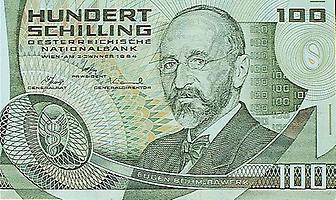
Eugen von Böhm-Bawerk

The monopolist . . . never has unlimited control; he merely has the choice within the laws of price of different ‘economically possible’ price levels. He can select that price at which the combination of profit for each article, and the number of articles to be sold at that price, are likely to promise the greatest total profit, but he cannot exert his ‘power’ in any other way than in conformity with the laws of price, for it is his behavior that establishes the ‘price law,’ namely the conditions of the amount offered at a given price level, but never can he counteract the laws of price.


Eugen von Böhm-Bawerk, “Control or Economic Law,” Zeitschrift für Volkswirtshaft, Sozialpolitik und Verwaltung, Volume XXIII (1914): 205–71; John Richard Mez, Ph.D., translator.

Categories
Accountability crime and punishment general freedom ideological culture judiciary media and media people moral hazard national politics & policies Regulating Protest too much government

Post Blindfold

While the Supreme Court heard oral argument, Monday, in Janus v. American Federation of State, County and Municipal Employees (AFSCME), the court of public opinion focused not so much on the constitutionality of the law in question, i.e. justice, but instead on the partisan impact of the decision, i.e. politics.

A Washington Post editorial advances the notion that the court was presented “with two questions. The first is the legal issue . . .” and the second “implicit” question is “how the court should conduct judicial review in a deeply polarized society.”

Plaintiff Mark Janus and his legal team are seeking an “extraordinary remedy in the context of the Supreme Court’s tumultuous recent history,” claims the Post.

But that history is not Mr. Janus’s.

Or the union’s.

Or even U.S. labor relations’.

The editors are talking about Washington’s bitter 2016 political fight.

What does political polarization have to do with the facts or law of this case? Nothing. Except . . . what’s in peril is a system whereby government workers who do not wish to join a union are nonetheless forced to pay union dues.

So, if the Court nixes current law, AFSCME might wind up with fewer dues paying members . . . meaning less money for AFSCME’s political pet, the Democratic Party.

And Democrats — now stuck with a conservative replacement for the late Justice Scalia — are left only with Obama’s pronouncement: “Elections have consequences.”

And, embarrassingly, the Post’s bizarre case for “steering the court modestly down the middle of the road.”

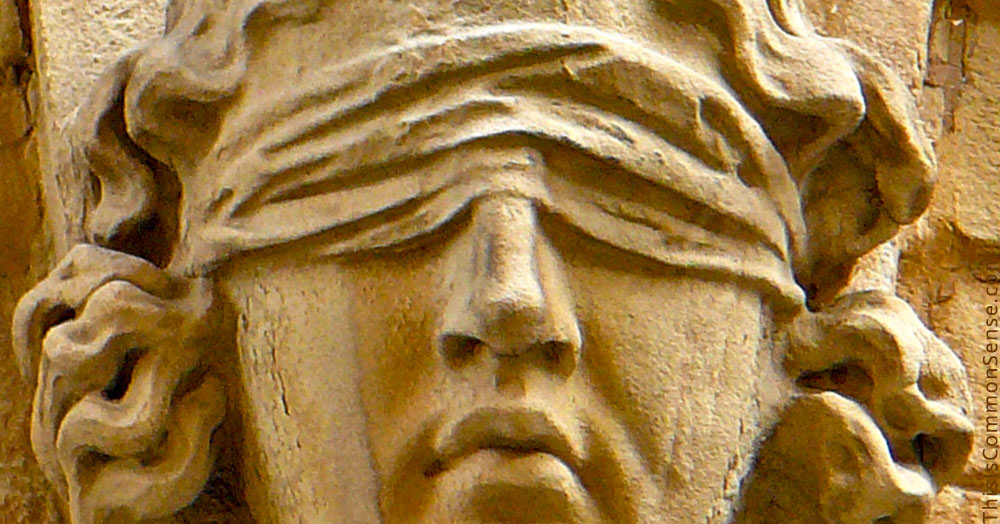
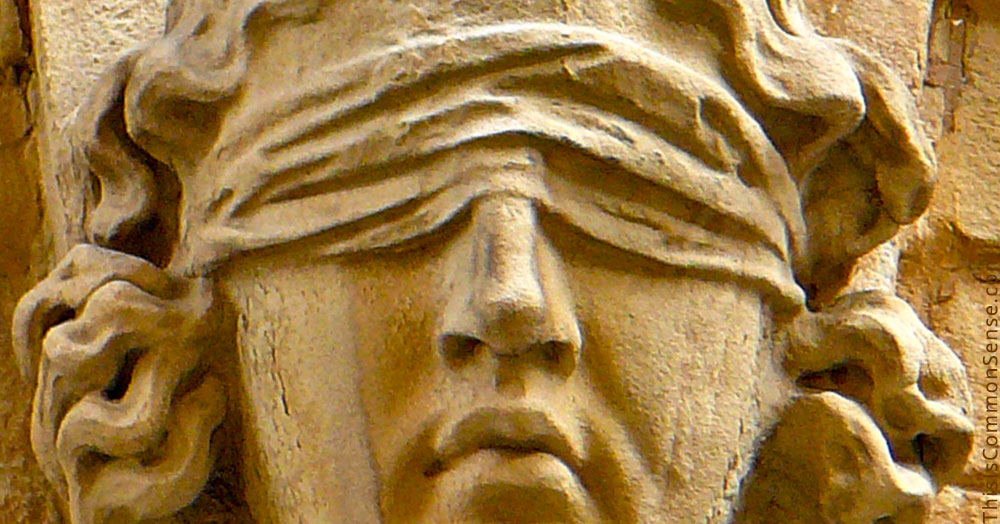
A lady, blindfolded, holding scales and a sword symbolizes justice. That blindfold is not to avoid reading the law; it represents the imperative to ignore politics.

This is Common Sense. I’m Paul Jacob.


PDF for printing
 

Categories
Today

March First Firsts

March 1st Firsts (and a 17th and a 37th):

| The first United States census was authorized, in 1790.

| Ohio was admitted as the 17th U.S. state, in 1803.

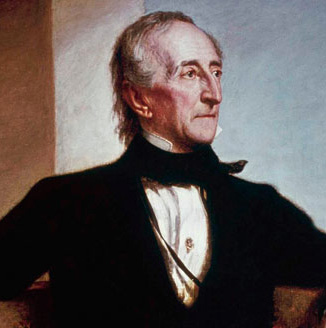
| President John Tyler [pictured above] signed a bill authorizing the United States to annex the Republic of Texas, in 1845.

| The state of Michigan formally abolished capital punishment, 1847.

| Nebraska became the 37th of the United States, in 1867.

| Yellowstone National Park was established as the world’s first national park, 1872.

On March 1, 1781, the Continental Congress of the United States adopted the Articles of Confederation. With this, the governing body became known, officially, as United States of America in Congress Assembled, more commonly as the Congress of the Confederation. The first session of this newly styled Confederation Congress took over without a break from the Second Continental Congress, adjourning on November 3. Samuel Huntington and Thomas McKean served as presidents during this first session.

Categories
Thought

Epicurus

The just person enjoys the greatest peace of mind, while the unjust is full of the utmost disquietude.


Epicurus, Principal Doctrines, 17