Categories
Accountability crime and punishment government transparency insider corruption local leaders media and media people Popular

Sweet Schadenfreude?

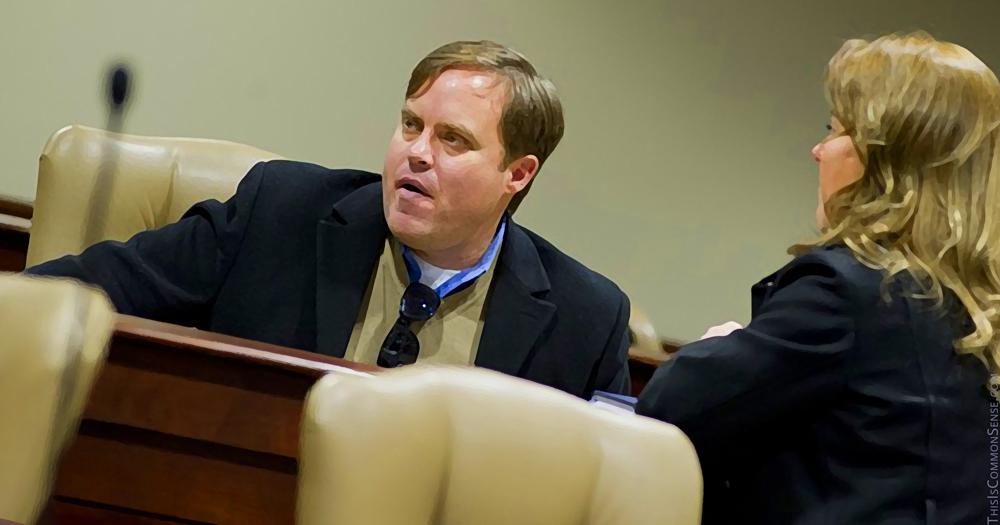
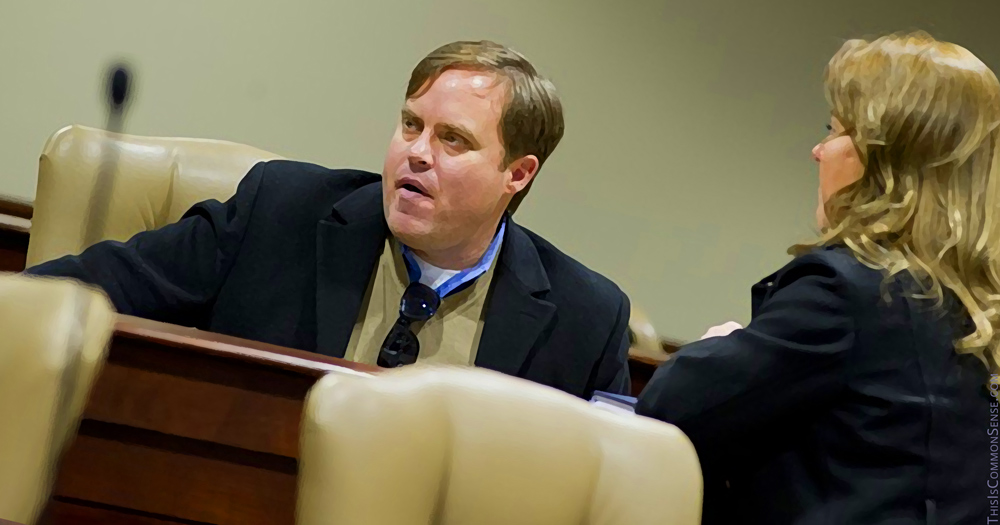
Yesterday, jurors convicted former Arkansas State Senator Jon Woods on 15 felony counts consisting of conspiracy, wire fraud, mail fraud and money laundering.

Woods was at the center of a corrupt scheme to reward cronies at Ecclasia College and AmeriWorks with GIFs — state General Improvement Funds — in return for kickbacks. Former State Rep. Micah Neal, his co-conspirator, pleaded guilty more than a year ago. And last month, the former president of Ecclesia College, Oren Paris III, also admitted guilt.

Regular readers may remember Woods as the Senate author of Issue 3, placed on the 2014 ballot by legislators — along with a summary for voters to read that fibbed about “establishing term limits” and imposing a gift ban between lobbyists and legislators.

Enough voters were hoodwinked,* leading to the gutting of term limits (allowing a legislator to stay in the same seat for 16 years), the empowering of a legislature-appointed “Independent” Commission to bestow a 150 percent pay raise on legislators, and the enabling of legislators to eat every meal at the lobbyists’ trough.

Mr. Woods now faces as many as 20 years on each of 14 counts and ten more years on the money laundering conviction. Having experienced, in a previous life, the poor customer service in the federal prison system, I do not wish that on anyone.

But justice has been done.

More good news: the Arkansas Supreme Court has since ruled the entire corrupt GIF program unconstitutional . . . while Arkansas Term Limits closes in on completion of their petition drive to place a measure on this November’s ballot to restore the term limits stolen by Woods.

This is Common Sense. I’m Paul Jacob.


* The measure passed 52 to 48 percent at the ballot box.


Previous coverage here of Woods’ corruption:
 

PDF for printing


Categories
Today

Historian

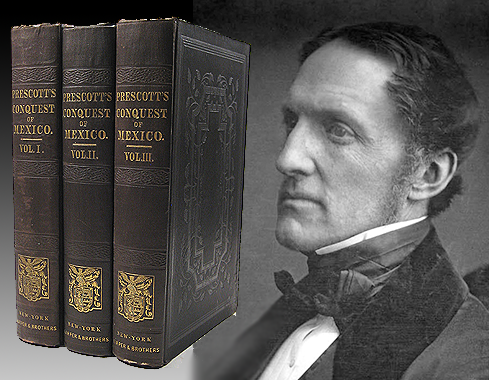
On May 4, 1796, American historian William H. Prescott was born. Prescott’s History of the Conquest of Mexico and his Conquest of Peru remain classic works of well-researched, ”scientific history.” Prescott, Arizona, was named in his honor.

Categories
Thought

Benedetto Croce

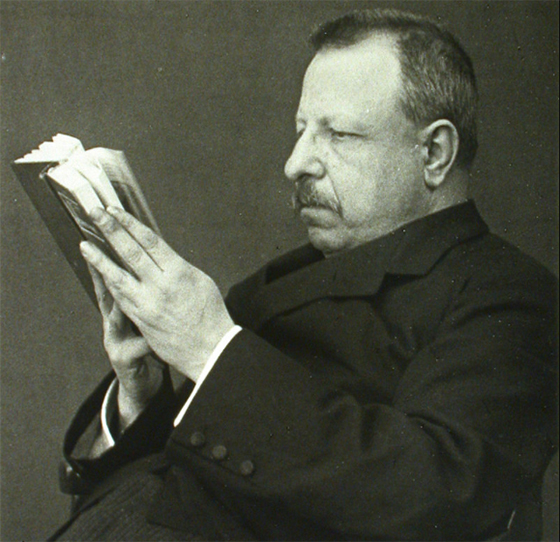
We are products of the past and we live immersed in the past, which encompasses us. How can we move towards the new life, how create new activities without getting out of the past and without placing ourselves above it? And how can we place ourselves above the past if we are in it and it is in us? There is no other way out except through thought, which does not break off relations with the past but rises ideally above it and converts it into knowledge.


Benedetto Croce was an Italian philosopher and outspoken anti-fascist. He called his political philosophy “liberism.”

Categories
crime and punishment free trade & free markets general freedom media and media people moral hazard nannyism national politics & policies property rights too much government U.S. Constitution

The Studio System: The Sequel

Evermore virtue signaling, everless virtue — that pretty much encapsulates Oscars’ night. The industry that brought us Harvey Weinstein and the occasion for #MeToo made the 90th Academy Awards two months ago unwatchable for most of us.

Now, as the Academy of Motion Pictures Arts and Sciences loses touch with audiences around the country, Netflix appears to have decided to horn its way into the Oscars. “Netflix will reportedly begin purchasing movie theatres,” informs The Independent, “to help it get ahead in the race for Academy Awards.

The streaming giant has aimed to land an Oscar nod since the release of its first original feature in 2015, Beasts of No Nation. 

I have not seen that film, but I have made time for some entertainment (and a few documentaries) on Netflix. After Stranger Things and Wormwood, I think I can safely repeat a point I’ve made before: this is the new Golden Age of Television.

But Netflix wants more prestige than the TV industry’s “Emmys.”

Whether the company succeeds with the Oscars, notice: Netflix is becoming a major studio — complete with “vertical integration.” Just what the Supreme Court tried to kill in 1948 when it ruled against the studio system’s “monopoly” status.

That decision, plus the rise of broadcast television, dealt a death blow to the studios — and arguably movie quality.

Maybe a new studio system (also courtesy of Amazon Prime, Apple, and other players) will make for a renaissance.

For feature-length films.

If we can just keep government out of it.

This is Common Sense. I’m Paul Jacob.


PDF for printing


Categories
Thought

Galileo Galilei

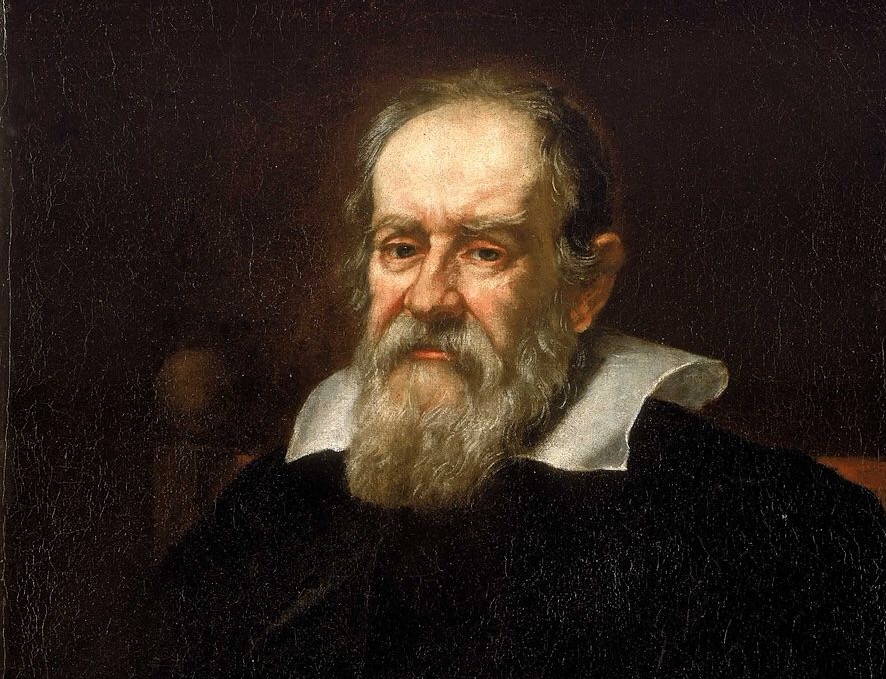
Philosophy is written in this grand book — I mean the universe — which stands continually open to our gaze, but it cannot be understood unless one first learns to comprehend the language in which it is written.


Galileo Galilei, Il Saggiatore (1623), as translated in The Philosophy of the Sixteenth and Seventeenth Centuries (1966), by Richard Henry Popkin, p. 65.

Categories
Today

Between the crosses

In 1791, the Constitution of May 3, the first modern constitution in Europe, was proclaimed by the Sejm of the Polish–Lithuanian Commonwealth.

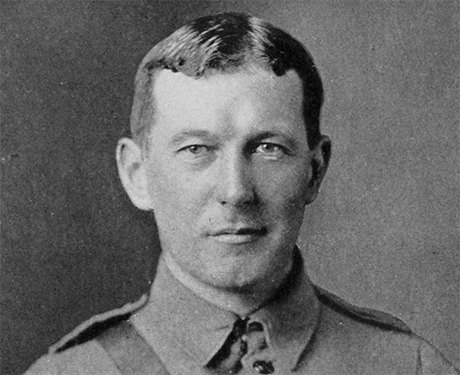
On May 3 in 1915, Lieutenant Colonel John McCrae composed the poem “In Flanders Fields,” the most famous poem of World War I. The Canadian physician wrote it after presiding over the funeral of friend and fellow soldier Lieutenant Alexis Helmer, who died in the Second Battle of Ypres. It is in the form of a rondeau.

Categories
Thought

Lieutenant Colonel John McCrae

In Flanders fields the poppies blow
Between the crosses, row on row,
That mark our place; and in the sky
The larks, still bravely singing, fly
Scarce heard amid the guns below.

We are the Dead. Short days ago
We lived, felt dawn, saw sunset glow,
Loved and were loved, and now we lie
In Flanders fields.

Take up our quarrel with the foe:
To you from failing hands we throw
The torch; be yours to hold it high.
If ye break faith with us who die
We shall not sleep, though poppies grow
In Flanders fields.

Categories
Accountability First Amendment rights ideological culture media and media people moral hazard U.S. Constitution

Exit Strategy Advised

The First Amendment applies only against governments, but our free speech rights can be violated by nearly anyone.

These days, these rights are most notoriously and routinely violated by mobs of students . . . attending colleges and universities nearly all of which depend upon taxpayer subsidies.

David E. Bernstein, writing at the Volokh Conspiracy, in “USC Law Professor: Supporters of Campus Free Speech are ‘Preying on Vulnerable Teenagers,’” makes a number of points regarding a law professor’s published defense of nasty student reactions to a Federalist Society speaker . . . on a campus not his own.

Bernstein notes that “the article has to have the requisite references to the Emmanuel Goldsteins of the modern left, the Koch Brothers, who are mentioned four times for no discernable reason.” The reason, of course, is demonization. For a movement needs enemies.

The USC law professor argues that journalists should ignore campus speaking events that “goad” students into “tactical mistakes” by the “mean-spirited provocations” of “seasoned political operatives preying on vulnerable teenagers and inexperienced young adults.”* Bernstein shows that the “tactical mistakes” amount to peaceful and intellectual speakers being “harrassed, shouted down, and subject to or threatened with violence”; every reasonable person knows that disagreeing with the ideas someone communicates does not excuse violating that someone’s rights.

No matter how “provocative.”

Most chillingly, the speaker who incited student ire and accusations, etc., had been advised by “a security guard” before his “talk” to devise “an ‘exit strategy.’” This indicates that the American taxpayer needs an exit strategy from subsidizing anti-democratic mob activism.

And its professorial enablers.

This is Common Sense. I’m Paul Jacob.


* Don’t you find this language awfully coddling of people who should be treated as responsible for their actions, and who, by their attendance at an institution of higher learning, should be capable of listening to any point of view? I find it maddening.


PDF for printing


Categories
Thought

Benedetto Croce

Morality, and the ideal of freedom which is the political expression of morality, are not the property of a given party or group, but a value that is fundamentally and universally human. . . . No people will be truly free till all are free.


Benedetto Croce was an Italian philosopher and outspoken anti-fascist. He called his political philosophy “liberism.”

Categories
Today

Run for the border

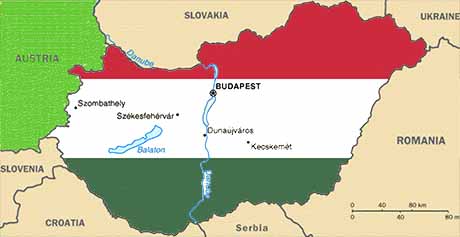
On May 2, 1989, Hungary began dismantling its border fence with Austria, allowing a number of East Germans to defect.