Categories
folly ideological culture media and media people national politics & policies

Sometimes a Great Moment

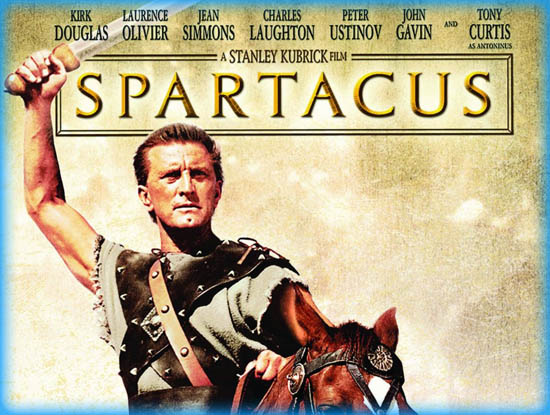
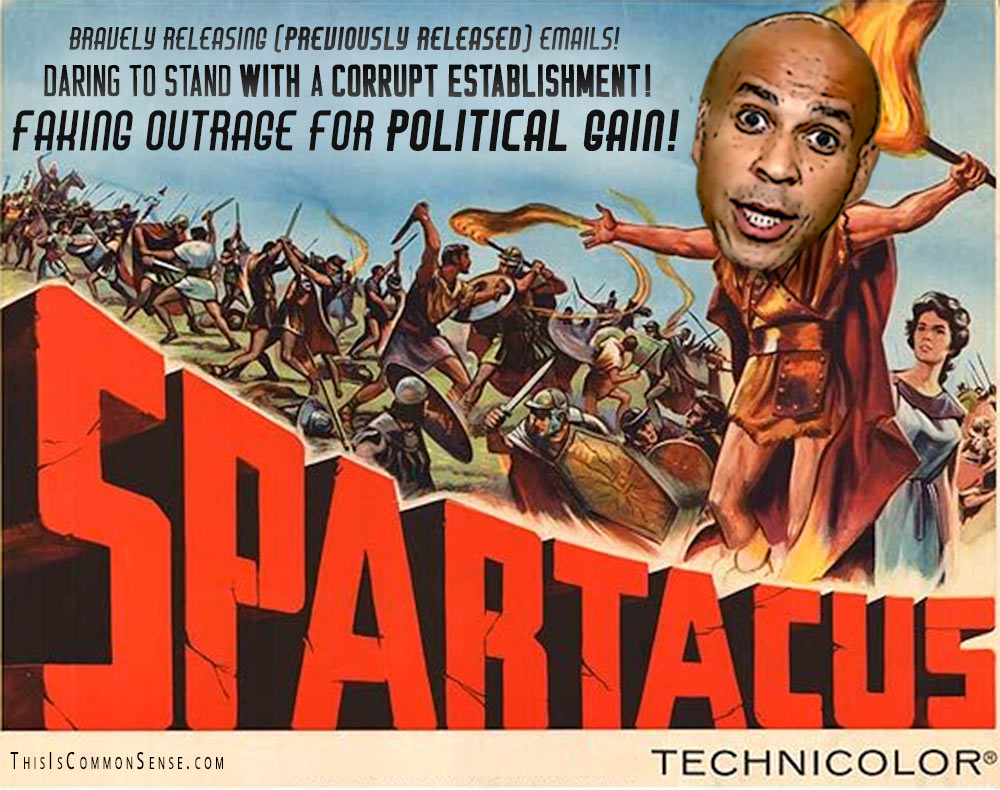
“This is about the closest I’ll probably ever have in my life to an ‘I am Spartacus’ moment,” Corey Anthony Booker said, referring, during last week’s Senate hearings, to his “leakage” of confidential emails from Supreme Court nominee Brett Michael Kavanaugh.

How the mighty have fallen. Senator Booker, when mayor of Newark, seemed an up-and-comer.

Now? A down-and-goer?

“I come from a long line, as all of us do as Americans, of understanding what that kind of civil disobedience is, and I understand the consequences.” It was almost a Br’er Rabbit Briar Patch Moment, performatively suggesting, “whatever you do, don’t censure me.”*

The moment Senator Booker was referring to was from Stanley Kubrick’s Spartacus, where a group of slaves all claim to be Spartacus, the leader of the rebelling slaves. Booker mostly missed the point of a great movie scene. 

That wasn’t all he missed. The emails he leaked (a.) had in fact been previously released to the public; (b.) he knew this; and (c.) they somehow failed to provide that killer proof of Kavanaugh’s racist love of racial profiling.

Funny, in a cringe-inducing sort of way, as when someone tries to tell a mildly risqué joke at a church social . . . and flubs it.

Booker was not the only one to make a fool of himself at the Senate’s Supreme Court nomination hearings. Though Kavanaugh doesn’t seem so scary, Democrats have gone off the beam, even so far as to engage in ululations of protest.

Why?

I have several theories. But maybe it’s just that they are out of power.

It’s especially hard being out of power when power is what you are all about.

This is Common Sense. I’m Paul Jacob.


* Being seen as the underdog is so persuasive that some will put themselves under a dog.

PDF for printing


Categories
Today

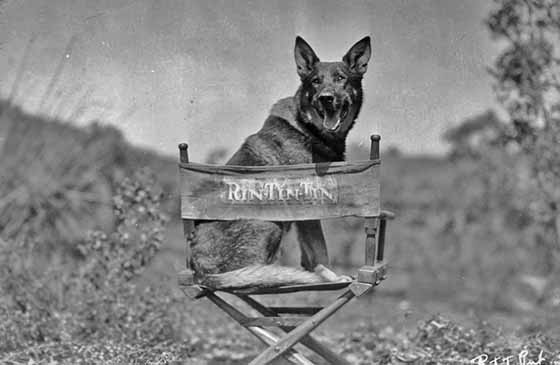
Rin Tin Tin

September 10, 1918, is the estimated date of birth for Rin Tin Tin, one of a litter of shell-shocked puppies found by an American serviceman in a bombed-out kennel in Lorraine, less than two months before the end of World War I. The dog went on to become the lead actor in a number of very popular films, and one of the great celebrities of his age.

Categories
Thought

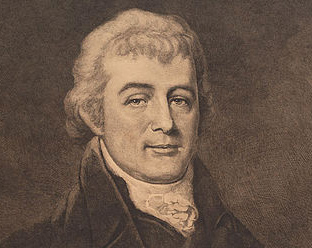
Luther Martin

We have no right to expect that our rulers will be more wise, more virtuous, or more perfect than those of other nations have been. . . .

Categories
links

Townhall: Make Sense, Not Ululations

Oh, how weird it has all gotten! But why? Well, what is demanded?

Click on over to Townhall.com. Then back here for more perspective:

This column will appear on this site and in downloadable PDF on Tuesday: click here.

Categories
Today

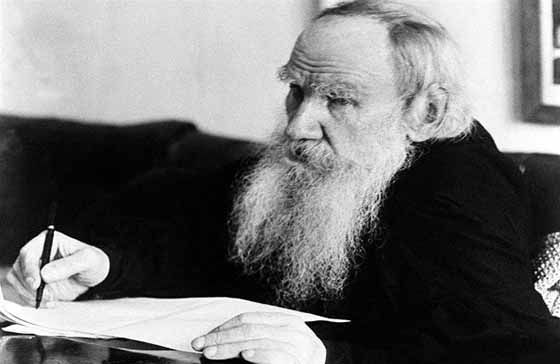
Leo Tolstoy

On September 9, 1828, Count Lev Nikolayevich Tolstoy was born. Known most commonly in the English-speaking world as Leo Tolstoy, he became the celebrated author of the novels Anna Karenina and War and Peace, as well as the novellas and short stories entitled “Family Happiness,” “The Death of Ivan Ilyich,” and “The Kreutzer Sonata.”

His political and religious ideas heavily influenced Gandhi and Martin Luther King, Jr.

Tolstoy died in 1910.

Categories
video

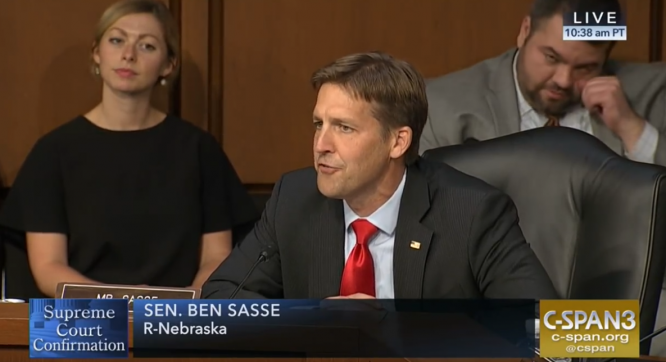
Senator Sasse Has Good News, Bad News

Ben Sasse provides some context for the Kavanaugh appointment to the Supreme Court, the brouhaha regarding same, and the predicament of modern America.

Categories
Today

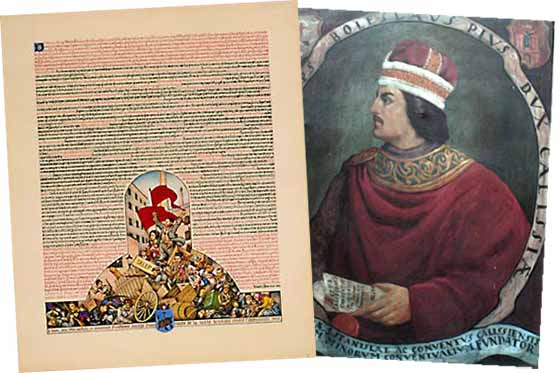
Statute of Kalisz

On September 8, 1264, Boleslaus the Pious, Duke of Greater Poland, promulgated the Statute of Kalisz, guaranteeing Jews safety and personal liberties and giving battei din jurisdiction over Jewish matters.

On the same date in 1883, former U.S. President Ulysses S. Grant drove in the final “golden spike” completing the Northern Pacific Railway in a ceremony at Gold Creek, Montana.

Categories
general freedom ideological culture media and media people moral hazard

Until the Fat Lady Offends

We live in a new Age of Offense. A whole lot of people make a whole lot of fuss about what other people say and listen to, view and experience.

Then again, some things are enormously offensive.

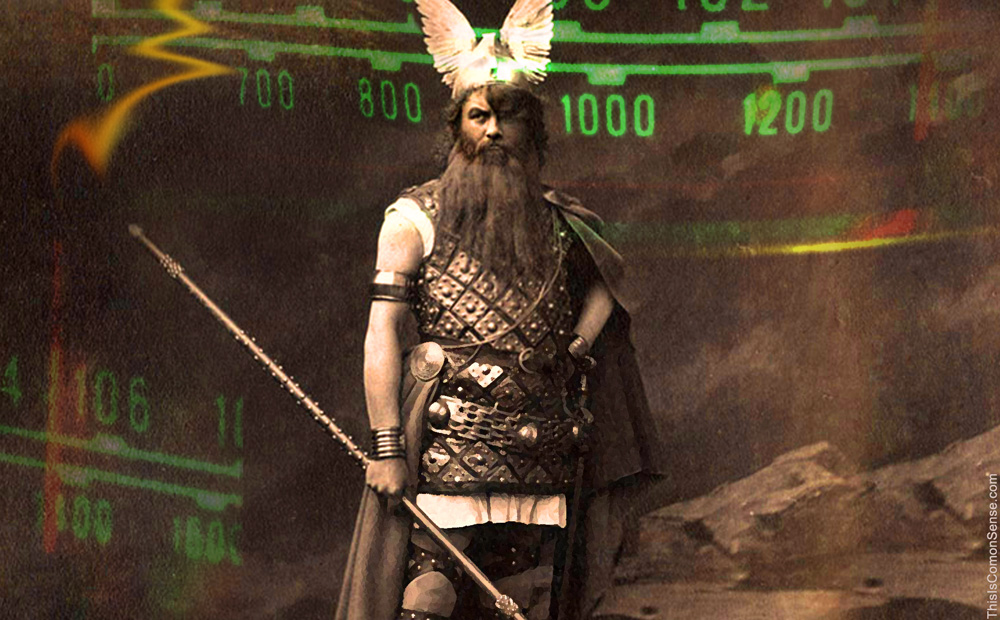
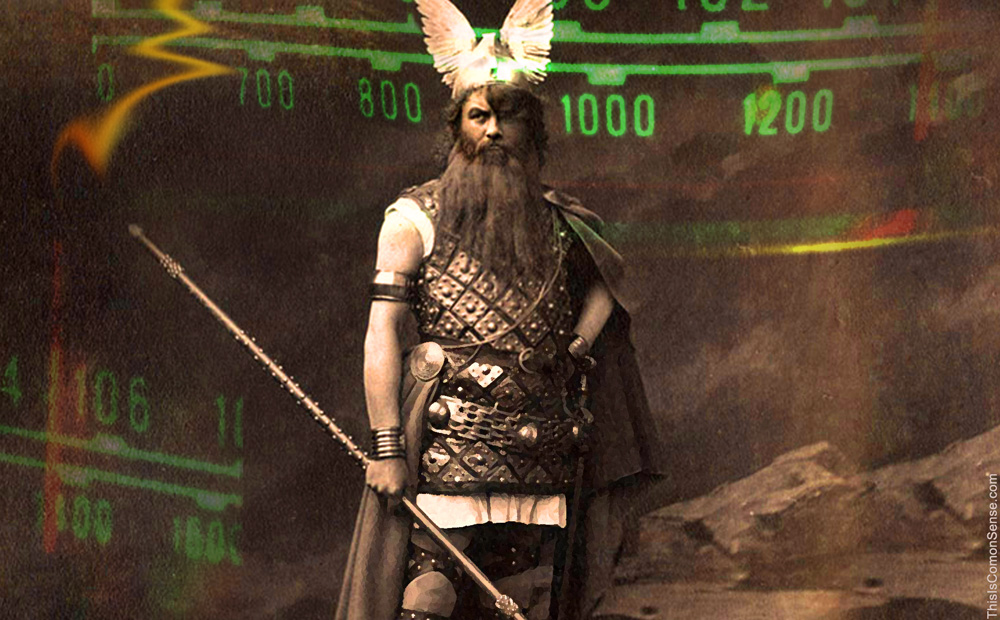
One of the latest offense-takings takes place in Israel, where a classical music station played music by Richard Wagner. And so of course had to apologize.

The music played was from the final opera in Wagner’s Ring Cycle. Not my cup of tea. Or coffee. Or latte. As those who follow me on Facebook know, I have varied musical tastes, but more classic rock than classical.

Israelis who listen to classical tend to be none too fond of Wagner not because he was an especially bad composer (I’m told he is a “Great”) but because he was very much an anti-Semite, and Hitler’s favorite composer.

“While there is no law in Israel banning the German composer’s works from being played,” The Telegraph informs us, “orchestras and venues refrain from doing so because of the public outcry and disturbances accompanying past attempts.”

Understandable.

Still, some Israelis do like Wagner’s music. But since the radio station is State-owned and -controlled, the Israel Wagner Society’s president’s admonishment that “Whoever doesn’t want to hear the music can always turn the radio off,” doesn’t quite work.

That would apply only were the station owned by the Israel Wagner Society — willing to bear the loss of customers one might expect in Israel.

In America, of course, Wagner is often on the air. 

And those who object . . . turn the dial. 

This is Common Sense. I’m Paul Jacob.


PDF for printing


Categories
Thought

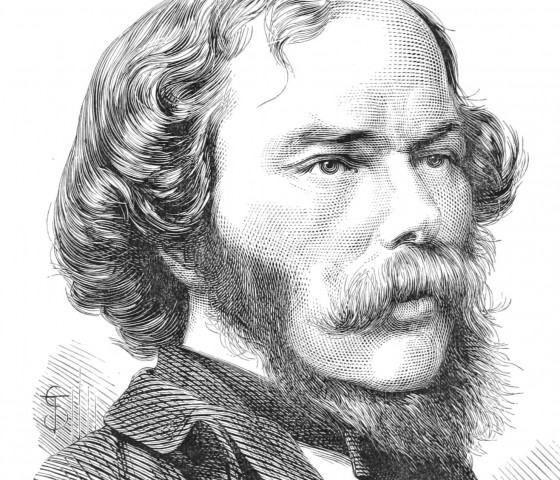
George H. Lewes

History shows how the human mind, which, at the dawn of civilisation, was a lyre of three chords, became in the progress of civilisation a lyre of seven chords. . . .

G. H. Lewes, Problems of Life and Mind (Third Series) Problem the First — The Study of Psychology: Its Object, Scope, and Method (1879), p. 157.
Categories
Today

Fannie and Freddie

On September 7, 2008, the US Government “took control” of the two largest mortgage financing companies in the United States, Fannie Mae and Freddie Mac. Both of these had been created by Congress as part of a concerted plan to make home ownership easier, and both had gotten completely out of hand during the many years of their existence, especially under new rules established by politicians in the 1990s. The after-market that they helped create — the packaged mortgage market — was what imploded in 2007–2008, leading to the economic slump that Nicholas Nassim Taleb referred to as setting the U.S. government on President Obama’s economic policy course of “eight years of Novocain.”