While in America we are not immune to government-induced too-high prices for fuel, in France it is worse. The rioting there got a rise out of the now much-despised President Macron, this week. But is all the tumult over just gasoline prices? It has become much more.
And dangerous. But what should we expect? The French people have been treated very poorly by their government:
On December 15, 1791, the United States Bill of Rights became federal law when ratified by the Virginia General Assembly.
On December 15 in 1933, the Twenty-first Amendment to the United States Constitution officially became effective, repealing the Eighteenth Amendment that had, by enabling the Volstead Act, prohibited the sale, manufacture, and transportation of alcohol for any other than medical and industrial uses.
December 15 birthdays include that of Pehr Evind Svinhufvud af Qvalstad [pictured above], 1861, first Head of State of independent Finland, serving in this capacity first as leader of the Senate and then as Protector, or Regent. In 1930 he became Prime Minister, and in 1931 was elected President, leaving office in 1937.
During the Civil War of 1918, his anti-socialist refugee government, Valkoiset, or “Whites,” opposed the “Reds,” a Social Democrat Party faction, for control of the government as it transitioned from Russian rule as a Grand Duchy, to independent status.
For the answer to be yes, we would first have to explain to them what principles are.
Sure, politicians adamantly oppose term limits that cut against their self-interest, i.e. apply to them. But they are often for term limits . . . when the limitation applies to others.
The exception to this rule? When limiting one’s own terms — or pledging to do so in the future — is absolutely essential in order to win an election.
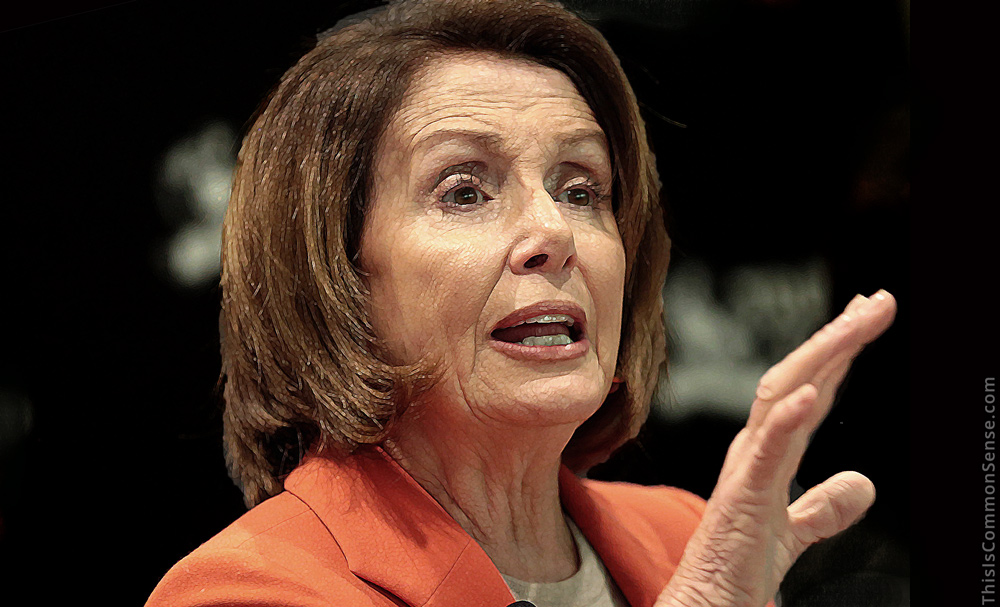
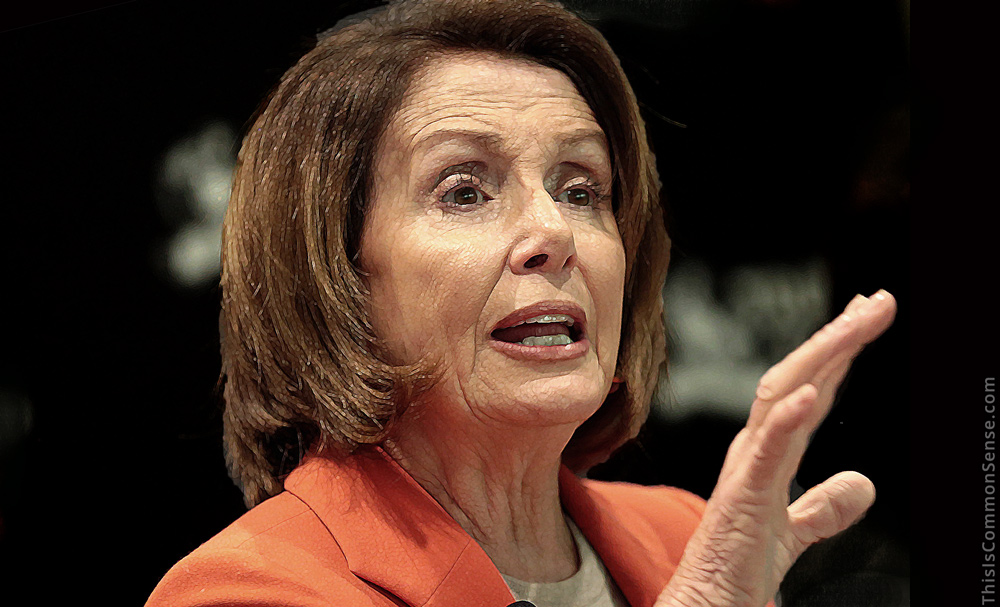
Take the case of House Minority Leader Nancy Pelosi, who wishes to be elected Speaker in January by the new Democratic House majority.
Mrs. Pelosi is an unlikely candidate . . . for Mrs. Term Limits. And yet, she has agreed to support a new rule imposing term limits on leadership positions — even her own speakership.
What gives?
A number of newly elected congresspeople won their seats on a promise to change Washington. And to gain votes, they had pledged not to support the exceedingly unpopular, long-serving Swamp Creature for speaker.
Or should that be Mrs. Swamp Creature?
Now with Democrats comprising a narrow 17-seat majority in the new Congress, these young upstarts wield enough votes to deny Pelosi the position she covets.
So, against the objections of her longtime lieutenants, Pelosi has promised these “rebels” that she will not merely bring before her caucus a new rule imposing limits of three terms for leadership positions, including her own, but she also insists that even if that rule fails to win the support of the Democratic caucus, she will personally, voluntarily, abide by those limits.
Meet the Missus. Don’t ask about her previous status.
A man cannot govern a nation if he cannot govern a city; he cannot govern a city if he cannot govern a family; he cannot govern a family unless he can govern himself; and he cannot govern himself unless his passions are subject to reason.
On December 14, 1819, Alabama became the 22nd state of these United States.
On the same December date in 1918, Friedrich Karl von Hessen, a German prince elected by the Parliament of Finland to become King Väinö I, renounced the Finnish throne.
In 1939, the Soviet Union was expelled from the League of Nations for invading Finland and starting the Winter War.
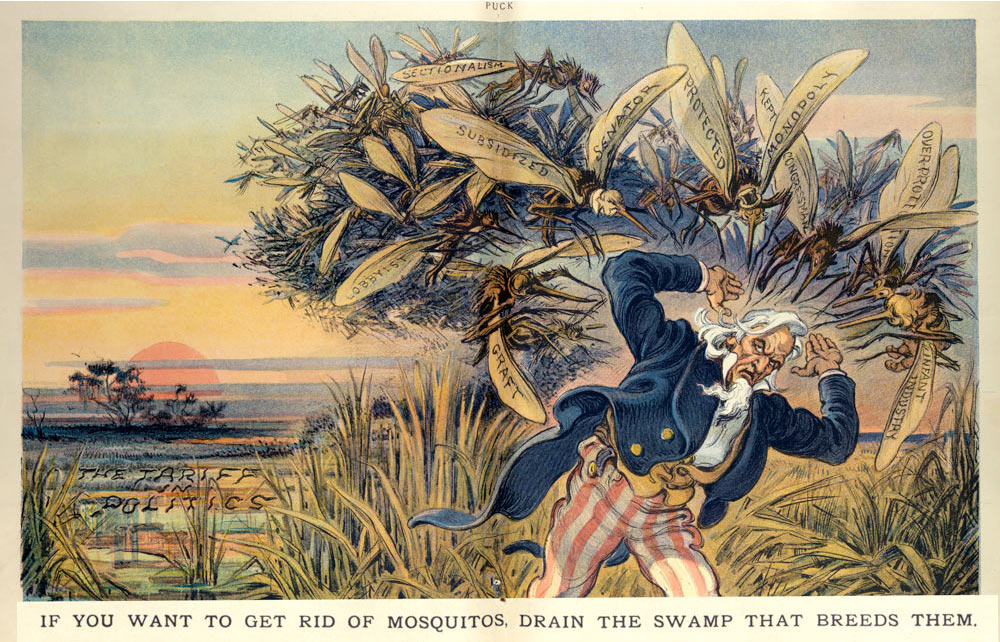
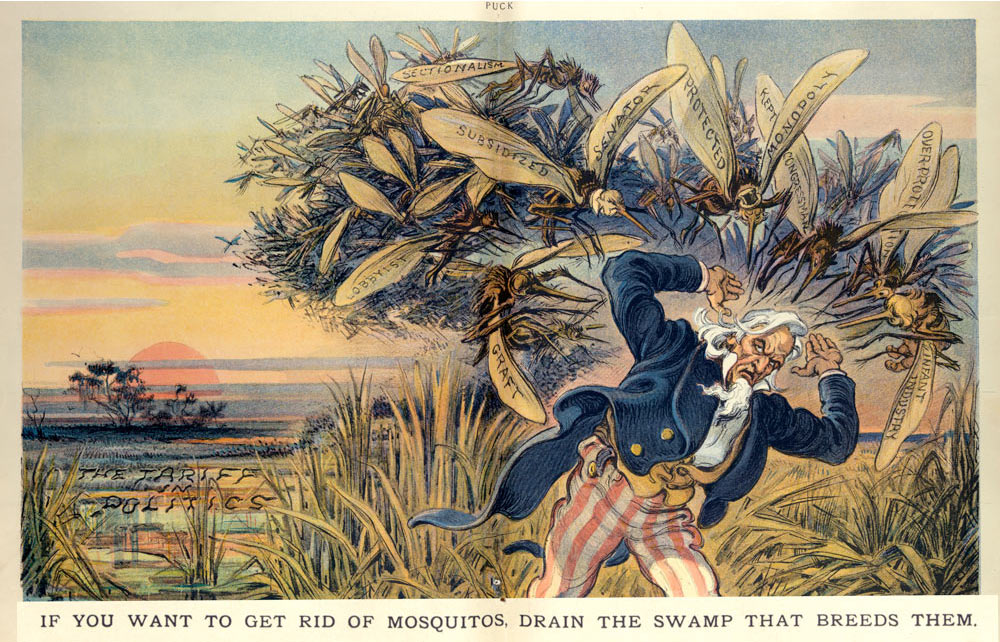
Donald Trump’s “drain the Swamp” promise was good rhetoric, great politics — because nearly everybody knows that the federal government just cannot restrain, constrain, or re-train itself.
So it would have to take an outside force.
Along comes said Outside Force — the current president — yet the Swamp remains.
Unfortunately, too few of the president’s most ardent supporters see the deepest part of the Swamp.
That is, the Department of Defense.
“Less than a week after calling the Pentagon’s $716 billion budget ‘crazy’ and indicating that he wanted to trim it, President Donald Trump is reportedly proposing to push America’s military spending to greater heights,” writes Eric Boehm at Reason. “Trump told Mattis to submit a $750 billion budget request for next year — well in excess of the $733 billion level that had been previously planned.”
And he does this despite the fact that just recently this military establishment failed to give a competent accounting of its spending.
Sadly, poor accounting is rigged into the Department of Defense, as demonstrated in an important exposé last month.
“For decades, the DoD’s leaders and accountants have been perpetrating a gigantic, unconstitutional accounting fraud,” The Nation explains, “deliberately cooking the books to mislead the Congress and drive the DoD’s budgets ever higher, regardless of military necessity.”
Even the imperiled Social Security juggernaut is not run as badly as the Pentagon. We at least know where its funds go and have gone.*
It may be that a real leader — with substantive ideas, reliable information, and a sense of the enormity of governmental carelessness — will inspire Americans and challenge the Deep Swamp, er, State, before catastrophe.
Unfortunately, Trump is looking less and less like that drainer.
This is Common Sense. I’m Paul Jacob.
* One recipient of Social Security “contributions” has been, in fact, the Pentagon, since budget deficits have been at least partially covered by congressional borrowing from Social Security’s “surpluses.”
The taxes with which we are familiar class themselves readily according to the basis on which they rest. 1. Capital. 2. Income. 3. Consumption. These may be considered as commensurate; Consumption being generally equal to Income, and Income the annual profit of Capital. A government may select either of these bases for the establishment of its system of taxation, and so frame it as to reach the faculties of every member of the society, and to draw from him his equal proportion of the public contributions; and, if this be correctly obtained, it is the perfection of the function of taxation. But when once a government has assumed its basis, to select and tax special articles from either of the other classes, is double taxation. For example, if the system be established on the basis of Income, and his just proportion on that scale has been already drawn from every one, to step into the field of Consumption and tax special articles in that, as broadcloth or homespun, wine or whiskey, a coach or a wagon, is doubly taxing the same article. For that portion of Income with which these articles are purchased, having already paid its tax as Income, to pay another tax on the thing it purchased, is paying twice for the same thing; it is an aggrievance on the citizens who use these articles in exoneration of those who do not, contrary to the most sacred of the duties of a government, to do equal and impartial justice to all its citizens.
Thomas Jefferson, note to Destutt de Tracy’s Treatise on Political Economy.
Hopes, wishes and cinematic sentiment are not a business plan.
A baseball stadium in Camden, New Jersey is being shut down three years after the team for which it was built has left town.
At the groundbreaking in 2000, then-Governor Christine Todd Whitman said she’d “heard the message from the movie Field of Dreams: ‘If you build it, they will come.’ Well, soon we will see a field of dreams right here in Camden, and my prediction is ‘they will come.’”
So it’s the movie’s fault?
Officials had hoped that crowds would steadily come to see the Camden Riversharks play ball, boosting the local economy and enabling repayment of the taxpayers’ “investment” of $18 million.
Didn’t work out.
The minor-league team threw in the towel in 2015 after missing several lease payments. The Camden government bought the property. They couldn’t find a successor team, so now the stadium is going. It will cost another million in taxpayer dollars just to tear it down.
Lesson learned? Er, no. Another taxpayer-funded development will replace the stadium.
Of course, private investors can also err when spending their own money. But they’re less likely to throw millions at projects with little prospect of profit. When their investments do fail, companies tend to cut their losses much faster than government officials who are ladling out other people’s money.
Unlike many government planners, private investors of private capital are also not eager to keep repeating their worst blunders.
Meanwhile, perhaps best of all, when private investors misjudge a project, non-investors lose nothing.