Paul Jacob puts everything in context:
This Week in Common Sense, September 28 – October 2, 2020.
Paul Jacob puts everything in context:
This Week in Common Sense, September 28 – October 2, 2020.

Paul Jacob finds worse things than that horrid debate between Trump and Biden — but not without first talking about that debate! This weekend we give you a glimpse into how a column gets written:
You can also check it out via podcatchers such as Apple’s, Google’s, Pocket Cast and Stitcher.
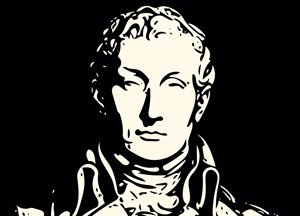
Who knows but that hereafter some traveller like myself will sit down upon the banks of the Seine, the Thames, or the Zuyder Zee, where now, in the tumult of enjoyment, the heart and the eyes are too slow to take in the multitude of sensations? Who knows but he will sit down solitary amid silent ruins, and weep a people inurned and their greatness changed into an empty name?
Constantin-François de Chassebœuf (1757–1820), Comte de Volney, The Ruins; Or, Meditation on the Revolutions of Empires: And The Law of Nature, Chapter II (Thomas Jefferson, translator).
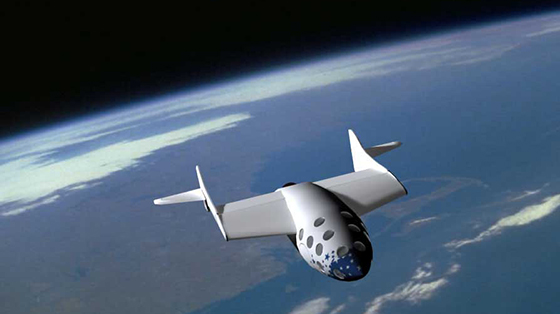
On October 4, 2004, SpaceShipOne became the first private craft to fly into space, thereby winning the Ansari X Prize for private spaceflight.
It’s hard to destroy a state. Or rather, the advanced industrial economy of a state.
Mud slides, eco-policy-abetted wildfires, exploding taxes and spending and regulations, riots, pandemics — such things go only so far. After the latest holocausts and catastrophes abate (if they do), survivors can still soldier on. Mow the lawn, say hello to neighbors, hop in the car to get to work, and so forth.
Is there a solution? Yes! Pile on the calamities thicker, faster, harder. While people are still reeling from one natural disaster or lunatic policy decision, slug them again!
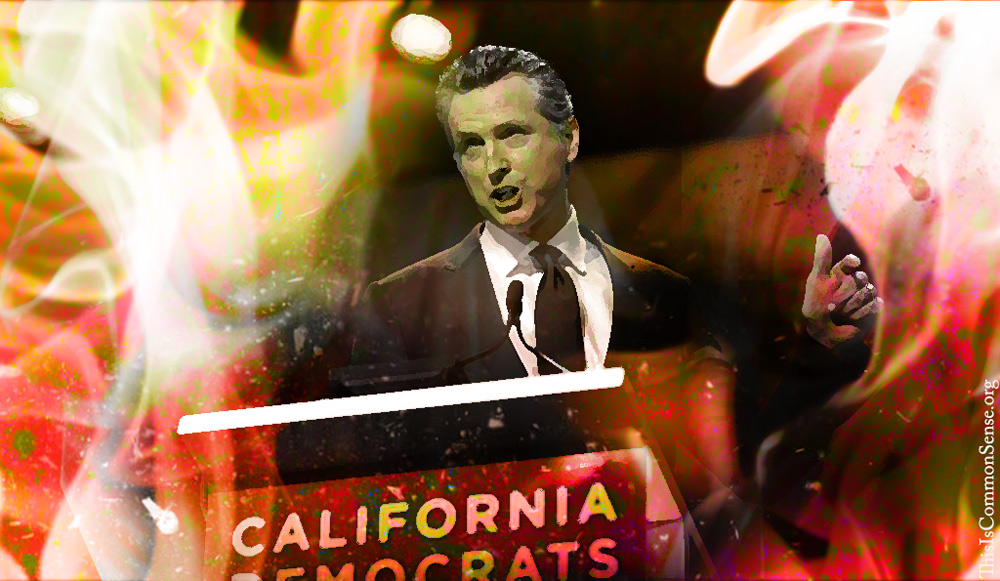
California Governor Gavin Newsom is taking this lesson to heart, bless him. He has signed an order banning production of emission-emitting cars and light trucks by 2035, in hopes of eliminating “sales of internal combustion engines.”
He also wants lawmakers to get cracking on banning fracking. No point helping to produce abundant means of combustion if you’re outlawing combustion.
Alas, though Newsom’s heart is in the right place, he’s still somewhat pandering to friends of civilization and transportation. If gas be so wicked, turn off the spigot ipso pronto. Well, maybe in a month or two to give people a chance to practice their walking. Then shutter all carbon-emitting factories that make all the cars, including electric cars.
If the key to life is paying fealty to environmentalist pieties immunized from cogent analysis, we must end industry ASAP. Stopping plastic straws and internal combustion isn’t enough.
Sock it to ’em!
This is Common Sense. I’m Paul Jacob.
See all recent commentary
(simplified and organized)
See recent popular posts
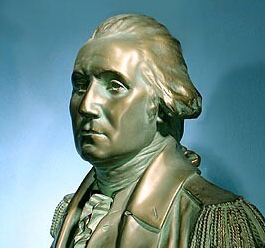
On October 2, 1789, George Washington sent the proposed Constitutional amendments (the United States’ Constitution’s Bill of Rights) to the States for ratification.
On the same date in 1919, U.S. President Woodrow Wilson suffered a massive stroke, leaving him partially paralyzed, preventing him from reacting to the economic downturn following the Great War in a Progressive fashion, making his response de facto laissez faire. One insider, and skeptic of Progressive hubris, cattily referred to Wilson’s incapacitation as “a stroke of luck.”
His successor in office, President Warren G. Harding, would go on to massively cut spending as well as taxes, and take on regulation as well. He also released Woodrow Wilson’s domestic war prisoners — ranging from journalists, ordinary folk to socialist presidential candidate Eugene V. Debs — who had dissented from Wilson’s involvement in the war.
The Depression of the early 1920s, though as deep as the early 1930s, proved remarkably brief, thanks to Harding . . . and a “stroke of luck.”
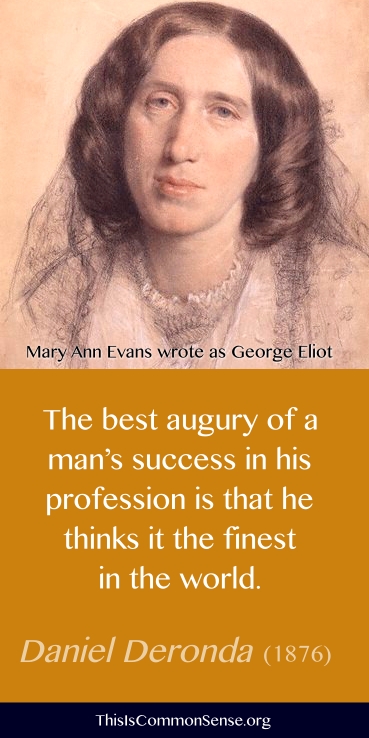
The best augury of a man’s success in his profession is that he thinks it the finest in the world.
Mary Ann Evans, writing as George Eliot, Daniel Deronda (1876).
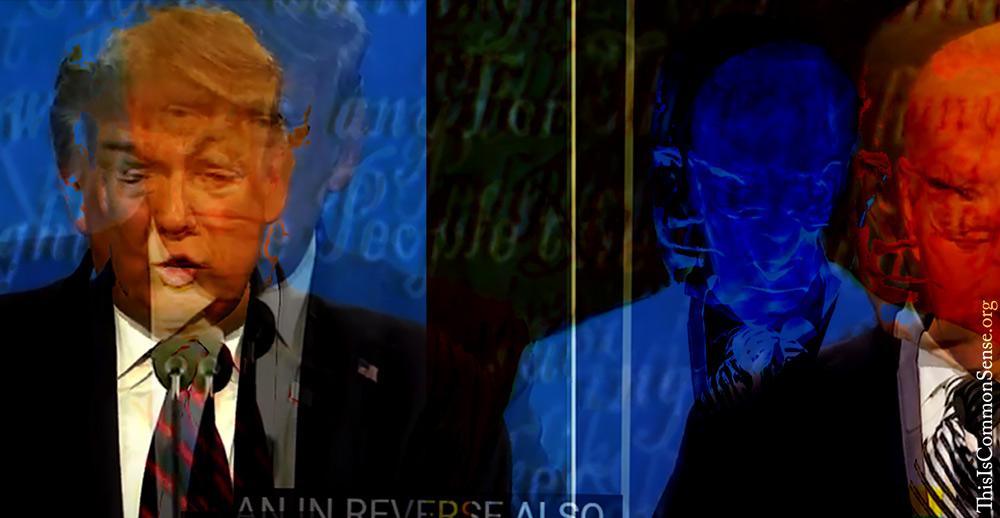
If you sent Trump into a meeting with Xi Jinping, you’d worry that Trump might say something that maybe he shouldn’t. But you wouldn’t have to worry that China’s warlord would go “Wo-ho-ho! Would you sign this? And drink this?!?!”
With Biden, well, you would worry, no?
That’s my prime takeaway of Tuesday’s terrible debate, which is near-universally described as a “train wreck” or “dumpster fire.”
My “meta” take is that the debate format itself was doomed to derail or blow up in flames (depending on metaphor).
It started out with a reasonable “two minutes for you; two minutes for you” method, and then lurched into a free-for-all, with far too many interruptions and back-and-forth.
You can tell when a moderator lacks control: he talks all the time.
Chris Wallace talked too much.
Did you notice that both debaters attempted to answer questions before they had been fully formulated? Once, twice, thrice . . . at first you wonder, “Hey guys, can you calm down a bit?”
Of course,
Why, pray tell, is there a 62-part interrogative barrage?
To allow the questioner to sneak in something tangential but of a “gotcha” nature, of course — an element of some media-spun controversy.
Must we select the moderator by sortition?
More structure seems a good idea. And gain the ability to turn off microphones.
Or do the opposite: Put both men in a studio all alone* with live mics and let’s see if they could negotiate the 90 minutes like adults. They might learn something.
And so might we.
This is Common Sense. I’m Paul Jacob.
* Maybe a couple security guards, too, just in case.
See all recent commentary
(simplified and organized)
See recent popular posts
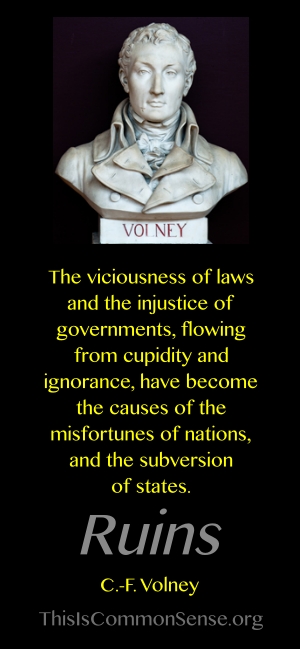
The perpetual play of the passions having produced incidents not foreseen — their conventions having been vicious, inadequate, or nugatory — in fine, the authors of the laws having sometimes mistaken, sometimes disguised their objects; and their ministers, instead of restraining the cupidity of others, having given themselves up to their own; all these causes have introduced disorder and trouble into societies; and the viciousness of laws and the injustice of governments, flowing from cupidity and ignorance, have become the causes of the misfortunes of nations, and the subversion of states.
Constantin-François de Chassebœuf (1757–1820), Comte de Volney, The Ruins; Or, Meditation on the Revolutions of Empires, Chapter IX (Thomas Jefferson, translator).
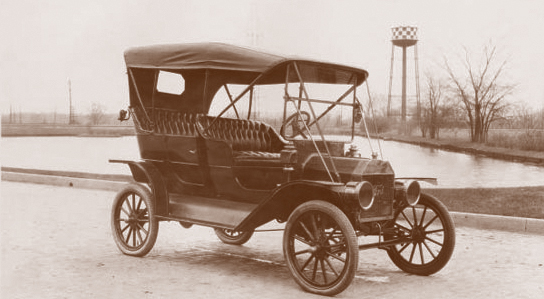
On October 1, 1908, Ford produced the first Model T at a plant in Detroit. The auto could travel 40 miles per hour and ran on gasoline or hemp-based fuel. (As oil prices fell, Ford phased out the hemp option.) The Model T was the first car designed for a mass market, rather than as a luxury item. By 1927, Ford had built 15 million Model T cars – the longest production run of any car model until the Volkswagen Beetle surpassed it in 1972.
On October 1, 1918, Lawrence of Arabia (T.E. Lawrence) helped lead a combined Arab and British force that captured Damascus from the Turks during World War I.