Categories
Accountability crime and punishment

Not Above the Law

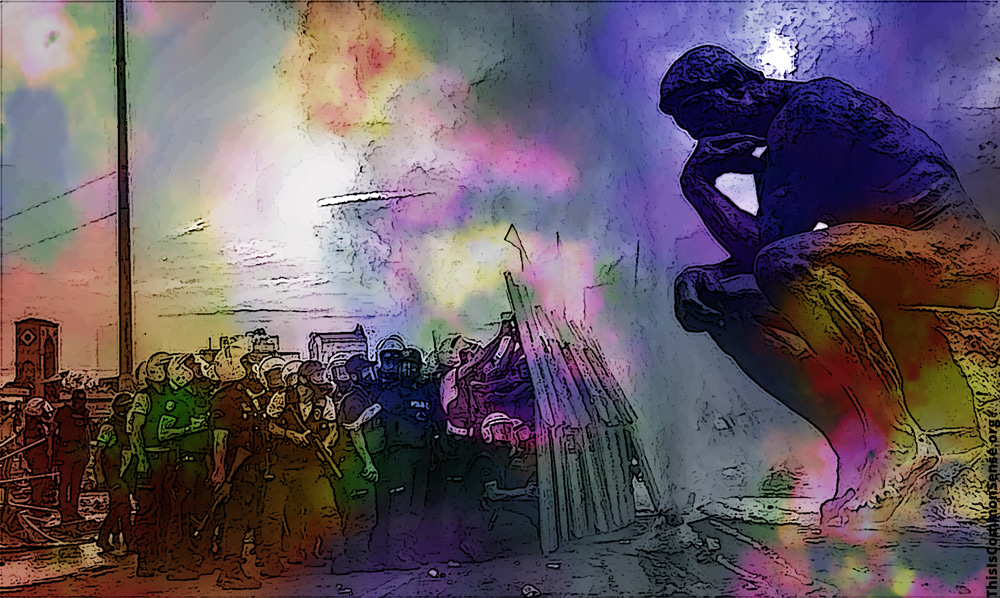
Should government officials be free to violate the rights of others so long as they are doing their job at the time?

With impunity?

That’s the question that the Institute for Justice is arguing before the Supreme Court in Brownback v. King.

The case concerns James King, whom officers of the law mistook for a fugitive. When they grabbed his wallet and demanded to know his name, King ran, thinking he was being mugged. The officers pursued him and and then viciously assaulted him — nearly killing him.

Later, the government concocted bogus charges to try to force King to accept a plea bargain. The idea was to prevent him from suing the government for the way he had been treated. 

King did not cooperate.

The problem? Many government officials in many circumstances have a get-out-of-prosecution-free card. The doctrine that confers this card is called “qualified immunity.”

In the 1982 case Harlow v. Fitzgerald, the Supreme Court opined that this immunity is warranted by “the need to protect officials who are required to exercise discretion” and “can be penetrated only when they have violated clearly established statutory or constitutional rights.”

In practice, however, the immunity being granted often seems more unqualified than qualified.

IJ’s premise is simple. “Government officials are not above the law,” says IJ President Scott Bullock. “Those who are charged with enforcing our nation’s laws should be more — not less — accountable for their unconstitutional acts.”

In a free society, police cannot brutally beat innocent people and get away with it. Can they?

This is Common Sense. I’m Paul Jacob.


PDF for printing

See all recent commentary
(simplified and organized)
See recent popular posts
Categories
Thought

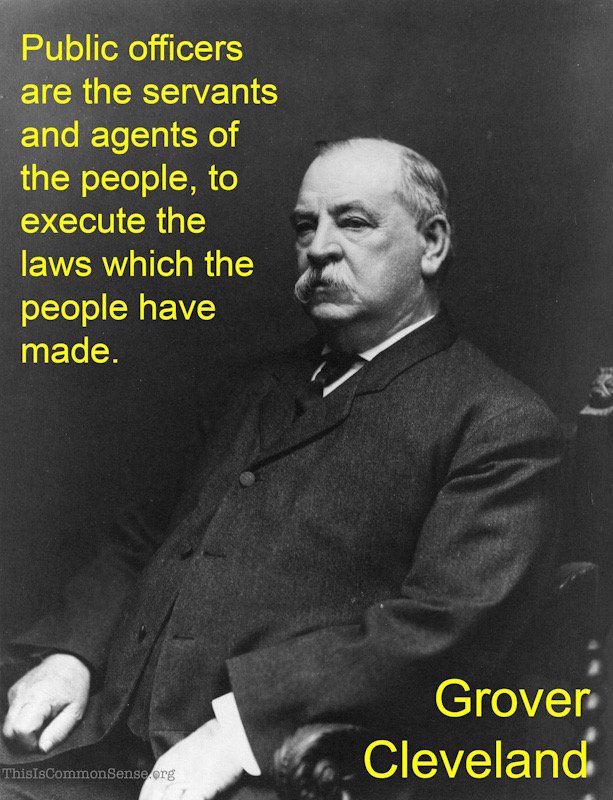
Grover Cleveland

Public officers are the servants and agents of the people, to execute the laws which the people have made.

Categories
Today

Eleven/Eleven/Eleven

On November 11, 1889, the State of Washington was admitted as the 42nd State of the United States.

In 1918, German officials signed an armistice agreement with the Allies in a railroad car in the forest of Compiègne, France. The fighting officially ended at 11:00 a.m. — the eleventh hour of the eleventh day of the eleventh month. The war officially ended with the signing of the Treaty of Versailles on June 28, 1919.

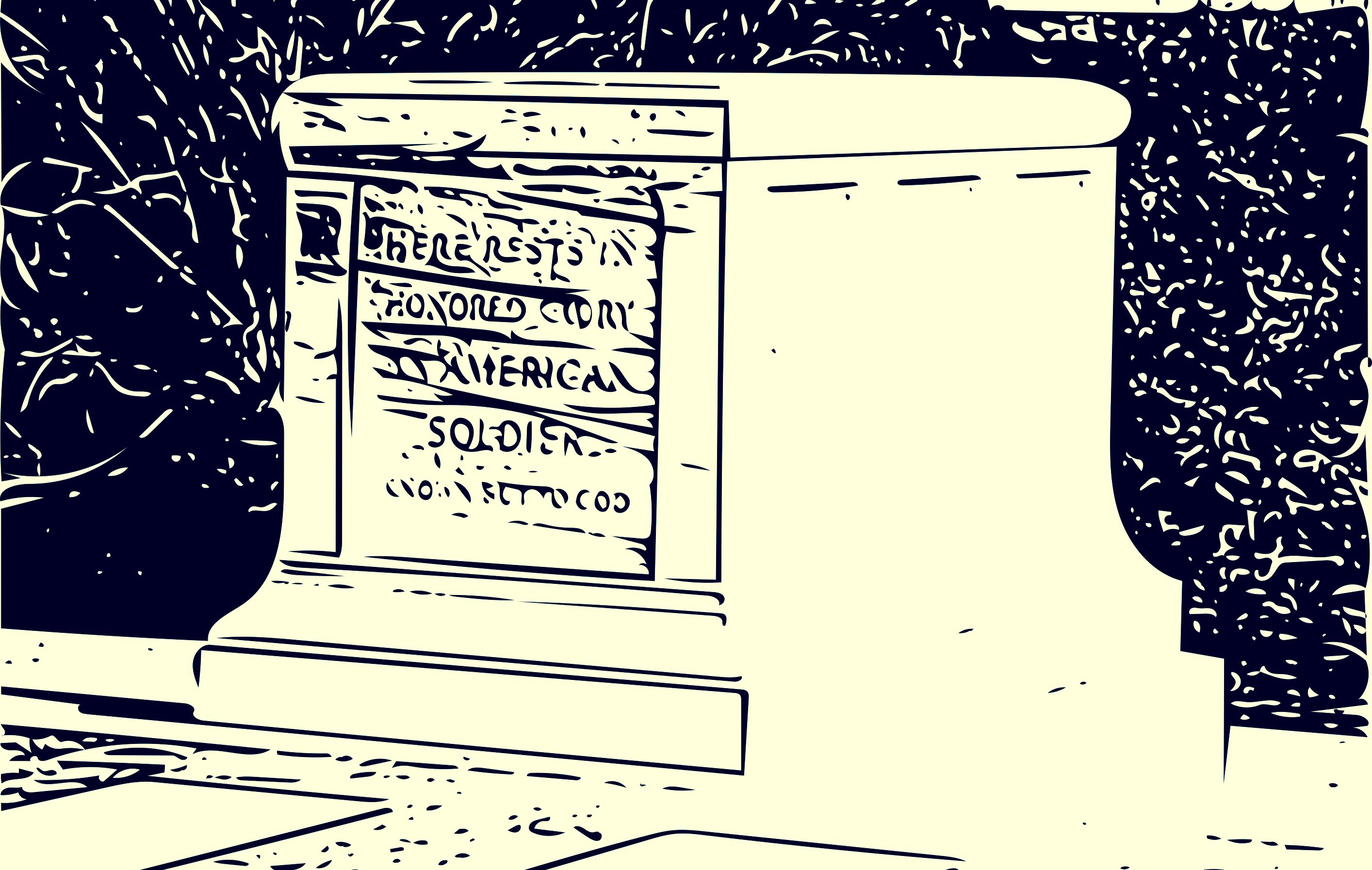
In 1921 on this date, U.S. President Warren G. Harding dedicated the Tomb of the Unknowns at Arlington National Cemetery.

Categories
initiative, referendum, and recall

Voting in Black & White

In a nation divided over color — red for Republicans and blue for Democrats — voters united around the country to pass and defeat measures at the ballot box. No grayness in the results, as in the presidential election. The returns are black-or-white.

Before the election, I highlighted Citizens in Charge’s fight against measures designed to wreck the citizen initiative process in Arkansas (Issue 3), Florida (Amendment 4) and North Dakota (Measure 2). I’m glad to report voters slapped back all three.

Last week, I celebrated the defeat of California’s Prop 16, which sought to re-establish racial preferences, and the passage of a myriad of state measures related to ending drug prohibition, including Oregon voters legalizing psychedelic mushrooms and decriminalizing harder drugs . . . as well as conservative Montanans and South Dakotans allowing recreational marijuana use.

A whopping 89 percent of Michigan voters passed Proposal 2: “A proposed constitutional amendment to require a search warrant in order to access a person’s electronic data or electronic communications.”

Illinoisans turned down a constitutional amendment giving “the State authority to impose higher income tax rates on higher income levels, which is how the federal government and a majority of other states do it.” Apparently, voters weren’t impressed by that ballot language pitch . . . or by the who’s who of politicians, public employee unions and special interests promoting it.*

California voters defeated Proposition 21, 60-40, an attempt to expand rent control, and by nearly that margin approved Prop 22, providing Uber and Lyft a Get-Out-of-Regulatory-Hell card.

Not every electorate was wise. Thanks to Proposition 208, Arizona will “impose a 3.5% tax surcharge on taxable annual income over $250,000 for single persons or . . . $500,000 for married persons filing jointly . . . to increase funding for public education.” 

In other news, Mississippians voted themselves a new flag, and Rhode Island changed its name to “Rhode Island” — jettisoning the “and Providence Plantations” that has always been part of its official name. Back in 2010, 78 percent of citizens gave a firm NO; this time, Question 1 passed by 53-47 percent.

This is Americans showing our true colors.

And usually Common Sense. I’m Paul Jacob.


* A short list courtesy of Ballotpedia includes: Governor J.B. Pritzker (D), who donated $54 million to the effort, State Senator Christopher Belt (D), State Senator Don Harmon (D), Speaker of the House Michael Madigan (D), State Representative Robert Martwick (D), Democratic Party of Illinois, AFSCME Illinois Council No. 31, American Federation of Teachers, Associated Fire Fighters of Illinois, Chicago Federation of Labor, Chicago Teachers Union, Illinois AFL-CIO, Illinois Education Association, Illinois Federation of Teachers, National Education Association, SEIU Healthcare Illinois, SEIU Illinois State Council, AARP, Chicago Jobs Council, Democracy for America, Equality Illinois, Illinois Alliance for Retired Americans, Illinois Economic Policy Institute, Indivisible Chicago Alliance, Indivisible Illinois, Latino Policy Forum, League of Women Voters of Illinois, Planned Parenthood Illinois Action, Sierra Club Illinois and Think Big Illinois.

PDF for printing

See all recent commentary
(simplified and organized)
See recent popular posts
Categories
Thought

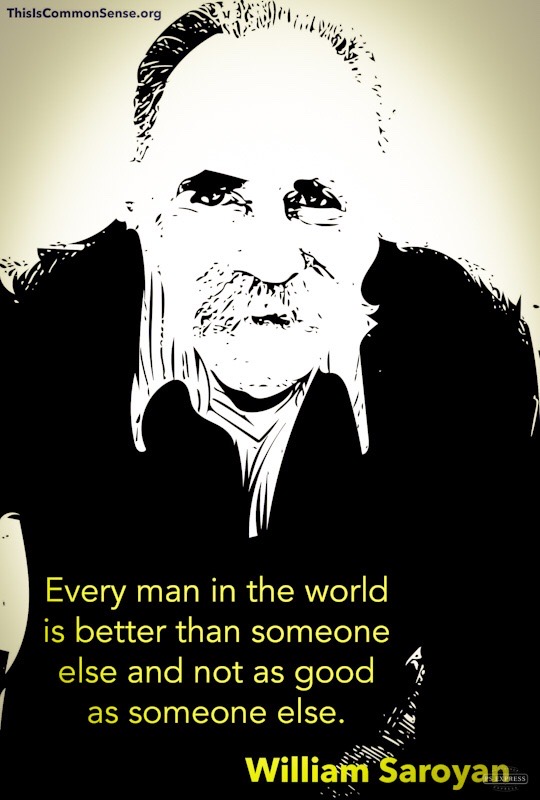
William Saroyan

Every man in the world is better than someone else and not as good as someone else.

William Saroyan, The Resurrection of a Life (1935).
Categories
Today

Cry of Independence

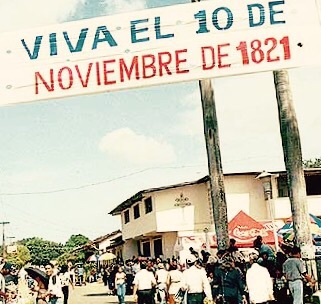
On November 10, 1821, the First Cry of Independence in the small, interior town of Villa de los Santos, occurred in Panama. The November 10 date has since become Panama’s “Cry of Independence Day” in the country. November is a month of independence celebrations in Panama, but the November 10 celebration marks the first signs of the struggle for separation from Spain.

Categories
ideological culture media and media people

Landscape, with Trumpians

“America, in the aggregate, seems just as stupid as it was four years ago,” Philip Kennicott, The Washington Post’s Pulitzer Prize-winning art and architecture critic, declared over the weekend.

Last week’s election was not, Mr. Kennicott correctly concludes, “a repudiation of Trumpism.” He finds “horrifying” the fact that six million or so more Americans voted for Trump over last go-around.The problem? “White supremacy,” which he says is “existential, precognitive and pervasive”; Trumpism is its “colloquial alternative.”

Yet the critic omits the evidence.

“I’ll leave his policies and his politics — to the extent that he ever had policies or coherent politics — to the pundits,” Kennicott punts. 

A master of mere assertion, he declares the MAGA crowd filled with “not just avowed racists who have publicly supported the president but also those who downplay the problem, or align with it for personal gain, or are simply unwilling to acknowledge its history and persistence.”

Trumpeting “our unique brand of ugliness,” Kennicott can’t see the city for the slums. 

Moral uglinesses are evident here and worldwide. But the U.S. is uniquely recognized around the globe for freedom and human rights.

“Trumpism is embedded in America and can be fought only through rigorous self-discipline, through constant surveillance of the thoughts we think, the words we use and the assumptions we make,” writes Kennicott. “Now we know it not as a perverse blemish on American culture but as foundational to American culture. That’s progress.” 

Not true. Not progress. But the Post scrivener does sum up progressivism’s current cultural revolution: “constant surveillance of the thoughts we think.”

He didn’t like this past election or the one four years ago. He won’t like 2022 or 2024 any better.

This is Common Sense. I’m Paul Jacob.


PDF for printing

See all recent commentary
(simplified and organized)
See recent popular posts

Categories
Today

Close Call

On November 9, 1979, NORAD computers and the Alternate National Military Command Center in Fort Ritchie, Maryland, detected an apparent massive Soviet nuclear strike. After reviewing the raw data from satellites and checking the early-warning radars, the alert was cancelled.

Categories
Thought

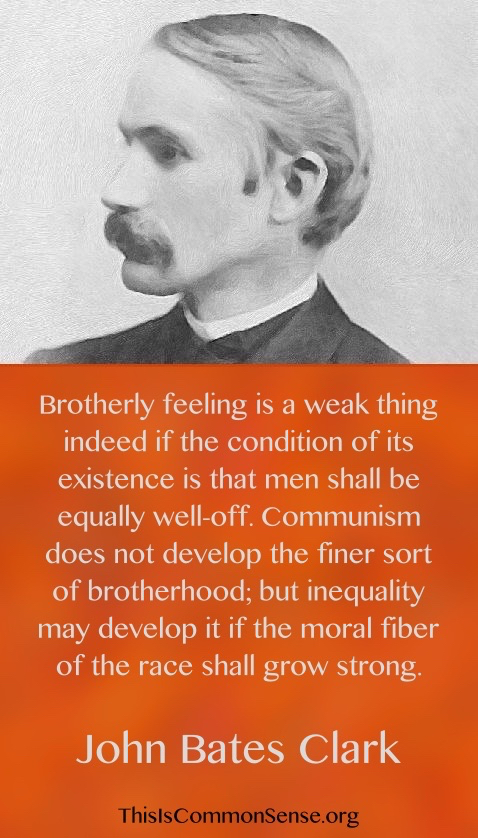
John Bates Clark

Brotherly feeling is a weak thing indeed if the condition of its existence is that men shall be equally well-off. Communism does not develop the finer sort of brotherhood; but inequality may develop it if the moral fiber of the race shall grow strong.

John Bates Clark, “The Demos of the Future,” Independent (July 18, 1901), in The Annals of America (Encyclopedia Britannica, 1976), Vol. 12.

Categories
by Paul Jacob video

Watch: Democrats Lost, We Won?

The podcast this weekend summarizes and analyzes a big week in American history: