Categories
general freedom

The Season of Not Demanding

Every day, in tandem with these columns, ThisIsCommonSense.org provides a bit of history (“Today”) and a wise or significant saying (“Thought”). Christmas Eve’s Thought is worth thinking about again. 

“Liberty is the only thing you cannot have,” wrote William Allen White, “unless you are willing to give it to others.”

While one could argue that trust and love and a number of other important things also require reciprocity, it is true, and profoundly so, that liberty is reciprocal — or non-existent: if you won’t let others be free, they won’t let you be free, either. 

Further, the responsibility that is freedom’s flip-side is something we must do together. 

That is where the idea of shared burdens comes in. Freedom is not itself a non-economic, or free good, in that those who won’t leave us free must be fought, sometimes with a lot of time and effort and resources. And even danger.

The key to not turning the burden of defending freedom into a form of oppression itself is to respect individual liberty in doing so — not turning our wants into commands.

This year, 2020, the challenge has been bigger than usual. Governments’ demands have been breathtakingly extensive: to not work, not trade, to not engage in business or worship or even going to the beach.

That burden has been so oppressive — and so much worse for some (small business folks and their employees, especially, and those with mental health issues) than others (like retirees, people in government, those working from home) — that surely it is too much to demand of others.

That’s something to consider in this “gift-giving” season: Don’t play the spoiled child, with a gift-demanding attitude toward others.

Freedom is the gift we can all afford to exchange.

This is Common Sense. I’m Paul Jacob.


PDF for printing

See all recent commentary
(simplified and organized)
See recent popular posts
Categories
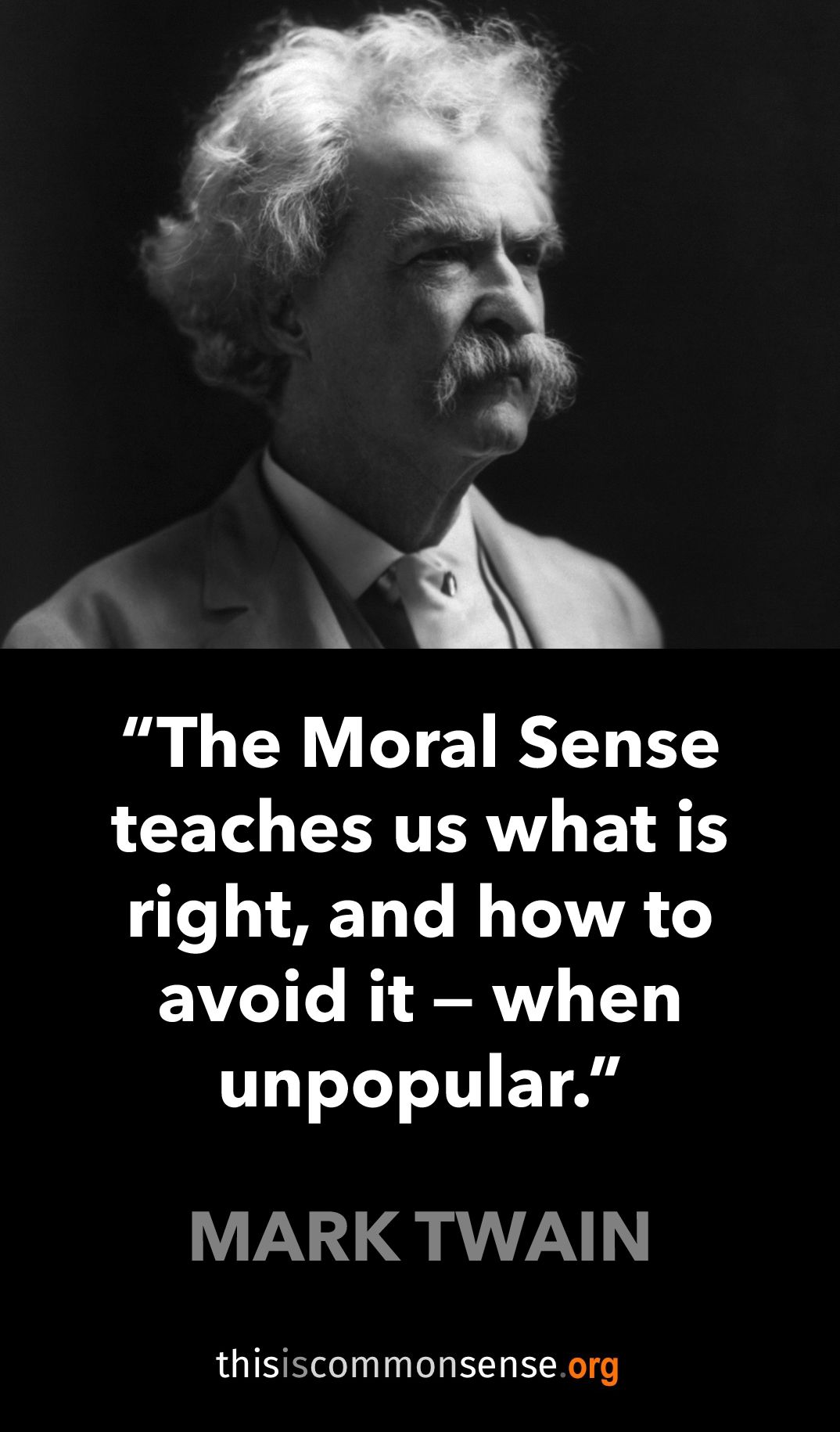
Thought

Mark Twain

The Moral Sense teaches us what is right, and how to avoid it — when unpopular.

Mark Twain, “The United States of Lyncherdom” (1901), first printed in Albert Bigelow Paine, ed., Europe and Elsewhere (1914).

Categories
Today

An Arrest, a Resignation

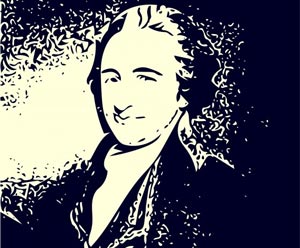
On December 28, 1797, Thomas Paine was arrested in France for treason, after being tried in absentia on December 26 and convicted. Before moving to France, Paine had been an instrumental figure in the American Revolution as the author of Common Sense. Paine then moved to Paris to become involved with the French Revolution, but the chaotic political climate turned against him. Paine had not earned friends in the Revolution with his vocal opposition to capital punishment.

“During the whole of my imprisonment,” Paine later wrote, “prior to the fall of Robespierre, there was no time when I could think my life worth twenty-four hours, and my mind was made up to meet its fate. The Americans in Paris went in a body to the convention to reclaim me, but without success.”

Paine’s imprisonment in France caused a general uproar in America. Future President James Monroe used all of his diplomatic connections to get Paine released in November 1794.

With the publication of Paine’s The Age of Reason — a great part of which he wrote in French prison — the American population turned against him, and he died penniless in New York in 1809.


On this date in 1832, John C. Calhoun resigned as Vice President of the United States, the first to do so.

Categories
by Paul Jacob video

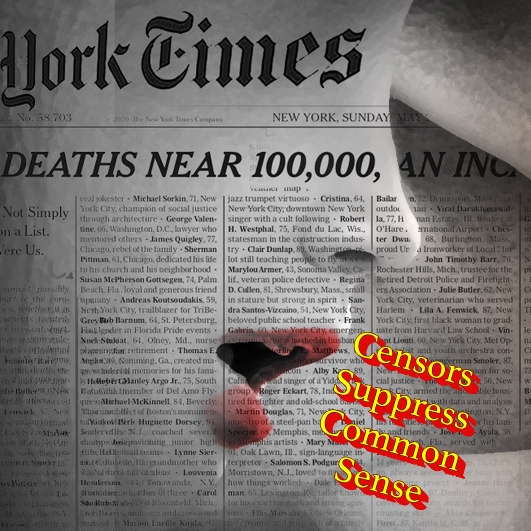
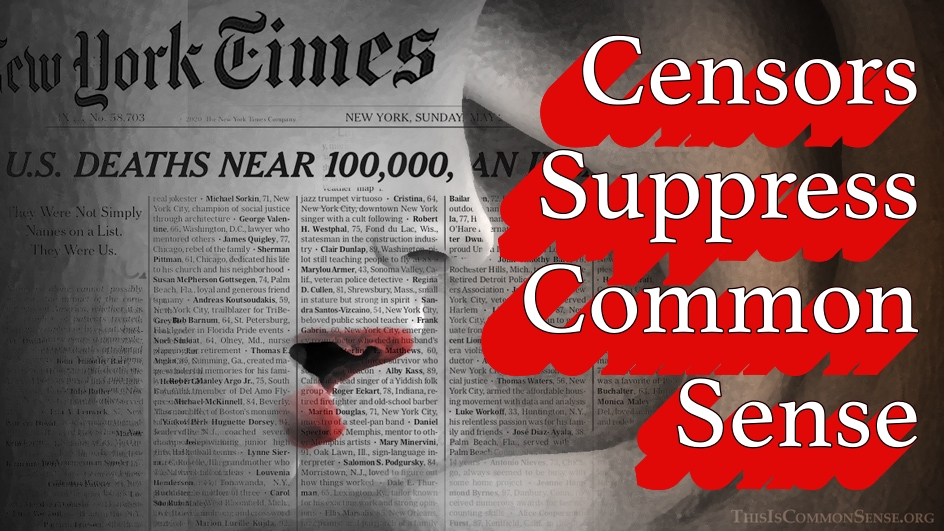
Watch: What Censors Do

Categories
Thought

Frédéric Bastiat

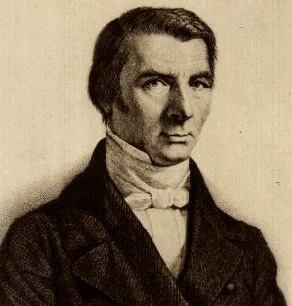
Nature has provided, by means as simple as they are infallible, that there should be dispersion, diffusion, coordination, simultaneous progress, all constituting a state of things that your restrictive laws paralyze as much as they can; for the tendency of such laws is, by isolating communities, to render the diversity of condition much more marked, to prevent equalization, hinder integration, neutralize countervailing circumstances, and segregate nations, whether in their superiority or in their inferiority of condition.

Frédéric Bastiat, from Economic Sophisms, “To Equalize the Conditions of Production” — the “such laws” mentioned are protectionist measures, and protectionism was the chief target of Bastiat’s famous book.
Categories
Today

Flushing Remonstrance

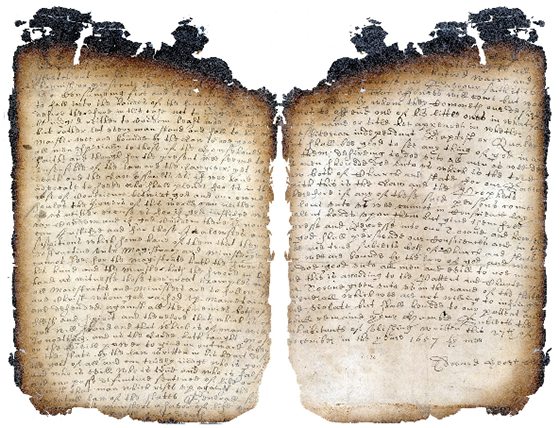
On December 27, 1657, a group of English citizens in Flushing, New York, who were not themselves Quakers, signed a petition protesting the persecution of Quakers, a document that has become known as the Flushing Remonstrance. An eloquent statement of the principle of religious liberty, it is widely regarded as a forerunner to the U.S. Constitution’s First Amendment.

The petition was delivered to Director-General of New Netherlands, Peter Stuyvesant.

Categories
audio podcast

Listen: Merry Christmas & Happy Censorship?

Paul Jacob covers the big stories of the week, starting on such a happy note, plunging through rough waters, and ending on a note of hope. Don’t believe us? Give him a listen:

This Week in Common Sense, December 25, 2020.
Categories
Today

First

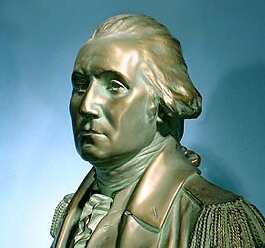
December 26, 1799 – Henry Lee III’s eulogy to George Washington in Congress declared him “first in war, first in peace and first in the hearts of his countrymen.”

Categories
Thought

Immanuel Kant

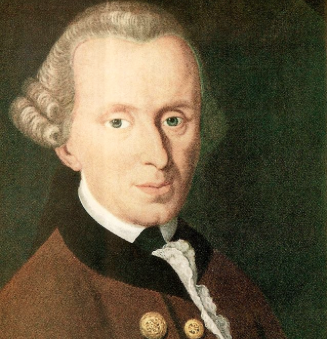
Human freedom is realised in the adoption of humanity as an end in itself, for the one thing that no-one can be compelled to do by another is to adopt a particular end.

Immanuel Kant, Metaphysics of Morals (1797), Part Two: “Metaphysics of Virtue.”
Categories
Common Sense

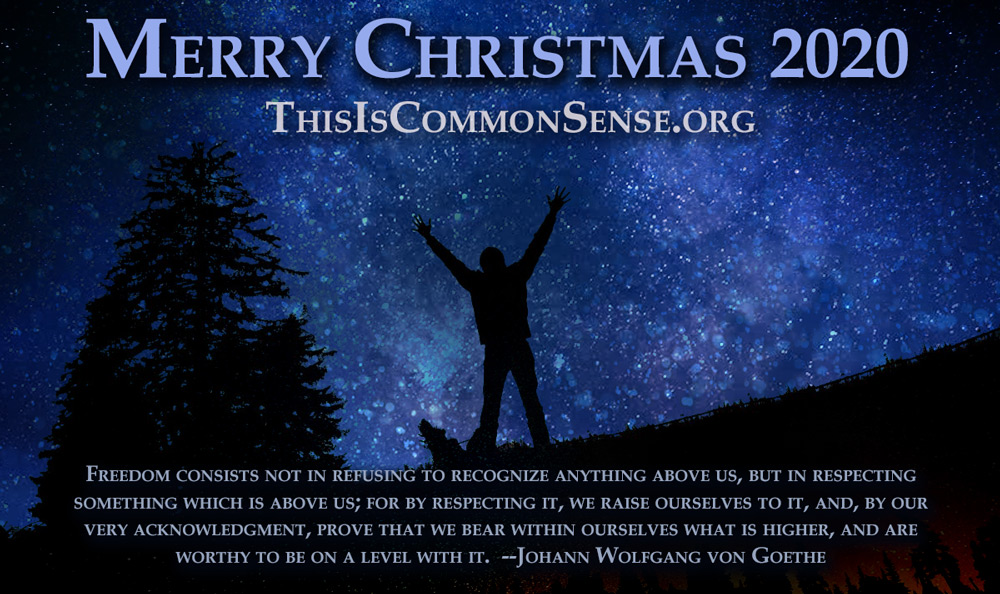
Merry Christmas