Categories
Today

The Twenty-Fifth

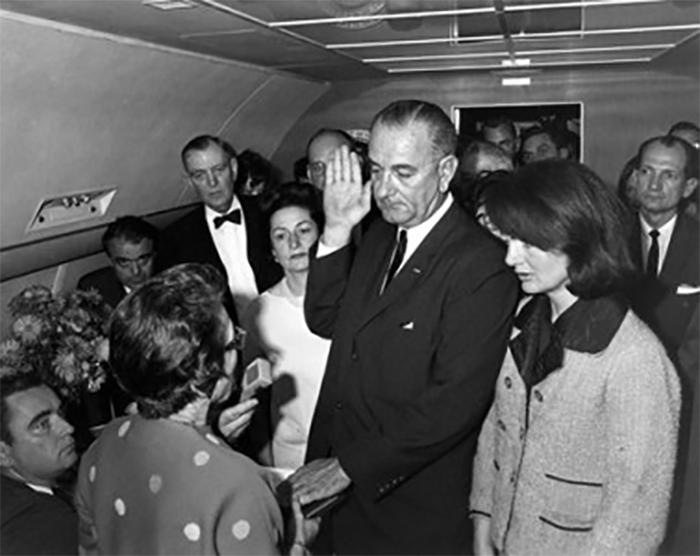
On Feb. 10, 1967, the 25th Amendment to the U.S. Constitution was ratified by Nevada, the necessary 38th state to do so. The amendment sets the process for presidential succession, and reads:

Section 1. In case of the removal of the President from office or of his death or resignation, the Vice President shall become President.

Section 2. Whenever there is a vacancy in the office of the Vice President, the President shall nominate a Vice President who shall take office upon confirmation by a majority vote of both Houses of Congress.

Section 3. Whenever the President transmits to the President pro tempore of the Senate and the Speaker of the House of Representatives his written declaration that he is unable to discharge the powers and duties of his office, and until he transmits to them a written declaration to the contrary, such powers and duties shall be discharged by the Vice President as Acting President.

Section 4. Whenever the Vice President and a majority of either the principal officers of the executive departments or of such other body as Congress may by law provide, transmit to the President pro tempore of the Senate and the Speaker of the House of Representatives their written declaration that the President is unable to discharge the powers and duties of his office, the Vice President shall immediately assume the powers and duties of the office as Acting President.

Thereafter, when the President transmits to the President pro tempore of the Senate and the Speaker of the House of Representatives his written declaration that no inability exists, he shall resume the powers and duties of his office unless the Vice President and a majority of either the principal officers of the executive department or of such other body as Congress may by law provide, transmit within four days to the President pro tempore of the Senate and the Speaker of the House of Representatives their written declaration that the President is unable to discharge the powers and duties of his office. Thereupon Congress shall decide the issue, assembling within forty-eight hours for that purpose if not in session. If the Congress, within twenty-one days after receipt of the latter written declaration, or, if Congress is not in session, within twenty-one days after Congress is required to assemble, determines by two-thirds vote of both Houses that the President is unable to discharge the powers and duties of his office, the Vice President shall continue to discharge the same as Acting President; otherwise, the President shall resume the powers and duties of his office.

Categories
general freedom ideological culture

Jeep & Freedom

“Bruce Springsteen issued a call for common ground, unity and political centrism,” CNN reported, “in a 2-minute long ad for Jeep [that ran] during the Super Bowl on Sunday.”

The Detroit Free Press called the commercial a “healing message.”

Not so much over at The Federalist, a conservative outlet, where Mollie Hemingway listed three main problems:

1. The Messenger Is Known For Hating Republicans

2. The Images Were All Off

3. The Argument For Unity Was Not Made Well

I don’t disagree with her. Springsteen, after all, said he would leave the U.S. if President Trump were re-elected; he has long supported Democrats and bashed Republicans.

But, nevertheless . . . I heard something that rang true. 

“Now fear has never been the best of who we are,” spoke Mr. Springsteen. That’s a truism.

But the Boss added, “And as for freedom, it’s not the property of just the fortunate few; it belongs to us all. Whoever you are, wherever you’re from, it’s what connects us. And we need that connection.”

Yes. We. Do. 

Freedom unites us . . . because we can do our own thing.

Whether Born in the USA or recent arrivals to these shores, let us celebrate not what government can legislate, mandate, or make us do, but what those in power cannot make us do, that we are free to speak truth as we see it and to dream, build and achieve a better tomorrow of our own making. 

It all sure fits with Jeep’s “Go Anywhere. Do Anything” slogan. And I have no doubt they mean “anything” as long as you don’t impinge on anyone else’s rights.

Just note that the slogan applies to us, not our politicians.

This is Common Sense. I’m Paul Jacob. 


PDF for printing

See all recent commentary
(simplified and organized)
See recent popular posts

Categories
Thought

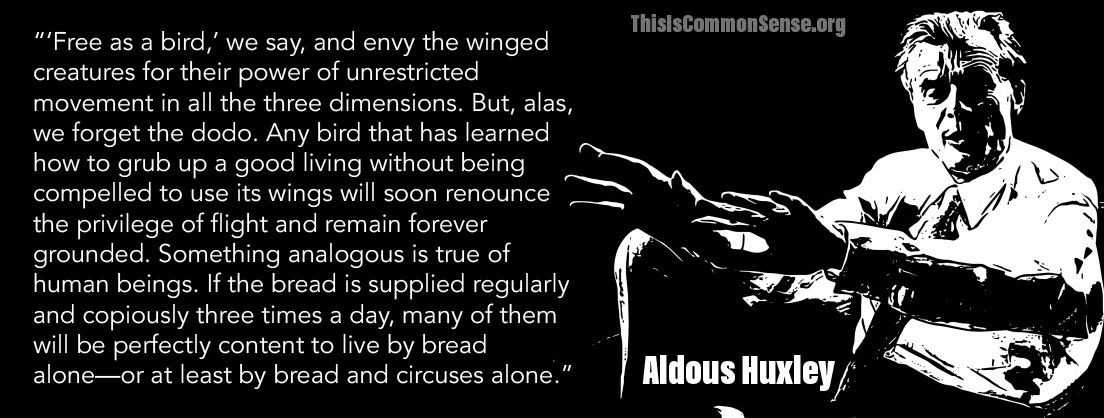
Aldous Huxley

“Free as a bird,” we say, and envy the winged creatures for their power of unrestricted movement in all the three dimensions. But, alas, we forget the dodo. Any bird that has learned how to grub up a good living without being compelled to use its wings will soon renounce the privilege of flight and remain forever grounded. Something analogous is true of human beings. If the bread is supplied regularly and copiously three times a day, many of them will be perfectly content to live by bread alone — or at least by bread and circuses alone.

Aldous Huxley, Brave New World Revisited (1958).
Categories
Today

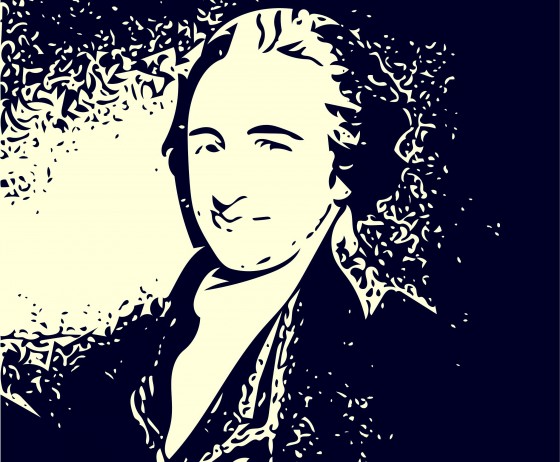
The Age of Paine

On Feb. 9, 1737, Thomas Paine was born in Thetford, England.

Paine would come to America in 1774 and by 1776 publish Common Sense, urging American independence. Later works included The Rights of Man (1792) and The Age of Reason (published in three parts in 1794, 1795, and 1807).

Paine died in 1809.

Categories
First Amendment rights too much government

I See a Bill

“See something, say something.” Reasonable enough advice, most times. But what if the scary thing you are supposed to report is someone’s heated political opinion?

A bill called the “See Something, Say Something Online Act of 2020” — just reintroduced last week — would require websites and interactive service providers to report “suspicious” activity that may later be connected with “terrorism, serious drug offenses, and violent crimes.”

If a provider fails to exercise “due care” in reporting major crimes and “suspicious transmission activity,” the company’s liability protections would be at risk.

Suspicious transmissions would have to be reported to the Justice Department within 30 days. Though, reporting at the end of that window wouldn’t do much to stop an imminent crime committed, say, five days after a dubious text message.

What the legislation would do, notes Reason magazine’s Elizabeth Brown, is “set up a massive new system of intense user monitoring and reporting that would lead to more perfectly innocent people getting booted from internet platforms” and give government another way to clobber “disfavored tech companies.”

Of course, neither hyperbolic opinions nor gleeful snitching are rarities on the Internet. So if such legislation leads to instituting easy and anonymous ways to complain to the government about somebody’s online opining, we can expect false positives to skyrocket. Time and energy wasted harassing innocent people would not be used to catch actual thugs and terrorists.

And we’d have yet another chilling effect on our freedom of expression.

Back to the drawing board, Senators Manchin and Cornyn. On second thought, please step away from that drawing board.

This is Common Sense. I’m Paul Jacob.


PDF for printing

See all recent commentary
(simplified and organized)
See recent popular posts

Categories
Thought

George Orwell

[T]here is the fact that the intellectuals are more totalitarian in outlook than the common people. On the whole the English intelligentsia have opposed Hitler, but only at the price of accepting Stalin. Most of them are perfectly ready for dictatorial methods, secret police, systematic falsification of history etc. so long as they feel that it is on ‘our’ side.

George Orwell, letter to H. J. Willmett (May 18, 1944), published in The Collected Essays, Journalism, & Letters, George Orwell: As I Please, 1943-1945 (2000), edited by Sonia Orwell and Ian Angus.
Categories
Today

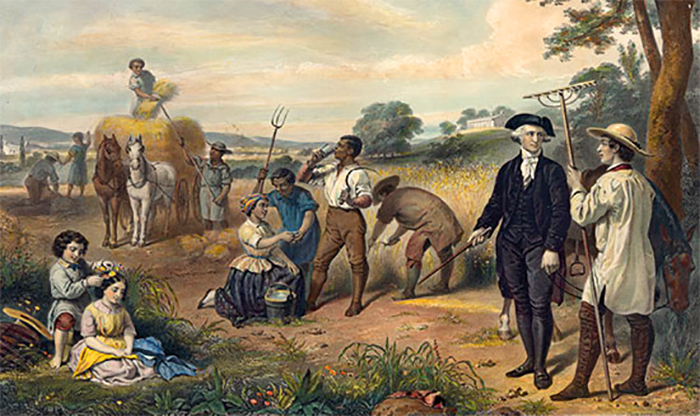
Delaware and Slavery

On February 8, 1865, Delaware voters rejected the Thirteenth Amendment to the U.S. Constitution, voting to continue the practice of slavery. Delaware belatedly and symbolically ratified the amendment on February 12, 1901.

Categories
by Paul Jacob video

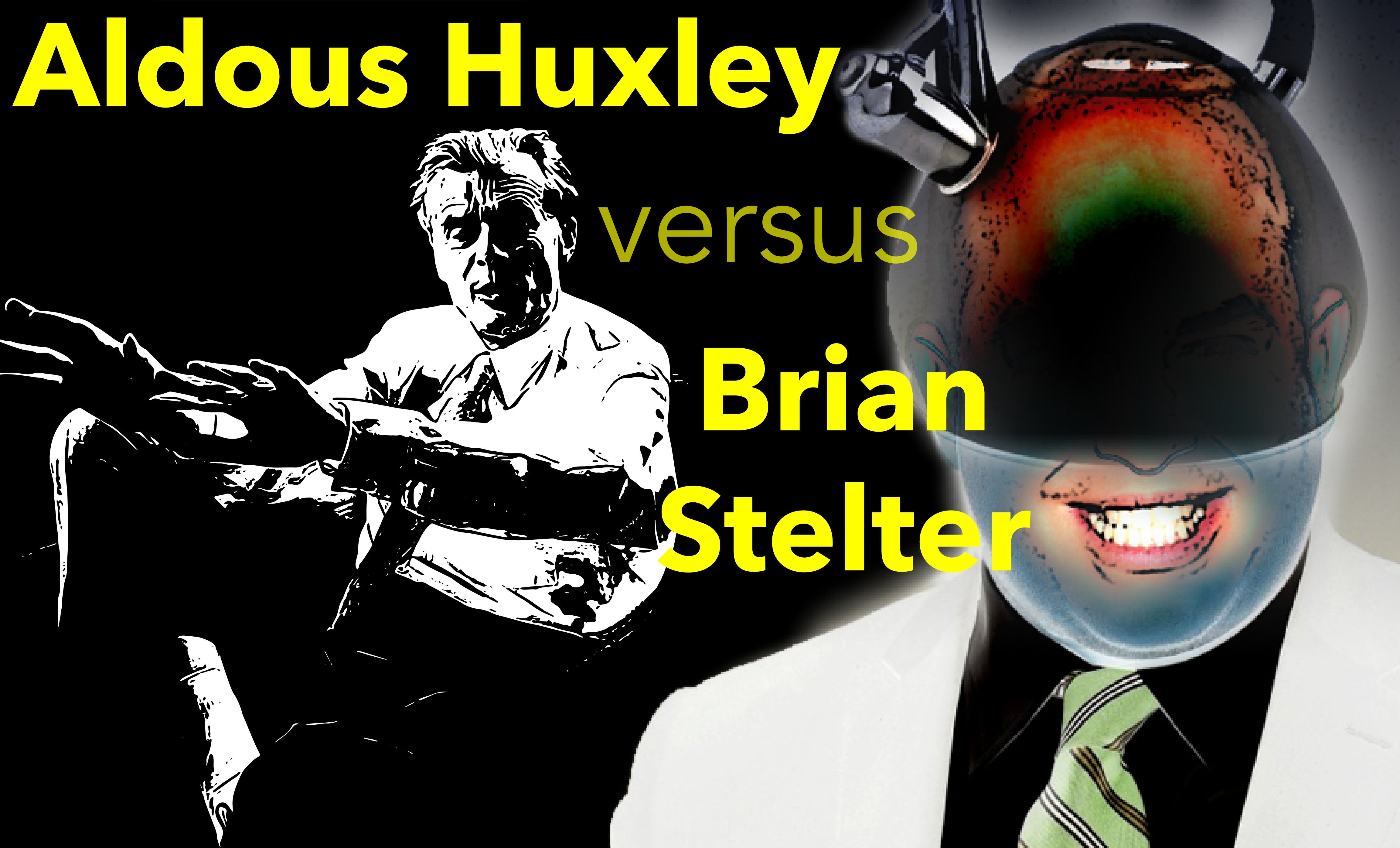
Watch: Aldous Huxley vs. Brian Stelter

Paul Jacob fights against totalitarianism:

This Week in Common Sense, February 2021, Week 1.

Categories
Thought

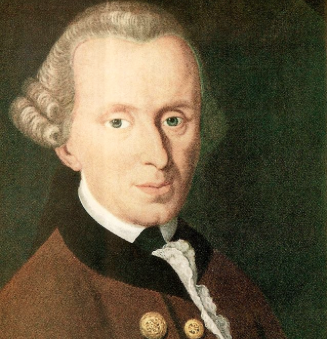
Immanuel Kant

Reason does not work instinctively, but requires trial, practice, and instruction in order to gradually progress from one level of insight to another.

Categories
Today

Soviets Give Up

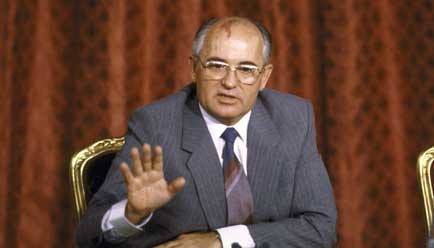
On February 7, 1990, the Central Committee of the Soviet Communist Party agreed to give up its monopoly on power, thus ushering the way for the dissolution of the putatively communist empire.