Categories
education and schooling

None of That Happened

A high school senior in Baltimore, Maryland, has only passed three courses in his last four years of “study.”

But here’s the kicker: his 0.1373 Grade Point Average is average at his school. Out of 120 students in his class, the young man ranks 62nd, with 58 others failing to reach his hardly stratospheric GPA.

“Tiffany France thought her son would receive his diploma this coming June,” explained Project Baltimore, the local Fox affiliate’s watchdog effort on education. “But after four years of high school, France just learned, her 17-year-old must start over.”

The television exposé found that in three years her son had “failed 22 classes and was late or absent 272 days.”

But for some inexplicable reason, though the unnamed lad was flunking roughly nine out of ten classes, Augusta Fells Savage Institute of Visual Arts continued to pass him on to higher grades and more advanced classes than those he had just bombed on.

“I’ve seen many transcripts, many report cards, like this particular student,” informed an anonymous (for fear of reprisal) administrator with the City Schools.

“He’s a good kid,” his mother offered. “[H]e’s willing, he’s trying, but who would he turn to when the people that’s supposed to help him is not? Who do he turn to?” 

Baltimore City Schools released a long statement detailing their bureaucratic procedures and protocols to prevent students from falling through the cracks. “France says none of that happened,” reported Project Baltimore.

I was privileged to have two parents who would never have allowed me to be so mis-educated. But when parents struggle, the theory is that public schools are there to help. In actual practice, though, this theory fails.

But gets passed along anyway.  

This is Common Sense. I’m Paul Jacob.


Related reading:

PDF for printing

See all recent commentary
(simplified and organized)
See recent popular posts

Categories
Thought

David Hume

It is seldom, that liberty of any kind is lost all at once. Slavery has so frightful an aspect to men accustomed to freedom, that it must steal upon them by degrees, and must disguise itself in a thousand shapes, in order to be received.

Categories
free trade & free markets

Meritocracy a Myth?

COVID and the pandemic panic have not been kind to small businesses, but some entrepreneurs have skyrocketed their wealth. Months ago, CNBC’s Gary Cohn waxed enthusiastic for “the banner year for newly minted American billionaires,” citing among reasons to celebrate “the possibility that it can happen to other people. . . .”

Reporting on three new billionaires from Doordash and “the winner of the week, Brian Chesky, AirBNB CEO,” CNBC’s Robert Frank said the recent uptick was “really inspirational no matter what your point of view.”

Wrong, says Kyle Kulinksi, a thoroughly unimpressed progressive podcaster, dissing the segment as “everything that’s terrible about CNBC in one clip.”

Now, I can imagine worrying about the context of celebrating a few folks’ success while so many others have been hit hard by bad policy and a virus, all the while big business (especially banks) have been subsidized with “stimulus.” But, Mr. Kulinski explains, “the main problem” is that CNBC’s encomiasts “clearly believe in the myth of meritocracy.”

Kulinski then yammers on about hard-working folks who got nowhere in life working three jobs. “The idea that the reason why these people are getting wealthy is because they’ve just worked harder than anybody else — that’s provably not true.” 

And then proceeds not to prove it.

Kulinski errs in focusing on “working hard” in sheer physical and time-suck terms. But to the extent we have a meritorious meritocracy, the merit rests on what CNBC’s Cohn called “work hard and have a great idea.” Emphasize the “and” — remembering that “great ideas” are those that extend value to others via trade. 

Value isn’t measured in BTU’s and time-clock ticks. 

Kulinski should have noticed the big truth about these gig economy billionaires: they have allowed normal people to take their investments in household production — their homes and their cars — and turn them into capital goods for services on the open market.

They created new markets . . . wherein all participants gain.

That is progress.

But not, apparently, “progressive.”

This is Common Sense. I’m Paul Jacob. 


PDF for printing

See all recent commentary
(simplified and organized)
See recent popular posts

Categories
Today

Nations and National Isms

On March 3, 1924, the 407-year-old Islamic caliphate collapsed when Caliph Abdülmecid II of the Ottoman Caliphate was deposed. The last remnant of the old regime gives way to the reformed ofKemal Atatürk.

On the same day, the Free State of Fiume was annexed by the Kingdom of Italy.

On March 3 of 1931, the United States adopted The Star-Spangled Banner as its national anthem.

Mohandas K. Gandhi began his hunger strike in Bombay to protest at the autocratic rule in British India on this day in 1939.


Belgian economist Gustave de Molinari (pictured above) was born on March 3, 1819. Associated with French laissez-faire economists Frédéric Bastiat and Yves Guyot, he was the longest-serving editor of Guillamin’s Journal des économistes. Today chiefly known in the English-speaking world for his authorship of one article, “The Production of Security” (1849), he was, as Ludwig von Mises described, the most productive economist in his school. Despite this, and his worldwide recognition, only one of his many books was translated from the French into English during his lifetime, The Society of To-morrow (1904), his final book.

In the book he advanced the idea of “the free constitution of nationality.”

Molinari died on January 28, 1912.

Categories
Thought

Paul Valéry

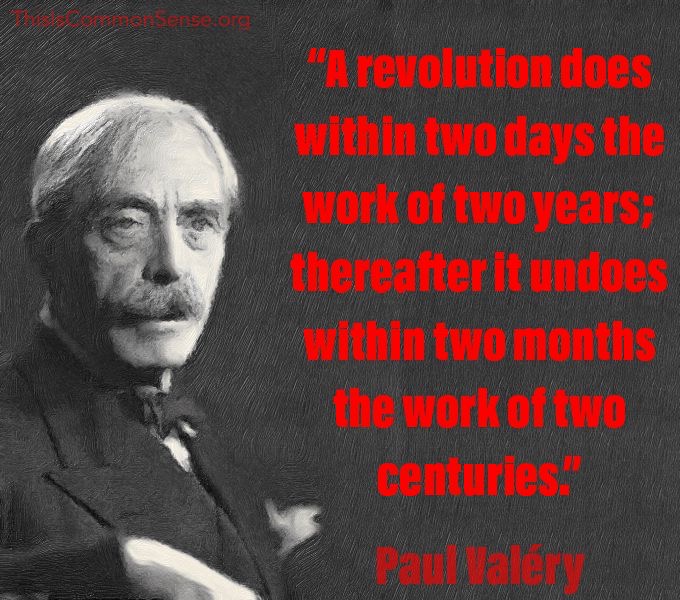
A revolution does within two days the work of two years; thereafter it undoes within two months the work of two centuries.

Paul Valéry, quoted by André Maurois in his introduction to Anatole France’s The Gods Are A-thirst (Nonesuch Press, 1942).

Categories
Accountability scandal

Cuomo Calling

Sunday, after two public accusations of sexual misconduct, New York Governor Andrew Cuomo apologized for anything he may have said that was “misinterpreted as an unwanted flirtation,” while maintaining he “never inappropriately touched anybody,” and “never intended to make anyone feel uncomfortable.”

Not even plausible. Intimidating people — making them “feel uncomfortable” — is actually the governor’s modus operandi.  

“The recent spate of stories about Gov. Cuomo’s penchant for bullying,” explains Karen Hinton, his former press secretary, in the New York Daily News, “isn’t about behavior that’s unusual in politics. It’s the norm.”

I believe her.

First, it’s widely practiced in politics; and, second, his method has been effective for many years. “A part of that is making sure that people very rarely speak up publicly against him,” a Fordham University political science professor informed The Post. 

Bullying is Cuomo’s go-to damage control.

And damage he has aplenty. After being nominated for Time’s “Person of the Year” and winning an Emmy “in recognition of his leadership during the Covid-19 pandemic and his masterful use of television to inform and calm people around the world” — and especially in recognition of him not being Donald Trump — Cuomo has come under fire not only for some faulty judgments, but for actually covering up the data on nursing home deaths.

When news broke of Mr. Cuomo allegedly calling and threatening to “destroy” a lawmaker seeking an investigation into the nursing home scandal, it brought back memories. While working for U.S. Term Limits in the 1990s, I fielded calls from angry politicians on what I dubbed “the prima donna party line.”

In my life, not many people have called to scream like spoiled brats in full tantrum and threaten me — but nearly all have been politicians.

This is Common Sense. I’m Paul Jacob.


PDF for printing

See all recent commentary
(simplified and organized)
See recent popular posts

Categories
Thought

David Hume

Generally speaking, the errors in religion are dangerous; those in philosophy only ridiculous.

Categories
Today

Rothbard and Houston

On March 2, 1793, Sam Houston was born.

On March 2, 1926, American economist and political theorist Murray N. Rothbard was born.

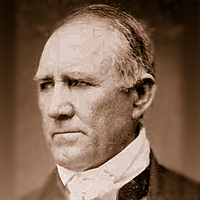
As President of the Republic of Texas, Houston (pictured above) cut the size of the Republic’s budget by a whopping amount, including selling the navy for scrap. Rothbard theorized about even more daring — and more permanent — cuts to (and limits upon) government.


On March 2, 1781, the Second Continental Congress convened as the new Congress of the Confederation, under the Articles of Confederation, ratified the day before. The congress elected no new president upon adoption of the Articles. This Confederation Congress oversaw the conclusion of the American Revolution.

Categories
crime and punishment national politics & policies

ICE De-Taloned

Occasionally, an outlier appears in politics, someone who follows through on campaign promises. Many people say that Donald Trump was one of those outliers, being someone who actually delivered to his voters the most conservative administration of our lifetimes.

I have heard precisely the opposite, too. But that is not an outlier: in politics, opposite opinions appear right next to each other all the time. Yet, however we judge a politician for letting voters down, when we do see a pol keeping a promise, it is worth noting.

So now that President Joe Biden has nixed Operation Talon, scratch a mark upon the wall.

One of Mr. Trump’s major concerns was immigration — “the Wall” being the most infamous notion. Somewhat less well-known was Trump’s aim to put Immigration and Customs Enforcement (ICE) back on a law-and-order footing, cracking down on actual criminality associated with (and piled on top of) “mere” illegal entry into the country. Operation Talon was an attempt to do just that, cracking down on sex trafficking crimes among the illegal alien set.*

It was a very focused ICE program.

AOC’s wing of the Democrats, on the other hand, want to abolish ICE entirely.

Now, the likelihood of either a Democratic Congress or President Biden following through on abolition seems about zero. But something could be done. ICE could be made to stop going after real criminals.

And so Mr. Biden has. Attorneys general in 18 states have formally complained about it, though, stating that Operation Talon was actually useful in their states’ core mission of fighting crime.

But, hey: no matter; Biden delivered on a promise.

This is Common Sense. I’m Paul Jacob.


* It is worth remembering that the U.S. Marshals have also made many successful operations, during the last administration, against domestic child sex trafficking rings, as covered here last year.

PDF for printing

See all recent commentary
(simplified and organized)
See recent popular posts
Categories
Today

March First Firsts

March 1st Firsts (and a 17th and a 37th):

| The first United States census was authorized, in 1790.

| Ohio was admitted as the 17th U.S. state, in 1803.

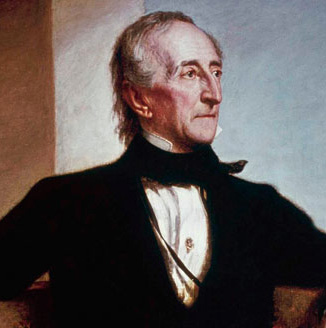
| President John Tyler [pictured above] signed a bill authorizing the United States to annex the Republic of Texas, in 1845.

| The state of Michigan formally abolished capital punishment, 1847.

| Nebraska became the 37th of the United States, in 1867.

On March 1, 1781, the Continental Congress of the United States adopted the Articles of Confederation. With this, the governing body became known, officially, as United States of America in Congress Assembled, more commonly as the Congress of the Confederation. The first session of this newly styled Confederation Congress took over without a break from the Second Continental Congress, adjourning on November 3. Samuel Huntington and Thomas McKean served as presidents during this first session.