On March 23, 1775, Patrick Henry delivered his “Give me Liberty, or give me Death!” speech at St. John’s Church in Richmond, Virginia.
On this date in 1992, economist and social philosopher Friedrich August von Hayek died.
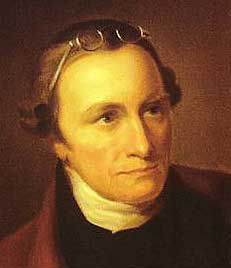
On March 23, 1775, Patrick Henry delivered his “Give me Liberty, or give me Death!” speech at St. John’s Church in Richmond, Virginia.
On this date in 1992, economist and social philosopher Friedrich August von Hayek died.

On NBC’s Meet the Press, Jon Ralston, editor of the Nevada Independent, acknowledged that “it’s unclear whether the Atlanta shootings were a hate crime or not,” but asserted that former President Trump’s use of “phrases like ‘the China Virus,’ clearly has exacerbated these problems.”
At the close of the program, host Chuck Todd warned “elected officials” that, “when [you] talk about China, the country, as a rival and an adversary to this country, be careful of your words. That matters too. And I know there’s a lot of fear that as the rivalry heats up with China, that these, these hateful incidents will also increase here.”
That’s really his takeaway? Be careful what you say about China?
Sure, let’s always remember that the genocidal regime running China — the Chinese Communist Party (CCP) that recognizes zero individual rights and permits no democratic checks on its power — is not the disenfranchised Chinese people.
Of course, most sane people understand the difference between ordinary folks and their government.
Frankly, Mr. Todd and NBC are as guilty as anyone in speaking of China while meaning the ruling CCP — just as we often say the U.S. when we really mean the U.S. Government.
But please, do not stop reporting when “China” does something bad, even genocidal. Lives everywhere depend on it.
And about that term, “rivals.” The problem with China is not that it rivals us — economically, or even militarily, per se. The problem is China’s tyranny, too easily exported.
Yes, watch your words, but don’t fear speaking out. The lives you save may be Asian.
This is Common Sense. I’m Paul Jacob.
Note: As faithful readers know, I prefer the term “CCP Virus,” directing blame for the worldwide pandemic to the Chinese government, which by lying and hiding information from the world unnecessarily unleashed death upon millions across the globe.
See all recent commentary
(simplified and organized)
See recent popular posts

On passing from a free country into one that is not free, the traveller is struck by the change; in the former, all is bustle and activity; in the latter, everything seems calm and motionless. In the one, amelioration and progress are the topics of inquiry; in the other, it seems as if the community wished only to repose in the enjoyment of advantages already acquired.
Alexis de Tocqueville, Democracy in America, Volume 1.

On March 22, 1630, the Massachusetts Bay Colony outlawed the possession of cards, dice, and gaming tables. Exactly eight years later, the colony expelled Anne Hutchinson for religious dissent.
In 1812 on this date, Stephen Pearl Andrews was born. Andrews would go on to become an important American abolitionist, free love advocate, and theorist of “individual sovereignty,” promulgating the reforms of Josiah Warren.
The weekend podcast is up in vlog form at YouTube:
This Week in Common Sense, March 19, 2021.
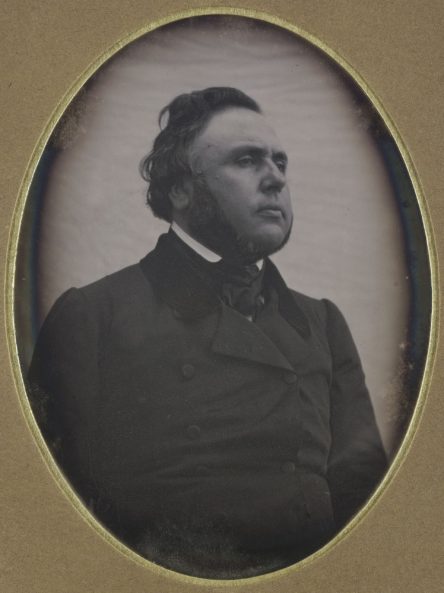
Socialism — that is the State substituting itself for individual liberty and growing to be the most terrible of tyrants.
Alexandre Auguste Ledru-Rollin (September 12, 1848), published as the epigraph to Yves Guyot, The Tyranny of Socialism (1894).
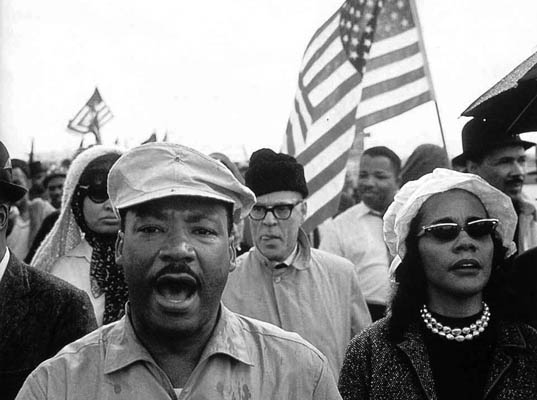
On March 21, 1965, Dr. Martin Luther King, Jr. led 3,200 people on the start of the third and finally successful civil rights march from Selma to Montgomery, Alabama.
Nearly two decades earlier, the Twenty-second Amendment (Amendment XXII) of the United States Constitution, passed Congress. The date was March 21, 1947. The amendment, ratified on February 27, 1951, set a term limit for election and overall time of service to the office of President of the United States. This was an obvious reaction to Franklin Delano Roosevelt’s more than three terms in office.
The first section of the amendment reads as follows:
No person shall be elected to the office of the President more than twice, and no person who has held the office of President, or acted as President, for more than two years of a term to which some other person was elected President shall be elected to the office of the President more than once. But this Article shall not apply to any person holding the office of President, when this Article was proposed by the Congress, and shall not prevent any person who may be holding the office of President, or acting as President, during the term within which this Article becomes operative from holding the office of President or acting as President during the remainder of such term.


Perhaps it is impossible for a person who does no good to do no harm.
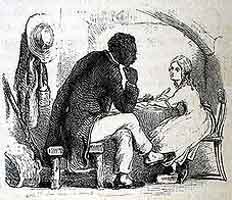
On March 20, 1852, Harriet Beecher Stowe’s anti-slavery novel Uncle Tom’s Cabin was published.