Categories
judiciary national politics & policies

Constitutionalize the Court

“To undo the damage Republicans did by stealing multiple Supreme Court seats,” argues Demand Justice, “we should immediately add seats to the Supreme Court and appoint justices who will restore balance.”

“Stealing”? That’s hyperbolic, to say the least. The Senate used its constitutional prerogative by refusing to approve President Obama’s nomination of Merrick Garland in 2016 and four years later by swiftly voting to confirm Justice Amy Coney Barrett.

The group’s proposal? Add four new justices. 

Facing a 3 to 6 justice deficit (Dem-nominated vs. GOP-nominated), many Democrats and groups like this one have settled on adding four.

For “balance.” 

Which means, to them, going from the minority to the majority.

And you thought Democrats weren’t good at math!

Last week, President Biden announced a commission to look into this “court packing” notion, as well as other possible changes to the High Court, including term limits. 

“My colleagues and I need not wait for the findings of a commission,” offered Rep. Mondaire Jones (D-N.Y.). It is “obvious,” he added, “we must expand the Supreme Court, before it’s too late.”

That is, before the next election or a resignation or tragic death of a single D-Senator might flip the Senate to Republican control. 

“Adding seats is straight-forward and easy,” reminds Demand Justice, correctly explaining that the Constitution specifies no number, “so Congress can change it at any time.”

Yes, even with the slimmest of congressional majorities Democrats could completely re-make the High Court. Without a single Republican vote. 

A partisan takeover of the Supreme Court is way too “easy” — until we place the number of justices firmly in the Constitution, away from poisonous partisan politicians. 

It’s the most urgent reform of all.

This is Common Sense. I’m Paul Jacob.


PDF for printing

See all recent commentary
(simplified and organized)
See recent popular posts
Categories
Thought

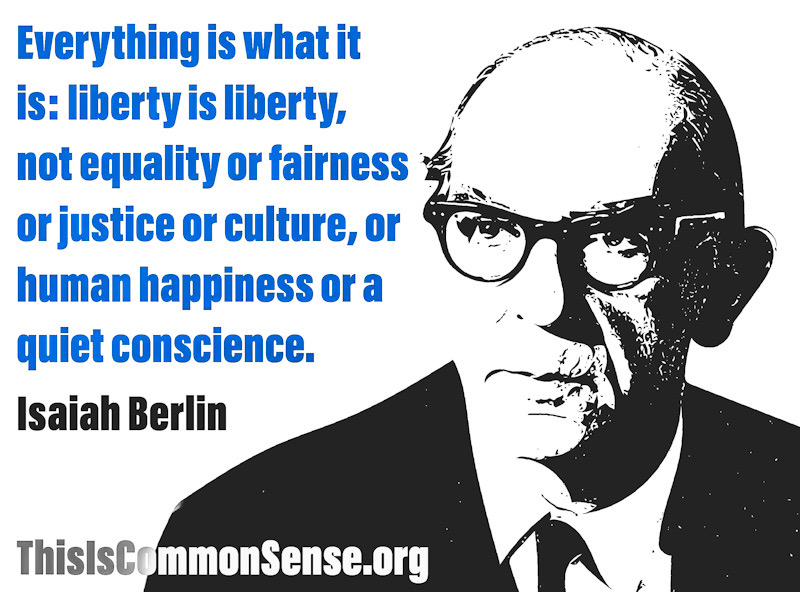
Isaiah Berlin

Everything is what it is: liberty is liberty, not equality or fairness or justice or culture, or human happiness or a quiet conscience.

Categories
Today

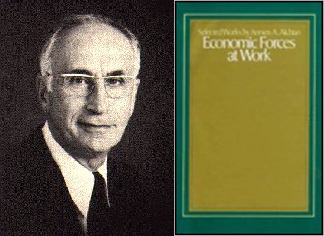
Armen Alchian

On April 12, 1914, American economist Armen Alchian was born. His contributions to economic theory and teaching were many and varied — his textbook, co-authored with William R. Allen, University Economics (also titled Exchange and Production), was widely considered one of the finest intermediate texts in microeconomics — but he remains perhaps best known for his work on property rights.

Alchian died in 2014, in late February, at the age of 99.

Categories
by Paul Jacob video

Watch: What They Hide from Us

The video version of Paul’s weekend podcast is up on YouTube:

This Week in Common Sense, April 9-10, 2021.
Categories
Thought

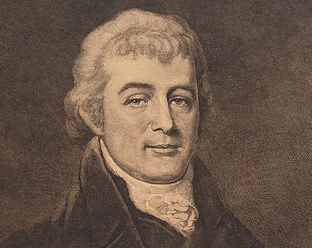
Luther Martin

Those who would wish to excite and keep awake your jealousy and distrust are your truest friends; while they who speak peace to you when there is no peace — who would lull you into security, and wish you to repose blind confidence in your future governors — are your most dangerous enemies; jealousy and distrust are the guardian angels who watch over liberty — security and confidence are the forerunners of slavery.

Categories
Today

Buchenwald

On April 11, 1945, the American Third Army liberated the Buchenwald concentration camp, near Weimar, Germany, a camp that would later be judged second only to Auschwitz in the horrors it imposed on its prisoners.

Among those in the camp saved by the American soldiers was Elie Wiesel, who would go on to win the Nobel Peace Prize in 1986.


Shown in photograph: German citizens ushered to the camp by American soldiers, post-conquest.

Categories
audio podcast

Listen: What They Hide

The podcast for the first full week of April 2021 is uploaded for your download:

Categories
Thought

Carmichael & Hamilton

It is our hope that the day may soon come when black people will reject federal funds because they have understood that these programs are geared to pacification rather than to genuine solutions. We hope that the rising level of consciousness may bring a rejection of such doles.

This will strike many readers as fantastic, but they might recall that once in India, Gandhi rejected relief food shipments from England precisely because he saw them as tools of pacification.

Stokely Carmichael and Charles V Hamilton, Black Power: the Politics of Liberation (New York: Random House, 1967).
Categories
Today

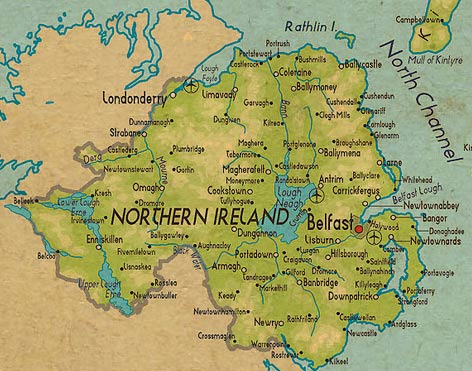
Good Friday Agreement

On April 10, 1998, the Northern Ireland peace talks ended with an historic agreement, dubbed the Belfast, or Good Friday Agreement. The accord was reached after nearly two years of talks and 30 years of conflict.

The agreement was approved by voters across the island of Ireland in two referendums held on May 22, 1998. The agreement came into force on December 2, 1999. 

Categories
national politics & policies too much government

The Audacity of the Swamp

A crony anti-infrastructure plan.

That, writes Veronique de Rugy at Reason, is “the best description of the Biden administration’s proposed $2.3 trillion infrastructure plan.”

Democrats are the masters of favoring a select few at the expense of the electorate and calling it the Public Good. Their woke moralism, egalitarianism, and other pieties effectively mask their party’s accomplished crony scheming.

Right now, though, the heady audacity of spending trillions of dollars we do not (yet) possess is all the mask the Democrats appear to need. 

Does anyone talk about the Swamp anymore?

Never drained, it is back with a vengeance:

  • “A large share of the plan . . . is a massive handout to private companies. The proposal includes $300 billion to promote advanced manufacturing, $174 billion for electric vehicles, $100 billion for broadband, $100 billion for electric utility industry, and more.”
  • “Biden’s plan also includes hundreds of billions that have nothing even remotely to do with infrastructure.”
  • “To the extent that Democrats are trying to pay for this spending with taxes, they’re doing it in a way that belies their claim that this plan will result in a boost in quality infrastructure.”

The tax increase in the plan is to eliminate established tax “preferences” for fossil fuel companies. This would be politically popular with Democratic Party supporters, feeding their enviro-lust to lash out at what are commonly perceived as destroyers of the planet. But tax something more, get less. And a huge part of our infrastructure relies upon — indeed, consists in — the fossil fuel industry. So there will be less infrastructure investment in that realm.

But that doesn’t hurt the cronies. It hurts other folks.

This is Common Sense. I’m Paul Jacob.


PDF for printing

See all recent commentary
(simplified and organized)
See recent popular posts