Categories
Today

To Freedom

On June 16, 1961, dancer Rudolf Nureyev defected from the Soviet Union.


The great Scottish moral philosopher, political economy pioneer, and Enlightenment intelectual Adam Smith (1723-1790), best known for authoring the 1776 masterwork The Wealth of Nations, was born on June 16.

On June 16, 1858, Abraham Lincoln delivered his “House Divided” speech in Springfield, Illinois.

On this date in 1963, the Soviet Space Program achieved a first with the Vostok 6 mission, placing Cosmonaut Valentina Tereshkova into orbit as the first woman in space.

June 16th is Bloomsday, a celebration of the life and work of Irish expatriate author James Joyce (1882-1941). The date was selected because June 16, 1904, was the date in which Joyce’s 1922 novel Ulysses was set. The ceremonial day is named after the character Leopold Bloom.

Categories
education and schooling ideological culture

The A-word in Our Schools

Banning “Critical Race Theory” in public schools and other government institutions seems like such a good idea that when you read Scott Shackford’s headline at Reason, “Don’t Ban Critical Race Theory in Education. Embrace School Choice Instead,” you may balk. 

“Conservatives in Florida, Idaho, and the nation’s capitol are attempting to block public schools from teaching Critical Race Theory,” Shackford writes, describing CRT as “an ideology that holds that racism is historically fundamental to how America’s political, legal, and cultural institutions are structured.” His problem with this political move is that it is “an authoritarian proposal that would cut off classroom debate about hot-button political issues.”

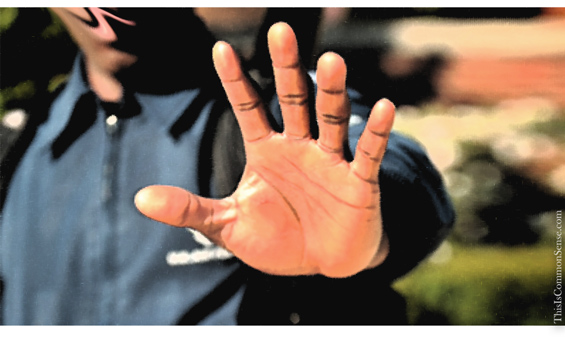
My issues really begin with the a-word.

From what I can tell, CRT is itself authoritarian, and groupthink-oriented, class-based and generally racist. The program looks designed to implement a sort of Cultural Revolution indoctrination-and-social control system into American institutions, definitely not to encourage “classroom debate.” 

While Shackford makes the obvious point that America’s past institutional make-up was indeed racist and structurally so, and that learning this is important for a decent education, CRT did not add this to “the debate.” This has been widely acknowledged for years.

Besides, CRT activists go much further, calling “whiteness” a disease and white people ineluctably, “systemically” racist.

Though Shackford’s main point — that we should take the occasion to offer the best way out, “school choice” — is indeed a great one, letting socialist radicals and weak-minded educrats enshrine a racist theory about racism into public institutions amounts to a kind of brinksmanship, a “collapsitarian” approach.

Couldn’t we put government education’s allotted doom on the back burner, stop teaching CRT or other woke indoctrination, and also empower parents and students with freedom of choice?

This is Common Sense. I’m Paul Jacob.


PDF for printing

See all recent commentary
(simplified and organized)
See recent popular posts

Categories
Thought

Frederick Douglass

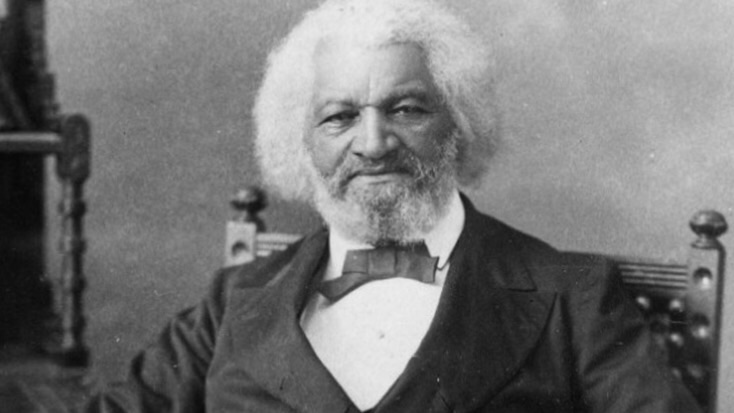
Power concedes nothing without a demand. It never did and it never will. Find out just what a people will submit to, and you have found out the exact amount of injustice and wrong which will be imposed upon them; and these will continue till they are resisted with either words or blows, or with both. The limits of tyrants are prescribed by the endurance of those whom they oppress.

Categories
Today

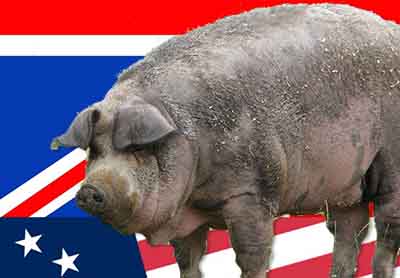
Pig War!

The Oregon Treaty, signed June 15, 1846, established the boundary between Great Britain’s Canadian territory and the United States of America, from the Rocky Mountains to the Strait of Juan de Fuca, using the 49th Parallel as the handy marker. However, the treaty was not exactly clear on the territorial status of the San Juan Islands, so exactly 13 years later, to the day, a war erupted . . . over a shot pig.

An American farmer shot a pig rooting through his garden. The pig belonged to an Irishman. The two did not agree upon compensation, and “the authorities” were called in, with infantry mustering from the south and the Governor of Vancouver Island instructing marines to land on San Juan Island — though the rear admiral in charge refused to comply with the order, on the reasonable grounds that war over a pig was not worth it. Local troops from both sides lined up against each other, but under command to defend themselves only and not shoot first. All that was exchanged in this war were insults. It turned out to be a bloodless war, discounting the pig, so it might qualify as the best war in American history.

Categories
First Amendment rights international affairs

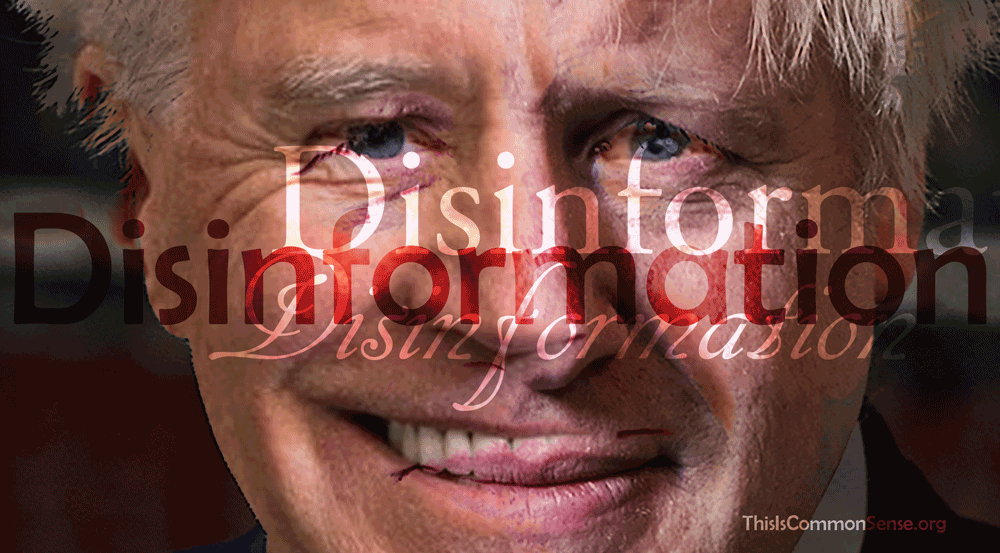
The Biden-Boris Censorship Alliance

The Group of Seven (G7) is an annual meeting at which leaders of seven major countries hobnob about international matters and how they might coordinate policies.

This year, the pandemic was high on the agenda. Also on the agenda, if lower and less conspicuous, was muzzling dissidents.

Dissidents being defined, in current style, as people who spread “disinformation.”

At the meeting, Joe Biden and Boris Johnson endorsed a revised version of the 1941 Atlantic Charter that includes a seemingly minor provision: “We oppose interference through disinformation or other malign influences, including in elections . . . .”

That’s it — just an ominous hint. 

But the Biden administration has been more open in other contexts. White House Press Secretary Jen Psaki says that according to Biden, more should be done by “major platforms” to prevent “misinformation, disinformation, damaging, sometimes life-threatening information” from going out to the public.

Throughout history, people have disagreed about facts and their interpretation. It’s nothing new. And pretending it is new provides no justification for preventing the exercise of freedoms that are the only means of reaching and communicating truths — and of correcting the honest or dishonest errors that government officials are as capable of committing as the rest of us.

The UK is considering an Online Safety Bill to block social media sites that fail to remove “legal but harmful content” — which opens up wide vistas of . . . illegal legal content? 

Even if our government doesn’t follow Her Majesty’s (yet), our current administration is pressuring social media firms to impose censorship on its behalf.

That’s violation-by-proxy of the First Amendment.

This is Common Sense. I’m Paul Jacob.


PDF for printing

See all recent commentary
(simplified and organized)
See recent popular posts

Categories
Thought

Philip K. Dick

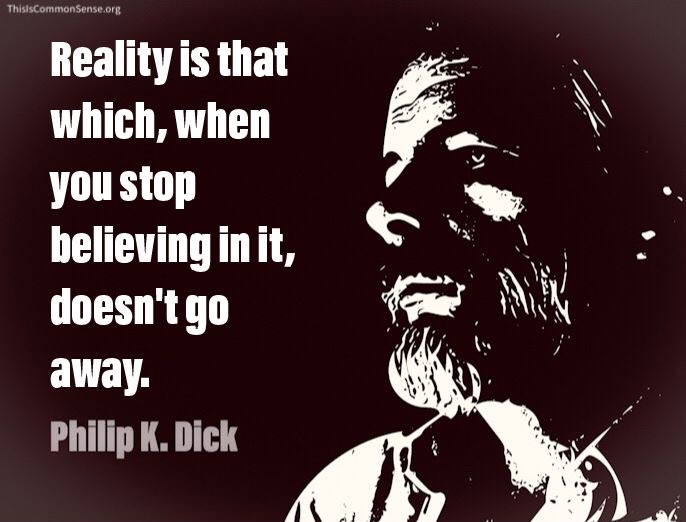
Reality is that which, when you stop believing in it, doesn’t go away.

Philip K. Dick, “How To Build A Universe That Doesn’t Fall Apart Two Days Later” (1978).
Categories
Today

Stars and Stripes

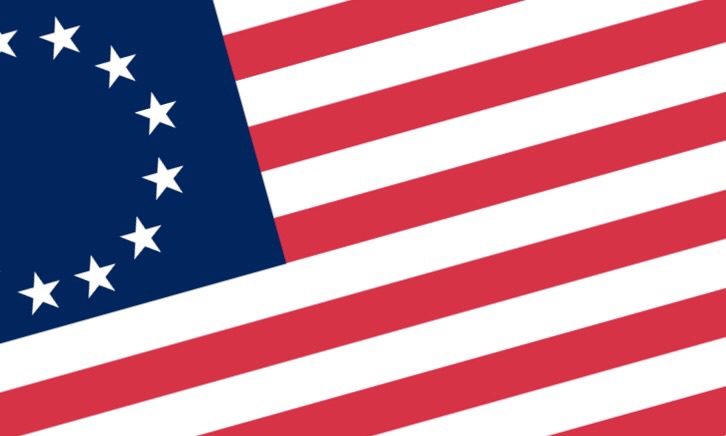
On June 14, 1777, U.S. Congress adopted the Stars and Stripes as the United States Flag.

Categories
video

Watch: Bite!

Paul Jacob expands upon the biggest stories of the week as treated more concisely on this site, in the second week of June 2021.

Categories
Thought

Frederick Douglass

I had very strangely supposed, while in slavery, that few of the comforts, and scarcely any of the luxuries, of life were enjoyed at the north, compared with what were enjoyed by the slaveholders of the south. I probably came to this conclusion from the fact that northern people owned no slaves. I supposed that they were about upon a level with the non-slaveholding population of the south. I knew they were exceedingly poor, and I had been accustomed to regard their poverty as the necessary consequence of their being non-slaveholders. I had somehow imbibed the opinion that, in the absence of slaves, there could be no wealth, and very little refinement. And upon coming to the north, I expected to meet with a rough, hard-handed, and uncultivated population, living in the most Spartan-like simplicity, knowing nothing of the ease, luxury, pomp, and grandeur of southern slaveholders. Such being my conjectures, any one acquainted with the appearance of New Bedford may very readily infer how palpably I must have seen my mistake.

Frederick Douglass, Narrative of the Life of Frederick Douglass, 1845.

Categories
Today

Anti-slavery

On June 13, 1774, Rhode Island became the first British colony in the Americas to prohibit the importation of slaves.