Paul Jacob laughs:
Categories
Watch: Joker in the White House
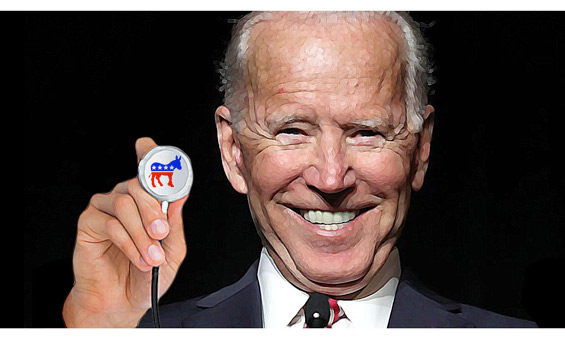
Paul Jacob laughs:
On July 25, 1861, the U.S. Congress passed the Crittenden-Johnson Resolution, stating that the war with the seceded states of the Confederacy was being fought to preserve the Union, not to end slavery.

Paul Jacob starts off this week’s podcast with Joker Biden himself:

Where there are no rights, there are no duties.

On July 24, 1487, citizens in Leeuwarden, Netherlands, went on strike against a ban on foreign beer.
On the same day of 1823’s calendar, slavery was abolished in Chile.
On this day in 1974, the U.S. Supreme Court told President Richard Nixon that he lacked constitutional authority to withhold the infamous “Nixon Tapes” from Congress.
July 24 serves as Pioneer Day in Utah and as Simón Bolívar Day in Bolivia, Ecuador, Colombia, and Venezuela.

Chinese government officials are shocked, shocked — no wait, make that “extremely shocked!” — that the World Health Organization (no less) proposes “to further investigate whether the coronavirus emerged from a lab in Wuhan.”
“We are asking China to be transparent, open and cooperate,” said Tedros Adhanom Ghebreyesus, the W.H.O.’s director-general, “especially on the information, raw data that we asked for in the early days of the pandemic.”
But yesterday, at a Beijing news conference, the vice minister of the Chinese National Health Commission, Zeng Yixin, shared his feelings that “this plan revealed a lack of respect for common sense and an arrogant attitude toward science. We can’t possibly accept such a plan for investigating the origins.”
Instead, Zeng suggested searching for “signs of natural transmission . . . and the possibility that the virus may have first spread outside China” . . . or perhaps chasing after wild geese.
“[S]everal Chinese officials asserted that the W.H.O. inquiry got it right the first time,” explained The New York Times, “and that there was no evidence to justify renewed checks of the labs.”
“Renewed”? That supposes that labs at the Wuhan Institute of Virology have previously been inspected, forensically, and the personnel interviewed — not to mention a ton of essential evidence on the virus shared and analyzed. None of that has happened.
The joint WHO-China investigation was no such thing. It was a transparent* scam to dismiss the lab-leak theory as “extremely unlikely” without scrutiny. Even the head of the W.H.O. publicly backed away from its own finding, declaring that more investigation was needed.
Only major U.S. media still buy Chinazi gaslighting . . .
. . . or express surprise that the genocidal mobsters running China won’t cooperate in holding themselves accountable.
This is Common Sense. I’m Paul Jacob.
* No doubt, this marks the absolute zenith of transparency for the Chinese Communist Party.
art: transparent / floater
The Man the Media Missed — June 8, 2021
The Worshipful and the Incurious — June 3, 2021
The Sound of Sino-Silence? — March 22, 2021
Now Safe to Blame? — March 8, 2021
Good Relations with Genocide? — November 24, 2020
Soft on China — April 29, 2020
Follow the (Media) Money — April 21, 2020

“I don’t know nothin’, but I suspect a lot of things.”
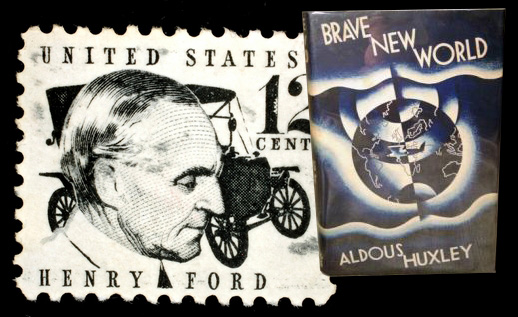
On this day in 1903, the Ford Motor Company sold its first car. Less than 30 years later, Aldous Huxley satirized Ford’s assembly line procedures in his novel Brave New World. Arguably, both the assembly line and the satire advanced freedom.
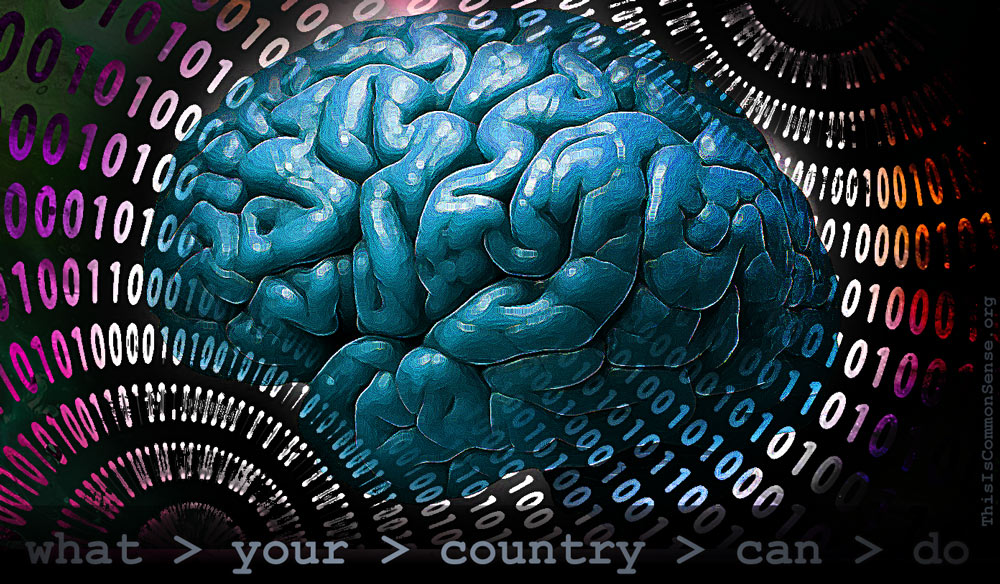
Can you communicate with your mind alone, without moving a muscle?
Setting aside fantasy and wishful thinking, my answer is, at least presumptively, “No.”
But the paralyzed man known as T5 was not alone when the sentences he imagined appeared on screen at a rate of 18 words per minute with an accuracy of about 94 percent.
He had the help of inventive scientists. And, by some definitions, I suppose T5 did move a muscle: his brain.
Normally, though, we must also move other muscles to get what’s on our mind out into the world and communicate it to others.
After suffering a spinal cord injury in 2007, T5 became almost entirely paralyzed. Several years later, he enrolled in a clinical trial called BrainGate2 to research brain-computer interfaces.
Two small microchips were implanted in his brain.
Scientist Frank Willett of Stanford University and his colleagues asked T5 to imagine that he was writing individual letters and punctuation marks. They found that the patterns of neural activity they recorded were distinct for each letter, period, and comma.
Now all they had to do — a trifle! — is train an algorithm to predict, based on T5’s neural patterns, what letter or punctuation mark he was writing in his imagination.
It worked. Initial accuracy: 94 percent. With autocorrect that percentage went up to 99.
As yet, the technology is said to be too rudimentary to be practically applied. But the basic approach has been shown to be viable. The work also communicates the power of human ingenuity.
This is Common Sense. I’m Paul Jacob.
art credit: binary
See all recent commentary
(simplified and organized)
See recent popular posts

Nature having made men unequal, by giving stronger bodily and mental powers to one than to another, the end of government ought to be, to destroy this inequality by protecting the weak. Instead of which, it has always leaned to the opposite side, wearing itself out by disregarding the first principle of its organization.
Mary Wollstonecraft, An Historical and Moral View of the French Revolution (1794), p. 7.