Categories
Thought

Charles Baudelaire

La plus belle des ruses du diable est
de vous persuader qu’il n’existe pas.

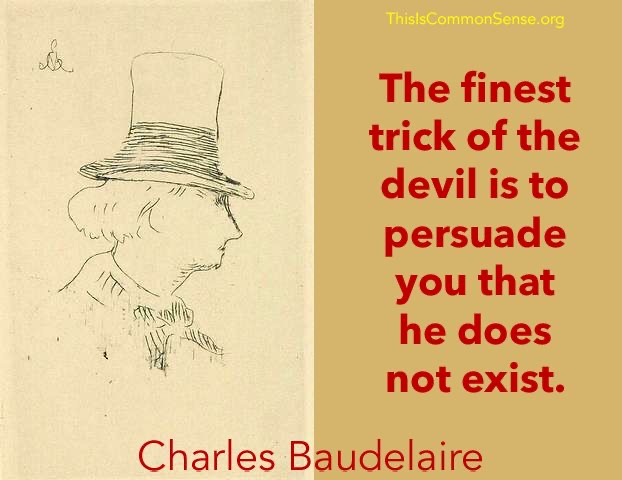
The finest trick of the devil is to persuade you that he does not exist.

Charles Baudelaire, Le Spleen de Paris (1869; posthumous).

Paraphrased in The Usual Suspects as “The greatest trick the Devil ever pulled was convincing the world he didn’t exist.” Sketch of the author is by Édouard Manet.

Categories
Today

John Birch

On August 25, 1945, the Cold War began (some say) when, ten days after World War II ended with the Japanese surrender, armed supporters of the Chinese Communist Party killed Baptist missionary Capt. John Birch (1918-1845).

Categories
international affairs privacy too much government

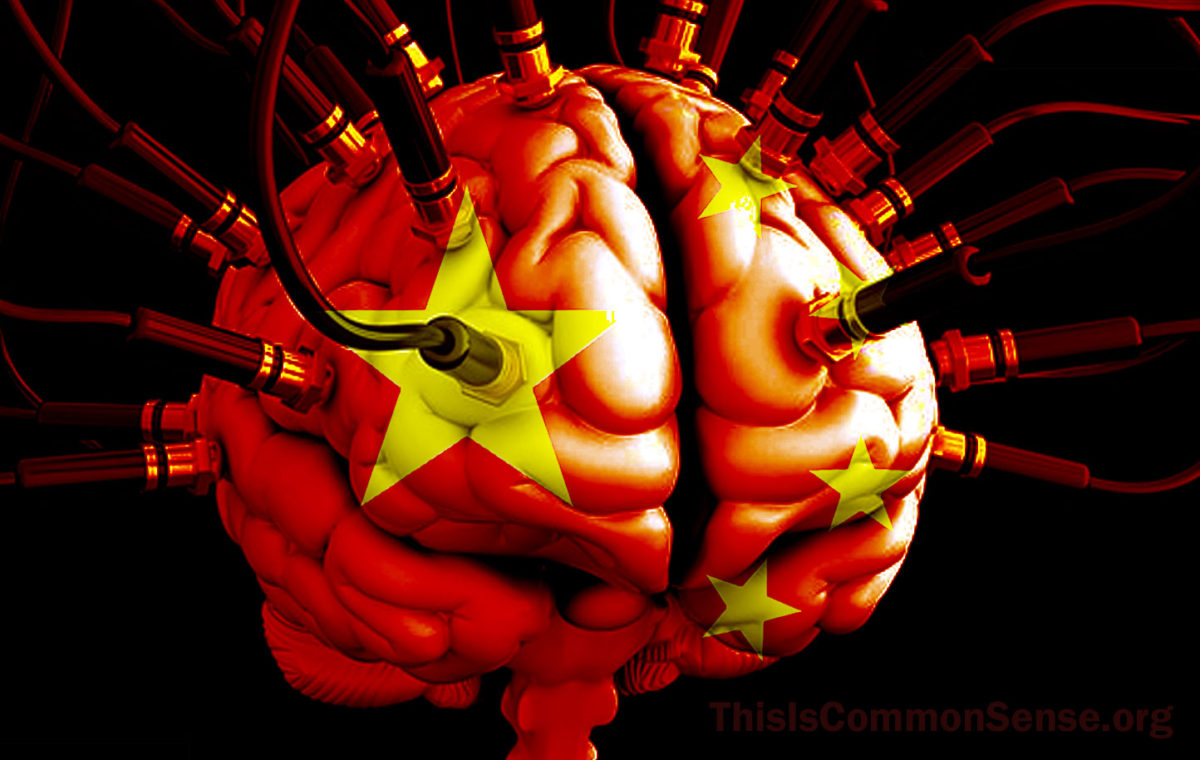
Privacy with Chinese Characteristics

Governments must appear, at least some of the time, to be riding a silver stallion to rescue The People. All government rests on a kind of consent: not legal; not democratic; instead, the accommodation of the many to the few — to accept being ruled. This has been known since David Hume.

So when governments pretend to be more democratic, more contractual, than they actually are, it’s to maintain and increase power.

Take China.

In a fascinating report by Liz Wolfe, we learn that the Chinese Communist Party (CCP) is establishing new rules regulating corporations’ use of their customers’ data: “the Personal Information Protection Law (PIPL), necessarily weakens big tech companies, forcing onerous regulations that they will now have to comply with.”

This may sound all very consumer- and citizen-oriented. But Ms. Wolfe not only notes that the regulations are burdensome, she observes that while China’s corporations will soon be prevented from doing things big tech companies routinely do in the West, the Chinese will pointedly not be protected from data collection by the government. 

Which is vast. 

Intrusive.

Often malign.

“Protection of consumer data, while fine and good, means nothing,” she writes, “if there’s no true rule of law binding governments to privacy-protecting standards as well.”

Almost certainly China is trying to prevent in China what happened in America: the creation of powerful countervailing organizations competing with the government in one of the oldest activities of government: suppression of opinion to leverage power and revolutionize the State, changing policy from outside formal power centers.

Our social media — and other major tech corporations — have plied their incredible access to information to mold popular opinion for political and ideological purposes.

The CCP will not put up with that. 

This is Common Sense. I’m Paul Jacob.


image credit

See all recent commentary
(simplified and organized)
See recent popular posts

Categories
Thought

David Hume

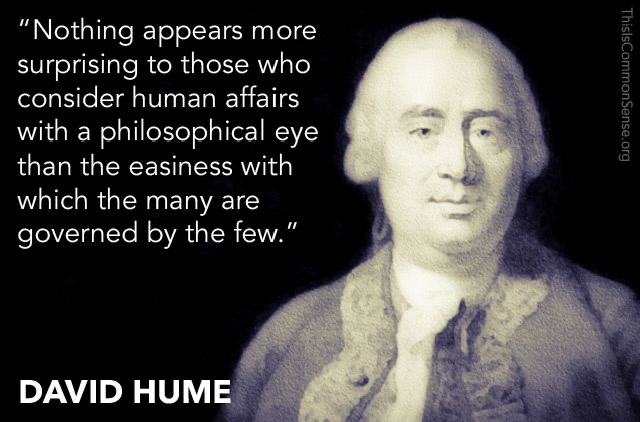
Nothing appears more surprising to those who consider human affairs with a philosophical eye than the easiness with which the many are governed by the few.

David Hume, “Of the First Principles of Government,” in Essays and Treatises on Several Subjects (London: A. Millar, 1764), vol. I, essay IV.

Categories
Today

White House Burnt Down

In 1814 on this day, British forces burnt down the White House. Unlike audience reaction to the 1996 movie Independence Day (pictured), there was no widespread cheering among Americans for the building’s destruction.

One year later, the modern Constitution of the Netherlands received its empowering signatures.


August 24 birthdays include that of British anti-slavery activist William Wilberforce (1759-1833), Argentine literary genius Jorge Luis Borges (1899-1986), and French historian and author of a magisterial study of the rise of capitalism in Europe, Fernand Braudel (1902-1985),

The Ukraine celebrates its independence from the Soviet Union with a National Day on August 24.

On August 24, 1682, William Penn received an area of territory to add it to his colony of Pennsylvania. The area comprises, today, the state of Delaware.

Categories
initiative, referendum, and recall

Recall Legal Scholars?

“For weeks, legal scholars have debated whether the recall election of [California] Gov. Gavin Newsom could be found unconstitutional,” The Los Angeles Times reports, “if Newsom failed to realize a ‘no recall’ majority of the ballots cast and was ousted by a candidate who received fewer votes than he did.”

By “failed to realize a ‘no recall’ majority,” writer Maura Dolan means — in normal lingo — that Newsom gets booted out of office by majority vote. But following that phrase with “ousted by a candidate who received fewer votes than he did” ignores precisely who just did the “ousting” or, if you prefer, “booting” — voters.

Her confusion was mightily assisted by University of California at Berkeley academics, Law School Dean Erwin Chemerinsky and Professor Aaron S. Edlin, economist, arguing in The New York Times that the recall is “nonsensical and undemocratic.” Oh, and “unconstitutional,” too, because more votes could be cast to keep the incumbent than for the incumbent’s replacement. 

“Every voter should have an equal ability to influence the outcome of the election,” they contend.

A Golden State recall petition results in two separate elections: (1) the voters’ up-or-down decision on keeping or recalling the official in question, and (2) a second election for voters to choose among candidates running to replace that official should the recall succeed. 

Every Californian casting a ballot on these two separate issues indeed has an equal vote. The recall is automatically decided by majority, while the replacement could win with a plurality.

The equal protection angle has been raised unsuccessfully before. In fact, Chemerinsky acknowledged, according to the LA Times, “that courts could decide that the recall proposal itself amounted to a separate election from the second question on the replacement candidates.”

No duh.

The authors should be glad that recalling academics isn’t a thing — even so, they’re not as awful as Governor Newsom.

This is Common Sense. I’m Paul Jacob.


Blast from the past: This column addressed opposition to the 2003 recall of California Gov. Gray Davis.

PDF for printing

Photo by Gage Skidmore

See all recent commentary
(simplified and organized)
See recent popular posts
Categories
Thought

C. G. Jung

No one can flatter himself that he is immune to the spirit of his own epoch, or even that he possesses a full understanding of it. Irrespective of our conscious convictions, each one of us, without exception, being a particle of the general mass, is somewhere attached to, colored by, or even undermined by the spirit which goes through the mass. Freedom stretches only as far as the limits of our consciousness.

Carl Gustav Jung, Paracelsus the Physician (1942).
Categories
Today

Singing Revolution

On August 23, 1989, two million people from Estonia, Latvia and Lithuania stood on the Vilnius-Tallinn road, holding hands, as part of the “Singing Revolution” that helped set the Soviet Union to its implosion.

Categories
video

Watch: The Right Punctuation Mark

Paul Jacob punctuates your equilibrium:

Categories
Thought

Jacob Burckhardt

The seventeenth century is everywhere a time in which the state’s power over everything individual increases, whether that power be in absolutist hands or may be considered the result of a contract, etc. People begin to dispute the sacred right of the individual ruler or authority without being aware that at the same time they are playing into the hands of a colossal state power.

Jacob Burckhardt, Reflections on History.