Categories
Today

Congress on the Run

Lancaster, Pennsylvania — home to James Buchanan, Jr., the 15th president of the United States, and to congressman, abolitionist and “Radical Republican” Thaddeus Stevens — served, during the American Revolution, as the capital of the United States for one day, on September 27, 1777.

This occurred after the Continental Congress fled Philadelphia, which had been captured by the British. The revolutionary government then moved still further away, to York.

Categories
by Paul Jacob video

Watch: The People’s Crusade Won’t Be Led by Those Who Hate the People

Paul Jacob explains his basic take on democracy, defends initiative and referendum rights, and the people’s right to know the truth about COVID . . . and UFOs.

Categories
Thought

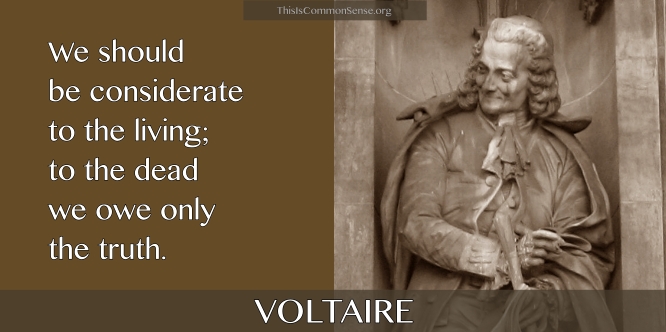
Voltaire

On doit des égards aux vivants; on ne doit aux morts que la vérité.

We should be considerate to the living; to the dead we owe only the truth.

François-Marie Arouet (pen name “Voltaire,” 1694-1778), Letter to M. de Grenonville (1719).
Categories
Today

Shays’ Constitution

On September 26, 1786, protestors shut down the court in Springfield, Massachusetts, beginning a military standoff and ushering in Shays’ Rebellion. This anti-tax revolt spurred a dramatic reaction on the part of the day’s politicians, including their attempts to reform the Articles of Confederation and to figure out better ways than high state taxes to pay off Revolutionary War debts. These efforts directly led to the adoption of a new Constitution.

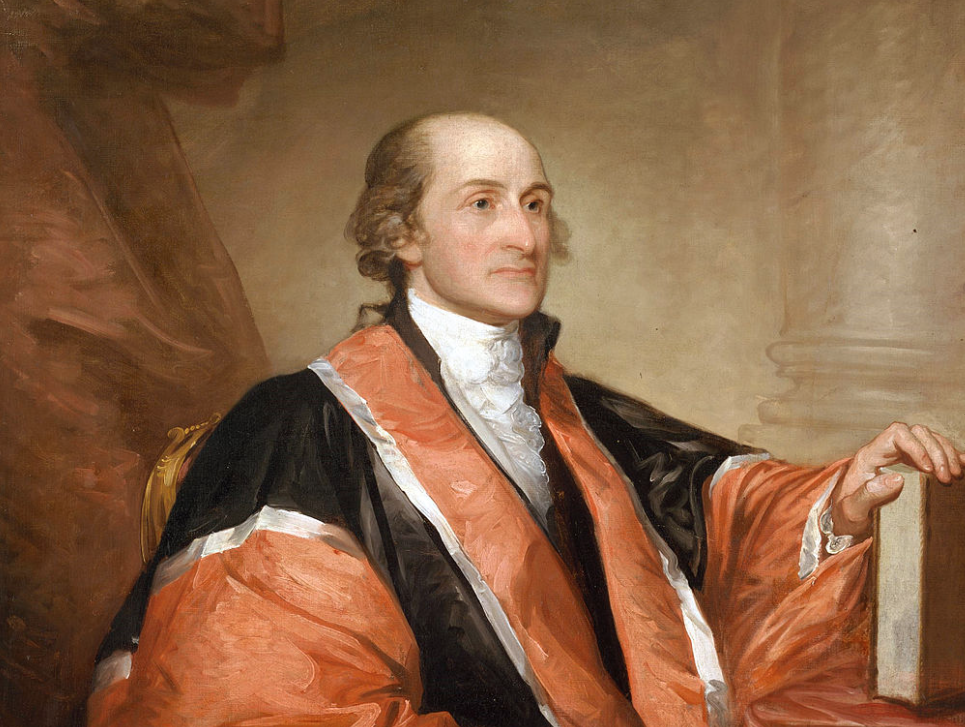
§   Three years later, to the day, Thomas Jefferson was appointed the first United States Secretary of State, John Jay (pictured) was appointed the first Chief Justice of the United States, Samuel Osgood was appointed the first United States Postmaster General, and Edmund Randolph was appointed the first United States Attorney General — all under the new Constitution.

§   In 1960 on this date, John F. Kennedy and Richard M. Nixon engaged in the first televised presidential campaign debates.

§   September 26 is celebrated, by some who know history, as “Petrov Day,” after Stanislav Yevgrafovich Petrov, who on this day in 1983 may have saved civilization by resorting to hunch. While serving as a lieutenant colonel in the Soviet Air Defense Forces, he took the initiative to downgrade information from the USSR’s computerized early warning missile defense system that the United States had initiated a nuclear first strike against the Soviet Union. He interpreted the warning as a false alarm. His hunch was correct; the U.S. had not initiated a first strike: the data he had received was misleading. A later investigation determined it was the result of high altitutde cloud interference with a satelite view of a U.S. Air Force base. Petrov was not rewarded for his decision, however. His decision showed up the military higher-ups and scientists to have concocted an extremely faulty system, so a reward would also have required some sort of punishment. He retired soon after with a very, very small pension.

Petrov died on May 19, 2017.

Categories
audio podcast

Listen: It’s Hard to Crusade for the People If You Don’t Like the People

Free speech, initiative rights, and UFOs — and other things the establishment wants to suppress:

Categories
Thought

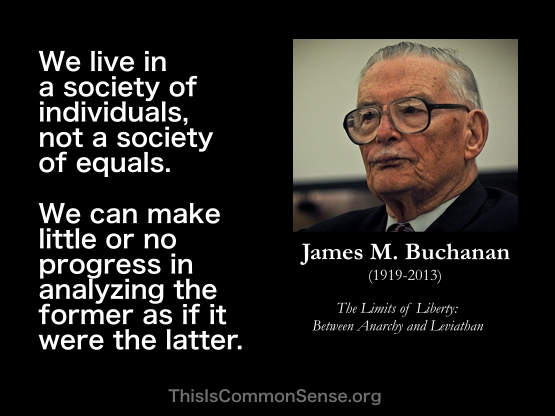
James M. Buchanan

We live in a society of individuals, not a society of equals. We can make little or no progress in analyzing the former as if it were the latter.

James M. Buchanan, The Limits of Liberty: Between Anarchy and Leviathan (1975).
Categories
Today

Augsburg, Bill of Rights

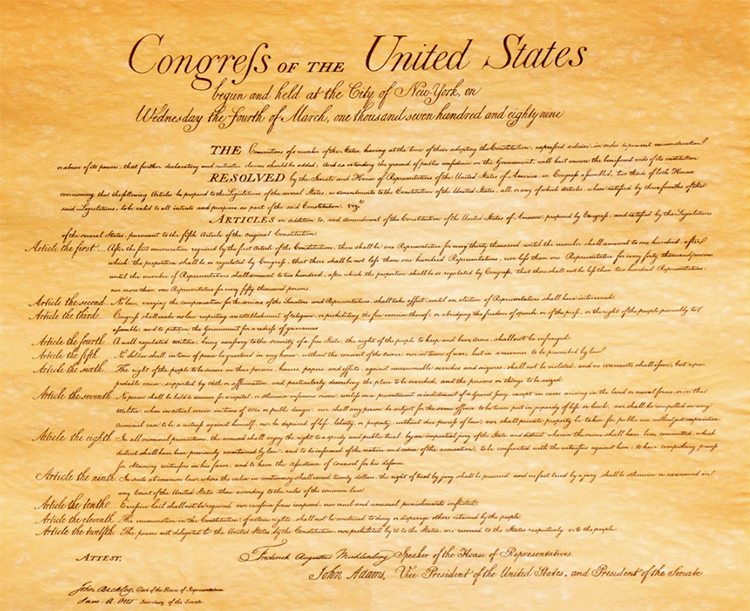
On September 25, 1789, the U.S. Congress passed twelve amendments to the United States Constitution: the Congressional Apportionment Amendment (which was never ratified), the Congressional Compensation Amendment, and the ten that are known as the Bill of Rights.

Earlier on that date, in 1555, the Peace of Augsburg was signed in Augsburg by Charles V and the princes of the Schmalkaldic League.

Categories
education and schooling First Amendment rights

Combatting Campus Cancel Culture

We keep hearing how students and professors are being targeted for saying stuff they’re not supposed to say — from the perspective of the hard-left students, professors, and off-campus third parties who launch most of the attacks, that is.

Which seem to be happening more and more often.

The numbers confirm it. New research by the Foundation for Individual Rights in Education (FIRE) indicates that attacks on professors for impolitic speech have increased since 2015. Most of the attacks — 74 percent — have resulted in sanctions against the accused.

According to FIRE, “calls for sanction” of a professor rose from 24 in 2015 to 113 in 2020.

Three fourths of the tallied incidents, 314 out of 426, have led to punishments like suspension or termination.

The attacks tend to occur on university campuses with “severely speech-restrictive” policies. Like many Ivy League schools.

One of the researchers, Komi German, says that university administrators and presidents must “explicitly state that the protection of free speech and academic inquiry supersedes protection from words that are perceived as offensive.”

Good idea. Let them do that.

Why aren’t the censorious administrators doing it already, though? 

Probably because they lack allegiance to the value of freedom of speech on campus.

Until these academics all have Damascus-level conversions, parents and students must do what they can themselves to discourage these censorious policies. This means, abstaining from attending and paying tuition at schools that penalize professors and others for wrongspeech.

This is Common Sense. I’m Paul Jacob.


PDF for printing

cancel/wisdom

See all recent commentary
(simplified and organized)
See recent popular posts
Categories
Thought

J. H. Levy

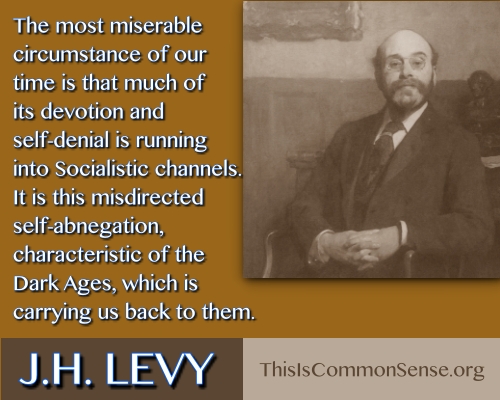
Socialism has its black sheep. What cause has not? But that which fills me with grief is that it has so many white ones. The most miserable circumstance of our time is that much of its devotion and self-denial is running into Socialistic channels. It is this misdirected self-abnegation, characteristic of the Dark Ages, which is carrying us back to them.

Joseph Hiam Levy, introduction to the first English edition (1894) of Yves Guyot’s The Tyranny of Socialism.

Categories
Today

Judiciary Act

On September 24, 1789, the United States Congress passed the Judiciary Act, creating the office of the United States Attorney General and the federal judiciary system, and ordered the composition of the Supreme Court of the United States.

On the same day that President George Washington signed the bill into law, he officially nominated John Jay to the new position of Chief Justice of the Supreme Court. Jay (pictured in his official portrait, above) served in that position until 1795, when he resigned to take up his elected position as second governor of the State of New York. The Supreme Court heard only four cases during Jay’s Chief Justiceship; Jay refused to consult, officially, on legislation written by Alexander Hamilton, establishing the precedent that the Supreme Court has followed to this day: the Court would only rule on cases tried before it.