Categories
by Paul Jacob video

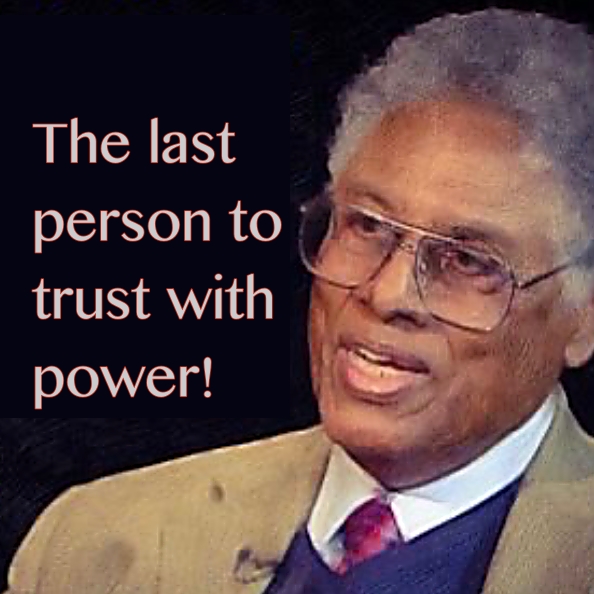
Watch: The Last Person to Trust with Power!

Paul Jacob begins with Thomas Sowell and ends with government-supported anarchists. In-between? The big issues of the day: but you cannot watch it on YouTube:

Why? Well, YouTube has taken it down:

No specific claim was cited as in error, nor any medical authority cited to back up the accusation. Of course.

The video is now available on Rumble:

The audio podcast is still available via podcatcher and as hosted on SoundCloud. See yesterday’s post for the link.

Categories
Thought

Ayn Rand

Don’t ever get angry at a man for stating the truth.

Dagny Taggart to Hank Rearden in Ayn Rand’s novel Atlas Shrugged (1957), p. 297.

Categories
Today

Atlas?

On October 10, 1957, Ayn Rand’s dystopian/utopian novel Atlas Shrugged was published. Written to expound and defend an individualist, freedom/free-market point of view, it is one of the most influential and literarily successful didactic novels ever written.

On October 10, 1973, Austrian-born American economist, Ludwig von Mises* (pictured above) died.

Two-hundred fifty-nine years earlier, the French law-maker and Jansenist Pierre le Pesant, sieur de Boisguilbert died.

Both economists were known for their defenses of freer markets: le Pesant for pioneering the critique of mercantilism, arguing that a nation’s wealth consisted in what its people produce and trade; Mises for systematizing economic theory and advancing the critique of both socialism and latter-day mercantilism (what he called “interventionism”).


In January 1958, following the publication of Atlas Shrugged, Mises wrote Ayn Rand a letter of congratulations.

Categories
audio podcast

Listen: Who Not to Trust with Power

Paul Jacob provides the advice, drawing on Thomas Sowell, Gustave Le Bon, and many other astute individualists:

Categories
Thought

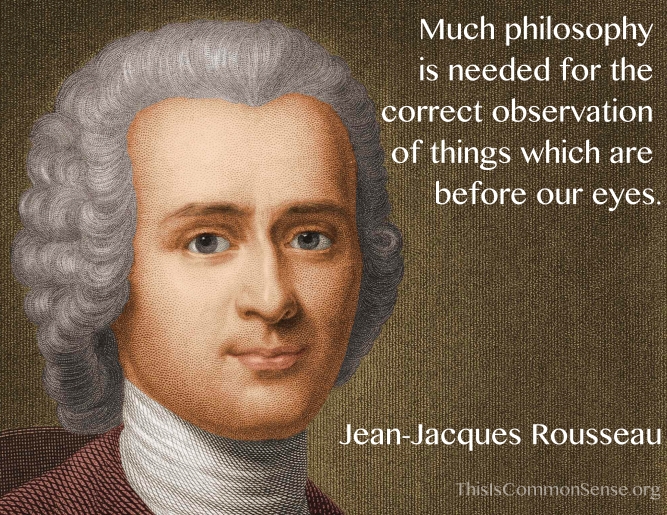
Jean-Jacques Rousseau

Il faut beaucoup de philosophie pour observer
les faits qui sont trop près de nous.

Much philosophy is needed for the correct observation of things which are before our eyes.

Jean-Jacques Rousseau, as quoted by Frédéric Bastiat, Harmonies of Political Economy (1850).
Categories
Today

The Banishment of Roger Williams

On October 9, 1635, Protestant theologian Roger Williams was banished from the Massachusetts Bay Colony as a religious dissident after he spoke out against punishments for religious offenses and giving away Native American land. He moved south, founding Providence Plantations, where he worked for separation of church and state, the rights of aboriginal Americans, and against slavery.

Categories
general freedom too much government

No Transplants for the Unvaxxed

Because of a rare but dangerous side effect, heart inflammation, Scandinavian countries are now discouraging the use of the Moderna vaccine in younger people.

We’ve seen other reports of severe illness and even death because of, or at least soon after, COVID-19 vaccinations. But we’re assured that serious side effects are so rare and the vaccines so effective that the wisdom of getting vaccinated is self-evident.

But what’s more evident? They’re forcing you. 

If you’re “vaccine-hesitant” for any reason — even if you’ve already got immunity because of a COVID-19 infection — too bad. A public-private partnership to mandate vaccination is already costing many people their jobs.

Now it’s costing people a chance for a kidney.

So ordains University of Colorado Hospital, whose Kidney Transplant Coordinator, Katie Harmann, tells Leilani Lutali that she “will be removed from the kidney transplant list” until she is vaccinated.

Note that the opportunity is not being withdrawn because the prospective recipient is sick with COVID-19 and therefore is about to kick the bucket anyway. The hospital is treating the patient’s assessment of her own risk as irrelevant.

Lutali says, “I feel like I’m being coerced into not being able to wait and see [whether the vaccine is the right thing to do], and that I have to take the shot if I want this life-saving transplant.”

This is the reality of rationed care in a largely socialist medical system.

And this is what Democrats lust for, even demand; and it is what they are working mightily to ensure — that our current messy, mixed healthcare system will soon become even more bureaucratic and restrictive.

This is Common Sense. I’m Paul Jacob.


PDF for printing

See all recent commentary
(simplified and organized)
See recent popular posts
Categories
Thought

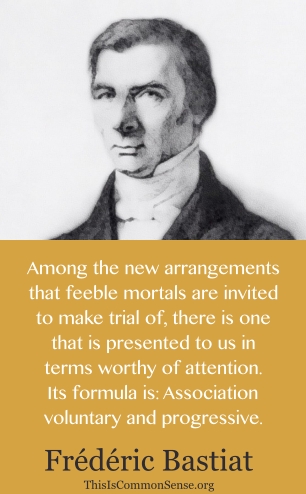
Frédéric Bastiat

Among the new arrangements that feeble mortals are invited to make trial of, there is one that is presented to us in terms worthy of attention. Its formula is: Association voluntary and progressive.

But political economy is founded exactly on the datum that society is nothing else than association (such as the above three words describe it) — association, very imperfect at first, because man is imperfect; but improving as man improves, that is to say, progressive.

Frédéric Bastiat, “Natural and Artificial Organizations (Journal des Economistes, January 1848), and later in Harmonies of Political Economy, book 1, chapter 1 (1850).
Categories
Today

Missing Day(s)

The date October 8, 1582, does not exist in the records of Italy, Poland, Portugal and Spain, the result of that year’s implementation of the Gregorian calendar.

Fearing a Catholic plot, Protestant countries adopted the more accurate calendar much later. By the time Britain and its colonies got on board in 1752, eleven days had to be “disappeared.” This caused riots in some places, as people suspected some horrible chicanery — and in actual fact the inspiration for the “Give us our eleven days” protest had something to do with taxes, so it might not have been as idiotic as it now seems.


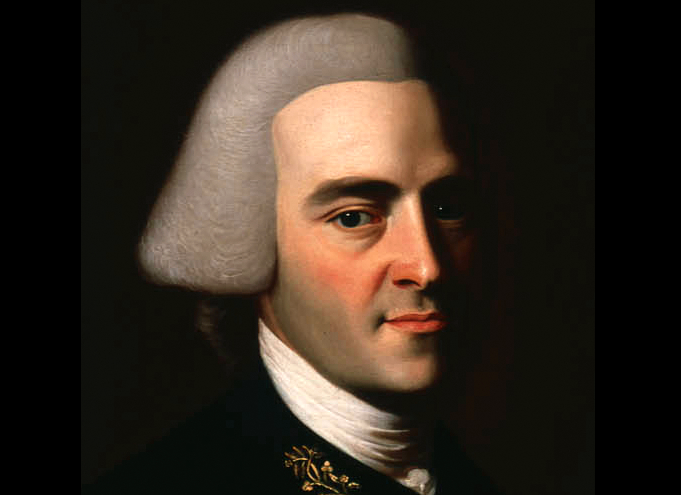
On October 8, 1793, American merchant, president of the Second Continental Congress (1775–1777) and first and third Governor of the Commonwealth of Massachusetts, John Hancock (b. 1737), died.

Categories
general freedom ideological culture

The Unhinging of the World Mind

Dr. Mattias Desmet, of the University of Ghent, teaches Gustave Le Bon’s The Crowd: A Study of the Popular Mind (1895) and how crowd psychology explains totalitarian movements. 

But even he didn’t see, right away, how “mass-formation” (his Le Bonian theory) explains the madness of the coronavirus pandemic.

I am still processing Desmet’s ideas, having caught parts of his Pandemic Podcast interview, but judge them important enough to pass on.

Le Bon’s main conjecture was that crowds, in certain conditions, form a “group mind,” the “psychological crowd” quite distinct from the individuals inside it in their normal course of life. Desmet, expanding on this, says that when key conditions are met, alarming developments can occur. When people suffer from

1. social isolation, with

2. lack of ‘sense making,’

3. free-floating anxiety, and

4. and general discontent,

they can become unhinged.

Into this situation comes the hinge to hang it all on: a demagogue, a revolutionary political party, or . . . news purveyors pressing one theme relentlessly. In the current pandemic, politicians, bureaucrats, and mainstream media offered a focusing issue and a means of alleviating it: mask-wearing, lockdowns, and subsidized, rushed-to-market vaccines.

And then mandates galore.

This sort of crowd can get really ugly, lashing out at newly created “enemies” (the unvaccinated!) to set up a social system easily exploited by the unscrupulous, the connected, and the fanatical.

Desmet has been studying socialism and fascism, and has a book in the works. He says that about a third of today’s population is caught up in this “mass hypnosis.”

Hitler used Le Bon’s book as a how-to. We should use it as a how-not-to.

This is Common Sense. I’m Paul Jacob.


PDF for printing

unhinged/network

See all recent commentary
(simplified and organized)
See recent popular posts