Categories
Today

American Crises

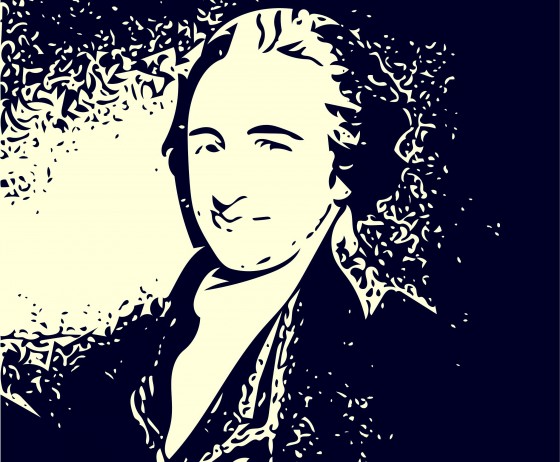
On December 19, 1776, Tom Paine published one of a series of pamphlets in the Pennsylvania Journal titled The American Crisis. Exactly one year later, George Washington’s Continental Army went into winter quarters at Valley Forge, Pennsylvania.

On December 19, 1828, Vice President of the United States John C. Calhoun penned the South Carolina Exposition and Protest, protesting the Tariff of 1828, a key moment in what became known as the Nullification Crisis.

Categories
audio podcast

Listen: F’s All Around

Beginning with John Adams and ending with George Washington — Paul Jacob isn’t going backwards, he is bookending the week in review, which includes subjects with a lot of F’s: Friends, Frauds, Facebook, and whole lot more:

See all recent commentary
(simplified and organized)
See recent popular posts

Categories
Thought

Benjamin Franklin

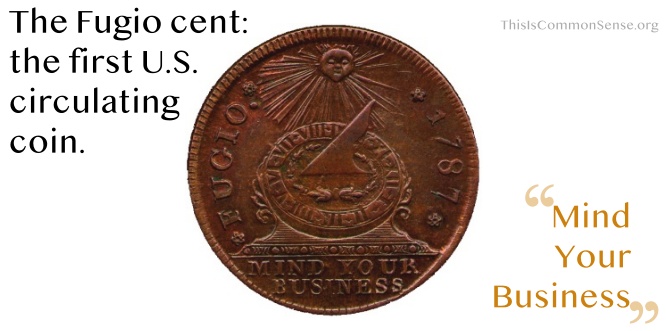
Mind Your Business

Motto on obverse of the Fugio cent, designed by Benjamin Franklin, and minted in 1787.
Categories
Today

Thanksgiving in December

On December 18, 1777, the United States celebrated its first official Thanksgiving, marking the then-recent October victory by the Americans over General John Burgoyne in the Battle of Saratoga.

Categories
Common Sense free trade & free markets general freedom property rights responsibility

Farming Is Fundamental

If you live in Maine, you may now grow your own food. The right to do so has been safeguarded in the state constitution.

If you have the right to life and to sustain your life, surely you have a right to farm. As we all know, though, governments regularly find excuses to interfere with all kinds of peaceful activities.

So this past November, Maine voters passed a constitutional amendment authored by Rep. Billy Bob Faulkingham (whose energetic campaigns for freedom have previously caught Common Sense notice) and proposed by the legislature. 

Maine’s Right to Food Amendment makes clear that “All individuals have a natural, inherent and unalienable . . . right to save and exchange seeds and the right to grow, raise, harvest, produce and consume . . . as long as an individual does not commit trespassing, theft, poaching or other abuses of private property rights public lands or natural resources in the harvesting, production or acquisition of food.” (So there’s no California-style de facto “right” to loot.)

Foes of the amendment worry that it will enable people to bypass regulations.

Let’s hope so. 

Don’t we want the new law to ban governments in Maine from banning agriculture for the sake of “esthetics,” protecting Big Milk, or any other rationalization for foiling farming on a person’s own property?

And for the idea to spread to the other states, where far too often the scales of justice don’t properly consider the citizen’s right to produce food against the bureaucrat’s regulations frustrating same. 

This is Common Sense. I’m Paul Jacob.


PDF for printing

See all recent commentary
(simplified and organized)
See recent popular posts
Categories
Thought

George Washington

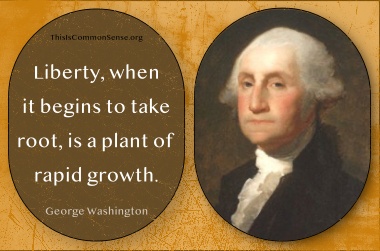
Liberty, when it begins to take root, is a plant of rapid growth.

George Washington, in a letter to James Madison (March 2, 1488).
Categories
Today

Official Recognition

On December 17, 1777, France formally recognized the United States of America.

The 17th of December, 1819, was the day Simon Bolivar declared the independence of the Republic of Gran Colombia in Angostura.

Categories
First Amendment rights general freedom ideological culture social media

F-Book Goes Meta

When Mark Zuckerberg changed the name of Facebook’s parent company to “Meta,” months back, a lot of people found this funny.

But for some of us older folks, the name was more funny-peculiar than funny-ha-ha. We’re used to “meta” as in Aristotle’s Physics and Metaphysics — the latter so-called because the book came “after the Physics.” 

So what does Zuckerberg’s desire to take the lead in the “shared virtual reality” market (Meta’s confessed goal) have to do with “after” anything? After real reality, there’s meta-reality? Uh, OK.

I don’t think I’ll be an early adopter of that waste of time. I still have things to do.

But that’s old Facebook news. Now, ready yourself for today’s Facebook news: defending itself from John Stossel’s defamation lawsuit over a bad case of pseudo-fact-checking, Facebook has admitted that its fact-checking is, from a legal point of view, opinion.

“In referring to its frequent use of ‘fact-checker’ labels on posts,” explains The Patriot Post, “the conglomerate stated in its motion for dismissal, ‘The [fact-check] labels themselves are neither false nor defamatory; to the contrary, they constitute protected opinion.’”

Truth is, as the New York Post observes, the whole “fact-check industry is funded by liberal moguls such as George Soros, government-funded nonprofits and the tech giants themselves.”

Facebook is moving beyond reality fast. Meta-fast. When bad “fact-checking” is defended as mere opinion, reality refracts to the point of unintelligibility.

Maybe Facebook’s name should be changed to Fraudbook, for while opinion is protected speech, labeling one’s opinions “facts” under the rubric of “fact-checking” sure looks, if not like legal fraud, exactly, certainly fraud in common parlance.

This is Common Sense. I’m Paul Jacob.


PDF for printing

See all recent commentary
(simplified and organized)
See recent popular posts
Categories
Thought

Dave Rubin

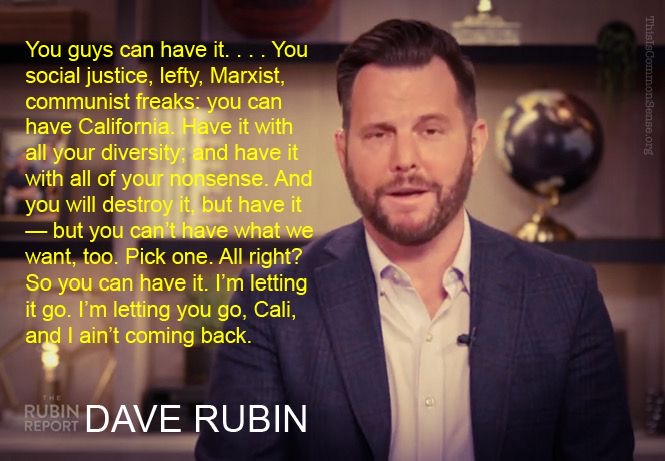
You guys can have it. Like, we’re ’ceding it to you people, OK? You social justice, lefty, Marxist, communist freaks: you can have California. Have it with all your diversity; and have it with all of your nonsense. And you will destroy it, but have it — but you can’t have what we want, too. Pick one. All right? So you can have it. I’m letting it go. I’m letting you go, Cali, and I ain’t coming back.

Dave Rubin, “DeSantis Calls BS on Blue State Mandates & Moving to Florida AMA | Direct Message,” signing off from The Rubin Report’s last public livestream from California. Mr. Rubin is moving lock, stock, and barrel to Florida. (Note: the apostrophe before “ceding” marks where we have redacted his spoken “con” — Dave obviously did not mean “conceding.”)
Categories
Today

The Convention Parliament

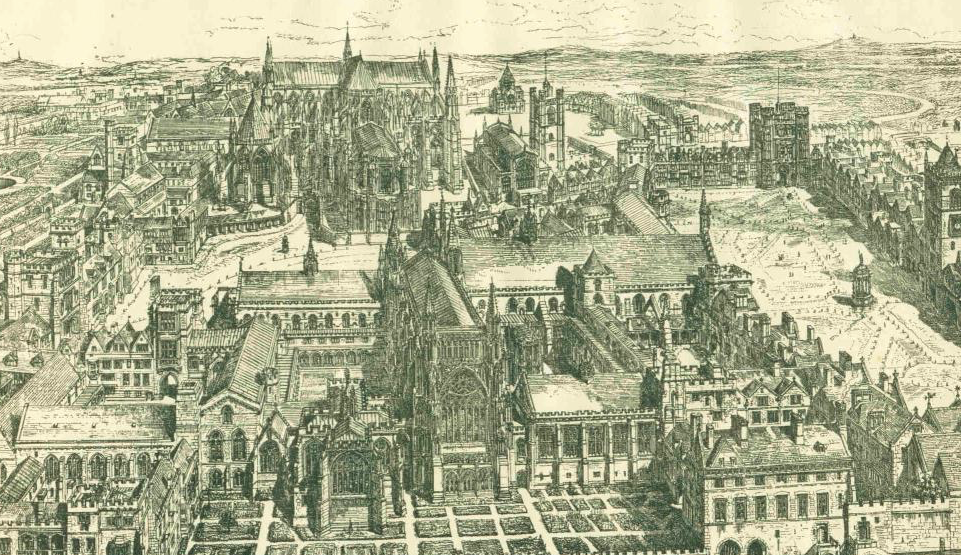
On December 16, 1689, England’s Convention Parliament began, not only transferring power from one king to another, but establishing procedures and rights.