Categories
Today

Auberon Herbert

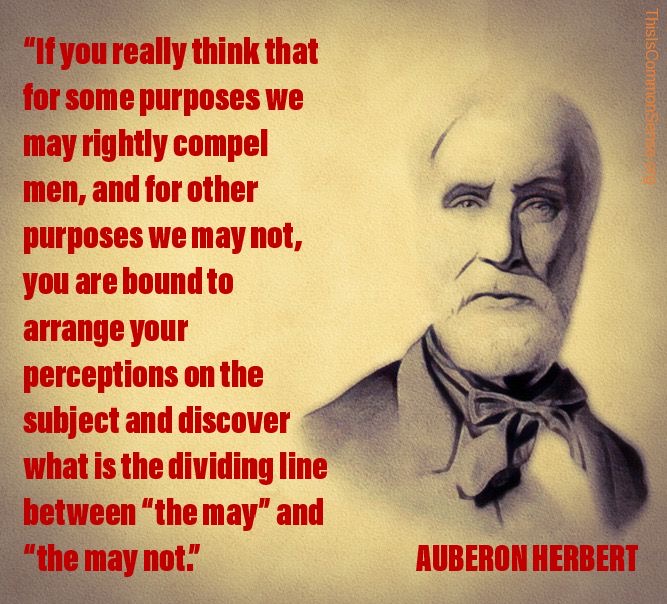
If you really think that for some purposes we may rightly compel men, and for other purposes we may not, you are bound to arrange your perceptions on the subject and discover what is the dividing line between “the may” and “the may not.”

Auberon Herbert, The Right and Wrong of Compulsion by the State (1885).
Categories
Today

Fifth to Ratify

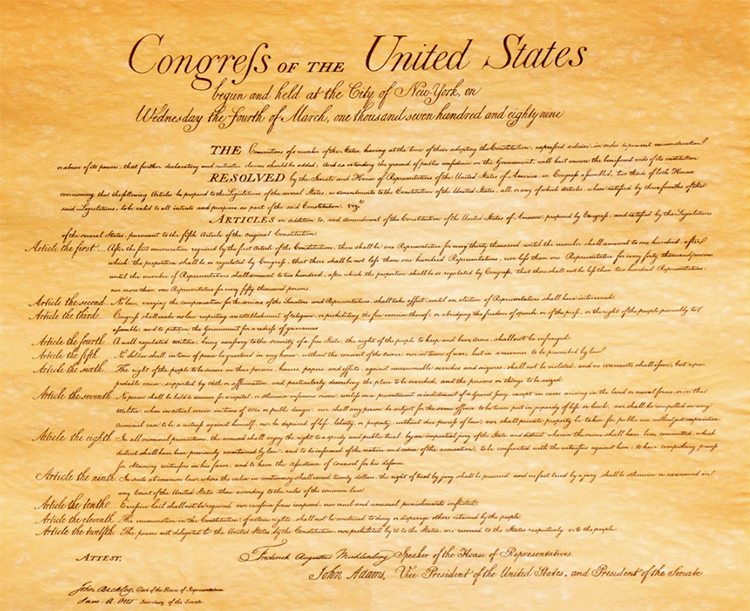
On January 9, 1788, Connecticut became the fifth state to be admitted to the United States under the new Constitution. Connecticut was one of the first nine states of the original union, under the Articles of Confederation, to accept the Constitution, and thus officially ratify it. All 13 original states had ratified that new compact, officially, by May 29, 1790. The first state to be added to the original 13 was Vermont, in 1791.

Categories
audio podcast

Listen: Eyes on “the Insurrection”

Paul Jacob distinguishes between the facts and the myths about the January Sixth Event:

This Week in Common Sense, January 7, 2022.

Categories
Thought

Ortega y Gasset

Tell me to what you pay attention and I will tell you who you are.

José Ortega y Gasset, Man and Crisis (1962).
Categories
Today

State of the Union

On January 8, 1790, George Washington delivered the first State of the Union address in New York, New York.

In 1835, on this date, the United States federal government achieved a zero debt for the first and only time.

In 1867, African-American men were first allowed to vote in Washington, D.C.

Categories
government transparency moral hazard national politics & policies partisanship

The Secret of the Second Impeachment

The impeachment that followed the events of January Sixth was . . . peculiar. President Trump had just a few weeks to go in his term, thus “removing him” on the way out seemed . . . almost pointless. 

And we quickly learned that the Senate wouldn’t hear the case until after Trump’s replacement was installed in office.

So why?

Had enough Republicans in the upper chamber jumped ship, what House Democrats would have obtained for their troubles was (1) a prohibition on Trump running again and (2) a twist of the knife.

Key word: Payback.

Democrats had never really “accepted” their defeat in 2016. So they played up Trump’s unwillingness to “accept defeat” in 2020. A poetic revenge — “with a twist.”

But this may have been more than merely partisan payback. 

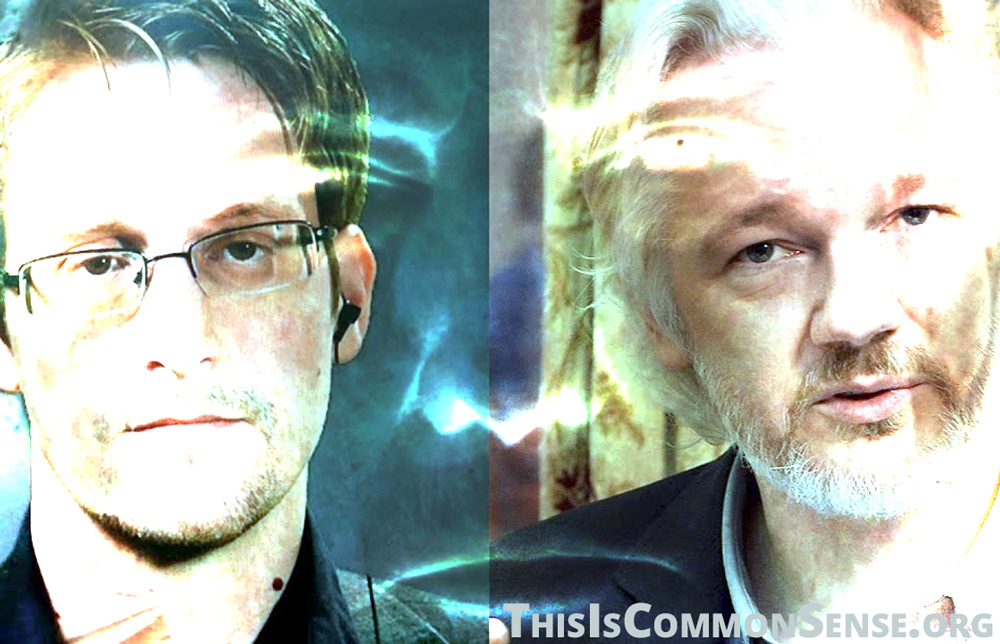
Here’s the proverbial Rest of the Story: The lame duck president had been seriously considering pardoning Edward Snowden and Julian Assange. And that was something the permanent government of the intel agencies and military-industrial complex could not allow. So, as Glenn Greenwald reported on Rumble, the Deep State’s most ardent Republican supporters in the Senate — Lindsay Graham being most prominent — threatened to vote against Trump in the impeachment proceedings if the president pardoned either of those . . . heroes.

By impeaching Trump, Democrats not only humiliated the man, to the extent he could be humiliated, they scored a political win against Snowden and Assange, two men who had humiliated the establishment in general and their party in particular.

The big winner? The Deep State.

And the real loser? Not Trump — the American people.

Because we are left with a Leviathan that spies on us and lies to us.

This is Common Sense. I’m Paul Jacob.


PDF for printing

See all recent commentary
(simplified and organized)
See recent popular posts
Categories
Thought

Adam Smith

How selfish soever man may be supposed, there are evidently some principles in his nature, which interest him in the fortune of others, and render their happiness necessary to him, though he derives nothing from it except the pleasure of seeing it.

Adam Smith, The Theory of Moral Sentiments (1759), opening sentence.
Categories
Today

Winter War

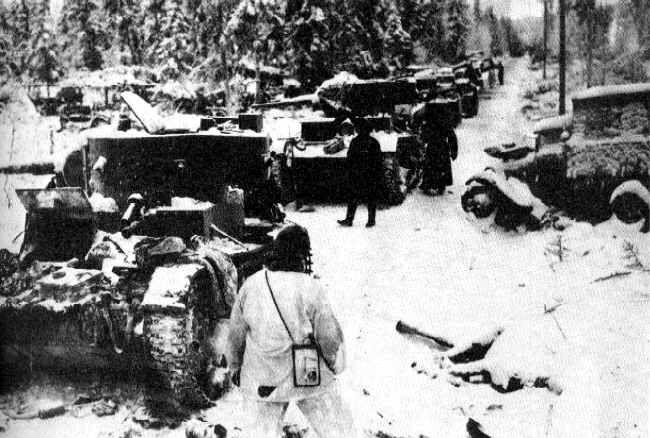
On January 7, 1940, the Finnish 9th Division completely destroyed the much-larger Soviet forces on the Raate-Suomussalmi Road, in a crucial battle during Finland’s Winter War.

Categories
general freedom ideological culture

A Sometimes Thing

One in three Americans claim that “violence against government can be justified,” The Washington Post warned last weekend. The Post-University of Maryland public opinion poll, done in anticipation of today’s one-year anniversary of the January 6th Capitol Riot, was heralded as “a window into the country’s psyche at a tumultuous period in American history.”

“The percentage of adults” so claiming “is up, from 23 percent in 2015 and 16 percent in 2010 in polls by CBS News and the New York Times.” 

And the results are more partisan, with 41 percent of independents and 40 percent of Republicans agreeing that violence can sometimes be justified, only 23 percent of Democrats concurring.

Here’s the precise question: Do you think it is ever justified for citizens to take violent action against the government, or is it never justified?

“Never” is a very extreme term. How can anyone — much less the 62 percent majority in this poll — conclude such political violence could “never” be warranted?

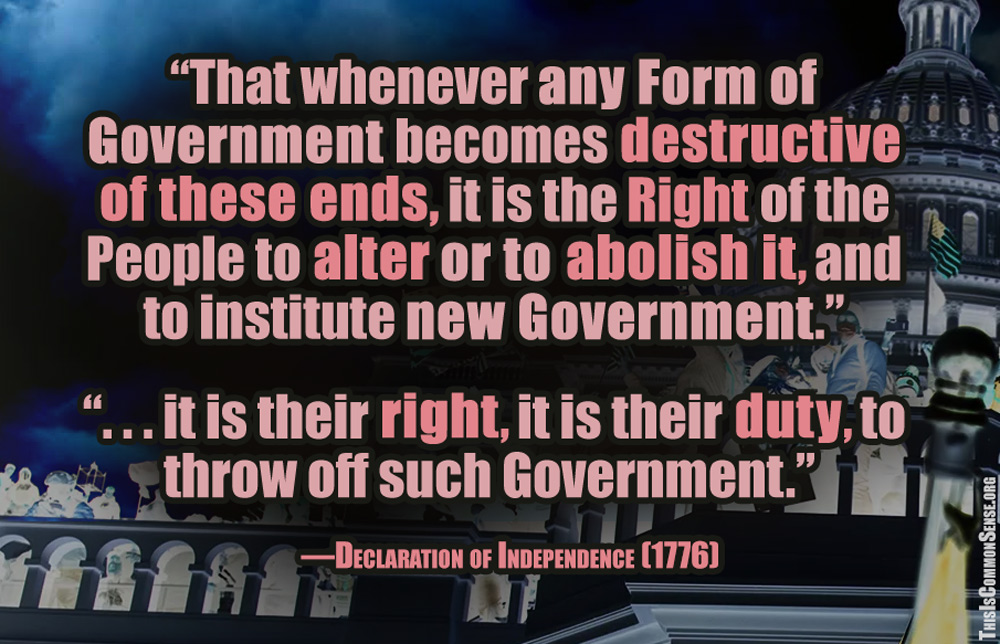
Our country was born in a revolution which declared “That whenever any Form of Government becomes destructive of these ends, it is the Right of the People to alter or to abolish it, and to institute new Government.” And further contended, “it is their right, it is their duty, to throw off such Government.”

Such “throwing off” (here and around the globe) has often necessitated a degree of violence. Why? Call it self-defense — as governments so often go on the offense, refusing to relinquish power when called to do so.

The 34 percent answering “Yes — sometimes” does not constitute a violent cadre, contra the “Oh, My” reactions from the media’s fainting couch set. The Yes-Sometimes Americans merely understand the nature of human rights. (And hypotheticals.)

Worry about those who answer “No — never.” What atrocities would they ever oppose?

This is Common Sense. I’m Paul Jacob.


PDF for printing

See all recent commentary
(simplified and organized)
See recent popular posts
Categories
Thought

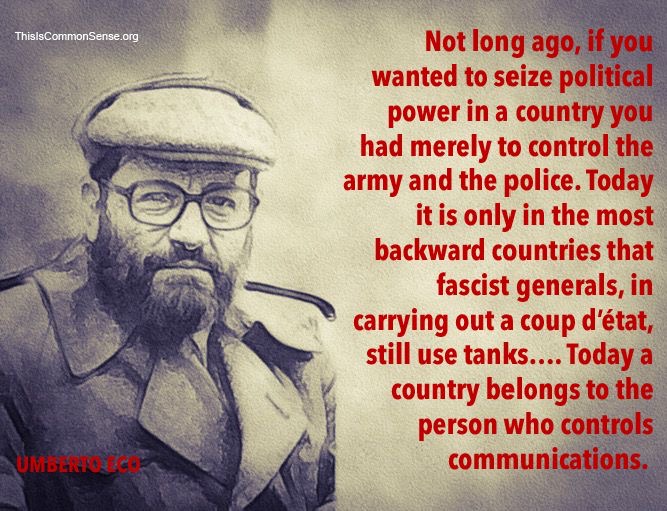
Umberto Eco

Not long ago, if you wanted to seize political power in a country you had merely to control the army and the police. Today it is only in the most backward countries that fascist generals, in carrying out a coup d’état, still use tanks. If a country has reached a high degree of industrialization the whole scene changes. The day after the fall of Khrushchev, the editors of Pravda, Izvestiia, the heads of the radio and television were replaced; the army wasn’t called out. Today a country belongs to the person who controls communications.

Umberto Eco, Il costume di casa (1973); as translated in Travels in Hyperreality (1986).