Paul Jacob expands upon the big stories of the week, not excluding the mostly positive tales of the mask mandaters routed:
This Week in Common Sense, January 22, 2022.
Paul Jacob expands upon the big stories of the week, not excluding the mostly positive tales of the mask mandaters routed:
This Week in Common Sense, January 22, 2022.
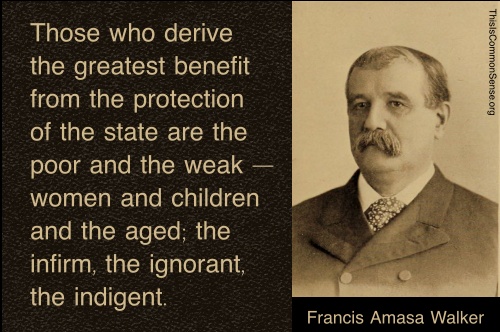
“The subjects of every state,” says Dr. Smith, “ought to contribute [490] towards the support of the government as nearly as possible in proportion to their respective abilities; that is, in proportion to the revenue which they respectively enjoy under the protection of the state.”
This maxim, though it sounds fairly, will not bear examination. What mean those last words, “under the protection of the state”? They are either irrelevant, or else they mean that the protection enjoyed affords the measure of the duty to contribute. But the doctrine that the members of the community ought to contribute in proportion to the benefits they derive from the protection of the state, or according as the services performed in their behalf cost less or cost more to the state, involves the grossest practical absurdities. Those who derive the greatest benefit from the protection of the state are the poor and the weak—women and children and the aged; the infirm, the ignorant, the indigent.
Even as among the well-to-do and wealthy classes of the community, does the protection enjoyed furnish a measure of the duty to contribute? If so, the richer the subject or citizen is, the less, proportionally, should he pay. A man who buys protection in large quantities should get it at wholesale prices, like the man who buys flour and meat by the car-load. Moreover, it costs the state less to collect a given amount from one taxpayer than from many.
Returning to the maxim of Dr. Smith, I ask, does it put forward ability to contribute, or protection enjoyed, as affording the true basis of taxation? Which? If both, on what principles and by what means are the two to be combined in practice?
Francis Amasa Walker, “The Social Dividend Theory of Taxation,” in Political Economy (Third Edition, Revised and Enlarged: 1888), pp. 489-490.
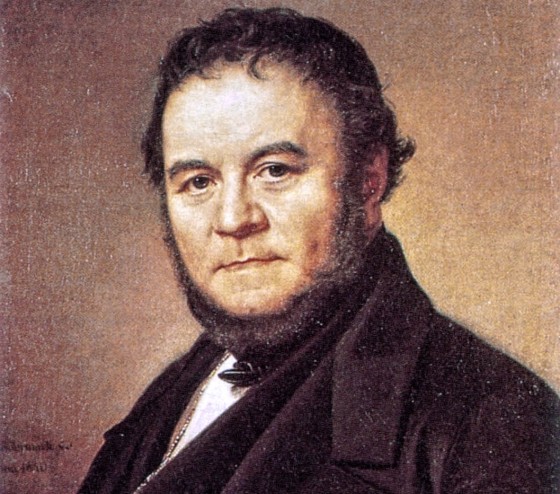
On January 23, 1783, journalist and novelist Marie-Henri Beyle, known by his pen name Stendhal (pictured above), was born. Stendhal was a follower of Destutt de Tracy and an attendant at the count’s salons. His most famous works include the novel The Red and the Black and a treatise on romantic love.
Stendhal died March 22, 1842.
On January 23, 1860, the Cobden–Chevalier Treaty was signed between France and Great Britain. The treaty was named after the two main proponents of the agreement, Richard Cobden (in England) and economist Michel Chevalier (in France). The treaty had been suggested the year earlier, in British Parliament, by Cobden’s colleague John Bright, who saw the measure as a peace measure, and an alternate to a military build-up.

Paul Jacob returns this weekend to recap the big stories of the week, in this episode of This Week in Common Sense:
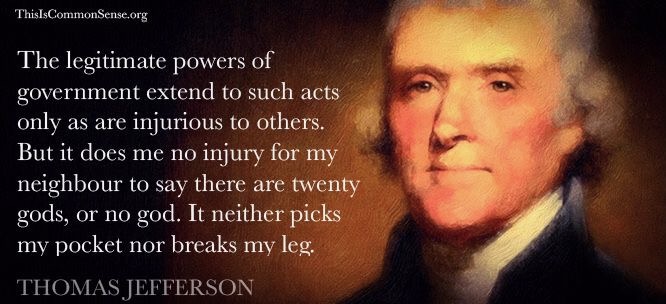
The legitimate powers of government extend to such acts only as are injurious to others. But it does me no injury for my neighbour to say there are twenty gods, or no god. It neither picks my pocket nor breaks my leg.
Thomas Jefferson, Notes on the State of Virginia (1781-1783), Query XVII, p. 169.
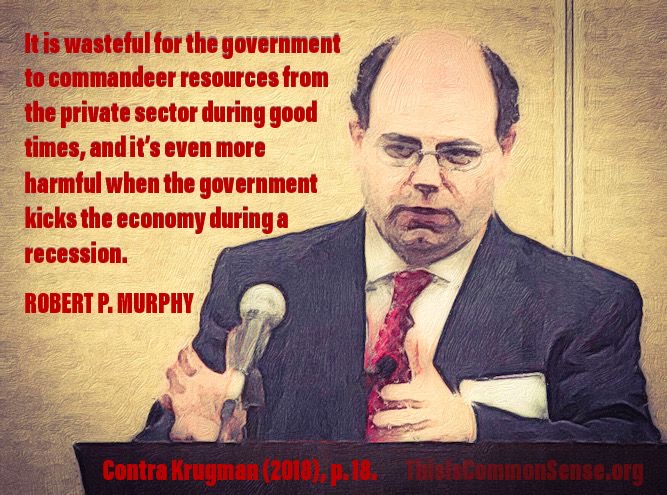
It is wasteful for the government to commandeer resources from the private sector during good times, and it’s even more harmful when the government kicks the economy during a recession.
Robert P. Murphy, Ph.D., Contra Krugman: Smashing the Errors of America’s Most Famous Keynesian (2018), p. 18.
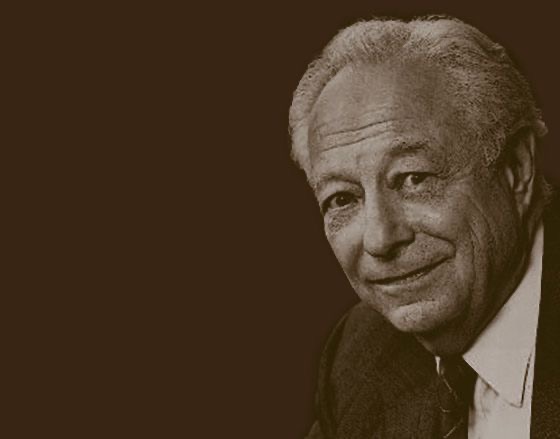
On January 22, 1920, American neoconservative pundit and author Irving Kristol was born.
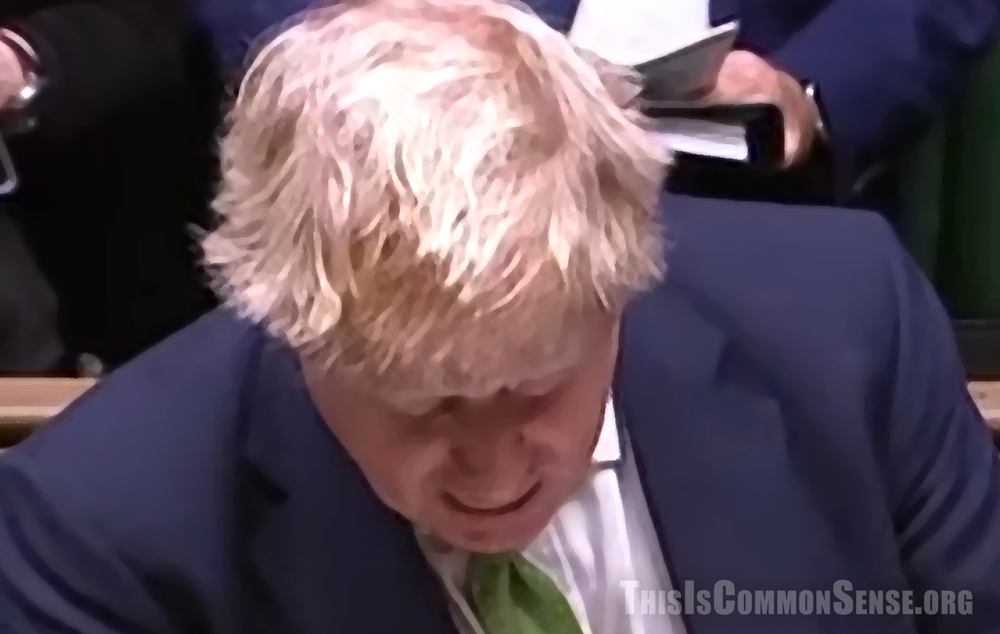
It was not immediately clear what had changed regarding “the science,” when, midweek, Britain’s Prime Minister Boris Johnson lifted the Queen’s government’s mask mandates and other coronavirus restrictions.
The case for and against mask efficacy has been about the same for a very long time. There’s no obvious statistical evidence for mask mandates working. And pre-2020 studies showed ambiguous results for preventing virus transmission by wearing masks — and certainly not for the cloth masks most people wear.
So what changed?
Well, Johnson cited the omicron variant. “Our scientists believe that the omicron wave has now peaked nationally,” he said, adding that hospital admissions had stabilized and that London admissions were falling.
So he lifted mask requirements in schools, too.
This takes some pressure off him. The vast majority of Brits are tired of masks, especially on students.
Predictably, however, some school masters appear to be clinging to the cloth.
Regardless, why the change?
Spokespersons for the beleaguered opposition party, Labour, argue it’s mostly political, since Boris was caught at two bigwig parties where no one was wearing masks. “Can the PM share the evidence,” asked one, “behind his decision and that he’s not just protecting his job?”
And Johnson says that “the scientific evidence is there for everybody to consult” — but, face it, everything these politicians say is half-assessed and untrustworthy.
Still, at least the people of Britain will receive a little let-up from the oppressive “scientific” tyranny of their government.
Not all states to the west of the Atlantic can say the same.
This is Common Sense. I’m Paul Jacob.
See all recent commentary
(simplified and organized)
See recent popular posts
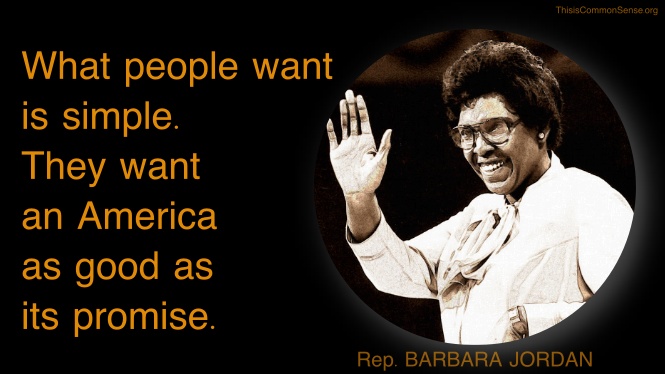
What people want is simple. They want an America as good as its promise.
Barbara Jordan, Commencement Address, Harvard University (June 16, 1977), as cited in Let me tell you what I’ve learned: Texas Wisewomen Speak, PJ Pierce, University of Texas Press (2010), p. 16.
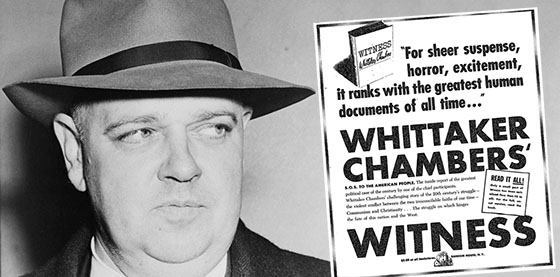
On January 21, 1950, Alger Hiss was convicted of perjury, with Whittaker Chambers being the main witness in Hiss’s prosecution. Chambers confessed to having been a Soviet spy, and accused Hiss as an accomplice, which Hiss denied to his dying day. Chambers gave a fascinating account of all this in his bestselling 1952 memoir, Witness.