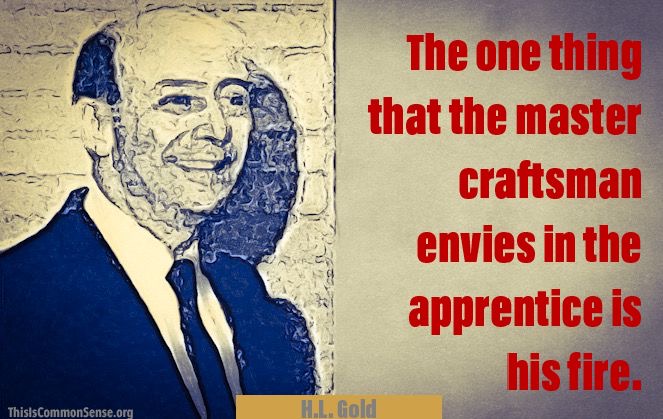
The one thing that the master craftsman envies in the apprentice is his fire.
H.L. Gold, The Fifth Galaxy Reader (1961), p. xi.
The one thing that the master craftsman envies in the apprentice is his fire.
H.L. Gold, The Fifth Galaxy Reader (1961), p. xi.
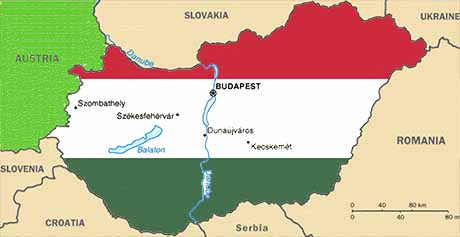
On May 2, 1989, Hungary began dismantling its border fence with Austria, allowing a number of East Germans to defect.

Paul Jacob laughs, sighs, weeps, cheers, and jeers his way through the big stories of the week, from Shanghai (really bad news), Virginia (really good news), to the Twitterverse (good news plus a lot of gallows chortling).
This podcast covers the final week of April 2022.
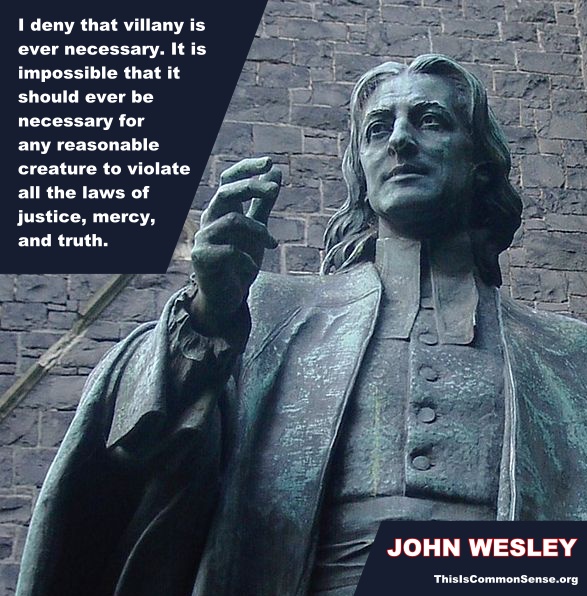
I deny that villany is ever necessary. It is impossible that it should ever be necessary for any reasonable creature to violate all the laws of justice, mercy, and truth. No circumstances can make it necessary for a man to burst in sunder all the ties of humanity. It can never be necessary for a rational being to sink himself below a brute. A man can be under no necessity of degrading himself into a wolf. The absurdity of the supposition is so glaring, that one would wonder any one can help seeing it.
John Wesley, Thoughts Upon Slavery (1774).
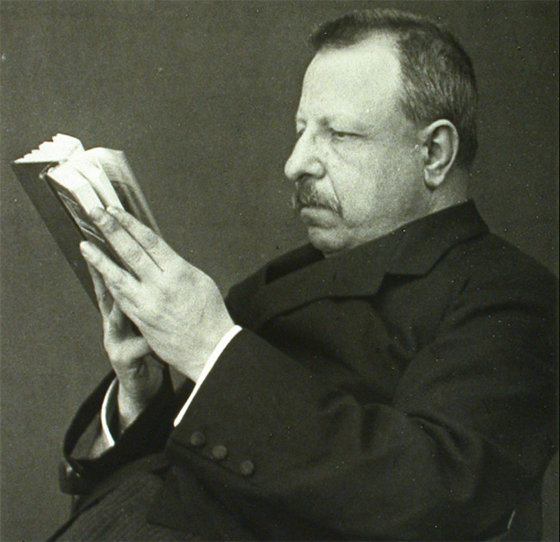
The Manifesto of the Anti-Fascist Intellectuals, written by philosopher Benedetto Croce [pictured, above] in response to the Manifesto of the Fascist Intellectuals by Giovanni Gentile, sanctioned the unreconcilable split between the philosopher and the Fascist government of Benito Mussolini, to which he had previously given a vote of confidence on October 31, 1922.
The manifesto was published by Il Mondo on May 1, 1925, which was Workers’ Day, symbolically responding to the publication of the Fascist manifesto on the Natale di Roma, the founding of Rome (celebrated on April 21). The Fascist press claimed that the Crocian manifesto was “more authoritarian” than its Fascist counterpart — a typical leftist dismissal of what used to be called “liberalism” — in Italian, liberismo — but which Croce dubbed liberism, to distinguish it from the dirigiste quasi-socialisms of self-described “liberals” of the time.

Paul Jacob laughs, sighs, weeps, cheers, and jeers his way through the big stories of the week.
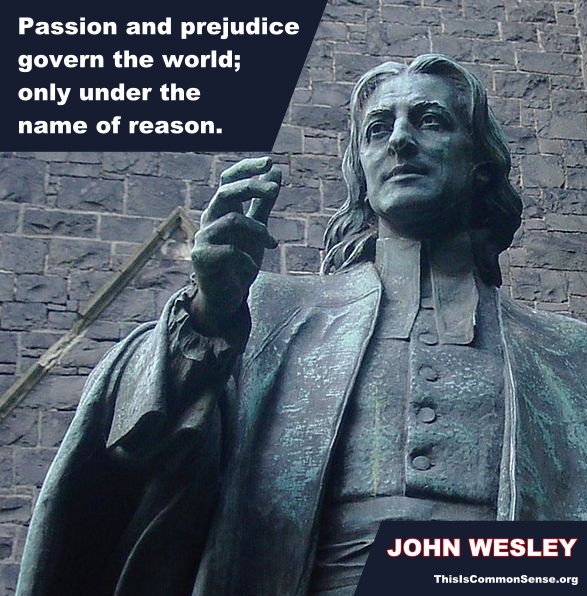
Passion and prejudice govern the world; only under the name of reason. It is our part, by religion and reason joined, to counteract them all we can.
John Wesley, Letter to John Benson (October 5, 1770); published in Wesley’s Select Letters (1837), p. 207.
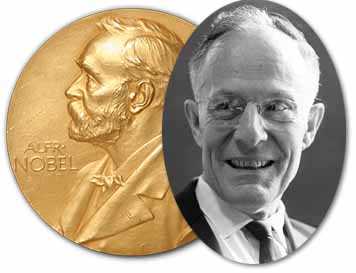
On April 30, 1902, economist Theodore W. Schultz was born. His work studying the quick post-war recovery in Germany and Japan led to his development of “human capital theory,” explicated in books such as Investing in People (1981) and several major papers, including “Investing in human capital” (1961) and “Transforming traditional agriculture” (1964).
He was co-winner (with William Arthur Lewis) of the 1979 Alfred Nobel Memorial Prize in Economic Sciences. Schultz died in 1998.

We can’t know in advance. Setting lagtime aside, consider the other factors. Some of the killers may have killed more than once. Some of the murders may never be solved. Some honest arrests may prove to be mistaken. We can only say: “As many arrests as possible, so long as persons are arrested for murder only if and when there is good cause to do so.”
Properly, one establishes sound criteria for making arrests and good investigative procedures. Not quotas. The same principles apply to every kind of arrest.
“Yes, Paul Jacob. But all this is bleedingly obvious. Why go on about it?”
Alas, what is really basic common sense to you and me apparently clashes with the desire of some within and without police departments for “proof” of effective results. Proof like total number of arrests. (Of course, in a police state, you might arrest half the population, far exceeding any quota, and still get lots of crime.)
The errant fondness for arrest quotas is at least being ended, almost, in Virginia, where the governor has signed legislation to prohibit Virginia agencies and police departments from using them.
I write “almost” because the legislation does not include a ban on quotas for traffic tickets, which are like being half-arrested. Tickets are one way municipalities make money.
Well, maybe we can all just stop driving.
This is Common Sense. I’m Paul Jacob.
Photo credit: arrests
See all recent commentary
(simplified and organized)
See recent popular posts

[Everything] ideal has a natural basis and everything natural an ideal development.
George Santayana, Reason in Common Sense (1905).