The dictator does not consider his power firmly established until he has reached the point where there is no man under him who is of any worth.
Étienne de La Boétie, Discourse on Voluntary Servitude (1548).
Étienne de La Boétie
The dictator does not consider his power firmly established until he has reached the point where there is no man under him who is of any worth.
Étienne de La Boétie, Discourse on Voluntary Servitude (1548).
On May 12, 1943, Axis forces in North Africa surrendered.
But hey. If the CDC stops saying and doing awful things, we can stop slamming it for saying and doing them.
The latest is the agency’s apparent use of Big Data to surveil cellphone users in ways the users never suspected or authorized.
Vice reports that the CDC paid for location data “harvested from tens of millions of phones” in the U.S. to track patterns of compliance with curfews, visits to churches and schools, and “monitor the effectiveness of policy in the Navajo Nation.”
CDC documents obtained by Vice suggest that although the pandemic was the rationale for getting the data, the CDC has planned to use it for other purposes too.
U.S. Senator Ron Johnson, a Republican, is calling for an investigation. “Just because data exists, doesn’t mean that the government should be using it to track Americans.”
He adds that “the government is becoming way too big, and way too powerful.”
Sounds like a new development. But, depending on how you’re measuring it, the metastasizing of the federal government goes back to the Civil War era — or at least the New Deal. So may I suggest a revision, Senator, starting with verb tense?
“Has become.”
Has become way too big and powerful.
And is getting even more so.
This is Common Sense. I’m Paul Jacob.
See all recent commentary
(simplified and organized)
See recent popular posts
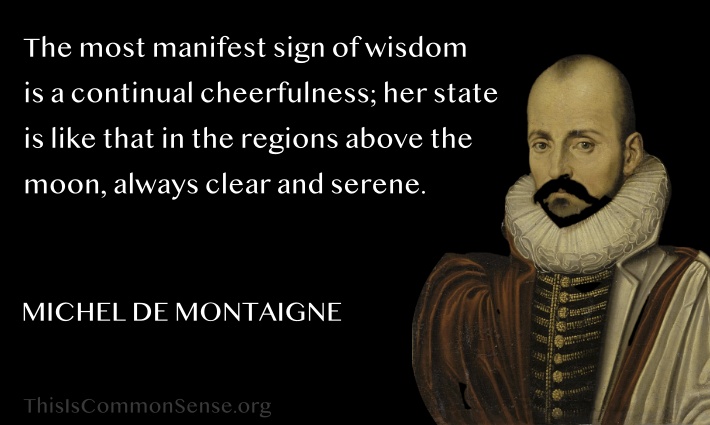
The most manifest sign of wisdom is a continual cheerfulness; her state is like that in the regions above the moon, always clear and serene.
On May 11, 1858, Minnesota was admitted as the 32nd U.S. State.
Nine years later, to the day, the Grand Duchy of Luxembourg’s independence and neutrality were affirmed in the Second Treaty of London.
Mike Stenhouse explains how this coalition leapt into action against a legislative effort to impose universal vaccination. (We use the term “vaccinated” loosely, since any ameliorative effects of the vaccines reportedly fade pretty quickly and don’t actually prevent COVID-19.)
The mandate’s penalties for noncompliance would have included monthly $50 fines, doubling of recalcitrants’ state income taxes, and fines upon employers of $5,000 per unvaccinated employee.
State Senator Samuel Bell submitted the legislation, S2552, on March 1 of this year. Because the country was by then returning to something like pre-pandemic “normal life,” the bill seemed dead on arrival.
But then the Boston Globe shifted into overdrive to revive the legislation, which also received new support from local media.
That’s when ParentsUnitedRI.com and others sounded the alarm. In just a few weeks, the bill became radioactive, hurrying former sponsors to renounce their support.
The state legislature’s current session ends June 30. Stenhouse suggests that although the senate president could still fast-track the Draconian proposal at any time, “there is likely no political appetite for such a heavy-handed measure, especially in an election year.”
If Bell’s bill does die in the current session, it’s even less likely to be revived in the next. Whatever political appetite there may be right now to stomp people who make the “wrong” decision about getting vaccinated, popular opposition has done its work, making medical tyranny much less likely.
This is Common Sense. I’m Paul Jacob.
See all recent commentary
(simplified and organized)
See recent popular posts

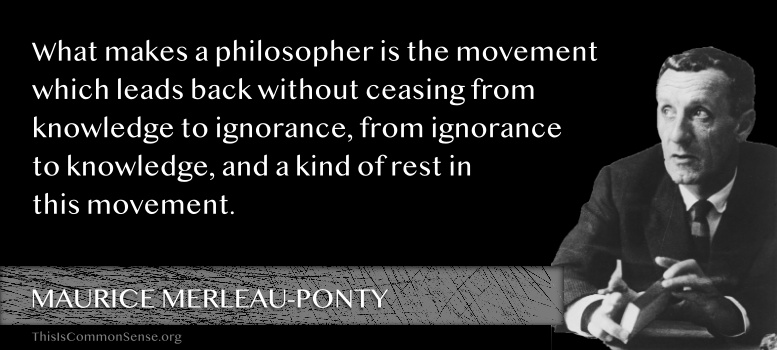
What makes a philosopher is the movement which leads back without ceasing from knowledge to ignorance, from ignorance to knowledge, and a kind of rest in this movement.
Maurice Merleau-Ponty, Éloge de la philosophie (1953; In Praise of Philosophy, 1963), p. 5.
On May 10, 1872, Victoria Woodhull became the first woman nominated for President of the United States.
In a landmark Supreme Court decision on May 10, 1893, the tomato was ruled a vegetable, not a fruit.
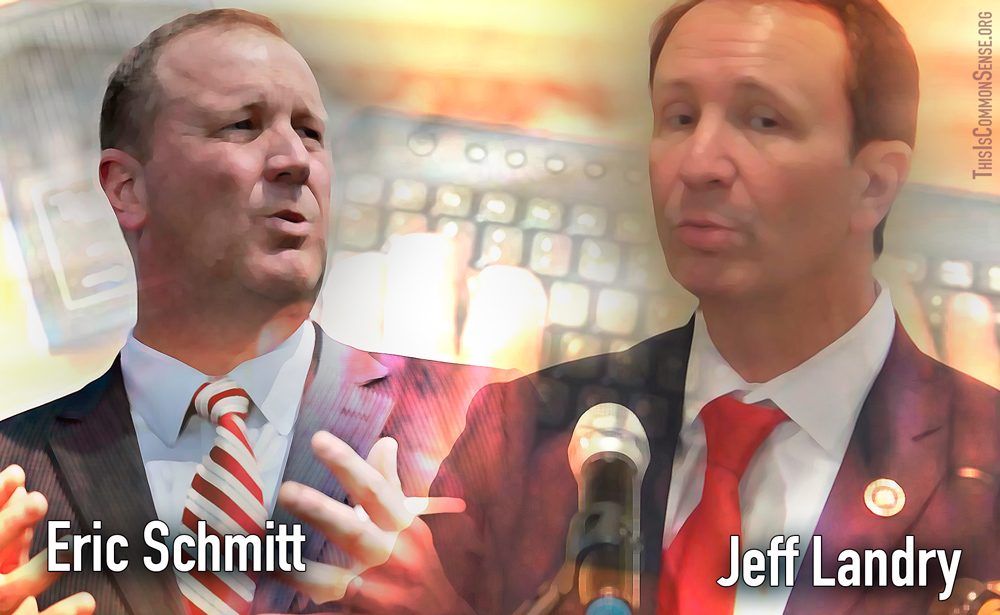
Their recent filing quotes a ruling which argues that it“violates the First Amendment ‘if the government coerces or induces [a private entity] to take action the government itself would not be permitted to do, such as censor expression of a lawful viewpoint.’”
The plaintiffs observe that this has been happening for years, “culminating in . . . open and explicit censorship programs,” and they ask the court to permanently enjoin such unlawful conduct.
Separately, twenty attorneys general (including Schmitt and Landry) have sent a letter to Homeland Security Secretary Alejandro Mayorkas about the agency’s new board instituted to counter unapproved speech.
The AGs threaten to “consider judicial action” if Mayorkas doesn’t “disband this Orwellian Disinformation Governance Board immediately.”
According to the letter, the board “will inevitably have a chilling effect on free speech.”
It is, I suppose, conceivable that if a suit were filed the Biden administration would recognize that it can’t win and would dissolve the board immediately. So far, though, the administration has just been barreling ahead with bad policies unless and until legally thwarted.
So why are the AGs even bothering with a letter that must have even less effect than a filing?
Now the letter has been submitted. Fine. Give Mayorkas ten minutes to shut down the board. Has he shut it down? No.
Sue!
This is Common Sense. I’m Paul Jacob.
See all recent commentary
(simplified and organized)
See recent popular posts

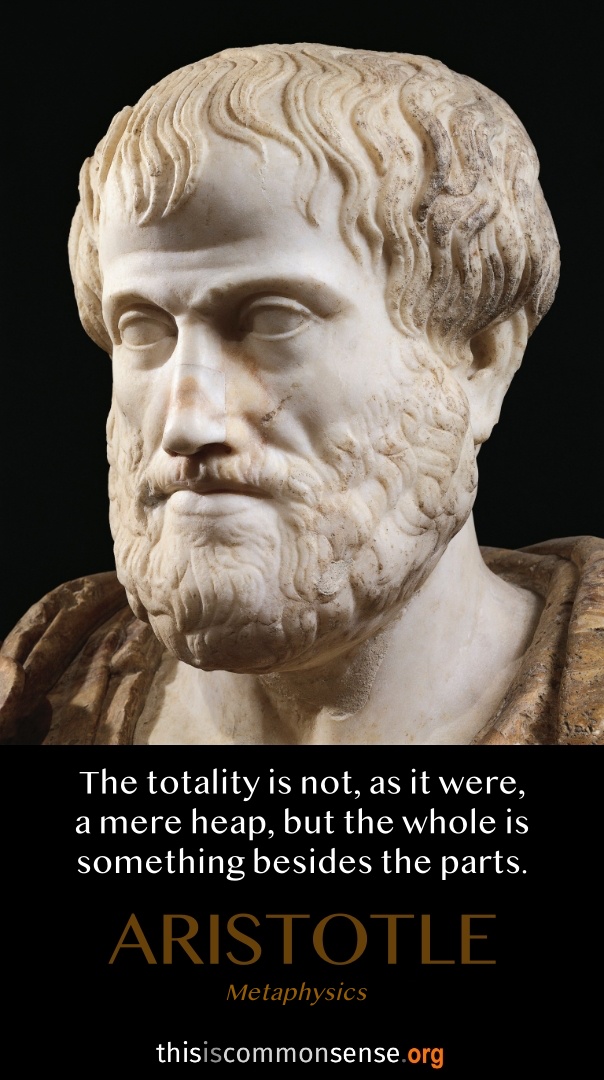
The totality is not, as it were, a mere heap, but the whole is something besides the parts.
Aristotle, Metaphysics, Book VIII.