Categories
Today

Slavery Ends

On August 1, 1834, Great Britain’s Slavery Abolition Act of 1833 took force, freeing slaves throughout the British empire.

Technically, it freed slaves under the age of six. On the August 1 date in 1838 and 1840, the rest of the empire’s slaves were freed, practically speaking.

August 1 births include Francis Scott Key (1779), composer of the poem “The Star-Spangled Banner”; American authors Richard Henry Dana, Jr. (1815) and Herman Melville (1819); and Thomas E. Woods, Jr. (1972), historian and popularizer of Austrian economics, podcaster of the Tom Woods Show.

Categories
Thought

Samuel Adams

Freedom of thought and the right of private judgment, in matters of conscience, driven from every other corner of the earth, direct their course to this happy country as their last asylum.

Sam Adams, Speech, State House of Pennsylvania, Philadelphia (August 1, 1776).
Categories
by Paul Jacob video

Watch: We Have to Stop Being Scared

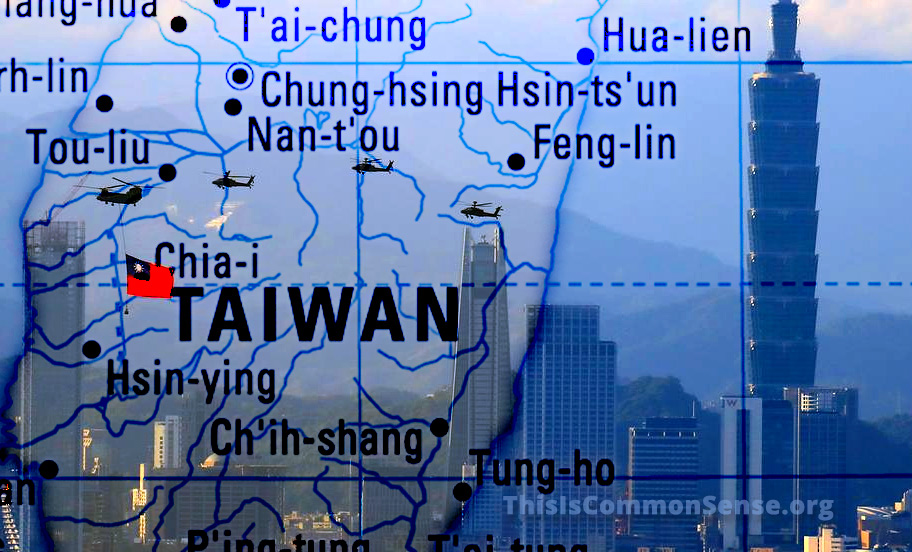
Paul defends Taiwan. Won’t you?

Categories
Thought

Mary Wollstonecraft

We reason deeply, when we forcibly feel.

Categories
Today

Pelted with Flowers

On July 31, 1703, Daniel Defoe — who would later become famous as the author of Robinson Crusoe and other literary works — was placed in a pillory for the crime of seditious libel. The sedition pertained to a satirical pamphlet he had published, “The Shortest-Way with the Dissenters; Or, Proposals for the Establishment of the Church.” The mob pelted him with flowers.

On the same date in 1912, Milton Friedman was born. Friedman became one of the most influential economists of the 20th century, and one of the most effective advocates of free markets, as well. His books include Capitalism and Freedom and two famous collaborations, A Monetary History of the United States (with Anna Schwartz) and Free to Choose (with his wife, Rose Friedman).

Categories
audio podcast

Listen: Stop Being Scared

Paul Jacob confronts the Chinanazi threat.

Categories
Thought

Voltairine de Cleyre

No one can hate petitions worse than I, and no one has less faith in them than I. But for my champion I am willing to try any means that invades no other’s right, even though I have little hope in it.

Voltairine de Cleyre, address to the Unity Congregation, Philadelphia, appealing for petitions against the imprisonment of Moses Harman (1890).
Categories
Today

Out the Window!

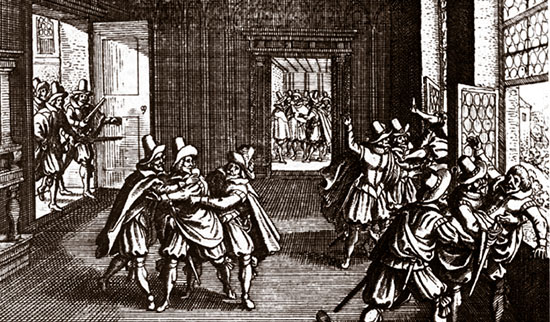
July 30, 1419, the First Defenestration of Prague: Jan Želivský, a Hussite priest at the church of the Virgin Mary of the Snows, led his congregation on a procession through the streets of Prague to the New Town Hall, on Charles Square. While they were marching, a stone was thrown at Želivský from the window of the town hall. The mob, enraged, stormed the hall. Once inside, the group threw the judge, the burgomaster, and some thirteen members of the town council out of the window and into the street, where they were killed by the fall or dispatched by the mob.

King Wenceslaus IV of Bohemia, upon hearing this news, was so stunned, the legend goes, that he died soon after.

On July 30, 1619, the first representative assembly in the Americas, the House of Burgesses, convened for the first time in Jamestown, Virginia. On the same date in 1676, Nathaniel Bacon issued the “Declaration of the People of Virginia,” beginning Bacon’s Rebellion against the rule of Governor William Berkeley.

On this date in 1863, representatives of the United States and tribal leaders (including the Shoshone’s Chief Pocatello) signed the Treaty of Box Elder.

July 30 birthdays include Henry Ford (1863), Gen. Smedley Butler (1881), C. Northcote Parkinson (1909), and former California Governor Arnold Schwarzenegger (1947).

Vanuatuans celebrate Independence Day on July 30.

Categories
defense & war general freedom international affairs

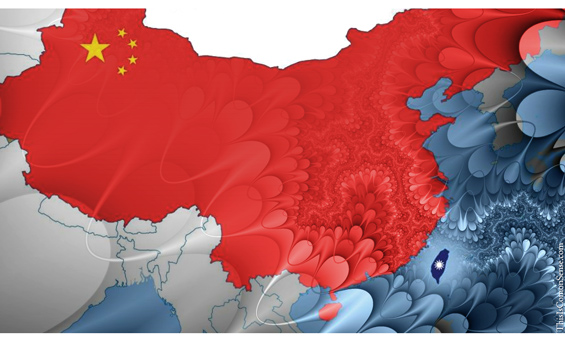
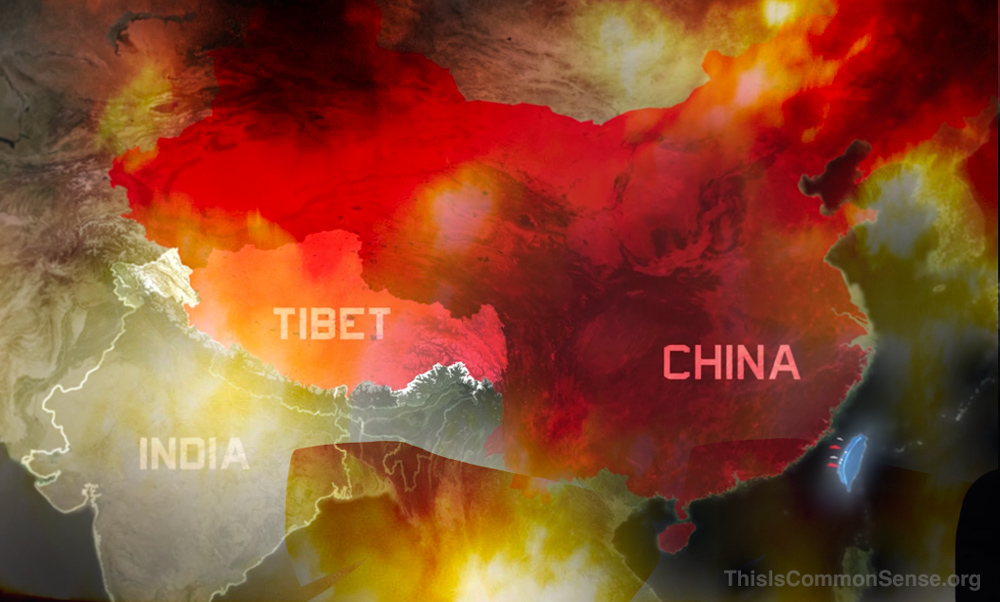
Does China Want War?

“WARNING,” it began, “THIS VIDEO MAY BE UPSETTING TO SOME VIEWERS.”

Just the all-caps was upsetting, I thought to myself.

Still, I was all ears and eyes for Johnny Harris’s “Here’s What Happens If China Invades Taiwan,” which garnered seven million views since February. 

Harris was “a little bit conflicted making this video,” because he “feels very against the machismo fascination with conflict,” telling viewers that “we’re talking about people’s lives” and “entire societies being ripped about by a power struggle.”

Declaring that “China doesn’t want war,” Harris hazards that Mainland China “will probably try much less violent ways to try to force Taiwan to the negotiating table before resorting to all-out invasion.” 

Masters of benevolence, the Chinese Communist Party (CCP) will . . . accept surrender!

Mr. Harris points out that the CCP has passed a law saying they “must” invade Taiwan if peaceful reunification is not possible. Explaining the dearth of support in Taiwan for joining their totalitarian neighbors, he notes “the interpretation of this law [is] more and more on the side of China should do this forcibly.”

Why, it’s “a legal imperative.”

And protecting “this far away island,” asserts Harris, “is something the American public broadly would not be into.” (Though, ahem, recent polling says otherwise.)

“I really hope that we are past needing to resort to this version of conflict to settle our disputes at this time in our history,” he concludes. “But I’m not totally convinced that we are yet.”

The CCP part of “we” is clearly not there. 

“We can talk about it,” explains Harris. “We can find creative ways to solve this.”

My take? Don’t expect too much creativity from the CCP. 

This is Common Sense. I’m Paul Jacob.


PDF for printing

See all recent commentary
(simplified and organized)
See recent popular posts
Categories
Today

Tocqueville

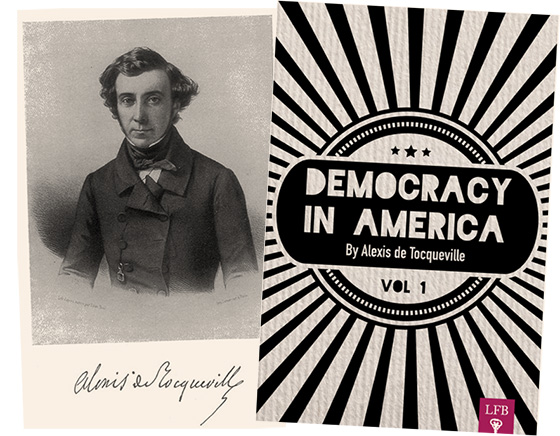
On July 29, 1805, Alexis de Tocqueville was born. His most famous book, Democracy in America (two volumes: 1835, 1840), quickly became a classic of social and political research and analysis, and remains the most important early book about the United States of America. He is often referred to as a founder of sociology as well as a major figure in the development of classical liberalism.