It is one thing to show a man that he is in error, and another to put him in possession of the truth.
John Locke, An Essay Concerning Human Understanding, Book IV, Ch. 7, sec. 11, 1689.
Categories
John Locke
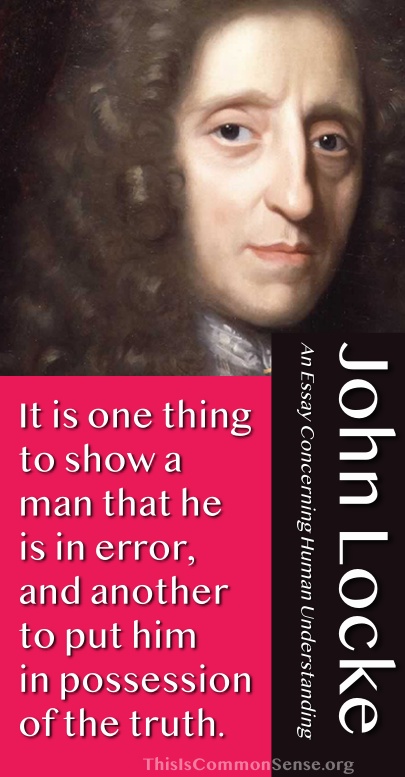
It is one thing to show a man that he is in error, and another to put him in possession of the truth.
John Locke, An Essay Concerning Human Understanding, Book IV, Ch. 7, sec. 11, 1689.
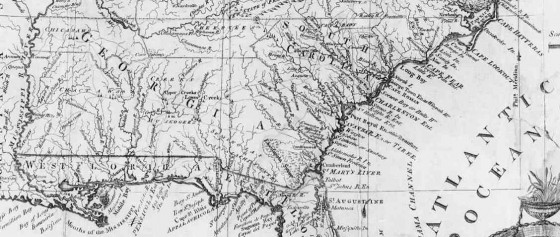
On January 2, 1788, Georgia became the fourth state to ratify the United States Constitution.
On the second day of 1819, the Panic of 1819, the first major peacetime financial crisis in the United States, began. The classic historical treatment of this crisis remains Murray Rothbard’s dissertation.

Paul Jacob tries to see straight into and through two of the biggest stories of the week. OK: one of them is a classic movie. So, not the BIGGEST story out there. But the implications? Huge:
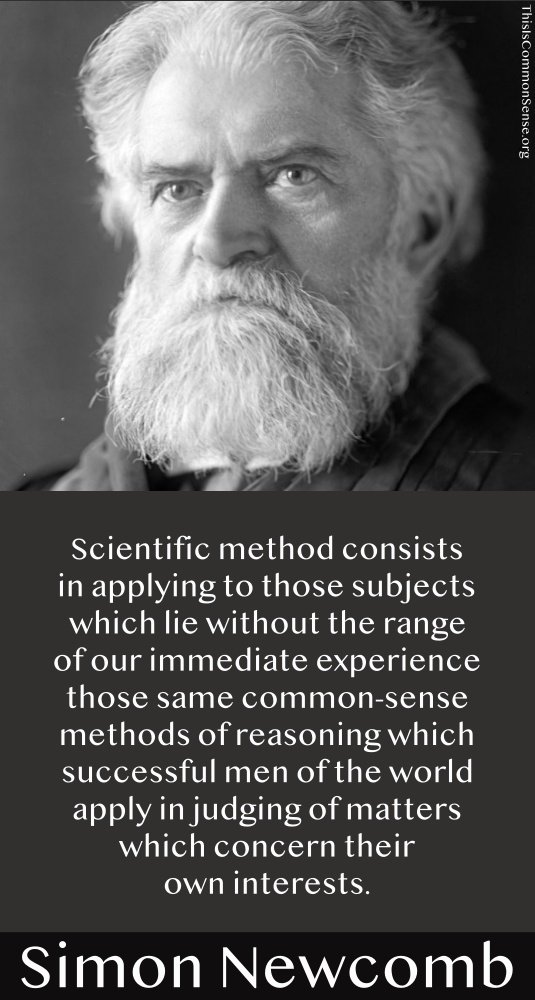
Scientific method consists in applying to those subjects which lie without the range of our immediate experience those same common-sense methods of reasoning which successful men of the world apply in judging of matters which concern their own interests.
Simon Newcomb, Principles of Political Economy, 1886, chapter III, “Of Scientific Method”
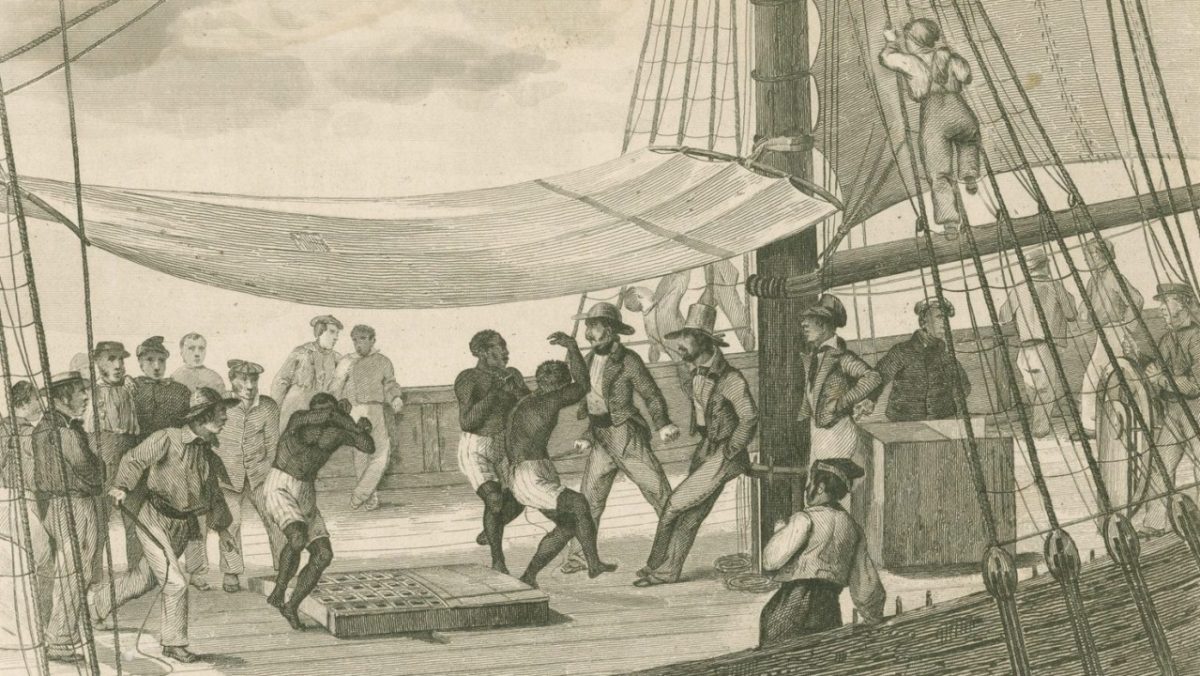
On January 1, 1808, the importation of slaves into the United States was banned.
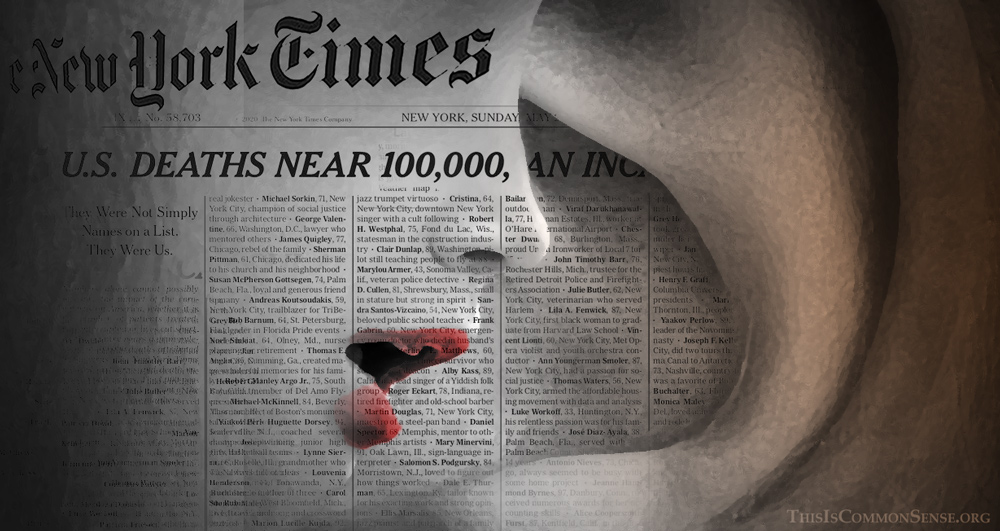
Paul Jacob tries to see straight two in this time where the world is quite crooked:
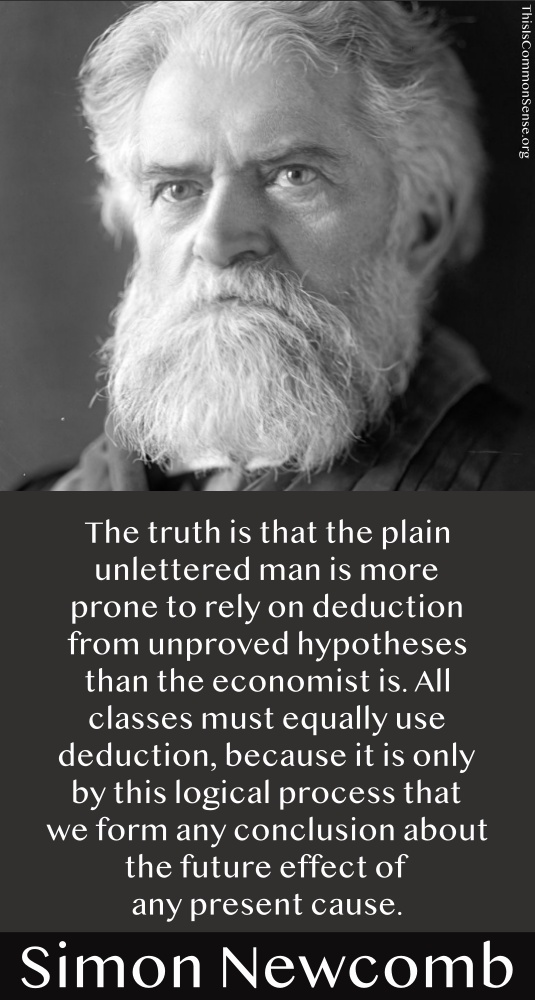
A common mistake is that the conclusions of the plain unlettered man differ from those of economists in being more immediately founded on observed facts and less on deduction. The truth is that the plain unlettered man is more prone to rely on deduction from unproved hypotheses than the economist is. All classes must equally use deduction, because it is only by this logical process that we form any conclusion about the future effect of any present cause. Drawing the conclusion that rain will follow a certain direction of the wind with certain appearances of the clouds is an act of logical deduction. The main point in which men’s logical methods differ lies in the care with which hypotheses are formed by induction from observed facts, and the readiness of men to test them. Now it is the plain man who is most prone to form hasty generalizations from insufficient facts, to consider the conclusions which he thence deduces as final, and to be blind to all facts which do not tally with his theory.
Simon Newcomb, Principles of Political Economy, 1886, p. 40.

On December 31, 1695, Englanders received a new tax, a window tax. One of the main responses to this was the bricking up of many British windows.
This last day of the year in 1991 marked the complete cessation of all institutions of the Soviet Union.
New Year’s Eve 1992 saw the peaceful dissolution of Czechoslovakia into the Czech Republic and Slovakia. This has been dubbed the “Velvet Divorce.”
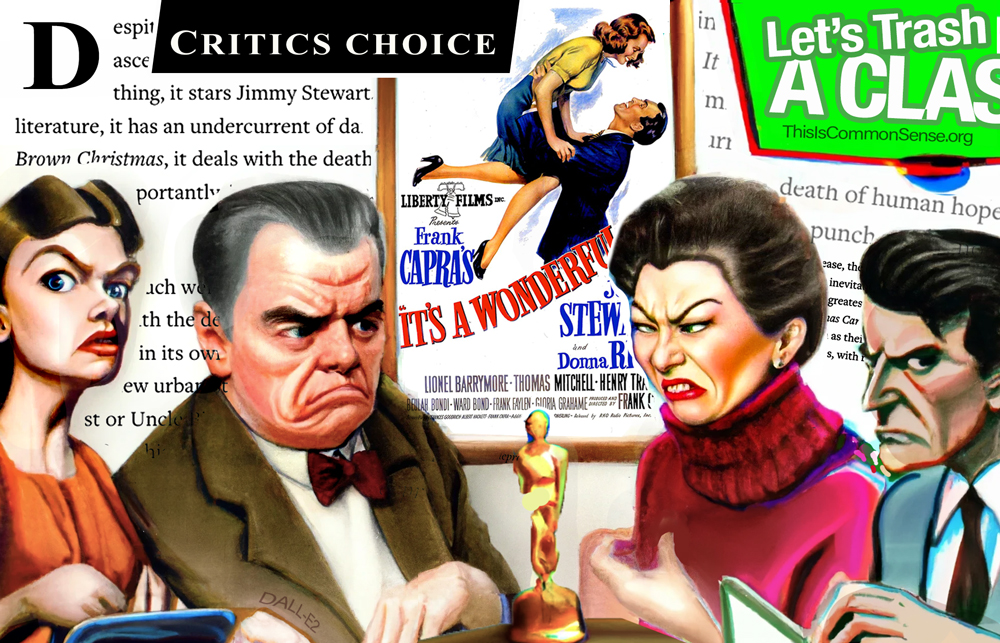
Last year, I had to correct Washington Post columnist Monica Hesse, who belittled protagonist George Bailey as “the tortured Boy Scout-type,” arguing that Mary, his wife, was “the real hero.”
One of the nicest things about the movie is that mythical Bedford Falls has a lot of ordinary heroes . . . just like in real life. And Mary is right at the top of the list. But with her husband George, whom she dearly loves, not instead of or as his chief competition.
“George Bailey Isn’t the Hero of ‘It’s a Wonderful Life,’” insists the headline to Mickey Randle’s recent column at Collider, where we learn that “many of [George’s] responses to hardship” are “less than admirable.” I don’t know about “many,” but George does throw something of a tantrum upon discovering that his business will go bankrupt and he likely end up in prison.
Hate me if you must, but I might throw a momentary fit, too, at that set of circumstances.
“Mary bears almost identical burdens,” notes Randle, “and always responds productively.” Of course, even Mary gets angry in one scene and smashes one of her favorite records. Apparently, this wonderful woman is not perfect. Who knew?
Randle concludes by calling the movie “significant because of its observations on gender,” suggesting: “We just have to remember to see things from Mary’s perspective.”
But can anyone who knows Mary claim that George is not a hero from her perspective?
One major point of attack on the film has been the idea that, if George “had never been born,” the sweet and beautiful Mary would certainly not be “an old maid,” as depicted. Granted, her being single would not be for lack of trying by every able-bodied, cisgendered male person in Pennsylvania. But in her piece at The Bulwark, Coffey gets this right by noticing, “Mary could marry any man in town. She doesn’t want to. She wants George.”
Seems to me the criticism is intended to obscure the powerful moral of this movie: that good guys and good gals are winners, not losers. And that two people in love and committed to doing what they think is right are as unconquerable as anything this world has ever known.
When push comes to shove, I put my faith in that tantrum-throwing George Bailey and the record-smashing Mary Bailey . . . working together.
This is Common Sense. I’m Paul Jacob.
Illustration created with DALL-E2
See all recent commentary
(simplified and organized)
See recent popular posts

Only the descent into the hell of self-knowledge can pave the way to godliness.
Immanuel Kant, Metaphysics of Morals (1797).