Paul looks at a fundamental problem with the current course of our society: the disrespect for property rights, and upholding a rule of law.
Paul looks at a fundamental problem with the current course of our society: the disrespect for property rights, and upholding a rule of law.
Plato did not believe any more in his republic than old Homer did in his gods.
Arsène Houssaye, Philosophers and Actresses (1886).
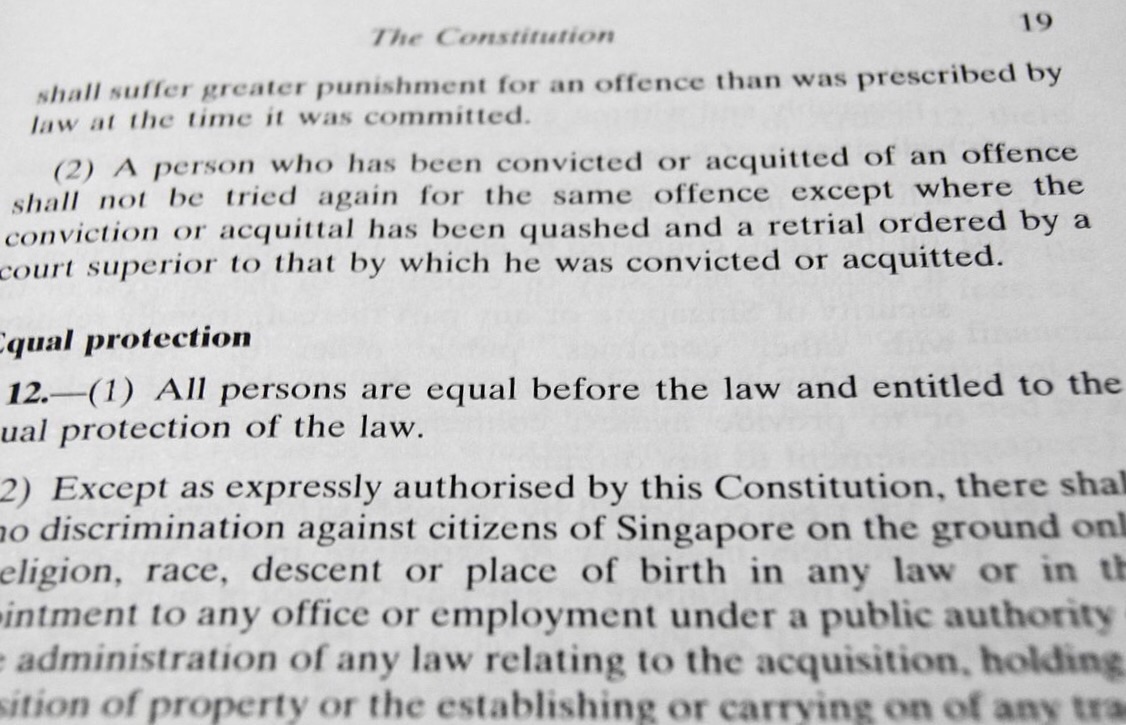
On June 3, 1959, Singapore adopted a constitution.

On May 25, 2023, the Court determined in a 9-0 ruling that Hennepin County, Minnesota, is not constitutionally entitled to pocket the entire sale-price value of a condo in massive excess of the property taxes that Geraldine Tyler owed on the property when the government seized it for unpaid taxes.
Including penalties and interest, Tyler had owed about $15,000. But after selling the condo for $40,000, the county government seemed to think that $25,000 was a reasonable brokerage fee.
Pacific Legal Foundation, which represented Tyler in the case, argued that the county violated the Takings Clause of the Constitution by taking private property for public use “without just compensation.”
The Court agreed, saying that exploiting the debt “to confiscate more property than was due” effected “a ‘classic taking in which the government directly appropriates private property for its own use.’ ”
The ruling also rejects the county’s argument that Tyler somehow forfeited her constitutional rights by failing to pay her property taxes.
The same day, PLF also won another huge victory in the U.S. Supreme Court when the Court ruled that the EPA does not have limitless authority to block property owners from building on their own land if the agency chooses to designate a soggy part of the land a protected “wetland.”
Two for two. Not a bad batting average.
This is Common Sense. I’m Paul Jacob.
Illustration created with PicFinder.ai and DALL-E2
See all recent commentary
(simplified and organized)
See recent popular posts
Whoso would be a man must be a nonconformist.
Ralph Waldo Emerson, “Self-Reliance,” Essays: First Series, quoted from the 1847 edition.

On June 2, 1924, President Calvin Coolidge signed the Indian Citizenship Act into law, granting citizenship to all Native Americans born within the territorial limits of the United States.

“They’re just full-blown, like, running circles around you grabbing as much as they can,” Rogers told WSBTV. “So, our reaction is to scream, ‘No! Get out! Leave!’ ”
The two employees called the police. The same thieves were caught when trying to rob another Lululemon store in the area the next day, perhaps because police were on the alert.
But two weeks later, Rogers and Ferguson were fired, without severance pay, for violating the retail chain’s policy of zero tolerance for calling 911 to report a robbery.
“We are not supposed to get in the way. You kind of clear path for whatever they’re going to do,” Ferguson said. “We’ve been told not to put it in any notes, because that might scare other people. We’re not supposed to call the police, not really supposed to talk about it.”
In a post blasting the company, Jennifer’s husband, Jason Ferguson, observed: “If we, citizens of the community, allow criminal activity to go unchecked, that is tacit approval for them to continue their ways.”
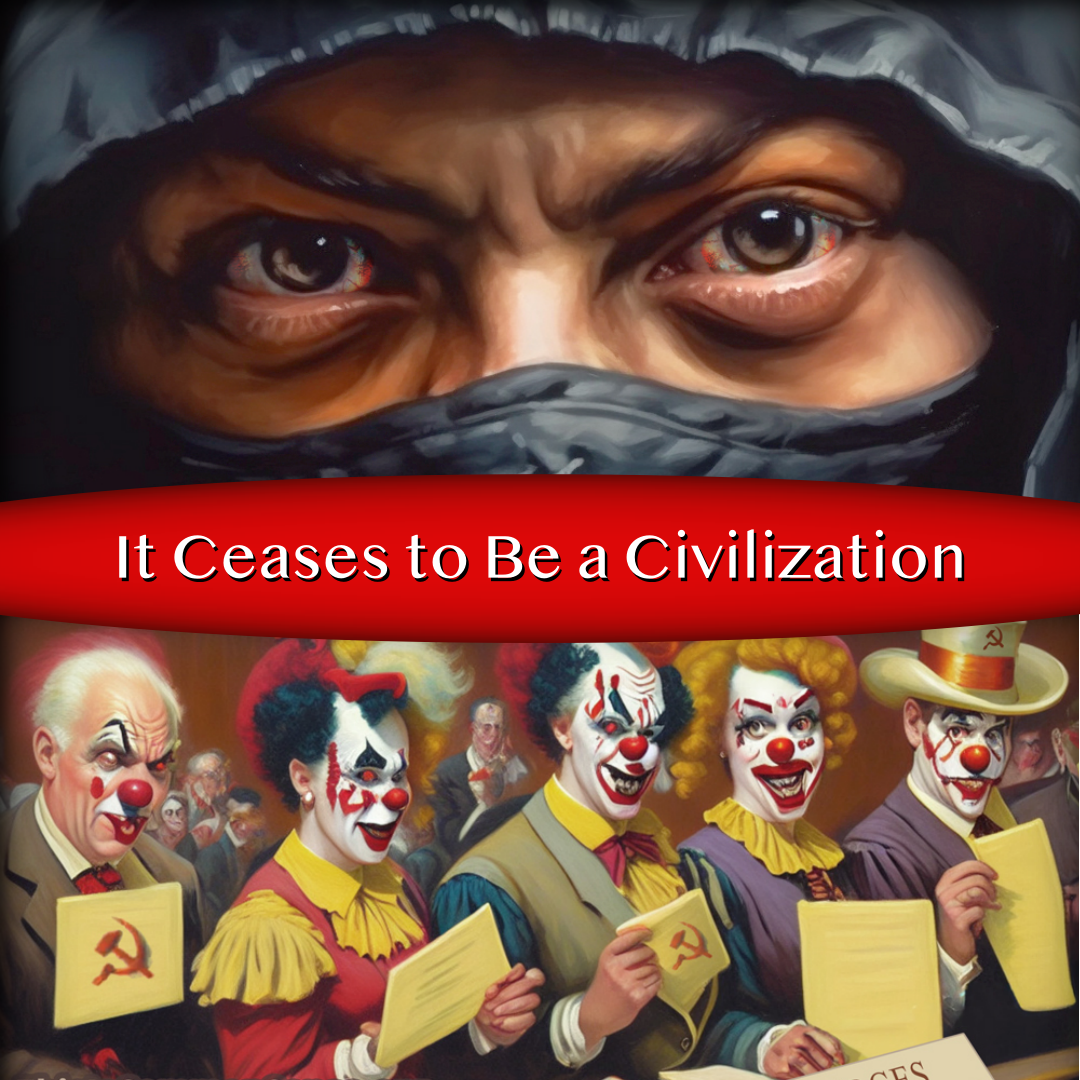
And how long can we hold onto our belongings and our civilization if we meekly usher in the Visigoths and Vandals and tell them go ahead, take whatever you want, we won’t try to stop you or even call the cops after it’s all over?
A lot of people, including higher-ups at Lululemon, have forgotten that property rights are at the foundation of civilization.
This is Common Sense. I’m Paul Jacob.
Illustration created with Midjourney
See all recent commentary
(simplified and organized)
See recent popular posts

You can have a revolution wherever you like, except in a government office; even were the world to come to an end, you’d have to destroy the universe first and then government offices.
Karel Čapek, The Absolute at Large (1921).
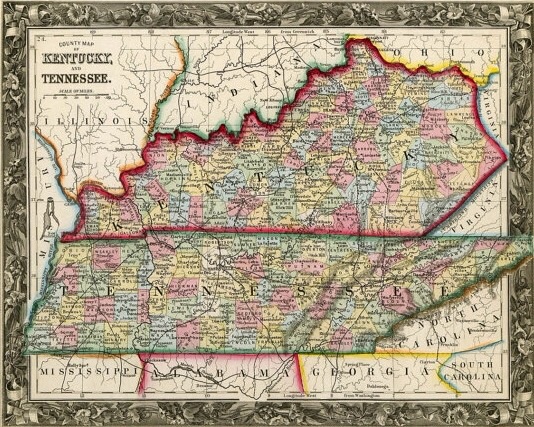
On June 1, 1792, Kentucky was admitted as the 15th state of the United States. Four years later, Tennessee became the 16th state.

“Look at us! We out-manipulated, outfoxed everybody with our gloriously sophisticated strategy. Yes, we lied and provided political cover in order destroy the ability of so many people to walk around and make a living. This was the plan from the start. But we couldn’t
In her memoir Silent Invasion, Deborah Birx, former CDC official and former Coronavirus Response Coordinator, clearly explains her give-us-an-inch/we’ll-take-a-mile method. “No sooner had we convinced the Trump Administration to implement our version of a two-week shutdown than I was trying to figure out how to extend it. Fifteen Days to Slow the Spread was a start, but I knew it would be just that.”
And: “The White House would ‘encourage,’ but the states could ‘recommend’ or, if needed, ‘mandate.’. . . The fact that the guidelines would be coming from a Republican White House gave political cover to any Republican governors skeptical of federal overreach.”
And: “Getting buy-in on the simple mitigation measures every American could take was just the first step leading to longer and more aggressive interventions. We had to [avoid the] appearance of a full Italian lockdown. [But we had to match] as closely as possible what Italy had done — a tall order.”
Etc.
I disagree with those who say that Brix et al. should be tarred and feathered. But let’s not put them in charge of any future pandemics.
This is Common Sense. I’m Paul Jacob.
Illustration created with Midjourney and DALL-E2
See all recent commentary
(simplified and organized)
See recent popular posts