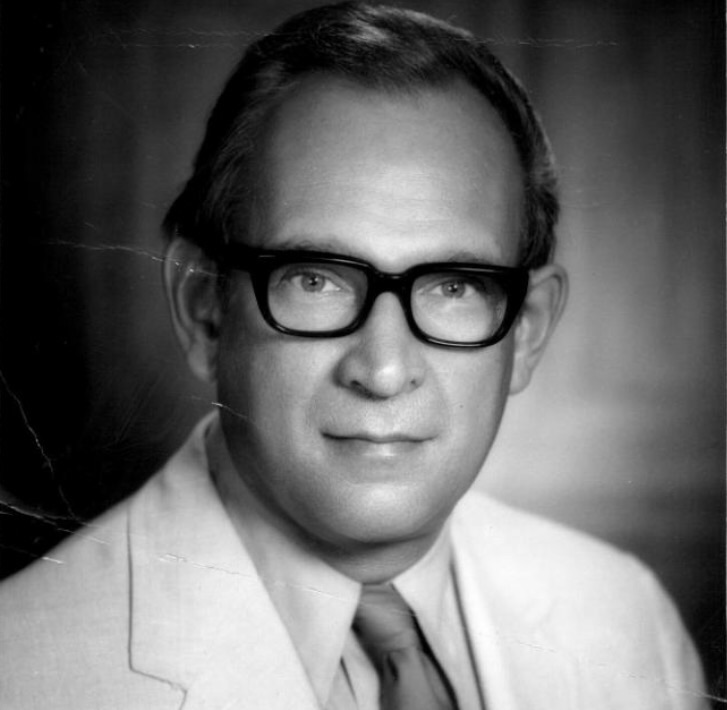
On January 17, 1937, Chicago School economist George Stigler was born. Stigler won a Nobel Memorial Prize for his work. His autobiography is entitled Memoirs of an Unregulated Economist.
George Stigler
On January 17, 1937, Chicago School economist George Stigler was born. Stigler won a Nobel Memorial Prize for his work. His autobiography is entitled Memoirs of an Unregulated Economist.
Some lawmakers want to overturn the ban.
The debated law, Right to Freedom from Discrimination in Public Workplaces and Education, is imperfect. But we live in a world where some taxpayer-funded educators, inspired by noxious doctrines like critical race theory, are eager to accuse students of being inherently racist or sexist or oppressive.
Obviously, though, moral wrongdoing is something chosen. One doesn’t commit it merely by having a certain hue, gender, or ancestors.
So how can one reasonably object to a provision stating that “No government program shall teach [that] an individual, by virtue of his or her age, sex, gender identity, sexual orientation, race, [etc.] is inherently racist, sexist, or oppressive, whether consciously or unconsciously”?
The law itself stresses that it’s not to be interpreted as prohibiting discussion of “the historical existence of ideas and subjects” like racism. Nevertheless, critics falsely claim that the law bans classroom discussion of racism as such. And their repeal bill, HB61, seeks not to perfect the current law but to repeal all sections “relative to the right to freedom from discrimination in public workplaces and education.”
New Hampshire lawmaker Jim Kofalt rightly reminds proponents of HB61 of the vision of Martin Luther King, a future where his children would “not be judged by the color of their skin but by the content of their character.”
This is Common Sense. I’m Paul Jacob.

Illustrations created with Midjourney and DALL-E2
See all recent commentary
(simplified and organized)
See recent popular posts
Whether one is a conservative or a radical, a protectionist or a free trader, a cosmopolitan or a nationalist, a churchman or a heathen, it is useful to know the causes and consequences of economic phenomena.
George Stigler, The Economist as Preacher and Other Essays (1982), p.61.
On January 16, 1786, Virginia enacted the Statute for Religious Freedom authored by Thomas Jefferson.
The China threat gets fiery, and the world gets serious? Paul Jacob on this situation, and more, in the weekend podcast, the video on Rumble:
Note: Zevia, a non-alcoholic drink sweetened with Stevia, is not a sponsor of this show.
Still, it is a pity we no longer really notice that material world which we unthinkingly contemn. Much abominable talk about “the un-wholesome restlessness of modern life” is thus bred by our blindness to the fact that restlessness is pre-eminently a natural trait.
The fictional author John Charteris in James Branch Cabell’s Beyond Life: Dizaine des Démiurges (1919), Chapter V, “Which Considers the Reactionary,” §8.
On January 15, 1777, New Connecticut declared independence from the crown of Great Britain and the colony of New York.
Delegates first named the independent state New Connecticut and, in June 1777, finally settled on the name Vermaont, an imperfect translation of the French for Green Mountain.
This new “Vermont Republic” minted copper coins (see above), first struck in 1785. The people of Vermont took part in the American Revolution although the Continental Congress did not recognize the jurisdiction, because of vehement objections from New York, which had conflicting property claims.
In 1791, Vermont was admitted to the United States as the 14th state, upon which its minting of coins ceased.
The situation in Asia is getting serious, and serious people take it seriously:
Science is made up of so many things that appear obvious after they are explained.
Pardot Kynes, a character in Frank Herbert’s Dune (1965), Book Two: Muad’Dib.
On January 14, 1514, Pope Leo X issued a papal bull against slavery.
On the same date in 1639, the first written constitution to create a government, the “Fundamental Orders,” was adopted in Connecticut.