Paul reminisces about Tom Paine and an old MTV show while considering the biggest stories of the week. Extra points if you guess the show before he mentions it:
Watch: It’s a Sick, Sad World
Paul reminisces about Tom Paine and an old MTV show while considering the biggest stories of the week. Extra points if you guess the show before he mentions it:
Government is not the solution to tragedies of the commons. It is the prime cause of them.
Matt Ridley, The Origin of Virtue: Human Instincts and the Evolution of Cooperation (1996).
On Feb. 12, 1986, Soviet human rights activist Anatoly Scharansky was released after spending eight years in Soviet prisons and labor camps. The amnesty deal was arranged at a summit meeting between Soviet leader Mikhail Gorbachev and President Ronald Reagan. Scharansky had been imprisoned for his campaign to win emigration rights for Russian Jews — who had been forbidden to practice Judaism in the USSR.
On Feb. 12, 1909, the National Association for the Advancement of Colored People (NAACP) was founded.
On Feb. 12, 1593, approximately 3,000 Korean defenders led by General Kwon Yul successfully repelled more than 30,000 invading Japanese forces in the Siege of Haengju.
Paul Jacob marks a day on the calendar and demerits for our politicians:
Progress, far from consisting in change, depends on retentiveness. When change is absolute there remains no being to improve and no direction is set for possible improvement: and when experience is not retained, as among savages, infancy is perpetual. Those who cannot remember the past are condemned to repeat it. In the first stage of life mind is frivolous and easily distracted; it misses progress by failing in consecutiveness and persistence. This is the condition of children and barbarians, in whom instinct has learned nothing from experience.
George Santayana, The Life of Reason: or The Phases of Human Progress: Volume 1, Introduction and Reason in Common Sense (1905).
On Feb. 11, 1990, after 27 years in prison, Nelson Mandela was released by South African authorities.
Mandela had joined the African National Congress (ANC) in 1944, becoming deputy national president of the group in 1952. Arrested for treason in 1961, he was acquitted — but then arrested again in 1962 for illegally leaving the country. Convicted and sentenced to five years at Robben Island Prison, he was put on trial again in 1964 on charges of sabotage. He was convicted and sentenced to life in prison along with several other ANC leaders.
In 1989, F.W. de Klerk became South African president and began dismantling apartheid. De Klerk lifted the ban on the ANC, suspended executions, and in February 1990 ordered the release of Nelson Mandela.
Mandela subsequently led the ANC in negotiating an end to apartheid and the establishment of a multiracial government. In 1993, Mandela and de Klerk were jointly awarded the Nobel Peace Prize. One year later, the ANC won the country’s first free elections, and Mandela was elected South Africa’s president.
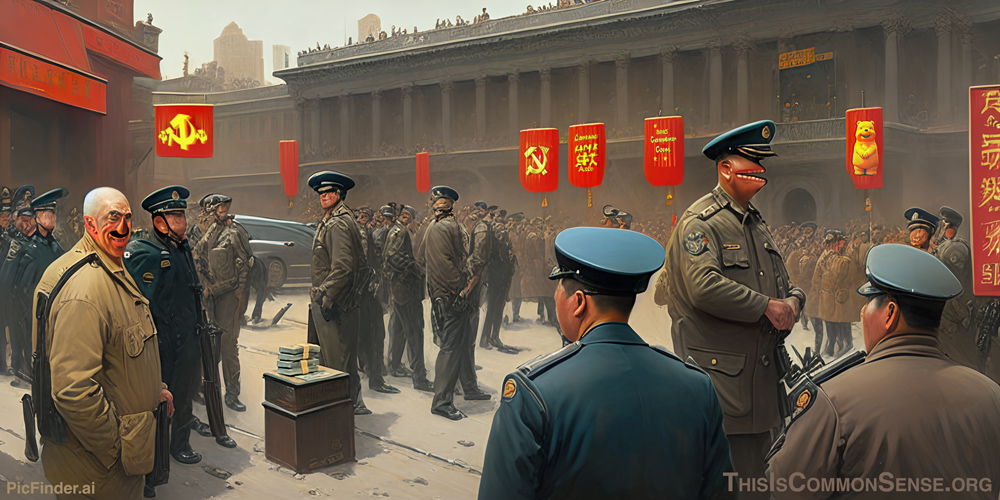
In November 2021, Disney hid from Hong Kong viewers an episode of The Simpsons that mentions the Tiananmen Square massacre in a way not laudatory of the Chinese government. Disney had recently acquired 20th Century Fox, now called 20th Century Studios, which produces The Simpsons.
And now Disney has removed an episode from its Hong Kong platform because it refers to “forced labor camps” in China.
Let us not say that The Simpsons is just a cartoon.
Everything you could want to know about the evils perpetrated by the Chinese government, as established by eyewitness accounts and other documentation, is available in many videos and articles and books. But not everybody reads Steven Mosher or BBC backgrounders on the detention and murder of the Uyghurs.
When a cartoon character says “Behold the wonders of China. Bitcoin mines, forced labor camps where children make smartphones, and romance,” a viewer not yet acquainted with China’s policies has two options. He can let the words slide by unheeded, or he can make a mental note to find out what the cartoon is talking about.
I don’t want a world where such opportunities for enlightenment in our most popular cultural products are routinely squelched — in Hong Kong or anywhere else — by the likes of Disney, an entity whose controlling officers are much more concerned to rationalize, hide, and accommodate tyranny than to expose and counter it.
With the Chinese Communist Party pushing Disney to censor, why don’t we pummel Disney in the pocketbook from the freedom side?
This is Common Sense. I’m Paul Jacob.

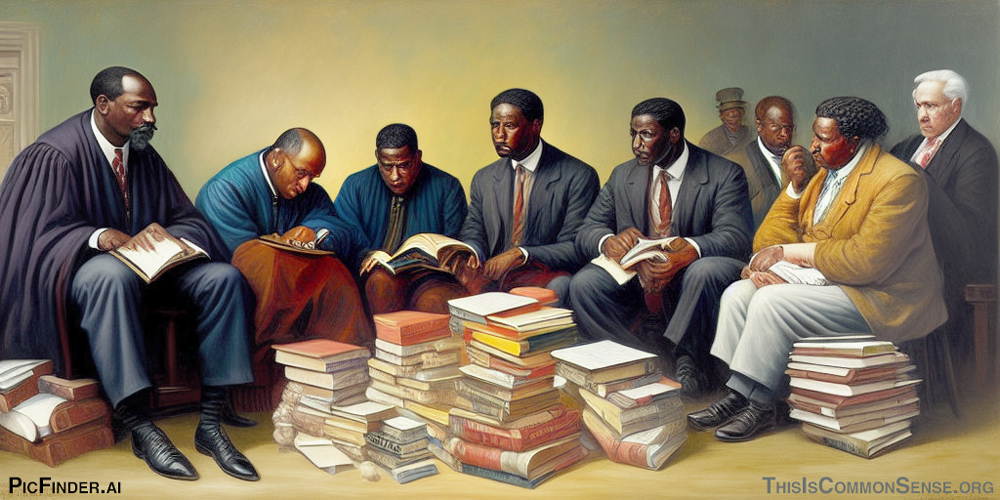
Illustration created with PicFinder.ai
See all recent commentary
(simplified and organized)
See recent popular posts

Let not any one pacify his conscience by the delusion that he can do no harm if he takes no part, and forms no opinion. Bad men need nothing more to compass their ends, than that good men should look on and do nothing.
John Stuart Mill, inaugural address delivered to the University of St. Andrews, Feb. 1st 1867.
On Feb. 10, 1967, the 25th Amendment to the U.S. Constitution was ratified by Nevada, the necessary 38th state to do so. The amendment sets the process for presidential succession, and reads:
Section 1. In case of the removal of the President from office or of his death or resignation, the Vice President shall become President.
Section 2. Whenever there is a vacancy in the office of the Vice President, the President shall nominate a Vice President who shall take office upon confirmation by a majority vote of both Houses of Congress.
Section 3. Whenever the President transmits to the President pro tempore of the Senate and the Speaker of the House of Representatives his written declaration that he is unable to discharge the powers and duties of his office, and until he transmits to them a written declaration to the contrary, such powers and duties shall be discharged by the Vice President as Acting President.
Section 4. Whenever the Vice President and a majority of either the principal officers of the executive departments or of such other body as Congress may by law provide, transmit to the President pro tempore of the Senate and the Speaker of the House of Representatives their written declaration that the President is unable to discharge the powers and duties of his office, the Vice President shall immediately assume the powers and duties of the office as Acting President.
Thereafter, when the President transmits to the President pro tempore of the Senate and the Speaker of the House of Representatives his written declaration that no inability exists, he shall resume the powers and duties of his office unless the Vice President and a majority of either the principal officers of the executive department or of such other body as Congress may by law provide, transmit within four days to the President pro tempore of the Senate and the Speaker of the House of Representatives their written declaration that the President is unable to discharge the powers and duties of his office. Thereupon Congress shall decide the issue, assembling within forty-eight hours for that purpose if not in session. If the Congress, within twenty-one days after receipt of the latter written declaration, or, if Congress is not in session, within twenty-one days after Congress is required to assemble, determines by two-thirds vote of both Houses that the President is unable to discharge the powers and duties of his office, the Vice President shall continue to discharge the same as Acting President; otherwise, the President shall resume the powers and duties of his office.
The Texan Republican was talking about term limits. On January 23, he and Rep. Ralph Norman (R-S.C.) introduced an amendment to the U.S. Constitution to impose term limits on Congress.*
But he was also addressing a complaint.
“Ted Cruz wants two-term limit for senators – and a third term for himself,” ran the headline in The Guardian; “Ted Cruz Confronted on Seeking 3rd Term Despite Pushing for 2 Term Limit” was the story on MSN. “Why aren’t you holding yourself to that standard?” asked Margaret Brennan on Face the Nation. The insinuation is inconsistency, hypocrisy.
Yet, the senator’s run for a third term isn’t either of those things.
Term limits make sense as a systemic fix. As a strategy for any one voter or any one politician, it’s another matter.
Why does so much of the media fail to understand this difference?
Simple: They don’t like term limits. Period.
They envision a big government run by career politicians and reported on by expert journalists while we little people lap up their narratives, keep quiet, and pay the bills.
Who wins, after all, if those who seek to make government more responsive and responsible through reforms such as term limits cede the congressional arena to the Washington insider incumbency, which stays and stays term after term?
Devoid of any rational argument that could sour Americans on the term limits that four of five of us love, the press plays this phony “hypocrisy” game.
Ted Cruz sees through it. He not only understands the advantages of term limits, but also knows that applying them to himself alone makes no sense for his career or for the term limits movement.
This is Common Sense. I’m Paul Jacob.
* The amendment would limit senators to two six-year terms and members of the House to three two-year terms after the date of its enactment.
Illustration created with PicFinder.ai
See all recent commentary
(simplified and organized)
See recent popular posts