On May 28, 1952, the women of Greece gained the right to vote.
Categories
Greek voters

On May 28, 1952, the women of Greece gained the right to vote.



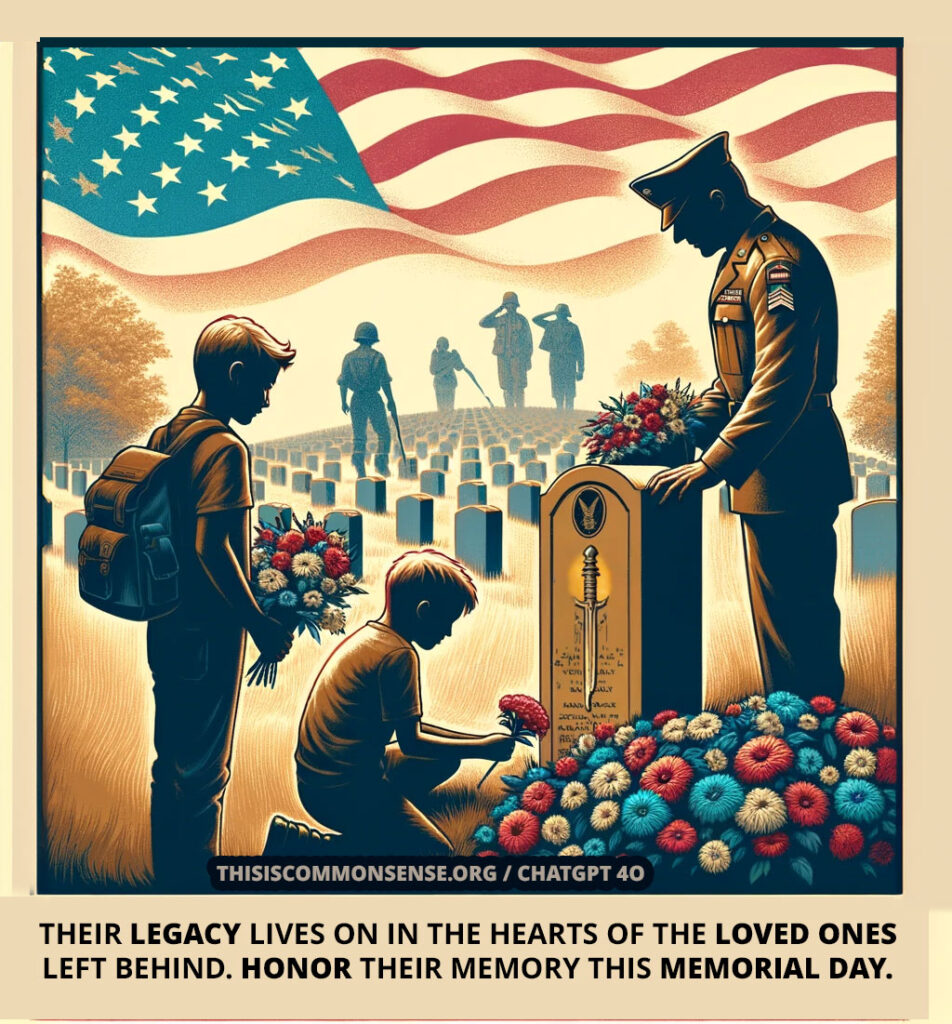
All images created with ChatGPT 4o
See all recent commentary
(simplified and organized)
See recent popular posts
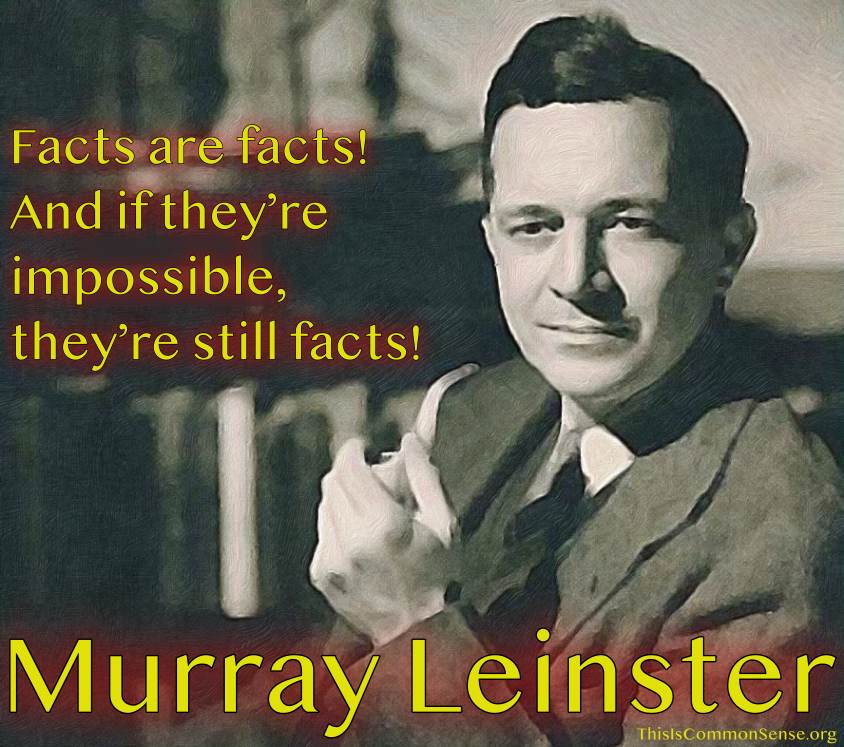
Facts are facts! And if they’re impossible, they’re still facts!
Murray Leinster, Time Tunnel (1964), ninth chapter, p. 140.

On May 27, 1860, Giuseppe Garibaldi began his attack on Palermo, Sicily, as part of the Italian unification.
In 1927 on this date in May, the Ford Motor Company ceased manufacture of the Ford Model T (pictured above), the last of this model coming off the line the day previous. Over 16 million Model T Fords had been sold; it was a world-transformative product. On the 27th, the company began to retool plants to make the Ford Model A.
Exactly 70 years later, the U.S. Supreme Court ruled that Paula Jones could pursue her sexual harassment lawsuit against President Bill Clinton while he was in office.
In 2015 on the 27th of May, the commercial space company SpaceX was approved as a contractor to the U.S. military for satellite launches; SpaceX has since led the world in its use of

On May 3, Paul wrote about the then-upcoming appearance of former President (and current candidate) Donald Trump before the Libertarian Party quadrennial presidential nominating convention, amusingly and perhaps tellingly given the motto “Become Ungovernable.”
Much has been made of the invitation. The same invitation was also extended to Robert F. Kennedy, Jr. (who, like Trump, accepted) and to President Joe Biden (who did not accept). A typical reaction to Trump’s scheduled appearance at the convention can be gleaned merely by reading the title of a recent Washington Post op-ed by Peter Goettler, President of Cato Institute: “Trump is hardly libertarian. But neither is today’s Libertarian Party” (May 23, 2024).
Well, the horror and dark thoughts about the appearance can now be judged by the facts, not speculations. The event happened. On Friday, RFK spoke, and was mostly courteously received. On Saturday — yesterday — Trump gave a perhaps too-long but mostly rational case for why Libertarians at the convention should endorse him, or at least, as citizens, vote for him. He also promised to place a libertarian in his cabinet. Additionally, Trump pledged to commute Ross Ulbricht’s sentence “on day one” if elected. It was an extraordinary occasion. But the crowd was restless, and there were a lot of boos.
Most truthful statement? “This is the first time in U.S. history that a presidential candidate of a rival party will address the convention of a party that is presumably gathering to nominate its own candidate.”
Juiciest statement? “[T]he Libertarians want to vote for me, and most of them will.”
But is it true? Will libertarians vote en masse — or even as a majority — for Trump?
Today the Libertarians vote among their candidates for the presidency and vice presidency to choose the party’s 2024 presidential ticket. Which will presumably garner the mere (?) 3 percent of the vote that Trump mocked them for.
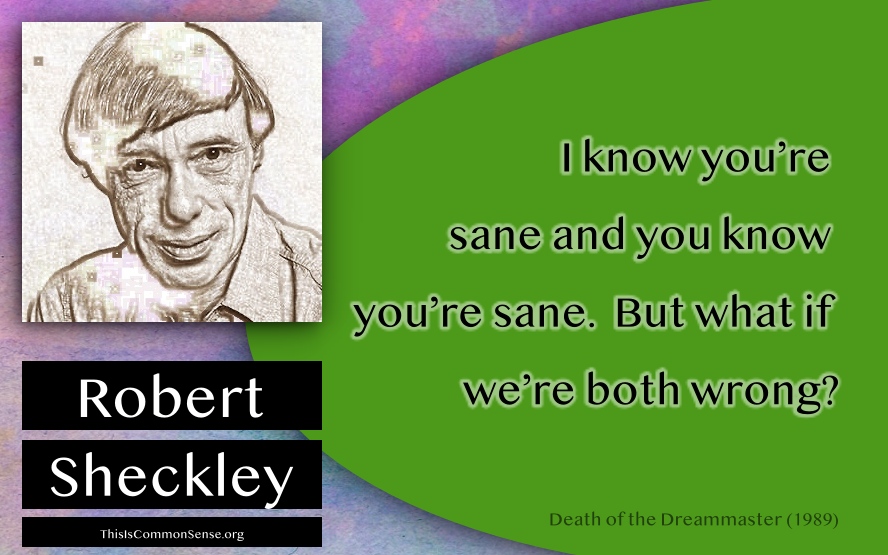
I know you’re sane and you know you’re sane. But what if we’re both wrong?
Robert Sheckley, “Death of the Dreammaster,” published in Martin H. Greenberg (ed.), The Further Adventures of Batman (1989), p. 24.
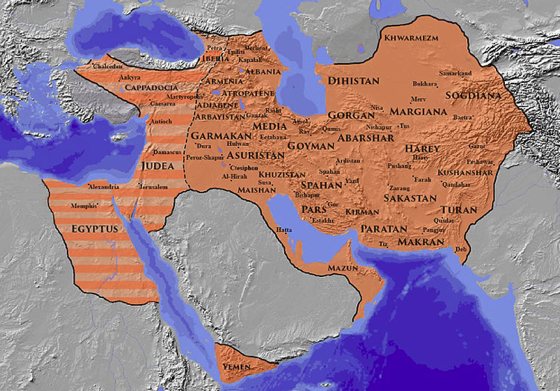
On May 26, 451 AD, the Sassanid Empire defeated the Armenians at the battle of
On May 26, 1328, scholastic philosopher and Franciscan friar William of Ockham and other Franciscan leaders secretly exited Avignon, fearing a death sentence from Pope John XXII. On the same day in 1538, the city of Geneva expelled John Calvin and his followers, who headed to exile in Strasbourg.

Here at Common Sense the subject of Oregon’s “red” county secession movement — to move the border to form a “Greater Idaho” — has been addressed several times. Such movements being slow creatures, the advances move along andante. Perhaps Andante con moto.
The story was in the news again this week. For example, Tim Pool brought it up and mused again about the new “civil war” possibility:
But it is also in the papers. Newsweek, for example:
On Tuesday, Crook County in Oregon became the 13th county to approve a proposal to secede from the state and join neighboring Idaho by 53.5 percent of the vote against 46.5 percent, as part of what supporters are calling the “Greater Idaho” project.
Backers of the plan argue the more conservative areas of eastern and central Oregon are currently dominated by liberal-leaning cities such as Portland and Salem and argue their interests would be better represented in traditionally Republican Idaho.
James Bickerton, “Oregon Counties Voting to Join ‘Greater Idaho,’” Newsweek, May 23, 2024.
Talk of secession shouldn’t automatically conjure up “civil war” fears. The American experience in 1860 is the exception: usually secession is the peaceful alternative to unrest, avoiding civil conflict.

Love is the extremely difficult realisation that something other than oneself is real. Love, and so art and morals, is the discovery of reality.
Iris Murdoch, “The Sublime and the Good,” in the Chicago Review, Vol. 13 Issue 3 (Autumn 1959) p. 51.
In 1763, on the 25th of May, the first issue of Norske Intelligenz-Seddeler was published. This was the first regular Norwegian newspaper (1763–1920), an early mark for the beginning of the Age of Newspapers.
On the same day in 1787, the United States Constitutional Convention formally convened in Philadelphia, after a delay of 11 days, upon the securing of a quorum of seven states.
May 25, 1818, the Swiss historian and academic Jacob Burckhardt was born. Burckhardt’s best-known work is The Civilization of the Renaissance in Italy (1860), but is remembered here as the author of Reflections on History (1905). Burckhardt died on August 8, 1897.
Playwright, poet and novelist Oscar Wilde was convicted of “committing acts of gross indecency with other male persons” and sentenced to serve two years in prison, on May 25, 1895. Laws against homosexuality in Britain were repealed in the 20th century, a liberation argued against chiefly on utilitarian grounds.
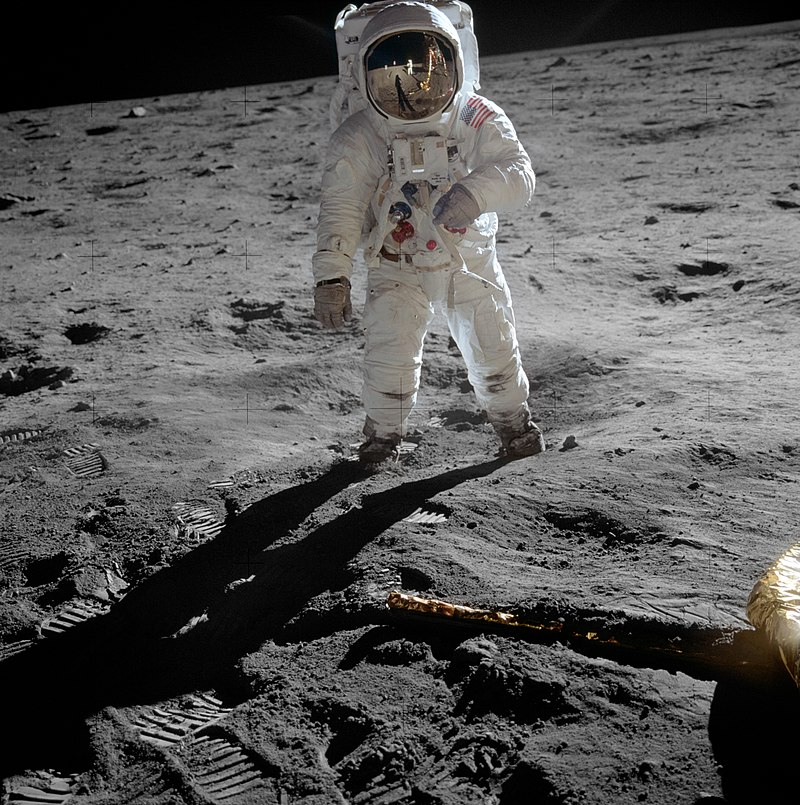
On May 25, 1961, U.S. President John F. Kennedy announced, before a special joint session of the U.S. Congress, the goal to initiate a project to put a “man on the Moon” before the end of the decade. The Apollo mission commenced, and with Apollo 11 the promise was fulfilled during the Nixon Administration. In 1977, the science fiction movie Star Wars was released in US theaters on May 25.