Categories
general freedom national politics & policies

Greater Eloquence

Last week, two major speeches caught our attention.

Barack Obama wagged his finger at the Supreme Court and orated in front of Congress. He said the state of the union is sound.

Apple’s Steve Jobs gave the other big speech, presenting the new iPad, a portable device that accesses the Web, allows users niftily to buy and read e-books, and much more.

Which speech will usher in real change?

Both have their critics. Many people no longer trust Obama, whether he’s pushing more government or a freeze. And many folks second-guess Apple’s newest project, despite Jobs’s spectacular success record.

For my part, I don’t buy Obama’s agenda. But I probably won’t buy an iPad, either. I tend to regard even the best new tech breakthroughs as just more vacuum cleaners. They really do suck . . . one’s time, anyway.

But to succeed, Apple doesn’t need my excitement. Just enough from others.

Early in each of Apple’s revolutions, it was hard to prophesy success, with certainty.

The neat thing about a possible neo-Gutenberg Age of tablets, e-books and virtual libraries is that I will still be able to read a normal book. One the other hand, if Obama gets his way, his policies will, willy nilly, crowd out better ones.

Still, it’s heartening to realize that to most of us the eloquence of a revolutionary thing means more, now, than the eloquence of any politician.

This is Common Sense. I’m Paul Jacob.
Categories
free trade & free markets too much government

Who Killed Disco?

The age of the glittery mirror ball and loud, simple dance music is over.

According to Ian Schrager, as recorded in Vanity Fair’s recent oral history of disco, it “wasn’t AIDS that made the nightclub business difficult. Government regulations did it in.”

Schrager and his partner set up their first nightclub, in Queens, for $27,000. The more famous Studio 54 — or is that “infamous”? — went up for $400,000.

“Now,” says Schrager, a major real estate developer, “with all the regulations, fire codes, sprinkler requirements, neighborhood issues, community planning boards . . . before you even put on the first coat of paint, you’re into it for over a million dollars. What it’s done is disenfranchise young people.”

And it’s not just disco that’s suffered. It’s worth remembering one sad side effect of all the red tape cities and states put up to new enterprises. It leaves the private sector desperate to focus on the surest forms of wealth generation, less able to serve niche markets. Like discos.

Nowadays, to establish and run non-school,  non-work activities for young people, volunteers organize community events, write grant applications and hold out their hats. This crowds out funding for needier, worthier charities, and litters our towns with poorly run government-funded efforts.

Personally, I don’t like disco — but could it be that things were better when entrepreneurs like Schrager set the stage?

This is Common Sense. I’m Paul Jacob.

Categories
media and media people

Haiti on the Hot Seat

Television theologian Pat Robertson attributes Haiti’s current woes to a two-century-old pact:

[S]omething happened a long time ago in Haiti. . . . They were under the heel of the French. You know, Napoleon III and whatever. And they got together and swore a pact to the devil. They said, “We will serve you if you will get us free from the French.” True story. And so, the devil said, “OK, it’s a deal.” . . . Ever since they have been cursed by one thing after the other. . . .

Pact with the devil? True story??

The Haitians threw off the French long before the rule of Napoleon III . . . but, whatever. It is doubtful that any amount of thumbing through an encyclopedia before going on air would have saved Pat.

Soon after the Robertson clip we got the clip from actor Danny Glover. Glover says climate change caused the earthquake. Apparently, he was mad about the failed summit. “They’re all in peril because of global warming . . . because of climate change. . . . When we did what we did at the climate summit in Copenhagen, this is the response, this is what happens. . . .”

Hey, why not? “Global warming” causes everything! Maybe even the heated hectoring of Pat and Danny.

Where’s the common sense?

Oh, here: This is Common Sense. I’m Paul Jacob.

Categories
national politics & policies responsibility

Washing Dishes

If you can’t pay your bill at a restaurant, management may set you to washing dishes to cover the cost of your meal.

Or so it’s said — I’ve never heard of it actually happening. Clean dishes are a must for serving food to paying customers; restaurants simply can’t wait around to press non-paying customers into service. Instead, they hire folks to do the dishes.

This came to mind when our president and congressional leaders began pushing to raise the federal government’s debt ceiling by $1.9 trillion.

The raise would allow the federal debt to increase to $14.3 trillion, about the size of our country’s entire yearly economic output.

Senator Max Baucus of Montana is all for raising the limit. He says it simply must be done: “We have gone to the restaurant,” he explained. “We have eaten the meal. Now the only question is whether we will pay the check.”

No dishwashing for Baucus.

Most of us avoid Congress’s unseemly situation by looking in our wallets for cash or ready credit before we order the filet mignon, not after we’ve consumed it.

I’m no wizard of high finance, but hey: If we want to stop piling debts onto our children, at some point we will have to prevent our so-called representatives from borrowing more trillions.

Oh, and if a congressman enters your diner, better make him pay cash up front.

This is Common Sense. I’m Paul Jacob.

Categories
free trade & free markets general freedom too much government

How Not to Help Haiti

Haiti has suffered horrific devastation. It didn’t have to.

There was no way to prevent the 7.0 earthquake itself. But estimates of as many as 200,000 dead? That didn’t have to happen.

Economist Donald Boudreaux recalls that in 1989, an equally powerful quake hit the San Francisco Bay area. It caused lots of trouble but killed fewer than 70 people. But Haiti is a much poorer country than the U.S., with weaker buildings and roads, for starters.

Why so poor?

Haiti is not a free society. It’s had one corrupt tyrant after another, recently emerged from the terrorizing rule of Jean-Bertrand Aristide, who was sent packing in 2004.

Many pundits are saying that the way to strengthen Haitian society over the long haul is torrents of foreign aid. Economist Jeffrey Sachs wants Washington to spend billions on a five-year development plan, which he says it should fund by taxing Wall Street bonuses.

Charity and rescue efforts are wonderful. Government-to-government foreign aid, not so much. Haiti has remained desperately poor despite the massive flow of foreign aid, which, over the years, has mainly subsidized corruption. What Haiti needs is stability. The ability to attract investment. Less propping up of corrupt politicians. Less foreign aid, more freedom.

But a free society is something Haitians will have to build themselves.

This is Common Sense. I’m Paul Jacob.

Categories
insider corruption political challengers

Great Scott!

Just when you thought nothing could stop Congress from sucking another sector of American life and our economy into the dripping maw of government, a spark of hope.

Scott Brown, the Republican candidate for Massachusetts’s open U.S. Senate seat, won.

I’m sure I’d disagree with many of the senator elect’s opinions. But his campaign was based, loud and clear, on his promise to vote against the Democrats’ overblown, misguided, quasi-socialistic healthcare plan — a compelling enough message to propel a Republican to victory in a very Democratic state.

What now? Well, hopefully we are going to stop the big government juggernaut. That is, unless Democrats start playing some very dirty pool.

Will it be the kind of dirty pool MSNBC talk show host Ed Schultz endorses? In the final days of the campaign, Schultz bragged on his radio show that if he were a Massachusetts resident he’d cheat at the ballot box to stop Brown. “[I]f I lived in Massachusetts I’d try to vote ten times. . . . Yeah, that’s right. I’d cheat to keep these bastards out. I would.”

It’s not unheard of, in politics, for politicians and even activists to go off the deep end, foreswearing principle for the sweet smell of partisan success. But I bet one reason Brown won was that he represents the kind of above-board probity that Schultz and far too many in Congress — Democrats, and Republicans, too — utterly lack.

This is Common Sense. I’m Paul Jacob.

Categories
too much government

Impossible Dream, Real Nightmare

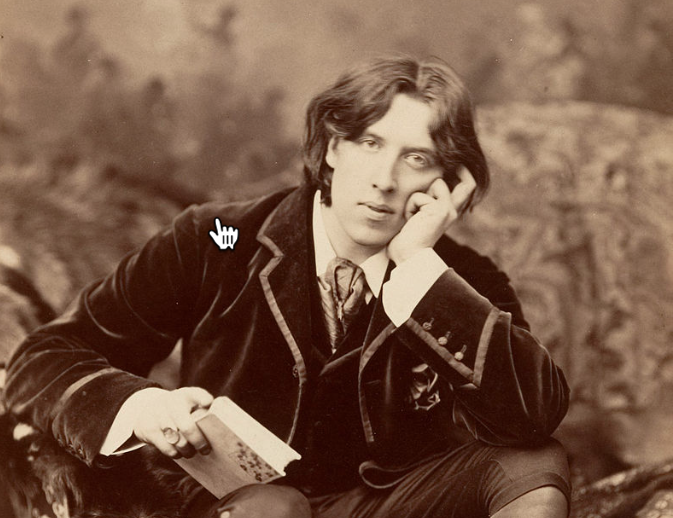
Over at Amazon.com there’s a discussion of Oscar Wilde’s essay “The Soul of Man Under Socialism.”

Some visitors decry the horrors of socialism enabled by such wishful thinking. Others say, “Hey, be fair! The calamitous ‘socialist’ regimes of the 20th century aren’t what Wilde was talking about!”

But not many volunteer for Wilde’s “voluntary” socialism. To impose such utopian dreams society-wide can only be done by force.

If an unrepentant socialist admits the track record, he must insist that his own ideas of perfect, magically blissful equality have been ignored or misappropriated. What he proposes is the socialism in which the incentives and demands of human life in society have disappeared, in which men and women are disembodied spirits, in which wishes are all-powerful fairy dust.

In the real world, socialism quickly devolves into the looting of the better-off and transferring a portion of said loot to the lesser-off — at the point of a gun. The more consistently socialists work to equalize everyone’s economic condition, the more rampantly and brutally they must deploy coercion. And so, under socialism, comes death to individual hopes, dreams, options . . . and souls.

The unbridgeable gulf between socialist fantasies and inconvenient facts explains much about recent health care reform. ObamaCare won’t be the socialist medical nirvana anybody was proposing. But it never could have been.

This is Common Sense. I’m Paul Jacob.

Categories
education and schooling local leaders

Tea Party Principles – Populist?

When friends of mine started up the “tea party” protests last year, I wondered: Could large numbers of American take the common-sense, freedom point of view and really run with it?

I had hopes.

But for Democrat congressional leaders, and some in the media, there was mostly fear and loathing — along with red-herring charges of racism against Tea Partyers.

Now, David Brooks, writing in the New York Times, focuses on something a bit different. Noticing that 41 percent of Americans have a favorable attitude towards the Tea Party movement — far higher levels of support than for either major party — Brooks interprets that tendency in terms of what we oppose: “The concentrated power of the educated class.”

Brooks insists that “Every single idea associated with the educated class has grown more unpopular over the past year.” And he’s not cheering.

Michael Barone, in The Washington Examiner, clarifies this new class divide, writing, “The Obama enthusiasts who dominated so much of the 2008 campaign cycle were motivated by style. The tea party protesters who dominated so much of 2009 were motivated by substance.”

There is an ancient truth: Being smart doesn’t make you wise. In fact, flaunting your schooling and lording over others with your cleverness makes you a de facto fool.

And wrapping up fantasies and hopes in stylish, we’re-smarter-than-you packaging doesn’t make them any more intellectually defensible.

This is Common Sense. I’m Paul Jacob.

Categories
initiative, referendum, and recall

But Not ‘By’ the People

Our ability to vote directly on the chief issues of our time is a vital political power, a right. I think so, and most Americans agree.

But for some reason some of those elected to “represent” us don’t.

Last year, Missouri State Rep. Mike Parson introduced legislation to restrict petitioning to place initiatives on the ballot. Parson himself admitted that there might be unconstitutional parts to his bill. Thankfully, it failed.

Now, this year, he’s back. Parson wants to double the number of petition signatures citizens must gather to place an issue on the ballot. Presently, citizens turn in more than 200,000 signatures to meet the state’s requirement. Parson wants to make that 400,000.

Why? Did voters really elect Mike Parson to block them from having a say-so in their own government?

In Nebraska, Citizens in Charge is suing to overturn unconstitutional restrictions on the initiative process. Amy Miller with the ACLU, which is handling the case, said, “It’s hard not to see the restrictions as a deliberate effort on the part of legislators to keep independent candidates and grassroots initiatives off the ballot.”

Now Nebraska State Senator Bill Avery has introduced legislation to further increase the signature requirement for a constitutional amendment by 50 percent.

It all makes me realize how important it is to have a process whereby we citizens can overrule our so-called representatives.

This is Common Sense. I’m Paul Jacob.

Categories
free trade & free markets general freedom too much government U.S. Constitution

Know Your Rights

For years, politicians and activists have declared that we have a right to medical care. Not a right to freely contract for medical services, mind you, but a fundamental right to medical care.

This assertion serves as the moral force behind those pushing for nationalized, universal health care legislation. But can medical care really be a basic right?

Well, it’s nowhere to be found in the Constitution or the Bill of Rights.

Should it be?

Again, no.

Rights cannot involve requiring others to provide a product or service to us. We can’t simply demand, with talk of rights, the expertise and labor of doctors, nurses and other healthcare workers. Why? Because they possess the same rights we possess, in particular, the right not to be enslaved.

Watching the 2,000-page health care bill plod through the congressional sausage factory, the fraudulent nature of this “right to medical care” claim becomes painfully obvious. We’re not getting a new right from the deal. Instead, politicians are slapping us with a new mandate, forcing us to fork over our hard-earned money to health insurance companies.

If our right to freedom of speech worked this way, the First Amendment would mandate that we buy a local newspaper and sign up for cable TV or XM Radio. The Second Amendment would force us to own a gun and pay dues to the NRA.

This is Common Sense. I’m Paul Jacob.