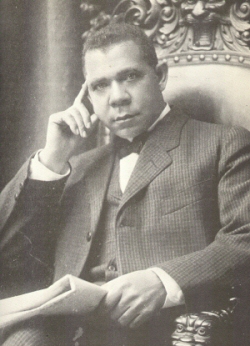
“My God! How little do my countrymen know what precious blessings they are in possession of, and which no other people on earth enjoy.”
One Day of Work
Unfunded public employee pensions threaten the financial future of governments across the country. In some states and localities, the crisis chickens have already come home to roost, spurring bankruptcies; in others, the clucking is getting much louder.
The State of Illinois may have the worst problem, having funded only 51 percent of its pension liabilities, the lowest level of any state in the nation. Every household in the Land of Lincoln owes $34,000 for this unfunded liability. For those living in Chicago, add the unfunded municipal pension liability and the burden more than doubles to $76,000 per household.
The underlying problem is the distorted political calculus of public pensions, which are negotiated by politicians who want the political support of the powerful unions, which they might win by promising future benefits they won’t be around to pay for.
This generalized political manipulation is so systemic that it reaches more specific absurdity. Consider the case of Steven Preckwinkle, political director of the Illinois Federation of Teachers. He was able to use a loophole in legislation, for which he lobbied, to snag a huge increase in his pension.
Preckwinkle had never taught in a classroom. Yet, by substitute teaching for just one day, he qualified for the much more generous pension given to Illinois teachers. Moreover, Preckwinkle’s pension benefits are calculated on his whopping $245,000 annual salary as a union lobbyist, not on a teacher’s pay.
Is this Lincoln’s government of, by and for the people? Or just for political insiders like Preckwinkle?
This is Common Sense. I’m Paul Jacob.
Policing the Prosecutors
Those who prosecute our laws have a solemn responsibility to seek justice, not simply victories in court. Their duties include not prosecuting the innocent and allowing defendants to examine all evidence.
Yet, in their zeal to look good with superiors — or to have better material for their political re-election ads — prosecutors too often forget about the justice part.
That’s why media watchdogs like blogger Radley Balko are so important.
Longtime Common Sense readers may remember Balko for helping free Corey Maye from Mississippi’s death row.
Now Balko brings us the 2011 Worst Prosecutor of the Year Award. Folks like us get to decide the winner from the ten prosecutors he’s nominated. (Mark your ballot here.)
You could vote for District Attorney Tracey Cline. She replaced disgraced prosecutor Mike Nifong, who tried to frame the Duke Lacrosse team, and she’s following in his footsteps.
Or consider Grant County, Wisconsin, District Attorney Lisa Riniker. She charged a 6-year-old boy with first-degree sexual assault for playing doctor with a neighbor girl.
There’s Philadelphia District Attorney Seth Williams, who charged Mark Fiorino with “reckless endangerment and disorderly conduct” for tape-recording police threatening to kill him for openly and legally carrying a gun.
I’m voting for my local prosecutor, State’s Attorney Paul Ebert of Prince William County, Virginia. It’s Ebert’s third nomination in a career of failing to investigate official corruption . . . too busy hiding evidence from defendants.
Mulling over the list of nominees, one’s reminded that power must be checked.
This is Common Sense. I’m Paul Jacob.
Montesquieu
“Government should be set up so that no man need be afraid of another.”
McCarthy Announces
On Jan. 3, 1968, Senator Eugene McCarthy (D-Minnesota) announced he would challenge incumbent Lyndon B. Johnson for the Democratic presidential nomination. In March, spurred by public opposition to Johnson’s escalation of the Vietnam War, McCarthy came within a few hundred votes of beating Johnson in the New Hampshire primary. At the end of March, Johnson withdrew from the race.
On Jan. 3, 1777, General George Washington evaded the numerically superior forces of British General Cornwallis dispatched to trap him in Trenton and went north to rout the British rear guard in the Battle of Princeton.
On the Other Hand
To start off this New Year, I admit that I missed some very thrifty actions taken by elected officials in 2011.
Though I often commented on California legislators, regrettably, I failed to mention their frugality. Last May, they unequivocally said, “No” to Senate Bill 18, which would have cost $200,000 for enforcement of the legislation’s gift ban.
These eminent elected officials would doubtless like to have SB-18’s restriction on lobbyists and special interests plying them with free tickets to sporting events, rock concerts, and other expensive entertainment venues, but were unwilling to place the high cost of policing their behavior onto the backs of taxpayers.
Nor are politicians always careless with tax dollars. In Washington, D.C., Council Chairman Kwame Brown gets the city’s money’s worth.
He had the city order him a Lincoln Navigator, loaded with a DVD entertainment system, power moon-roof and polished aluminum wheels. But, when the vehicle and its $1,900 a month lease arrived, the interior was gray — not black as requested. Brown wouldn’t stand for being shortchanged. So, a new SUV was ordered, with both exterior and interior black. It was driven from Michigan to Washington for an extra $1,500.
The city was stuck paying two luxury vehicle leases, but it’s the principle that counts. Chairman Brown informed the Washington Post that dark interiors hold their value better.
This year, let’s acknowledge the good elected officials do and not just harp on the bad. After all, nobody’s perfect.
This is Common Sense. I’m Paul Jacob.
NBC bans The Weavers
On Jan. 2, 1962, The Weavers, a folk music quartet, were banned from appearing on “The Jack Paar Show” by NBC, after the performers each refused to sign a political loyalty oath. One of the most significant popular-music groups of the postwar era, The Weavers career was nearly destroyed during the Red Scare of the 1950s, when Pete Seeger and Lee Hays were denounced as Communist Party members by an FBI informant (who later recanted). The entire group was placed under FBI surveillance and not allowed to perform on radio or television until the late 1950s. In 1955, both Hays and Seeger were called to testify before the House Committee on Un-American Activities, where Hays took the Fifth Amendment, while Seeger refused to answer on First Amendment grounds – the first person to do so after the Hollywood Ten were convicted in 1950. Seeger was found guilty of contempt and placed under restrictions by the court pending appeal, but in 1961 his conviction was overturned on constitutional grounds. Seeger, who left the group in 1958, didn’t appear on television again until 1968 on the Smothers Brothers show.
“Experience should teach us to be most on our guard to protect liberty when the Government’s purposes are beneficent. Men born to freedom are naturally alert to repel invasion of their liberty by evil-minded rulers. The greatest dangers to liberty lurk in insidious encroachment by men of zeal, well-meaning but without understanding.”
Frederick Douglass
“No man can put a chain about the ankle of his fellow man without at last finding the other end fastened about his own neck.”
Emancipation Proclamation
On Jan. 1, 1863, President Abraham Lincoln signed the final Emancipation Proclamation, which ended slavery in the rebelling states. A preliminary proclamation had been issued in September 1862, following the Union victory at the Battle of Antietam. As the proclamation freed slaves only in rebellious areas, it actually freed no one, since these were areas not yet under Union control. Yet, the act signaled an important shift in the Union’s Civil War aims, expanding the goal of the war from reunification to include the eradication of slavery.