This week, on Stossel:
Categories
This week, on Stossel:
 It is absurd to hold that a man ought to be ashamed of being unable to defend himself with his limbs but not of being unable to defend himself with speech and reason, when the use of reason is more distinctive of a human being than the use of his limbs.
Party politics is often underhanded.
Many of our country’s founders knew this all too well, and tried to avoid the factionalism of party politics. But still, two political factions emerged, and our politics has been dominated by two parties ever since.
And believe me, the two insider parties work mightily to rig the system in their favor. The presence of “sore-loser laws” is a case in point.
Now, political parties are private entities. They can choose whomever they want. Ideally, the ballots wouldn’t even list party affiliation. But “sore-loser laws” stretch in the other direction, preventing individuals from running in one party after losing a primary as a candidate for another party.
In this way, the parties use the law to secure their own positions. It has nothing to do with “democracy” or “voting rights,” everything to do with privilege.
In Michigan, whilom New Mexico Governor Gary Johnson ran in the primary as a Republican candidate for the presidency. Now, the Secretary of State is disallowing him from running as a Libertarian. You see, he’d filed some paperwork withdrawing his candidacy three minutes too late last November.
An amusing work-around may be in the offing, with a Texas businessman named Gary Johnson being groomed for the Michigan nomination. Take that, partisan insiders!
But regarding the Secretary of State’s ruling, the Libertarians smell a partisan rat, and are suing. It turns out they may have precedence on their side, since John Anderson had technically run afoul of the same law back in 1980, but nothing had been done to exclude him.
This time, Johnson’s more feared than Anderson was then. And, this time, the Secretary of State is a Republican.
This is Common Sense. I’m Paul Jacob.
J.P. Morgan Chase CEO Jamie Dimon testified before the Senate Banking Committee yesterday about the $2 billion in trading losses suffered by his company’s London office last month.
Congress is shocked that money can be lost trading derivatives. And our legislative leaders seem to seriously think they can write rules for banks and other financial institutions that protect everyone from such losses, making certain any trading in financial securities is guaranteed to earn a profit.
“We will lose some of our shareholders’ money,” Dimon acknowledged, “and for that, we feel terrible. But no client, customer or taxpayer money was impacted by this incident.” In fact, J.P. Morgan Chase is nonetheless expected to turn a profit this quarter — as it has consistently done since the financial crisis.
Still, some politicians and policy makers fear the nation’s largest bank is “too big to fail,” that a collapse could again threaten the stability of the entire economy.
I liked what Rob Cox of Reuters TV’s Fast Forward urged Dimon to tell the senators: “We are not going to fail, but if we do, the failure will be our own. We will bear it on our bond holders, our investors and it will not be a public problem.”
Cox went on to endorse “this idea that banks can go out and they can lose money and they can make money,” adding that “at the end of the day it’s their money, not our money, that’s at risk.”
In other words, no bailouts.
This is Common Sense. I’m Paul Jacob.
 War is as much a punishment to the punisher as to the sufferer.
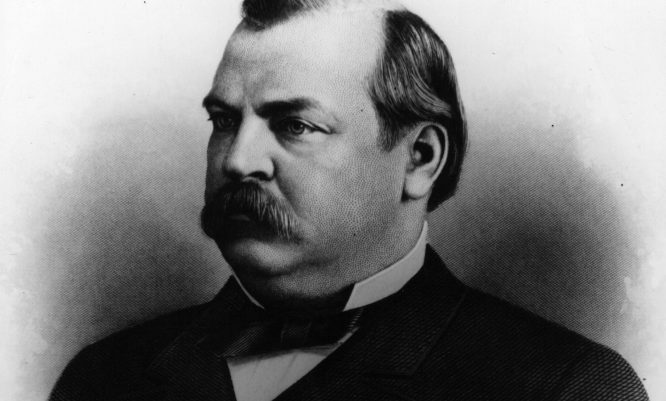
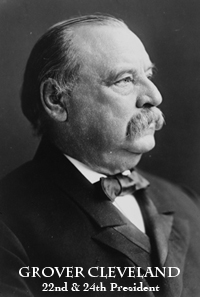
The lessons of paternalism ought to be unlearned and the better lesson taught that while the people should patriotically and cheerfully support their Government, its functions do not include the support of the people.
Stephen Grover Cleveland, Second Inaugural Address, March 4, 1893.
Some opponents of citizen initiative and referendum argue that voters will always opt for tax cuts. I only wish.
Yesterday, North Dakotans decided not to eliminate their state’s property tax. Measure 2 wouldn’t have lowered property taxes, it would have abolished them. Even in a land booming with new-found oil and gas, and a state government surfing in surpluses, a whopping 78 percent of voters weren’t willing to go that far.
Chalk it up to fear — unfounded fear. North Dakota State government is running a surplus bigger than the state’s property tax take.
As is too often the case, voters saw a one-sided campaign, with spending by the forces of big government — public employee unions and those extracting financial gain from the political status quo — completely outmatching the resources taxpayers had to get their message out. On Measure 2, the No side outspent the Yes side by more than 26 to 1.
Empower the Taxpayer, led by Bob Hale and Charlene Nelson, made the argument that property taxes are particularly malicious because people can lose their homes and farms if they can’t afford the taxes. That argument did not win the day.
But there will be other days. I often tell the story of a 2002 Arkansas initiative campaign to “ax the food tax.” The measure to end the sales tax on food and medicine was slaughtered at the ballot box. Still, now a decade later, the tax has been reduced from 6 percent to 1.5 percent.
North Dakotans voted to keep the state university’s Fighting Sioux mascot. The Fighting Taxpayers may be around even longer.
This is Common Sense. I’m Paul Jacob.
 When more of the people’s sustenance is exacted through the form of taxation than is necessary to meet the just obligations of government and expenses of its economical administration, such exaction becomes ruthless extortion and a violation of the fundamental principles of free government.
The “war on drugs” is not a mere metaphorical war, like the “war on poverty.”
The biggest problem with the term is not the subject, but the object: Our forces don’t shoot at pills and pipes and chemicals and syringes.
They shoot at people.
Sometimes dealers. Often just users. Too often innocents . . . “collateral damage” in a war that seems never to end, because impossible to win.
But if the war seems bad in America — now a land with the world’s largest gulag — it’s far, far worse in Mexico, especially since President Felipe Calderón turned the military on his own people, in the vain hope of subduing the drug traffickers.
What did he get for his efforts? Blood, death and terror.
The body count is over 50,000.
I’ve long advocated drug legalization. I don’t need to elaborate the reasons, not after 50,000 deaths have been weighed in on the pro-drug war side, but I probably should mention a few notions that the drug-war mentality suppresses: individual responsibility, a rule of law, and peace.
In America, our politicians slowly awake to the truth that killing people to prevent them from ruining their lives with drugs is a fool’s mission. But few yet commit to actual change.
In Mexico, on the other hand, the top three candidates to replace Calderón — whose service is limited, by law, to just the one term — go a step further: All agree that the drug war has to be scaled down.
Little talk, so far, of legalization, but hey: The addiction to war is a tough monkey to shrug off.
This is Common Sense. I’m Paul Jacob.

TV-watchers have no doubt noted so often that they are no longer aware of how often the interchangeable TV hosts handle anyone who tries to explain why something happened. “Are you suggesting that there was a conspiracy?” A twinkle starts in a pair of bright contact lenses. No matter what the answer, there is a wriggling of the body, followed by a tiny snort and a significant glance into the camera to show that the guest has just been delivered to the studio by flying saucer. This is one way for the public never to understand what actual conspirators — whether in the F.B.I. or on the Supreme Court or toiling for Big Tobacco — are up to.