 Plato is my friend — Aristotle is my friend — but my greatest friend is truth.
Categories
Plato is my friend — Aristotle is my friend — but my greatest friend is truth.
 On July 5, 1687, Isaac Newton publishes the work for which he is most honored, the Philosophiæ Naturalis Principia Mathematica. In 1811 on the same date, Venezuela declares independence from Spain. In 1819, Admiral William Cornwallis dies. In 1937, Hormel introduces SPAM, the canned “meat” product, which helps America win World War II. In 1945, U.S. declares the Philippines liberated. In 1947, Larry Doby joins the Cleveland Indians, becoming the American League’s first black player. In 1971 on this date, President Richard Nixon signs the 26th Amendment to the U.S. Constitution, lowering the voting age to 18 years.
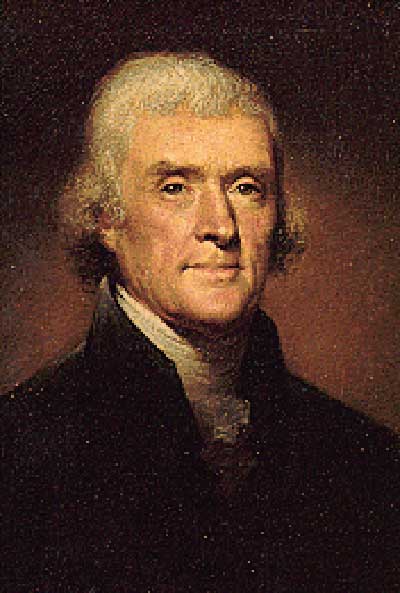 The most important document in American history is titled this way, in five lines: “In CONGRESS, July 4, 1776./ A DECLARATION / By the REPRESENTATIVES of the
/ UNITED STATES OF AMERICA, / In GENERAL CONGRESS assembled.” This “Declaration of Independence” begins with one of the best preambles ever: “WHEN in the course of human Events, it becomes necessary for one People to dissolve the Political Bands which have connected them with another, and to assume among the Powers of the Earth, the separate and equal Station to which the Laws of Nature and of Nature’s God entitle them, a decent Respect to the Opinions of Mankind requires that they should declare the causes which impel them to the Separation.”
The most important document in American history is titled this way, in five lines: “In CONGRESS, July 4, 1776./ A DECLARATION / By the REPRESENTATIVES of the
/ UNITED STATES OF AMERICA, / In GENERAL CONGRESS assembled.” This “Declaration of Independence” begins with one of the best preambles ever: “WHEN in the course of human Events, it becomes necessary for one People to dissolve the Political Bands which have connected them with another, and to assume among the Powers of the Earth, the separate and equal Station to which the Laws of Nature and of Nature’s God entitle them, a decent Respect to the Opinions of Mankind requires that they should declare the causes which impel them to the Separation.”
And it then goes on to assert a vital philosophical position: “We hold these Truths to be self-evident, that all Men are created equal, that they are endowed by their Creator with certain unalienable Rights, that among these are Life, Liberty, and the pursuit of Happiness—-That to secure these Rights, Governments are instituted among Men, deriving their just Powers from the Consent of the Governed, that whenever any Form of Government becomes destructive of these Ends, it is the Right of the People to alter or abolish it, and to institute a new Government, laying its Foundation on such Principles, and organizing its Powers in such Form, as to them shall seem most likely to effect their Safety and Happiness.”
It was a document that changed American history — and the world’s. But it wasn’t the only one to do so: The United States’ Constitution followed in 1787. But some documents can’t be fit onto a broadside. In a Saturday Review article published on July 4, 1953, historian Eric F. Goldman identified 13 “Books That Changed America.” These books were Thomas Paine’s Common Sense, The Federalist Papers, Harriet Beecher Stowe’s Uncle Tom’s Cabin, Herbert Spencer’s The Study of Sociology, Henry George’s Progress and Poverty, Charles Sheldon’s In His Steps, Sigmund Freud’s The Interpretation of Dreams, Charles Beard’s An Economic Interpretation of the Constitution, John Maynard Keynes’s The Economic Consequences of the Peace, John Dewey’s Human Nature and Conduct, Sinclair Lewis’s Babbitt, Lincoln Steffens’s Autobiography, and Wendell L. Willkie’s One World.
Happy Independence Day!
Though I understand if you are not feeling all that exultant, today.
Last week’s Supreme Court decision allowing the unconstitutional 2,700-page monstrosity known as Obamacare to stand was, well, bracing. We can soberly see how far our great country has fallen from the Republic our Founders envisioned. And how long and hard the battle will be to restore our country.
Let’s face it: We’re headed in the wrong direction. Unless we change course, our children and grandchildren will never know the freedom and opportunity and security that we have known. Can we accept such a fate? Can we live with it? Can we even bear to go to our graves with it?
On this day 236 years ago, not only did the United States of America break away from the monarchical and mercantilist British Empire, but we did so with a Declaration of Independence that spoke to “a candid world,” firing up the hearts and minds of people everywhere.
The Declaration served, in its day, as the most eloquent expression of the equality and dignity of each individual human being . . . of our inviolate right to freedom. It continues to do so today.
Freedom fighters worldwide have long been inspired by the simple words of our Founders . . . speaking truth to power:
We hold these Truths to be self-evident, that all Men are created equal, that they are endowed by their Creator with certain unalienable Rights, that among these are Life, Liberty, and the pursuit of Happiness — That to secure these Rights, Governments are instituted among Men, deriving their just Powers from the Consent of the Governed, that whenever any Form of Government becomes destructive of these Ends, it is the Right of the People to alter or abolish it, and to institute a new Government, laying its Foundation on such Principles, and organizing its Powers in such Form, as to them shall seem most likely to effect their Safety and Happiness.
It falls to us, today, to restore some semblance of this precious freedom.
The enemies of freedom are powerful and entrenched — but remember, they were at the founding, too.
Of course, today’s situation has a somewhat different complexion. The public employee unions (basically, the government itself) are now the biggest spending and most powerful special interests in our politics. Crony phony-capitalists (Solyndra and many more) join them to feed at the federal trough, gorging on our tax dollars, wallowing in the borrowed money that threatens collapse and catastrophe. They push ever more power into the hands of politicians and their special-interest clients.
Though whopping majorities of citizens favor balanced budgets, limited government, and common-sense checks on power — term limits and the right to initiative, referendum and recall — our so-called representatives ignore the will of the people. Their spending and debt and nanny-statism know no bounds. They sue to overturn our votes and fashion a maze of unconstitutional rules to block our political participation.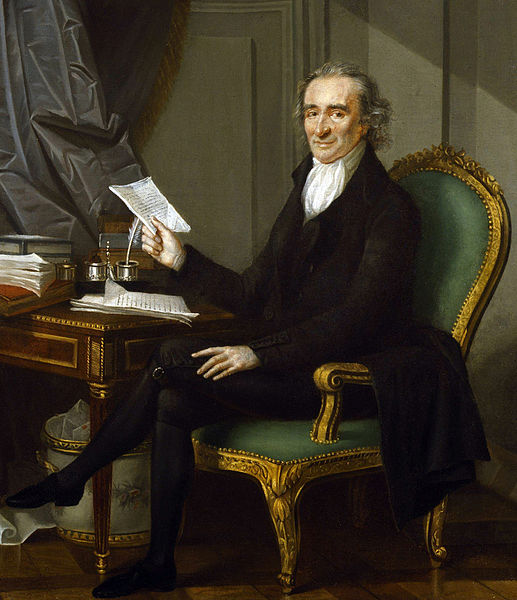
Today’s warning isn’t “the redcoats are coming!” it’s “the turncoats are in charge!”
We can’t count on politicians or judges to save us. We can only count on each other.
Benjamin Franklin said, “We must hang together or we shall surely all hang separately.”
This Common Sense program, in the spirit of Tom Paine’s famous pamphlet that inspired our revolution, is my effort to educate, to excite citizens to action, to entertain at times, and to unite us in our common cause.
From highlighting today’s grassroots freedom-fighters to lambasting the mindless nanny-state busybodies in high places, Common Sense is a daily shot heard ’round the world.
We don’t often ask for your financial support, but we can only continue with your support. Make a monthly pledge of $17.76 to Citizens in Charge. Or make a one-time gift today for $25 — or $100! — or whatever you can afford to give.
“Those who expect to reap the blessings of freedom must, like men, undergo the fatigue of supporting it,” Paine wrote to “the inhabitants of America.”
My goal in these commentaries is to add punch and verve to the movement, vanquishing fatigue so we can fight on.
Freedom is worth it. The only way to beat the odds is to fight.
This is Common Sense. I’m Paul Jacob.
P.S. Just as in Paine’s day, and in his words, “These are the times that try men’s souls. The summer soldier and the sunshine patriot will, in this crisis, shrink from the service of their country; but he that stands by it now, deserves the love and thanks of man and woman.”
P.P.S. Thank YOU for stepping up today and helping keep this program alive and kicking. Your monthly pledge of $17.76 or a one-time gift of $100, $50, $25 or $15 keeps us passing the ammunition. Please contribute. Why not do it now?
 If all men are created equal, that is final. If they are endowed with inalienable rights, that is final. If governments derive their just powers from the consent of the governed, that is final.
 In New York City, July 3, 1819, the Bank of Savings is opened — the first of its kind in the country. In 1848, slaves are freed in the Danish West Indies on July 3. In 1890 on this date, Idaho becomes the 43rd state of the union. July 3 births include:
Happy Birthday, Dave!
“Not one member of the Senate will read this bill before we vote on it,” said Sen. Rand Paul, last Friday. The junior senator from Kentucky had received the 600-page monstrosity mere hours before, and yet the august solons managed to pass it by a huge majority before close-of-business.
The legislation tackled three big funding extensions — another grab-bag “omnibus” bill in all but name. Obviously a rush job, even with the short turn-around it was too late for the president to sign that weekend.
By Senate internal rules, bills are supposed to be delivered 48 hours before any vote, to give time for senators to peruse their content. “We ought to adhere to our own rules,” said Sen. Paul, who went on to note that 48 hours isn’t that much time to read and comprehend everything in a bill of such length.
Such is the chaos in the Senate, run, apparently, like a business set on course to fail.
In a perhaps quixotic attempt to re-insert some sense of responsibility in the underachieving outfit, Paul has introduced two pieces of legislation, one requiring a day’s wait for every 20 pages of a bill, before voting, another designed to prohibit bills on more than one subject.
Frankly, I’d rather require every senator who votes on a law to be present in the chamber while the law in question is read aloud.
And the “one subject rule” is the kind of thing that many states have, regulating citizen-initiated measures. What’s foisted on the people should definitely be yoked onto the Senate, which obviously needs an omnibus-load of tough “love.”
This is Common Sense. I’m Paul Jacob.
 Politicians are always realistically maneuvering for the next election. They are obsolete as fundamental problem-solvers.
Foes of term limits love to repeat their favorite mantra, “We already have term limits — they’re called elections.”
This clichéd counsel urges us to ignore how term limits and other checks on government power can . . . well, check government power. Many incumbents prefer to remain effectively unchallenged when it comes to retaining, using, and abusing their power. And the advantages of incumbency can render election campaigns uncompetitive and even meaningless.
Political monopoly’s dangers, studiously ignored by many domestic critics of term limits, are often vividly illustrated by the latest news from abroad. Take Panama. Advocates of limited government at first applauded the election there of a successful businessman, Ricardo Martinelli, as president. Three years on, though, he’s looking like a standard-issue power-grabber.
In the Wall Street Journal, Mary O’Grady details how Martinelli is seeking to expand his power. A court-packing scheme is one of his gambits. Critics also see egregious cronyism in his political appointments. And, yes, Martinelli wants the power to immediately run again for office when his current term expires — even though Panama’s constitution prohibits consecutive presidential terms.
The Supreme Court would have to give the nod to any evading of the term limit. Hence the president’s desire to add a few buddies to the current nine-member bench.
Such is the pattern in Central America, Africa, Asia, everywhere.
Assaults on term limits tend to be part and parcel of assaults on rights and liberties. No coincidence.
This is Common Sense. I’m Paul Jacob.
 The Continental Congress adopts a resolution to sever ties with the Kingdom of Great Britain on July 2, 1776. The next year on this date the independent Vermont Republic abolishes slavery, fourteen years before joining the union, thereby gaining the honor of being the first U.S. territory to make slavery against the law.
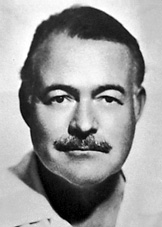
Jean-Jacques Rousseau died on this date in 1778. July 2 marks the death dates of a number of major American authors: