Categories
video

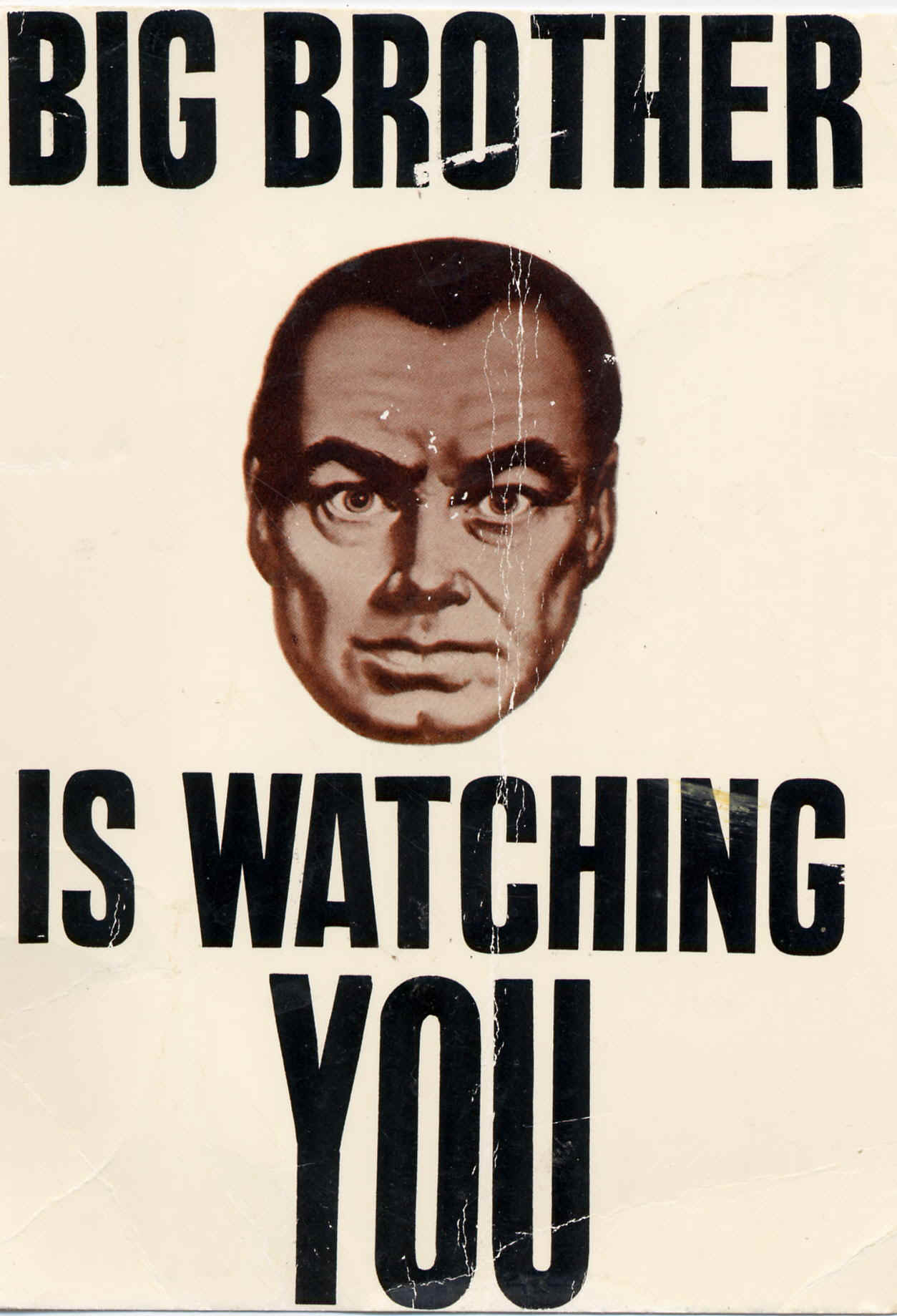
George Orwell 1984

On this day sixty-two years ago, George Orwell passed away, soon after the publication of his final novel, Nineteen Eighty-Four, an ugly glimpse at a dystopian future where the world is run by totalitarian regimes.

At the end of the novel, the torturer O’Brien tells Smith that, “If you want a vision of the future, imagine a boot stamping on a human face forever.” O’Brien goes on to argue that “the individual is only a cell, Winston, and the weariness of the cell is the vigor of the organism.”

“You’ll fail,” Winston responds. “Something will defeat you. . . . some spirit . . . the spirit of man.”

In Orwell’s book, the spirit of man is defeated, destroyed. Thankfully, in our lives, we can write our own ending.


“The real division is not between conservatives and revolutionaries but between authoritarians and libertarians.”

—George Orwell, Letter to Malcolm Muggeridge (4 December 1948), quoted in Malcolm Muggeridge: A Life (1980) by Ian Hunter


Categories
Thought

George Orwell

“All the war-propaganda, all the screaming and lies and hatred, comes invariably from people who are not fighting.”

Categories
Today

Gene Sharp born, Orwell dies

On Jan. 21, 1928, Gene Sharp, one of the world’s leading experts on non-violent change, was born. Sharp’s extensive writings, including his 1973 book “The Politics of Nonviolent Action,” have influenced anti-government resistance movements around the world. During the Korean War, he was jailed for nine months after protesting the conscription of soldiers. Sharp is currently Professor Emeritus of political science at the University of Massachusetts Dartmouth.

On Jan. 21, 1950, Eric Arthur Blair, better known by his pen name George Orwell, died – just a year after his dystopian novel “Nineteen Eighty-Four” was published. The English author and journalist was known for his awareness of social injustice, intense opposition to totalitarianism, and a passion for clarity in language. His two books, “Animal Farm” and “1984,” together sold more copies than any two books by any other twentieth-century author.

Categories
Thought

Chief Justice John Marshall

“The power to tax is the power to destroy.”

“An unlimited power to tax involves, necessarily, a power to destroy; because there is a limit beyond which no institution and no property can bear taxation.”

Categories
Today

First parliment, Marshall to Sup Ct, Roller Coaster

On Jan. 20, 1265, the first English parliament conducted its first meeting held by Simon de Montfort in the Palace of Westminster.

On Jan. 20, 1801, John Marshall was appointed by President John Adams to be the Chief Justice of the United States, serving in the position longer than anyone else in the country’s history, during all or part of the terms of six presidents – John Adams, Thomas Jefferson, James Madison, James Monroe, John Quincy Adams and Andrew Jackson.

On Jan. 20, 1885, L.A. Thompson patented the roller coaster.

On Jan. 20, 1920, the American Civil Liberties Union was founded.

Categories
insider corruption

The Forgotten Scandal

Newt Gingrich is taking a pounding over his personal life — ABC’s Nightline broadcast a lengthy interview with one of his ex-wives yesterday. Before that, Newt was pilloried for his work for Freddie Mac, the government-created mortgage malefactor, and pummeled with ethics charges from his days as Speaker.Newt Gingrich

Yet, nary a word has been uttered about what I consider his biggest scandal — and one that involves Democrats coming to Newt’s aid to ensure his triumph over their own party’s challenger to retain his Washington perch.

Back in 1989, as the new House GOP Whip, Gingrich helped push through a massive pay raise, hiking congressional salaries by 40 percent. Gingrich and GOP leaders assured Democrats that Republicans would not attack them for voting to grab the extra dough. Democratic leaders returned the favor.

In a bipartisan love-fest, Democratic National Committee Chairman Ron Brown and Republican National Committee Chairman Lee Atwater went so far as to sign a written agreement foreswearing criticism of the hike “in the coming campaigns.”

“The gag rule,” as Utah’s Deseret News dubbed it, “was accompanied by notice from the party officials that any breach could result in censure from a candidate’s own party and a cutoff of party campaign aid for non-incumbents.”

When Democrat challenger David Worley began to hit Gingrich “morning, noon and night” over the pay raise, the Democratic Party committees — in what the Orlando Sentinel called “a breathtaking move that would make you wonder if this is a free country” — cut Worley’s campaign off.

Gingrich prevailed by a mere 974 votes . . . and went on to collect his pay increase.

This is Common Sense. I’m Paul Jacob.

Categories
Today

John Wilkes was expelled from Parliament

On Jan. 19, 1764, John Wilkes was expelled from Britain’s Parliament for his allegedly libelous, seditious and pornographic writings. Over the next 12 years, in both Britain and the American colonies, Wilkes’ name became synonymous with Parliamentary oppression.

Wilkes fled to France to avoid arrest, but returned to Britain in 1768 to simultaneously win re-election to Parliament, though Parliament refused to allow him to take his seat, and begin serving a prison term. Troops opened fire on protesters gathered in front of Wilkes’ prison, killing six of his supporters and wounding 15 in what came to be known as the St. George’s Fields Massacre.


Categories
Thought

John Stuart Mill, On Liberty, 1859

“If all mankind minus one were of one opinion, mankind would be no more justified in silencing that one person than he, if he had the power, would be justified in silencing mankind.”

Categories
free trade & free markets

Stark Protectionism

The markets of the ancient world were often sewn up by kings and courts and priesthoods. In Egypt or Assyria or Rome, you had to pay off a guild to practice a trade, at least if yours was a common craft, and even ask permission of the sovereign.

Closed entry was the norm, and it certainly contributed to the age’s forbidding pyramid of wealth (which overshadows present One Percenter concerns): Vast hordes of the very poor and the “just scraping by”; tradesmen; slaves to the landed and wealthy; and then the very few rich and powerful. In Europe, this system opened up, in fits and starts, after the fall of Rome, but the basic idea was retained in the policy of mercantilism, against which Anders Chydenius, Adam Smith, and the exponents of laissez faire argued so persuasively. The social advantages of competition for customers and laborers and capital became widely recognized.

And yet free trade never won full sway anywhere.

Cut to today. Dateline: St. Louis, Missouri.

Michael Munie

Michael Munie wanted to go into the moving business, but needed the permission of . . . his competitors.

This, the very opposite of “free enterprise,” is the living embodiment of mercantilist “public-private” collusion, where the state secures existing businesses from “upstart” competitors in what Timothy Sandefur calls “an especially stark example of legislative protectionism.”

So, best wishes to Mr. Munie’s lawsuit, Munie v. Skouby, and the Pacific Legal Foundation, which has helped him bring it. Freedom requires the breaking down of barriers to business entry. Always has. Always will.

This is Common Sense. I’m Paul Jacob.

Categories
Thought

Ronald Reagan

“Politics is supposed to be the second-oldest profession.  I have come to realize that it bears a very close resemblance to the first.”