Categories
Today

Ponce massacre, Sharpeville massacre

On March 21, 1937, a peaceful Palm Sunday march in Ponce, Puerto Rico, turns deadly when National Guard and Insular Police, under the direct military command of the U.S.-appointed governor of Puerto Rico, General Blanton Winship, open fire on the crowd killing 18 people, including a 7-year-old girl. The Puerto Rican Nationalist Party organized the march to commemorate the ending of slavery in Puerto Rico by the governing Spanish National Assembly in 1873 and to protest the imprisonment, by the U.S. government, of Nationalist leader Pedro Albizu Campos on alleged sedition charges.

On March 21, 1960, South African police open fire on a group of unarmed black South African demonstrators, killing 69 and wounding 180 in the Sharpeville Massacre.

Categories
national politics & policies too much government

Very Lame Duck

A Washington Post feature story on Kent Conrad refers to the retiring U.S. Senator as “the Democrats’ balanced-budget guy for more than a decade.”

Of course, no budget has been balanced for “more than a decade.” Being the Democrats’ “balanced-budget guy” is sorta like being the Taliban’s diversity outreach guy or AARP’s youth activities director or the bartender for the Temperance League.

I won’t dispute Sen. Conrad’s claim that he’s “done [his] level best,” but, in the time he’s been in Congress, the federal debt has climbed more than 700 percent, from $2.1 trillion in 1986 to $15.4 trillion today.

Nonetheless, Conrad continues to work his colleagues in the dark corridors of the capitol, and The Post reports his goal is to “draft far-reaching legislation to tame the debt and present it for a vote after Election Day, when lawmakers will be under intense pressure to reach an agreement to avert huge tax increases and deep spending cuts set to hit Jan. 1.”

But how will the desire to avoid tax increases and spending cuts “pressure” Congress to pass Conrad’s preferred package of tax increases and spending cuts? Especially in a lame duck session that sidesteps public pressure?

House Budget Chairman Paul Ryan offers a different view: “We shouldn’t be insulating this from the American public, trying to cut back room deals on commissions or whatever. I think the process is moved forward if we put plans out for the public to see and defend our ideas.”

This is Common Sense. I’m Paul Jacob.

Categories
Today

GOP Formed, LBJ Calls Bama Guard

On March 20, 1854, former Whig Party members met in Ripon, Wisconsin, to establish a new party, the Republican Party, that would oppose the spread of slavery into the western territories.

On March 20, 1965, President Lyndon B. Johnson notified Alabama’s Governor George Wallace that he would use federal authority to call up the Alabama National Guard in order to supervise a planned civil rights march from Selma to Montgomery, after violence by state troopers and local police against a group of demonstrators had broken up their March 7 walk from Selma to Montgomery, the state capital city, in what became known as the “Bloody Sunday.”

Categories
Thought

A. Philip Randolph

“A community is democratic only when the humblest and weakest person can enjoy the highest civil, economic, and social rights that the biggest and most powerful possess.”

Categories
Thought

British philosopher Bertrand Russell, 1914

“And all this madness, all this rage, all this flaming death of our civilization and our hopes, has been brought about because a set of official gentlemen, living luxurious lives, mostly stupid, and all without imagination or heart, have chosen that it should occur rather than that any one of them should suffer some infinitesimal rebuff to his country`s pride.”

Categories
Today

Patriot McKean born, Versailles Treaty rejected, Nevada gambling passed

On March 19, 1734, patriot Thomas McKean was born in Pennsylvania. McKean went on to sign the Declaration of Independence and to serve as president of the state of Delaware, chief justice of Pennsylvania’s Supreme Court and president of the U.S. Congress under the Articles of Confederation.

On March 19, 1920, for the second time, the United States Senate rejected the Treaty of Versailles, negotiated after World War I.

On March 19, 1931, with the state suffering from the economic Great Depression, Nevada’s legislature passed legislation legalizing gambling.

Categories
First Amendment rights

Speech Results

You often hear people who support campaign finance laws say that the First Amendment isn’t about money, “just speech.” These folks despise the Citizens United decision that forbade, under the First Amendment, regulation of groups of people (“corporations,” profit or non-profit) pooling money to advertise and promote ideas and arguments and slogans and such.

Though many are First Amendment extremists on other matters, desiring no government interference of protests or movies or the Internet, when it comes to politics they fear “Big Money.” So they want to censor speech that some groups would push near elections.

It turns out, of course, that the effects of the Citizens United decision have been mostly beneficial, as Tim Cavanaugh points out in Reason. As a result of that infamous decision, local political races have been “shaken up”; the decision “guaranteed ‘big laughs’” in many humorous political commercials that were all-too-rare before; interest groups have been freed of the old yoke of the major parties; the GOP presidential nomination process has been made far more competitive; and even President Obama, the Citizens United critic-in-chief, has raised millions under the auspices of the organizations the decision allowed to operate — so he apparently likes it, too.

The blessings of “more speech” are pretty obvious — if one looks for them. But for those with a prohibitionist mindset, who fear a wide open public discussion, they’ll no doubt hate actual free speech. As protected by the Citizens United decision.

This is Common Sense. I’m Paul Jacob.
Categories
Thought

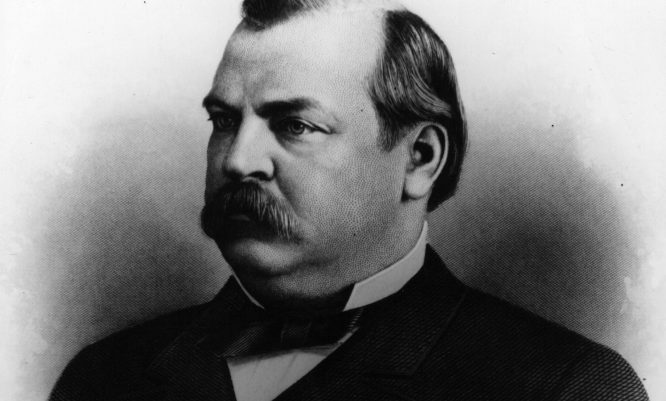
Grover Cleveland

What is the use of being elected or reelected, unless you stand for something?

Categories
Today

Stamp Act out, Cleveland born, Jap-Amer internment order, Gold reserve repealed

On March 18, 1766, the British Parliament repealed the Stamp Act, after four months of major protests in America.

On March 18, 1837, Grover Cleveland was born in Caldwell, New Jersey. Cleveland would go on to win the popular vote for president three times, and to be elected the 22nd and 24th President of the United States. He opposed high tariffs, inflation, imperialism and subsidies to business, farmers or veterans.

On March 18, 1942, President Franklin Roosevelt issued Executive Order 9102 establishing the War Relocation Authority to specifically abridge the constitutional rights of Japanese Americans by taking them into custody without any criminal charge. Over 120,000 citizens were forcibly relocated into internment camps.

On March 18, 1968, the U.S. Congress repealed the requirement for a gold reserve to back paper money in the U.S.

Categories
links

Townhall: Diving for Pearls

My Townhall column, this weekend, is entitled “Diving for Pearls.” Give it a look, why not?

And then come back here to check out these relevant references and links:

See you on Facebook and Twitter! Oh, and have you signed up for the emails of my weekday Common Sense commentaries? (See the “Subscribe” button in the right-hand column. Thanks!)