“Never has there been a good war or a bad peace.”
Categories
“Never has there been a good war or a bad peace.”
The Competitive Enterprise Institute honored science writer Matt Ridley, author of The Rational Optimist and other works, with an award. Ridley honored us with a great talk:
2012 Julian L. Simon Memorial Award Dinner from CEI Video on Vimeo.
Both the politics of “getting what we want” and the politics of reasonable principles — too often two very different things — rely, ultimately, upon the local, upon voters in actual communities.
In a review of a book with the provocative title How Local Politics Shapes Federal Policy, economist Robert Meiners considers the political economy of America’s most famous dam:
[M]ultiple states wrestled for control of the multi-state Colorado River and for control of the electricity that might be generated. When there is a pot of gold on the table, the stakes are high. Eastern interests opposed the dam. The rhetoric was about “states’ rights” . . . but likely had more to do with eastern members of the legislature seeing no benefit, only costs, for themselves. Again, assuming the dam had net benefits, there is no reason the national government needed to be involved in a project that provide benefits to six states at best.
The book’s author tells the story in terms of ideology, but the reviewer counters that it looks, to him, “more like traditional rent-seeking and logrolling. . . .” Our folks in Congress “constantly think about how to satisfy local interests at the expense of non-local taxpayers,” and that’s certainly the current problem.
And here ideology comes back into the picture. If you think that some people’s lives or property should be sacrificed for some other people’s lives and property, then the ultimate result is the mess we have today. Voters have little option but to take a stand and “ideologically” place limits on politicians and their very own selves.
In our limits, our liberty.
Lacking those limits, we’re each others’ hosts and leeches.
This is Common Sense. I’m Paul Jacob.
“They tell us, sir, that we are weak; unable to cope with so formidable an adversary. But when shall we be stronger? Will it be the next week, or the next year? Will it be when we are totally disarmed, and when a British guard shall be stationed in every house? Shall we gather strength by irresolution and inaction? Shall we acquire the means of effectual resistance, by lying supinely on our backs, and hugging the delusive phantom of hope, until our enemies shall have bound us hand and foot? Sir, we are not weak if we make a proper use of those means which the God of nature hath placed in our power. Three millions of people, armed in the holy cause of liberty, and in such a country as that which we possess, are invincible by any force which our enemy can send against us. Besides, sir, we shall not fight our battles alone. There is a just God who presides over the destinies of nations; and who will raise up friends to fight our battles for us. The battle, sir, is not to the strong alone; it is to the vigilant, the active, the brave. Besides, sir, we have no election. If we were base enough to desire it, it is now too late to retire from the contest. There is no retreat but in submission and slavery! Our chains are forged! Their clanking may be heard on the plains of Boston! The war is inevitable and let it come! I repeat it, sir, let it come.
“It is in vain, sir, to extenuate the matter. Gentlemen may cry, Peace, Peace, but there is no peace. The war is actually begun! The next gale that sweeps from the north will bring to our ears the clash of resounding arms! Our brethren are already in the field! Why stand we here idle? What is it that gentlemen wish? What would they have? Is life so dear, or peace so sweet, as to be purchased at the price of chains and slavery? Forbid it, Almighty God! I know not what course others may take; but as for me, give me liberty or give me death!”
On March 23, 1775, Patrick Henry gave his famous speech exclaiming “Give me liberty or give me death!” at St. John’s Church in Richmond, Virginia, where more than 100 Virginia patriots, including George Washington, Thomas Jefferson, Richard Henry Lee, and Peyton Randolph gathered after leaving the colonial capitol of Williamsburg to avoid the wrath of Royal Governor Lord Dunmore. Less than a month later, the American Revolution began at Lexington and Concord with the shot heard ‘round the world.
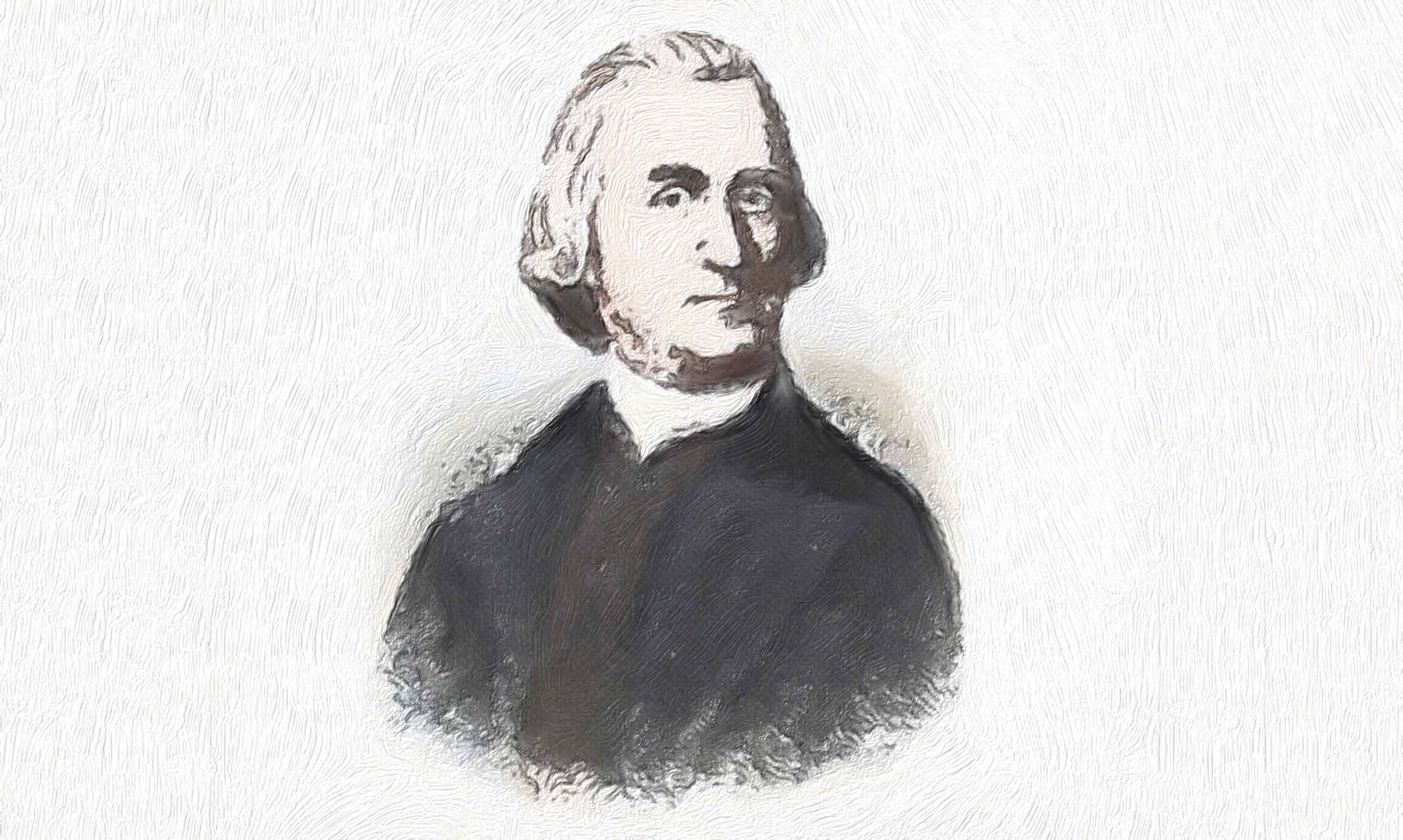
It does not require a majority to prevail, but rather an irate, tireless minority keen to set brush fires in people’s minds.
The taxman puts his hands in our pockets. But it’s one thing to reach into our bank accounts and take our money, it is quite another when governments engage in different kind of overreach, where they go beyond the rule of law and just start pushing people around.
Take the case of Sabina Loving and Elmer Killian.
The Institute for Justice has.
These plaintiffs are suing the IRS because that bureau of plunderers has ruled that Ms. Loving and Mr. Killian — who provide tax preparation services — must be regulated and schooled and certified by the IRS itself. The IRS says that these independent tax preparers (independent in that they are not part of big businesses) can’t just offer their services on the market, they must undergo an expensive annual education and certification process.
The overreach part is that the IRS has no statutory authority to regulate these businesses. Congress rejected precisely such regulation back in 2008. So the clever kleptocrats now argue that a pre-IRS law hailing from way back in 1884 authorizes their regulatory powers.
But that law doesn’t even deal with representatives of folks who owe the government money. It deals with representatives of people owed money by the federal government.
Nice try.
“You will be as shocked as Captain Renault to learn that big tax-prep companies — H&R Block, Jackson Hewitt, Liberty — all support the new regulations,” writes A. Barton Hinkle in Reason magazine, “for the same reason big tobacco companies go after roll-your-own smoke shops: It’s in their interest to stifle low-cost competitors.”
Like Ms. Loving and Mr. Killian.
As we prepare our tax returns in the next several weeks leading up to April’s filing day, perhaps we should burn a little incense along with our midnight oil in support of the plaintiffs and the Institute for Justice. For, really, they are fighting for us, too — eternal vigilance and all.
This is Common Sense. I’m Paul Jacob.
On March 22, 1765, the British Parliament passed the controversial Stamp Act, hoping to raise the funds from the North American colonies to defend the vast new American territories won from the French in the Seven Years’ War. The legislation levied a direct tax on all materials printed for commercial and legal use in the colonies, including everything from broadsides and insurance policies to playing cards and dice, infuriating the colonists, who argued that, as British subjects, Parliament could not impose taxes upon them without their consent, through the various colonial assemblies. Even though Parliament eventually repealed the legislation, the quarrel moved many colonists against the British government, setting the stage for the eventual break and war for independence.
Last Friday, the President of the United States signed an Executive Order on “National Defense Resources Preparedness,” and it’s gotten no small amount of attention. It seems to commandeer the entire economy — pretty much anything the government needs — in cases of a presidentially (not congressionally) declared “emergency.”
The powers are vast.
The checks and balances, vague.
The whole thing is matter-of-fact, sporting that business-as-usual style we’ve come to know and . . . view suspiciously. A few clauses at the end of the document build up to a sort of finale of weirdness with this clarification: “This order is not intended to, and does not, create any right or benefit, substantive or procedural, enforceable at law or in equity by any party against the United States, its departments, agencies, or entities, its officers, employees, or agents, or any other person.” It may be about “national security,” but the government has certainly protected itself. Against us.
Reasons for angst? Yes.
But the angst should not be conceived as new.
Economic historian Robert Higgs, writing for The Independent Institute, notes our long history of what he calls “fascist central planning.” Citing his own milestone work Crisis and Leviathan, he fingers warfare as the major rationale behind the centralization of power and industry. Under the Defense Production Act of the Truman Era, “the president has lawful authority to control virtually the whole of the U.S. economy whenever he chooses to do so and states that the national defense requires such a government takeover.”
It’s breathtaking. It’s sweeping. It’s almost ancient.
And it shows how important actual peace is to our freedoms, our property rights, our very lives.
This is Common Sense. I’m Paul Jacob.
“The liberties of a people never were, nor ever will be, secure, when the transactions of their rulers may be concealed from them.”