On June 14, 1777, U.S. Congress adopted the Stars and Stripes as the United States Flag.
Categories
Stars and Stripes
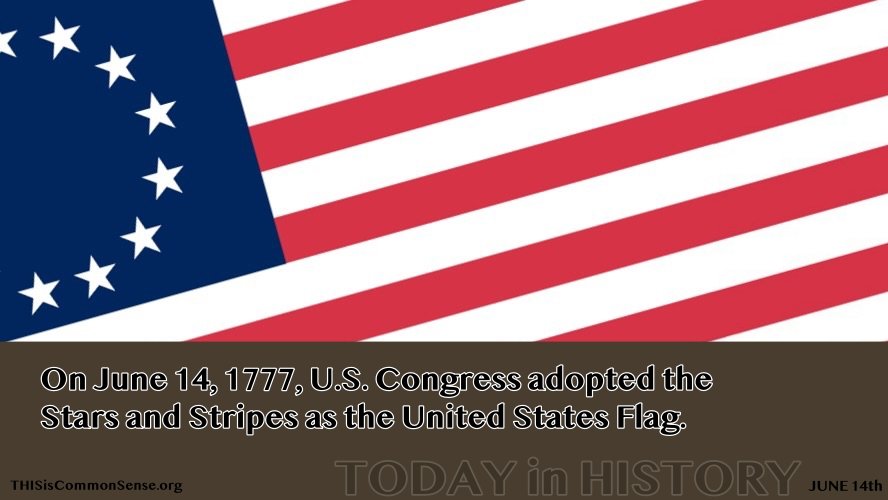
On June 14, 1777, U.S. Congress adopted the Stars and Stripes as the United States Flag.
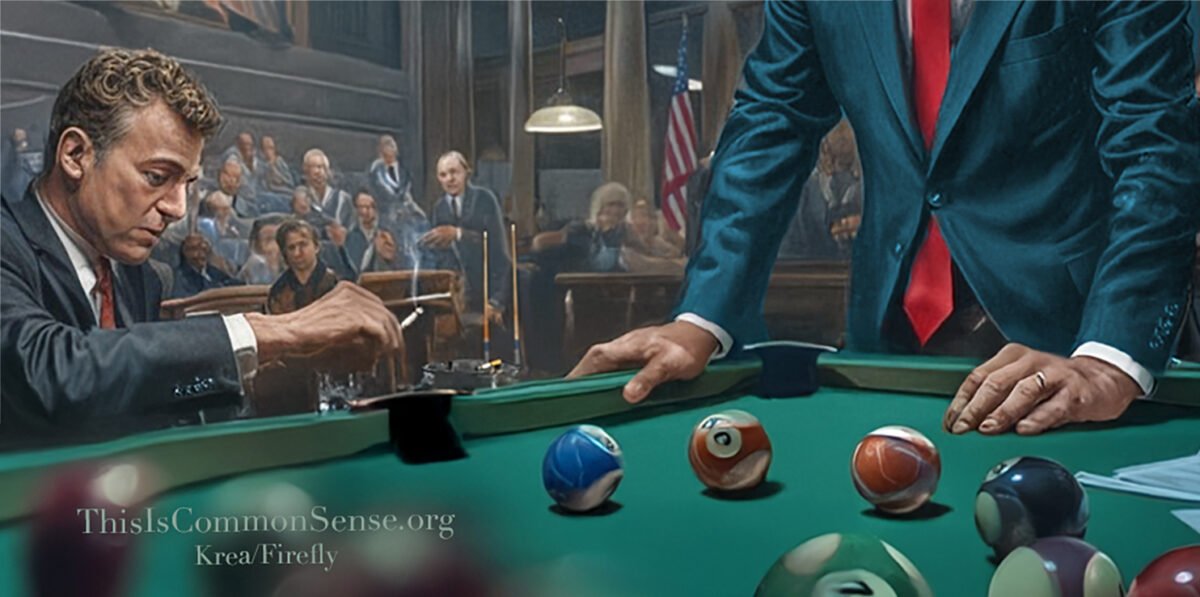
The federal government’s official debt rushed to the $37 trillion mark — but Senator Rand Paul (R-Ky.) took a few moments to shake his head over how he and his grandson were singled out by not being invited to the White House picnic.
“I just find it so incredibly petty,” Senator Paul said. “It’s really kind of sad that this is where we are.”
Politics is a petty business, too often, and this sure looked like one of those moments to upgrade the word with a capital P. Or with a T, for You-Know-Who.
Oddly, though, often it was the senator who was besmirched with the P word, not the prez!
“His complaint has sparked bipartisan mockery online,” explains Newsweek. “Vince Langman, a self-described member of the MAGA movement, told his 381,000 followers on X, formerly Twitter: ‘Rand Paul crying like a school girl because President Trump uninvited him from the White House picnic is the funniest thing I’ve seen on X in weeks.’”
I don’t know. Is it funnier than the Deep State admitting that it had been faking and fanning the flames of the UFO craze all along?
Or blaming Senator Paul for noticing and not the White House for the actual snub?!?
The attack on Paul is dumb: the Kentucky senator has always been an equal opportunity critic.
Thankfully, Rand Paul and his grandson — and, presumably, Rep. Thomas Massie, another Big Beautiful Bill critic — are back on the picnic list.
Maybe they can hold a moment in silence, amidst the fun, as the debt hits $37 trillion.
This is Common Sense. I’m Paul Jacob.
Illustration created with Krea and Firefly
See all recent commentary
(simplified and organized)
See recent popular posts
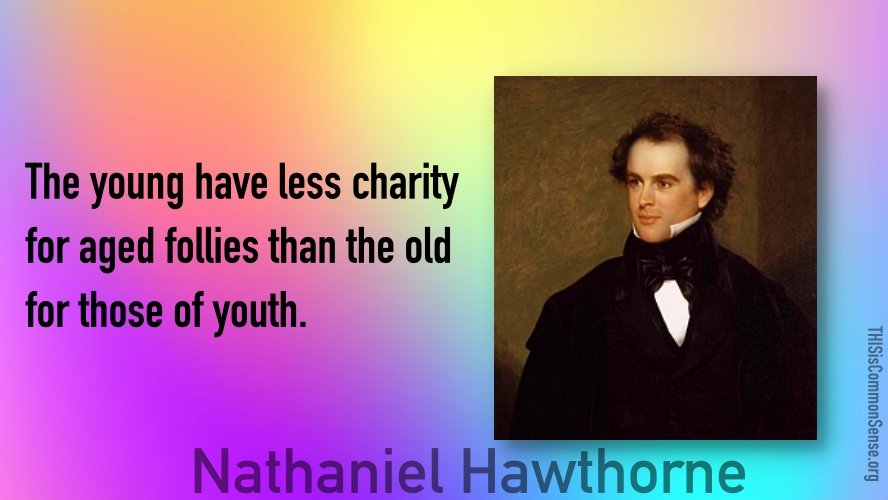
The young have less charity for aged follies than the old for those of youth.
Nathaniel Hawthorne, “The Wedding Knell” (1837) from Twice Told Tales (1837, 1851).
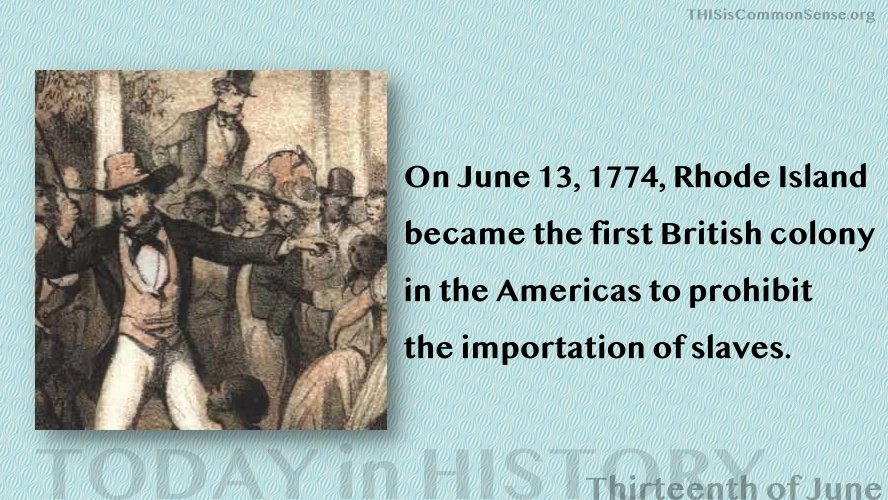
On June 13, 1774, Rhode Island became the first British colony in the Americas to prohibit the importation of slaves.

She’s referring to Secretary of Health and Human Services Robert F. Kennedy’s “retiring” of the entire 17-member Advisory Committee on Immunization Practices (ACIP).
You know, the group that did such a bang-up job for the Centers for Disease Control during the pandemic.
“After the US Food and Drug Administration (FDA) approves vaccines based on whether the benefits of the shot outweigh the risks,” the BBC explains, “ACIP recommends which groups should be given the shots and when, which also determines insurance coverage of the shots.”
A lot of money rides on what this board determines, you see.
Which is a big element of Kennedy’s complaint against the whole of the Big Pharma/Big Government complex. “The committee has been plagued with persistent conflicts of interest and has become little more than a rubber stamp for any vaccine,” he wrote in the Wall Street Journal prior to what he calls a “clean sweep.” “Most of ACIP’s members have received substantial funding from pharmaceutical companies, including those marketing vaccines.”
Various newspaper reports quote a lot of experts expressing their shock and worry, but — in the articles, mind you — avoid Kennedy’s key points.
After the corruption of “science” by Big Government during the pandemic, sweeping out the old board gets an enthusiastic thumbs up.
Let’s hold the new board members fully accountable; perhaps they could break with tradition by not holding any meetings in secret.
This is Common Sense. I’m Paul Jacob.
Illustration created with Krea and Firefly
See all recent commentary
(simplified and organized)
See recent popular posts

It is the magician’s bargain: give up our soul, get power in return. But once our souls, that is, ourselves, have been given up, the power thus conferred will not belong to us. We shall in fact be the slaves and puppets of that to which we have given our souls.
C.S. Lewis, The Abolition of Man (1943).

In 1776, on June 12, the Fifth Virginia Convention at Williamsburg, Virginia, unanimously adopted a Declaration of Rights, several weeks prior to the adoption of the state’s constitution. George Mason, who drafted the document, stated clearly in the preamble that rights must be “the basis and foundation of Government.”
The first four planks run as follows:
I. That all men are by nature equally free and independent, and have certain inherent rights, of which, when they enter into a state of society, they cannot, by any compact, deprive or divest their posterity; namely, the enjoyment of life and liberty, with the means of acquiring and possessing property, and pursuing and obtaining happiness and safety.
II. That all power is vested in, and consequently derived from, the people; that magistrates are their trustees and servants, and at all times amenable to them.
III. That government is, or ought to be, instituted for the common benefit, protection, and security of the people, nation or community; of all the various modes and forms of government that is best, which is capable of producing the greatest degree of happiness and safety and is most effectually secured against the danger of maladministration; and that, whenever any government shall be found inadequate or contrary to these purposes, a majority of the community hath an indubitable, unalienable, and indefeasible right to reform, alter or abolish it, in such manner as shall be judged most conducive to the public weal.
IV. That no man, or set of men, are entitled to exclusive or separate emoluments or privileges from the community, but in consideration of public services; which, not being descendible, neither ought the offices of magistrate, legislator, or judge be hereditary.

Well, what does it require in response? Open battles with the feds?
As in the 2020 BLM riots, rioters are attacking federal buildings, with attempts at violent entry.
This is no way to persuade Americans of much of anything — other than that force triumphs over reason.
So little wonder that the U.S. president chose to meet force with force by sending in the National Guard. Trump’s explanation on Truth Social qualifies as Classic Trump (not New Trump): “If Governor Gavin Newscum, of California, and Mayor Karen Bass, of Los Angeles, can’t do their jobs, which everyone knows they can’t, then the Federal Government will step in and solve the problem, RIOTS & LOOTERS, the way it should be solved!!!”
Federalizing the Guard will be fought in court — like everything else — but it appears to be yet another case in which folks argue that President Trump does not have the lawful authority . . . only come to find out that Congress does constitutionally enjoy said power but unaccountably legislated it away to the president.
Rita Panahi of Sky News Australia covered the mayhem in her “Lefties Losing It” segment. “And while the Mexican flag was proudly flying throughout these protests, the American flag was nowhere to be seen,” Ms. Panahi observed, “unless it was being set alight.”
Protesters waving the flag of the foreign state they’ve fled?!?!?
That’s not Common Sense. I’m Paul Jacob.
Illustration created with Krea and Firefly
See all recent commentary
(simplified and organized)
See recent popular posts

Every individual has a place to fill in the world, and is important, in some respect, whether he chooses to be so or not.
Nathaniel Hawthorne, 1836 entry, The American Notebooks (1835, 1853).

On June 11, 1776, the Continental Congress appointed John Adams, Benjamin Franklin, Thomas Jefferson, Robert R. Livingston, and Roger Sherman to draft a declaration of independence from Great Britain.
On the same date in 1963, Thich Quang Duc, a Buddhist monk, doused himself with gasoline and set himself aflame in a busy Saigon intersection as a protest against South Vietnam’s lack of religious freedom.